Why Dyrbek Nature Reserve stands out
Dyrbek is best known for protecting a representative stand of Carpathian beech forest set within the Słonne Mountains Landscape Park. Its defining identity is the natural beech forest community of the lower Carpathian slopes, supported by the topography of a single southwestern hillside. The reserve is also valued for the birdlife associated with this habitat, including species such as the lesser spotted eagle, the Eurasian eagle-owl, the black stork, and the Ural owl, all of which favor mature, undisturbed woodland.
Dyrbek Nature Reserve history and protected-area timeline
Dyrbek was formally designated as a nature reserve on 12 November 1996 through a legal act published in the Polish Monitor (M.P. z 1996 r. Nr 75, poz. 678). It entered the regional register under number 57. The founding document identified the natural community of Carpathian beech forest as the explicit subject of protection, establishing the reserve as a phytocoenotic forest reserve dedicated to forest communities.
In its early years, Dyrbek operated under a protection plan covering the period 2003 to 2022, prepared in June 2002. That plan guided the practical management of the reserve, including measures to maintain the integrity of its forest communities. The slightly smaller current area relative to the 130.88 hectares cited in the founding act reflects minor adjustments over time, while the core purpose of protecting Carpathian beech forest has remained consistent since the reserve's establishment.
Dyrbek Nature Reserve landscape and geographic character
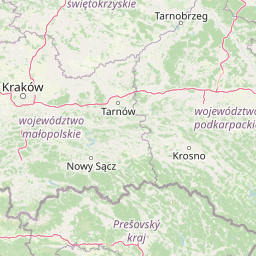
Dyrbek occupies a single southwestern slope of a hill within the Słonne Mountains, part of the broader Sanocko-Turczańskie mesoregion of the Eastern Carpathians. The hill reaches an elevation of about 640 meters above sea level, placing the reserve within the lower to middle elevation band that is typical for natural beech forests in this part of Poland. The aspect of the slope, together with the elevation, shapes the microclimate of the reserve and supports the development of moist, mesic forest communities favored by European beech.
The terrain is mountainous but not extreme, characterized by smooth, forested slopes and the valley systems typical of the Słonne range. Within the surrounding landscape park, this topography transitions gradually between closed forest cover and more open land used for small-scale agriculture and rural settlement, creating a patchwork of habitats around the reserve.
Dyrbek Nature Reserve ecosystems, habitats, and plant life
The defining ecological feature of Dyrbek is its natural Carpathian beech forest, the official subject of protection designated in the founding act. This habitat belongs to the broader category of mountain and submontane forests of the region, classified within the phytocoenotic framework as a forest community of the type associated with Carpathian foothills and middle-elevation slopes. The reserve's ecosystem type is identified as forest and boreal forest, with the specific subtype covering mountain and submontane forests.
In ecological terms, the Carpathian beech forest protected at Dyrbek is a mesic, broadleaf-dominated community in which European beech plays a central role in canopy composition. Such forests are characteristic of the transition zone between the lowlands and the higher Carpathian ranges, where climatic and edaphic conditions favor beech over oak and other deciduous competitors. Maintaining the continuity of this forest community is the central conservation objective of the reserve.
Dyrbek Nature Reserve wildlife and species highlights
Dyrbek supports a noteworthy community of forest birds, a pattern consistent with the maturity and structural complexity of its beech-dominated canopy. Among the species recorded in or near the reserve are the lesser spotted eagle, a forest-dwelling raptor sensitive to disturbance; the Eurasian eagle-owl, a large owl that requires extensive tracts of undisturbed woodland; the black stork, a shy wetland-forest species that nests in mature forest near water; and the Ural owl, another large forest owl associated with old-growth and near-natural woodland in the Carpathians.
The presence of these species reflects the value of Dyrbek as a refuge for fauna that depend on extensive, structurally diverse forest cover. The reserve thus contributes not only to botanical protection but also to the conservation of bird assemblages that are characteristic of near-natural Carpathian beech forests.
Dyrbek Nature Reserve conservation status and protection priorities
Dyrbek was established explicitly to safeguard a natural community of Carpathian beech forest, a habitat type of high conservation value across the Polish Carpathians. As a phytocoenotic forest reserve, its role is the preservation of forest communities rather than the protection of individual species, although the resulting habitat continuity also supports the wider forest biodiversity of the region.
The reserve is embedded within the larger Słonne Mountains Landscape Park, which provides additional landscape-scale protection around the reserve through broader regulations on land use, forestry, and development. Together, the reserve and its surrounding landscape park form a layered conservation network that helps maintain ecological connectivity in this part of the Eastern Carpathians. A protection plan covering the years 2003 to 2022 provided the management framework during the reserve's first decades of operation.
Top sights and standout views in Dyrbek Nature Reserve
Dyrbek stands out as a compact, well-defined example of Carpathian beech forest protection within the Polish nature reserve network. Its strengths lie in its clear conservation focus on a single, ecologically valuable forest community; its location within the larger Słonne Mountains Landscape Park, which extends protection beyond the reserve boundaries; and the birdlife associated with its mature canopy, including species of conservation concern such as the lesser spotted eagle, the Eurasian eagle-owl, the black stork, and the Ural owl. The reserve also complements the neighboring Buczyna w Wańkowej reserve, contributing to a small cluster of beech forest protections in the area.
Best time to visit Dyrbek Nature Reserve
Dyrbek is a forested mountain reserve visited primarily for appreciation of its beech forest habitat and birdlife. Spring and early summer bring active bird song and the fresh green canopy of beech leaves, a period when forest bird species, including the owls and raptors associated with the reserve, are most vocally present. Late summer and early autumn offer cooler, quieter forest conditions and a more muted palette as the beech canopy begins to turn. Winter can bring snow cover that highlights the structure of the bare deciduous canopy, though conditions on mountain slopes may be more demanding.