
Mori Atlas logo
Protected landscapeEd Jenkins National Recreation Area

Mapping the ridges and trail heritage of this key Georgia mountain recreation zone

Ed Jenkins National Recreation Area and the Southern Appalachian Protected Landscape

Ed Jenkins National Recreation Area encompasses 23,330 acres of forested mountain terrain within the southern Blue Ridge of northern Georgia. This protected landscape serves as a gateway to the Chattahoochee-Oconee National Forest and marks the symbolic southern terminus of the Appalachian Trail at Springer Mountain. Its topography of rolling hardwood ridges and secluded stream valleys offers a window into the ancient Appalachian geological and environmental heritage.

Appalachian MountainsSpringer MountainAppalachian Trail terminusnational recreation areaChattahoochee-Oconee National Forestsouthern Blue Ridge
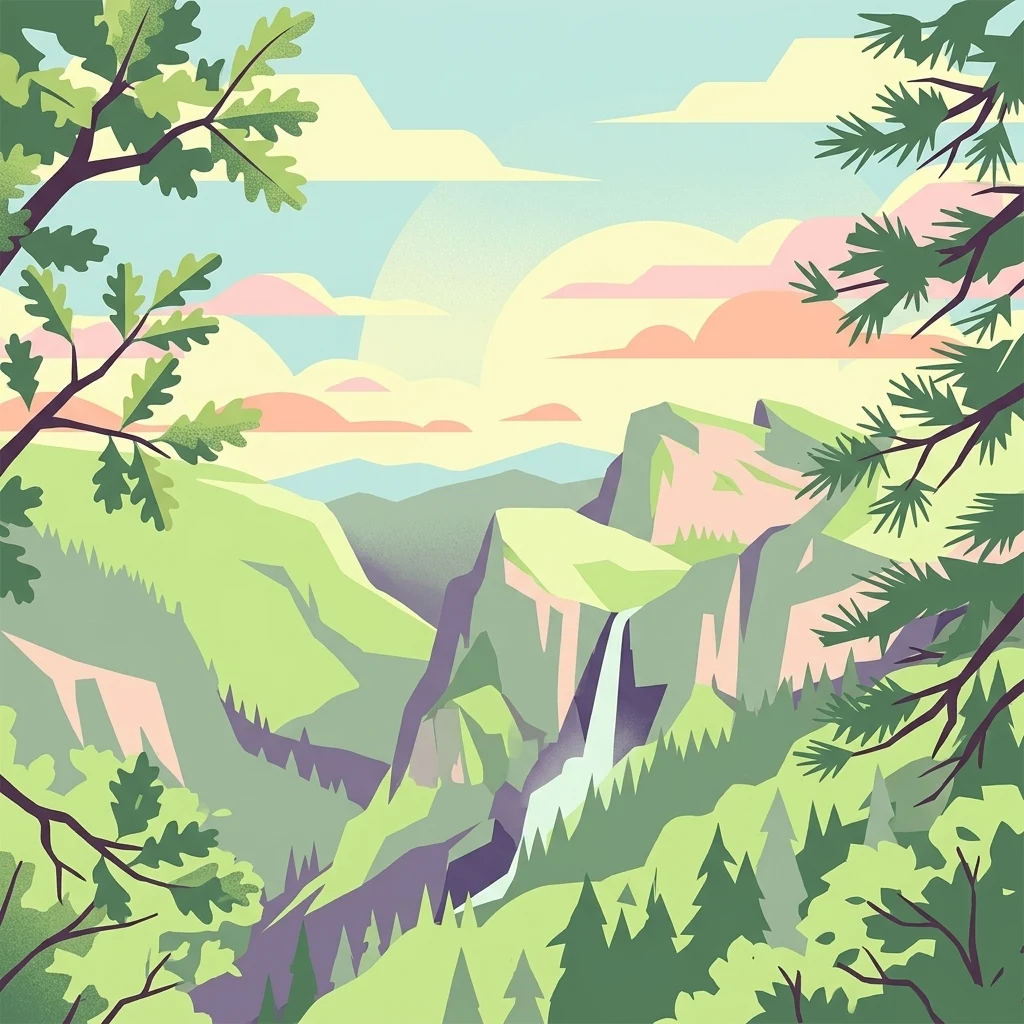
A stylized flat illustration showing a mountain valley with a waterfall in the center, framed by silhouetted tree branches on both sides against a pastel sunset sky.

Ed Jenkins National Recreation Area

Protected landscape

Park overview

Structured park overview, official facts, and landscape profile for Ed Jenkins National Recreation Area

Ed Jenkins National Recreation Area park facts, protected area profile, and essential visitor context

Review the core facts for Ed Jenkins National Recreation Area, including designation, size, terrain, visitor scale, habitats, and operating context in one park-focused overview.

About Ed Jenkins National Recreation Area

Ed Jenkins National Recreation Area occupies a meaningful place among America's federally designated recreation areas because it sits at the symbolic southern anchor of the Appalachian Trail. The unit sits within the Chattahoochee-Oconee National Forest, the largest national forest in Georgia, and extends across the mountainous terrain of Fannin and Union counties. The recreation area's identity is shaped primarily by the ridgelines and forests that converge around Springer Mountain, where the Appalachian Trail begins (or ends, depending on direction) its roughly 2,000-mile journey to Maine.

From an administrative and geographic perspective, the recreation area covers approximately 23,330 acres of rugged southern Appalachian landscape. Its slopes carry the characteristic mix of oak, hickory, and pine that defines much of the Georgia Blue Ridge, along with rhododendron and other understory plants typical of mid-elevation Appalachian forests. Streams cut through these forested hills, contributing to the watershed systems that drain into larger rivers of north Georgia.

Although smaller in size than many western recreation areas, Ed Jenkins National Recreation Area carries an outsized cultural footprint because of its position on the Appalachian Trail. Each spring, hikers arriving at Springer Mountain mark the official beginning of their northbound journey on the trail. This ongoing human story, layered on top of the natural landscape, gives the recreation area a distinctive identity that blends outdoor recreation, hiking tradition, and southern Appalachian scenery into a single compact protected unit.

Quick facts and research context for Ed Jenkins National Recreation Area

Ed Jenkins National Recreation Area is located in the southern Appalachians of northern Georgia, within the Chattahoochee-Oconee National Forest. The recreation area spans Fannin and Union counties and is administered by the U.S. Forest Service. Established as a national recreation area in 1991 and renamed the following year, it covers approximately 23,330 acres of mountain and forest landscape.

Springer Mountain, near the center of the recreation area, is the southern terminus of the Appalachian Trail. The recreation area serves as a popular starting point for northbound Appalachian Trail thru-hikers and as a destination for day hikers and backpackers exploring the surrounding ridges.

Protection and recognition

Terrestrial conservation scope established in 1992

Ed Jenkins National Recreation Area Protection Status and Designation History

Ed Jenkins National Recreation Area maintains a documented terrestrial protection status established in 1992. Official records outline the baseline designation history and management scope for this protected landscape without international recognition sources.

Protection details

Protection scope
Terrestrial
Designated year
1992
Transboundary protection
No
Park context

Deeper park guide and search-rich context for Ed Jenkins National Recreation Area

Ed Jenkins National Recreation Area history, landscape, wildlife, and travel context

Explore Ed Jenkins National Recreation Area through its history, landscape character, ecosystems, wildlife, conservation priorities, cultural context, and seasonal travel timing in a structured park guide built for atlas discovery and search intent.

Why Ed Jenkins National Recreation Area stands out

Ed Jenkins National Recreation Area is best known as the home of Springer Mountain, the traditional southern terminus of the Appalachian Trail. The site carries strong symbolic weight in long-distance hiking culture, since most northbound thru-hikers set out from this stretch of Georgia's mountains to begin their journey to Mount Katahdin. The recreation area is also valued for the classic southern Appalachian scenery it protects: layered ridges covered in mixed hardwood forest, deep stream valleys, and quiet, forested approaches that reflect the character of the Blue Ridge in northern Georgia. Its location inside the Chattahoochee-Oconee National Forest reinforces its role as a portal between the national forest landscape and one of America's most celebrated long-distance trails.
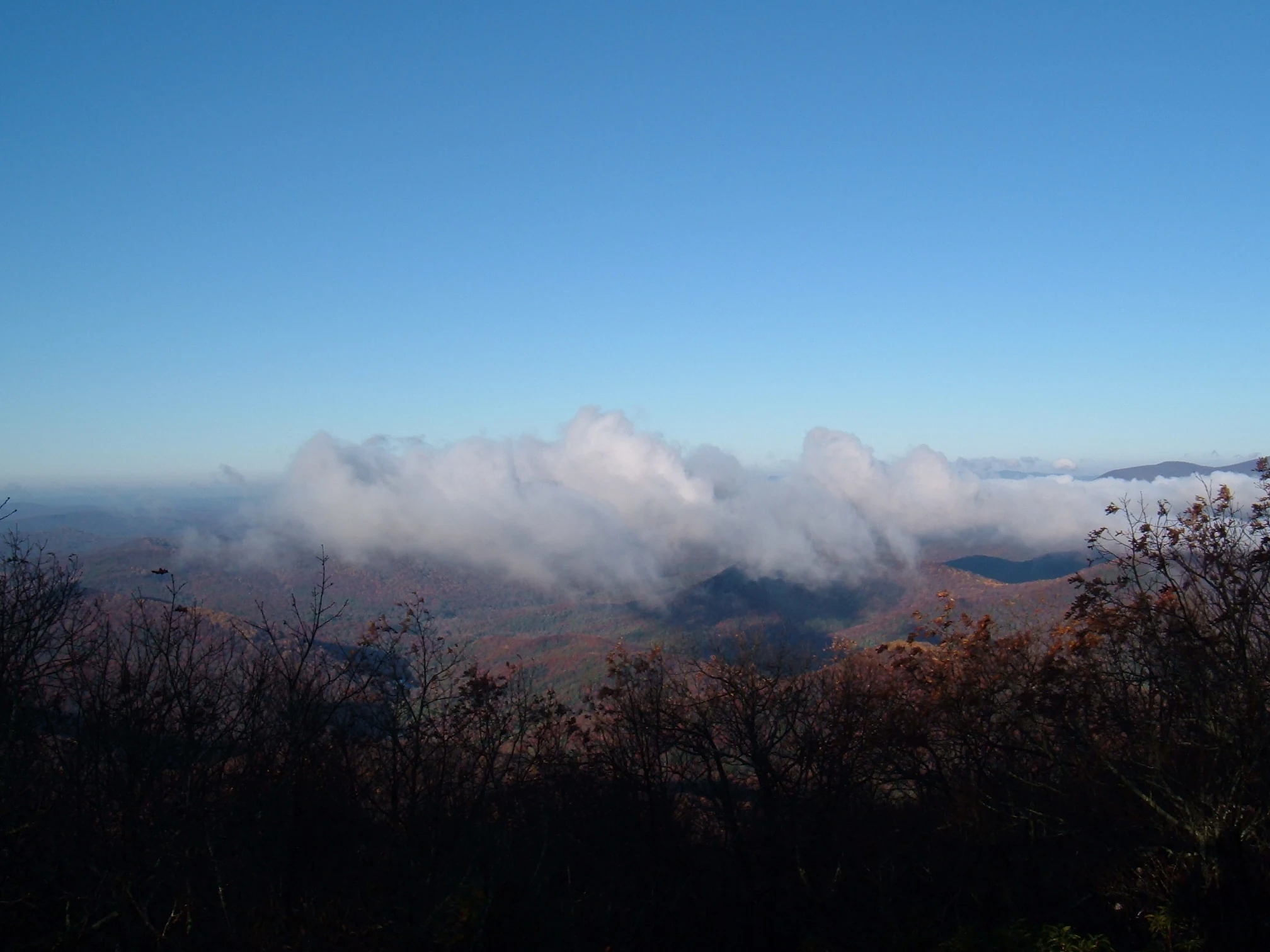
A wide view from the top of a mountain, looking out over rolling hills partially obscured by low-hanging clouds under a clear blue sky, with autumn-colored trees in the foreground.
A scenic view of the mountain landscape from the summit of Springer Mountain.

Ed Jenkins National Recreation Area history and protected-area timeline

Ed Jenkins National Recreation Area was originally designated as Springer Mountain National Recreation Area when it was established in 1991 within the Chattahoochee-Oconee National Forest. The unit was created by Public Law 102-207, adding a dedicated recreation area layer of federal protection on top of the existing national forest lands surrounding Springer Mountain.

Just a year after its creation, in 1992, the recreation area was renamed by Public Law 102-456, becoming Ed Jenkins National Recreation Area. The renaming commemorates Representative Ed Jenkins, a Georgia congressman whose work in the U.S. House of Representatives supported conservation and forestry initiatives in the region. Since that redesignation, the unit has retained its renamed status while continuing to be administered by the U.S. Forest Service as part of the broader Chattahoochee-Oconee National Forest system.

Over the following decades, the recreation area's role evolved in step with the growing popularity of the Appalachian Trail. Springer Mountain has served for many years as the southern terminus of the trail, and the recreation area has become closely associated with that trailhead experience, even though its formal history as a National Recreation Area is comparatively recent.

Ed Jenkins National Recreation Area landscape and geographic character

The landscape of Ed Jenkins National Recreation Area is shaped by the southern Blue Ridge Mountains, with rolling, forested ridges and valleys typical of northern Georgia's high country. Near the center of the recreation area, Springer Mountain rises above the surrounding terrain, offering long views over a sea of forested ridges that fade into the distance. The topography reflects the erosional patterns of the ancient Appalachians, producing a landscape of long, gentle ridgelines rather than dramatic alpine peaks.

Spring-fed streams and small creeks weave through the hills, and the forest cover extends continuously across the recreation area, broken only by the trail corridors, forest roads, and occasional gaps that connect valleys. This kind of unbroken forest canopy is one of the defining visual characteristics of the unit.

Because the recreation area sits at a relatively moderate elevation within the southern Appalachians, the landscape transitions between ridge-top hardwood forest and sheltered stream valleys with rhododendron and other moisture-loving undergrowth. The overall impression is of a deeply forested, ridgeline-dominated Appalachian landscape that feels more expansive than its acreage might suggest, in large part because of the way the surrounding national forest extends into the same continuous mountainscape.

Ed Jenkins National Recreation Area ecosystems, habitats, and plant life

Ecologically, Ed Jenkins National Recreation Area falls within the southern Appalachian forest biome, a region known for high plant diversity and a long evolutionary history. The mixed hardwood forests of the recreation area include oak, hickory, tulip poplar, and other broadleaf species that dominate mid-elevation Appalachian slopes, along with pockets of pine and a rich understory of shrubs, wildflowers, and ferns characteristic of the Blue Ridge.

The continuity of forest cover across the recreation area and into the surrounding Chattahoochee-Oconee National Forest supports wildlife adapted to mature Appalachian hardwood and mixed forest environments. Streams and seeps along the slopes add smaller, moister habitat types that contribute to overall biodiversity. Because the recreation area lies within a larger national forest matrix, its habitats connect more broadly to the wider ecological network of north Georgia's mountains.

The recreation area's elevation and position in the southern Appalachians also place it within a recognized zone of high biodiversity for temperate North America. The eastern United States, and the southern Appalachians in particular, harbor more tree and understory plant species than many comparable temperate regions, and Ed Jenkins National Recreation Area sits firmly within that ecological context.

Ed Jenkins National Recreation Area wildlife and species highlights

The forests of Ed Jenkins National Recreation Area support wildlife typical of the southern Appalachian Mountains. White-tailed deer are among the most commonly observed mammals, alongside black bear, which are present in the broader Chattahoochee-Oconee National Forest and occasionally move through the recreation area. Smaller mammals such as squirrels, foxes, raccoons, and various bat species also inhabit the forested slopes and stream valleys.

Birdlife in the recreation area reflects the mixed hardwood and pine forest of the southern Blue Ridge. Year-round residents include woodpeckers, wild turkeys, and a range of songbirds associated with mature Appalachian forest. During migration seasons, the ridgelines and forest edges along the Appalachian Trail corridor provide habitat for migratory songbirds and raptors.

Streams throughout the recreation area contribute additional aquatic habitat and support species typical of small Appalachian waterways. While the recreation area is not primarily managed as a wildlife-viewing destination, its forest cover and connectivity to the broader national forest make it a meaningful part of the regional habitat network of northern Georgia.

Ed Jenkins National Recreation Area conservation status and protection priorities

From a conservation perspective, Ed Jenkins National Recreation Area contributes to the larger protected landscape of the Chattahoochee-Oconee National Forest, which is the largest national forest in Georgia and an important stronghold of southern Appalachian forest. The recreation area designation, established by Public Law 102-207 and renamed by Public Law 102-456, adds a layer of federal recognition focused on recreation and landscape protection within an already protected national forest setting.

The unit matters for conservation because it preserves a continuous block of mature Appalachian forest in a region where habitat fragmentation is a long-standing concern. By protecting ridgelines, slopes, and stream valleys under U.S. Forest Service management, the recreation area helps maintain forest interior habitat, watershed function, and connectivity to surrounding national forest lands.

The recreation area also plays an indirect conservation role through its connection to the Appalachian Trail. Concentrating hiker use near Springer Mountain and on established trail corridors helps channel recreational pressure into specific areas, reducing broader off-trail impact across the more sensitive forested landscape of the surrounding mountains.

Ed Jenkins National Recreation Area cultural meaning and human context

The cultural context of Ed Jenkins National Recreation Area is shaped primarily by its connection to long-distance hiking in the United States. Springer Mountain is widely recognized as the southern terminus of the Appalachian Trail, and the recreation area has become a touchstone of thru-hiking culture. Each year, northbound thru-hikers gather at Springer Mountain to mark the symbolic beginning of their multi-month journey toward Mount Katahdin in Maine.

Alongside this modern hiking tradition, the unit's renaming honors Representative Ed Jenkins, a Georgia congressman whose work supported conservation and forestry in the region. This naming reflects the way regional political leadership and conservation history have intersected in the protection of north Georgia's mountain landscapes.

The surrounding mountains also carry longer regional histories of Appalachian settlement, forestry, and land use that continue to inform how the landscape is understood locally. While the recreation area is best known nationally for its trailhead significance, it also reflects the broader cultural and political history of forest protection in the southern Appalachians.

Top sights and standout views in Ed Jenkins National Recreation Area

Ed Jenkins National Recreation Area stands out for the combination of protected southern Appalachian scenery, its location within Chattahoochee-Oconee National Forest, and its role as the home of Springer Mountain at the southern terminus of the Appalachian Trail. Its ridges, hardwood forests, and stream valleys represent the classic character of north Georgia's Blue Ridge Mountains.

The recreation area's relatively compact size is offset by its symbolic importance: the Springer Mountain trailhead is one of the most photographed and visited spots on the entire Appalachian Trail. Whether approached as a day hike, a backpacking gateway, or simply as a quiet forested corner of a much larger national forest, the recreation area offers a focused encounter with the southern Appalachian landscape and its long-distance hiking heritage.

Best time to visit Ed Jenkins National Recreation Area

Spring and fall are generally the most rewarding seasons to experience Ed Jenkins National Recreation Area, when the hardwood forests of the southern Appalachians display either fresh leaf-out and flowering understory or autumn color across the ridgelines. These seasons also align with the busiest periods on the Appalachian Trail, since many northbound thru-hikers begin their journey at Springer Mountain in early spring.

Summer brings dense, fully leafed forest cover and warm conditions favorable for stream-side hiking, though humidity in the southern Appalachians can be high. Winter offers quieter conditions, cooler temperatures, and more open views through the deciduous canopy, although weather in the mountains can change quickly and some higher-elevation sections may see ice or snow. The recreation area's appeal in any season rests on the classic southern Appalachian forest setting rather than dramatic seasonal transformations.
Monthly climate preview

Long-term temperature ranges and monthly precipitation averages for Ed Jenkins National Recreation Area

Ed Jenkins National Recreation Area Climate Normals and Annual Weather Patterns

Ed Jenkins National Recreation Area records measured monthly temperatures spanning a low mean of 3.42 degrees Celsius in winter to a high mean of 25.11 degrees Celsius in summer, accompanied by consistent daily precipitation throughout the year. Reviewing the complete twelve-month climatology profile provides deeper analytical insight into long-term meteorological shifts across the protected terrain.
Annual mean15 °C
3 °C25 °C
Jan
Feb
Mar
Apr14°
May19°
Jun23°
Jul25°
Aug25°
Sep21°
Oct15°
Nov
Dec
Warmest month
July

25.1 °C

Coolest month
January

3.4 °C

Wettest month
February

4.4 mm/day

Driest month
October

3 mm/day

Park location guide

Geography guide, regional context, and park location map for Ed Jenkins National Recreation Area

Ed Jenkins National Recreation Area park geography, regions, and map view in United States of America

Understand where Ed Jenkins National Recreation Area sits in United States of America through a broader geographic reading of the surrounding landscape, nearby location context, and its mapped position within the national park landscape.

How Ed Jenkins National Recreation Area fits into United States of America

The United States of America is a federal presidential republic and one of the world's largest countries by area and population. It consists of 50 states across a vast territory spanning multiple time zones, with its capital in Washington, D.C. and largest city in New York City. The nation has a diverse economy, influential political system, and significant cultural and military presence globally.

Wider geography shaping Ed Jenkins National Recreation Area in United States of America

The United States occupies a vast territory in North America, bordered by Canada to the north and Mexico to the south. The 48 contiguous states stretch from the Atlantic to the Pacific Ocean, while Alaska occupies the northwestern region and Hawaii is an archipelago in the Pacific. The country encompasses diverse terrain including the Rocky Mountains, Appalachian Mountains, Great Plains, and extensive river systems.

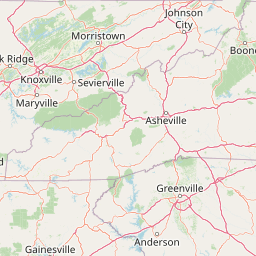
Map view of Ed Jenkins National Recreation Area

Use this park location map to pinpoint Ed Jenkins National Recreation Area in United States of America, understand its exact geographic position, and read its mapped placement within the surrounding landscape more clearly.

Pigeon | © OpenStreetMap contributors

Location context for Ed Jenkins National Recreation Area

Georgia

Visualizing layered hardwood ridges and protected Blue Ridge terrain

Ed Jenkins National Recreation Area Photos and Mountain Scenery

Ed Jenkins National Recreation Area photos reveal unbroken forest canopies, rolling mountain ridges, and stream valleys typical of the southern Appalachian highlands. Examining protected area imagery clarifies the distinct topography and continuous green terrain shaping northern Georgia.

A wide view from the top of a mountain, looking out over rolling hills partially obscured by low-hanging clouds under a clear blue sky, with autumn-colored trees in the foreground.

Park atlas

Compare adjacent southern Appalachian terrain and connected forest reserves

Explore Parks Near Ed Jenkins National Recreation Area and Surrounding Protected Landscapes

Browse other parks near Ed Jenkins National Recreation Area to examine connected mountain terrain across northern Georgia. Comparing adjacent protected landscapes reveals the broader regional spread of the southern Blue Ridge.
A wide watercolor painting showing a landscape of green rolling hills with trees in the foreground and layers of purple mountains in the background against a white background.
Protected areaGilmer County
About 14 km away#1 closest

Northwest

Rich Mountain Wilderness: Mapping Appalachian Ridges and Protected Terrain in Georgia

Explore the high-elevation forests of Gilmer County.

Rich Mountain Wilderness encompasses nearly 9,500 acres of undisturbed Appalachian mountain landscape. Characterized by its signature 4,050-foot peak and unique porter's loam soils, the area supports a diverse forest ecosystem shielded under federal wilderness protection within the Chattahoochee National Forest.

Area
38.35 km²
Established
1986
IUCN
Ib
Relief
Mountain
A pale, minimalist watercolor painting showing layers of soft green hills and a gentle stream against a white background.
Wildlife reserveGeorgia
About 28 km away#2 closest

East

Raven Cliffs Wilderness: Exploring the Appalachian Ridges and Protected Forest Landscapes

High-elevation wilderness area in northern Georgia.

Spanning steep ridges and narrow valleys, Raven Cliffs Wilderness represents a significant protected area within the Chattahoochee National Forest. The landscape transitions from high, exposed ridgelines to dense hardwood forest, offering a compact yet varied study in Appalachian mountain geography.

Area
36.89 km²
Established
1986
IUCN
Ib
Relief
Mountain
A horizontal watercolor painting depicting a soft green landscape with rolling hills, a meandering stream, and foreground grasses against a light white background.
Protected landscapeNorth Carolina
About 46 km away#3 closest

Northeast

Nantahala National Forest: Geographic Overview of Protected Appalachian Mountain Landscapes

Mapping deep river gorges and temperate rainforests in North Carolina

The Nantahala National Forest represents a significant conservation achievement, encompassing diverse southern Appalachian mountain terrain. The landscape features deep river gorges, ancient old-growth forests, and extensive networks of waterfalls. This overview provides mapped context on its vast wilderness areas, including Joyce Kilmer-Slickrock, and the long-distance trail corridors that traverse this temperate rainforest region.

Area
2,150 km²
Established
1920
Relief
Mountain
Climate
Temperate
A pale, soft-focus watercolor painting showing a river with gentle banks and distant hills, with tree branches hanging in the top right corner.
Protected landscapeGeorgia
About 54 km away#4 closest

South

Chattahoochee River National Recreation Area: Protected Landscape Map and Regional Geography

River corridors, Piedmont forest, and historic tributary gorges

This protected landscape in northern Georgia preserves a vital 48-mile corridor along the Chattahoochee River. The terrain shifts from vertical palisade cliffs to wide shoals and forested tributary gorges, weaving through the metropolitan landscape of Atlanta. The area serves as a significant regional anchor for natural river ecosystems and historic industrial remnants.

Area
42.69 km²
Established
1978
IUCN
V
Visitors
3.5M annual
Wildlife reserveTennessee
About 74 km away#5 closest

North

Gee Creek Wilderness: Geographic Atlas of an Appalachian Forested Wildlife Reserve

Protected mountain terrain in the Tennessee foothills

Gee Creek Wilderness is a federally protected area in southeastern Tennessee characterized by its small, roadless footprint and rich Appalachian forest composition. The reserve showcases the dramatic intersection of forested ridgelines and stream-carved valleys, providing a concentrated look at the ecological character of the Cherokee National Forest's lower Appalachian zone.

Area
10.09 km²
Established
1975
IUCN
Ib
Relief
Upland
Protected landscapeSouth Carolina
About 79 km away#6 closest

East

Sumter National Forest: Mapping Protected Landscapes and Terrain in South Carolina

Bridging Piedmont forests and Appalachian mountain foothills

Sumter National Forest offers a study in geographic contrast, as its three districts span the transition from South Carolina Piedmont ridges to the rugged spurs of the Blue Ridge Mountains. This protected area features the Chattooga Wild and Scenic River corridor, expansive hardwood-conifer mosaics, and complex mountain watersheds. The forest provides a window into regional land restoration, where reclaimed farmland and mountain ridges now form a continuous network of protected natural terrain.

Area
1,500.98 km²
Established
1936
Relief
Mixed relief
Climate
Temperate
A horizontal watercolor painting showing a soft, impressionistic landscape with mature trees in the foreground, rolling green hills in the midground, and faded purple mountain silhouettes in the distance against a white background.
Wildlife reserveNorth Carolina
About 83 km away#7 closest

North

Joyce Kilmer-Slickrock Wilderness: Mapped Topography and Protected Forest Boundaries

Old-growth Appalachian wilderness in North Carolina

Analyze the dramatic valley-and-ridge geography of the Joyce Kilmer-Slickrock Wilderness. This protected area, encompassing the rare Joyce Kilmer Memorial Forest, serves as a vital reference for eastern forest conservation, featuring ancient hardwood groves and sweeping mountain vistas across the Unicoi range.

Area
70 km²
Established
1975
IUCN
Ib
Relief
Mountain
National parkTennessee
About 96 km away#8 closest

Northeast

Great Smoky Mountains National Park: Exploring Its Protected Landscape and Regional Geography

Tennessee's premier national park, mapped for landscape discovery.

Delve into the protected area identity of Great Smoky Mountains National Park, a significant natural landmark within Tennessee. This page provides detailed context on its mountainous terrain, mapped ecological zones, and its foundational role in the broader geography of eastern North America. Understanding the park's specific protected landscape features and its geographic setting is essential for appreciating its unique conservation value.

Area
2,114.15 km²
Established
1934
IUCN
II
Visitors
12.2M annual

Common questions about visiting, size, designation, and location context for Ed Jenkins National Recreation Area

Ed Jenkins National Recreation Area FAQs for park facts, access, geography, and protected area context

Find quick answers about Ed Jenkins National Recreation Area, including protected-area facts, park geography, trail and visitor context, and how the park fits into its surrounding country and regional landscape.
MoriAtlas Explorer

Continue Your Protected Areas Search Across the Global Atlas

Deepen your exploration by continuing the structured search for national parks and protected areas worldwide. Utilize the comprehensive filtering capabilities to compare different conservation landscapes and refine your understanding of global park geography. Discover more about the distribution and characteristics of protected natural areas.

Global natural geography