
Why Ed Jenkins National Recreation Area stands out
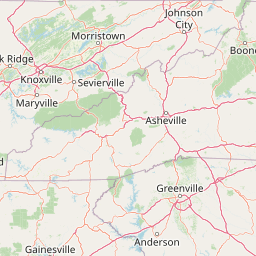
Ed Jenkins National Recreation Area is best known as the home of Springer Mountain, the traditional southern terminus of the Appalachian Trail. The site carries strong symbolic weight in long-distance hiking culture, since most northbound thru-hikers set out from this stretch of Georgia's mountains to begin their journey to Mount Katahdin. The recreation area is also valued for the classic southern Appalachian scenery it protects: layered ridges covered in mixed hardwood forest, deep stream valleys, and quiet, forested approaches that reflect the character of the Blue Ridge in northern Georgia. Its location inside the Chattahoochee-Oconee National Forest reinforces its role as a portal between the national forest landscape and one of America's most celebrated long-distance trails.
Ed Jenkins National Recreation Area history and protected-area timeline
Ed Jenkins National Recreation Area was originally designated as Springer Mountain National Recreation Area when it was established in 1991 within the Chattahoochee-Oconee National Forest. The unit was created by Public Law 102-207, adding a dedicated recreation area layer of federal protection on top of the existing national forest lands surrounding Springer Mountain.
Just a year after its creation, in 1992, the recreation area was renamed by Public Law 102-456, becoming Ed Jenkins National Recreation Area. The renaming commemorates Representative Ed Jenkins, a Georgia congressman whose work in the U.S. House of Representatives supported conservation and forestry initiatives in the region. Since that redesignation, the unit has retained its renamed status while continuing to be administered by the U.S. Forest Service as part of the broader Chattahoochee-Oconee National Forest system.
Over the following decades, the recreation area's role evolved in step with the growing popularity of the Appalachian Trail. Springer Mountain has served for many years as the southern terminus of the trail, and the recreation area has become closely associated with that trailhead experience, even though its formal history as a National Recreation Area is comparatively recent.
Ed Jenkins National Recreation Area landscape and geographic character
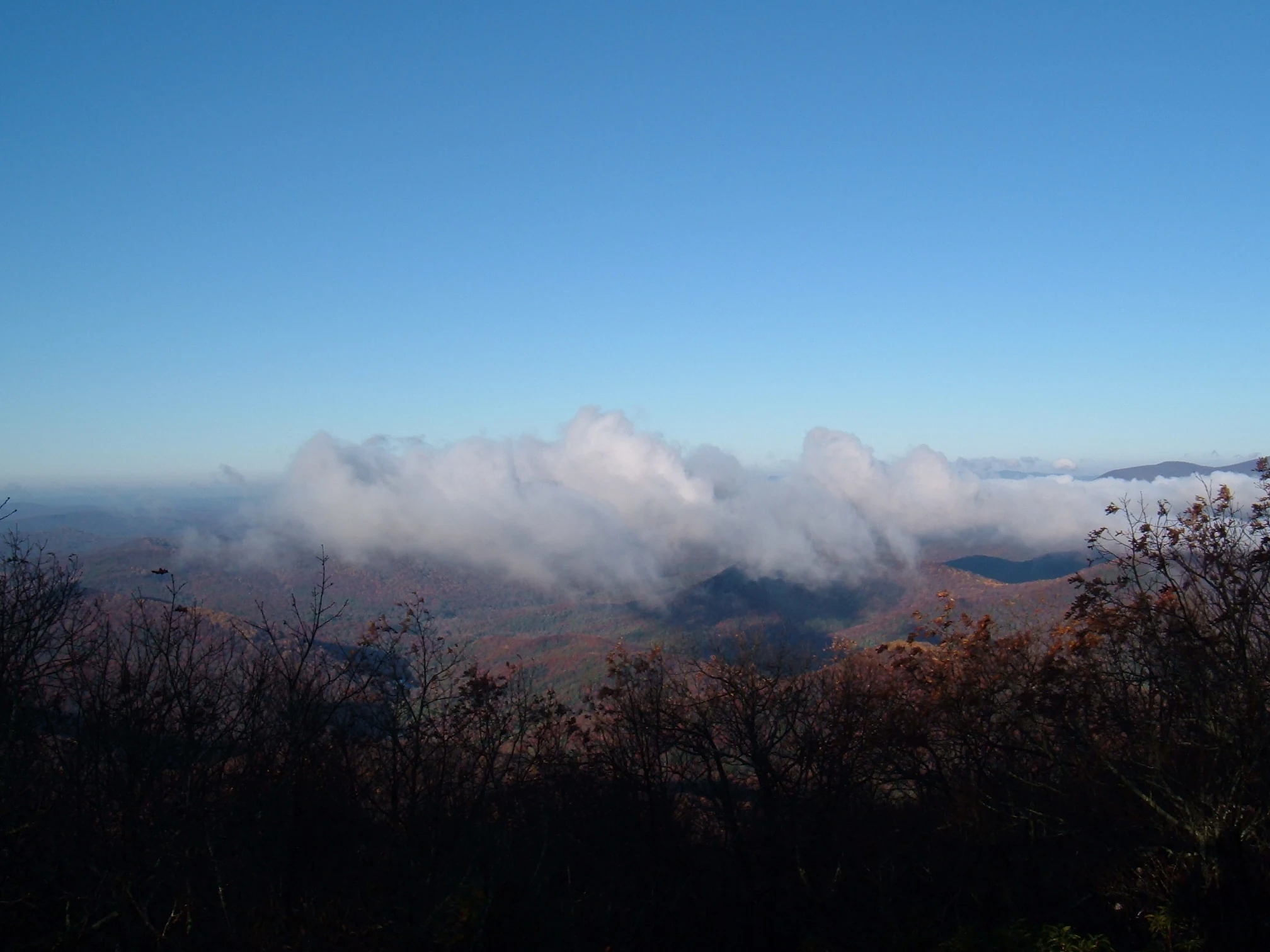
The landscape of Ed Jenkins National Recreation Area is shaped by the southern Blue Ridge Mountains, with rolling, forested ridges and valleys typical of northern Georgia's high country. Near the center of the recreation area, Springer Mountain rises above the surrounding terrain, offering long views over a sea of forested ridges that fade into the distance. The topography reflects the erosional patterns of the ancient Appalachians, producing a landscape of long, gentle ridgelines rather than dramatic alpine peaks.
Spring-fed streams and small creeks weave through the hills, and the forest cover extends continuously across the recreation area, broken only by the trail corridors, forest roads, and occasional gaps that connect valleys. This kind of unbroken forest canopy is one of the defining visual characteristics of the unit.
Because the recreation area sits at a relatively moderate elevation within the southern Appalachians, the landscape transitions between ridge-top hardwood forest and sheltered stream valleys with rhododendron and other moisture-loving undergrowth. The overall impression is of a deeply forested, ridgeline-dominated Appalachian landscape that feels more expansive than its acreage might suggest, in large part because of the way the surrounding national forest extends into the same continuous mountainscape.
Ed Jenkins National Recreation Area ecosystems, habitats, and plant life
Ecologically, Ed Jenkins National Recreation Area falls within the southern Appalachian forest biome, a region known for high plant diversity and a long evolutionary history. The mixed hardwood forests of the recreation area include oak, hickory, tulip poplar, and other broadleaf species that dominate mid-elevation Appalachian slopes, along with pockets of pine and a rich understory of shrubs, wildflowers, and ferns characteristic of the Blue Ridge.
The continuity of forest cover across the recreation area and into the surrounding Chattahoochee-Oconee National Forest supports wildlife adapted to mature Appalachian hardwood and mixed forest environments. Streams and seeps along the slopes add smaller, moister habitat types that contribute to overall biodiversity. Because the recreation area lies within a larger national forest matrix, its habitats connect more broadly to the wider ecological network of north Georgia's mountains.
The recreation area's elevation and position in the southern Appalachians also place it within a recognized zone of high biodiversity for temperate North America. The eastern United States, and the southern Appalachians in particular, harbor more tree and understory plant species than many comparable temperate regions, and Ed Jenkins National Recreation Area sits firmly within that ecological context.
Ed Jenkins National Recreation Area wildlife and species highlights
The forests of Ed Jenkins National Recreation Area support wildlife typical of the southern Appalachian Mountains. White-tailed deer are among the most commonly observed mammals, alongside black bear, which are present in the broader Chattahoochee-Oconee National Forest and occasionally move through the recreation area. Smaller mammals such as squirrels, foxes, raccoons, and various bat species also inhabit the forested slopes and stream valleys.
Birdlife in the recreation area reflects the mixed hardwood and pine forest of the southern Blue Ridge. Year-round residents include woodpeckers, wild turkeys, and a range of songbirds associated with mature Appalachian forest. During migration seasons, the ridgelines and forest edges along the Appalachian Trail corridor provide habitat for migratory songbirds and raptors.
Streams throughout the recreation area contribute additional aquatic habitat and support species typical of small Appalachian waterways. While the recreation area is not primarily managed as a wildlife-viewing destination, its forest cover and connectivity to the broader national forest make it a meaningful part of the regional habitat network of northern Georgia.
Ed Jenkins National Recreation Area conservation status and protection priorities
From a conservation perspective, Ed Jenkins National Recreation Area contributes to the larger protected landscape of the Chattahoochee-Oconee National Forest, which is the largest national forest in Georgia and an important stronghold of southern Appalachian forest. The recreation area designation, established by Public Law 102-207 and renamed by Public Law 102-456, adds a layer of federal recognition focused on recreation and landscape protection within an already protected national forest setting.
The unit matters for conservation because it preserves a continuous block of mature Appalachian forest in a region where habitat fragmentation is a long-standing concern. By protecting ridgelines, slopes, and stream valleys under U.S. Forest Service management, the recreation area helps maintain forest interior habitat, watershed function, and connectivity to surrounding national forest lands.
The recreation area also plays an indirect conservation role through its connection to the Appalachian Trail. Concentrating hiker use near Springer Mountain and on established trail corridors helps channel recreational pressure into specific areas, reducing broader off-trail impact across the more sensitive forested landscape of the surrounding mountains.
Ed Jenkins National Recreation Area cultural meaning and human context
The cultural context of Ed Jenkins National Recreation Area is shaped primarily by its connection to long-distance hiking in the United States. Springer Mountain is widely recognized as the southern terminus of the Appalachian Trail, and the recreation area has become a touchstone of thru-hiking culture. Each year, northbound thru-hikers gather at Springer Mountain to mark the symbolic beginning of their multi-month journey toward Mount Katahdin in Maine.
Alongside this modern hiking tradition, the unit's renaming honors Representative Ed Jenkins, a Georgia congressman whose work supported conservation and forestry in the region. This naming reflects the way regional political leadership and conservation history have intersected in the protection of north Georgia's mountain landscapes.
The surrounding mountains also carry longer regional histories of Appalachian settlement, forestry, and land use that continue to inform how the landscape is understood locally. While the recreation area is best known nationally for its trailhead significance, it also reflects the broader cultural and political history of forest protection in the southern Appalachians.
Top sights and standout views in Ed Jenkins National Recreation Area
Ed Jenkins National Recreation Area stands out for the combination of protected southern Appalachian scenery, its location within Chattahoochee-Oconee National Forest, and its role as the home of Springer Mountain at the southern terminus of the Appalachian Trail. Its ridges, hardwood forests, and stream valleys represent the classic character of north Georgia's Blue Ridge Mountains.
The recreation area's relatively compact size is offset by its symbolic importance: the Springer Mountain trailhead is one of the most photographed and visited spots on the entire Appalachian Trail. Whether approached as a day hike, a backpacking gateway, or simply as a quiet forested corner of a much larger national forest, the recreation area offers a focused encounter with the southern Appalachian landscape and its long-distance hiking heritage.
Best time to visit Ed Jenkins National Recreation Area
Spring and fall are generally the most rewarding seasons to experience Ed Jenkins National Recreation Area, when the hardwood forests of the southern Appalachians display either fresh leaf-out and flowering understory or autumn color across the ridgelines. These seasons also align with the busiest periods on the Appalachian Trail, since many northbound thru-hikers begin their journey at Springer Mountain in early spring.
Summer brings dense, fully leafed forest cover and warm conditions favorable for stream-side hiking, though humidity in the southern Appalachians can be high. Winter offers quieter conditions, cooler temperatures, and more open views through the deciduous canopy, although weather in the mountains can change quickly and some higher-elevation sections may see ice or snow. The recreation area's appeal in any season rests on the classic southern Appalachian forest setting rather than dramatic seasonal transformations.