
Visit Timing
When to Visit Egmont National Park: Best Times and Seasonal Trade-offs
Deciding on the best time to visit Te Papa-Kura-o-Taranaki, known as Egmont National Park, requires balancing the desire for favorable hiking conditions against the reality of a rugged, oceanic mountain climate. For most travellers, the period from December through March offers the most reliable window for outdoor activities. During these months, visitors benefit from the longest daylight hours and moderate temperatures, which are essential for navigating the exposed alpine terrain surrounding Mount Taranaki and exploring the Pouakai Circuit. While these warmer months see a decrease in storm frequency compared to the depths of winter, the mountain's position on the North Island means that weather remains highly volatile, and conditions can shift from sun to rain with little warning at any time of the year.
The Impact of Elevation on Your Visit
Understanding the vertical nature of the park is fundamental to your timing decision. The contrast between the lush, low-altitude temperate rainforest and the harsh alpine environment above the tree line is stark. Even in the height of summer, temperatures at higher elevations drop significantly, and high winds are common across the exposed ridges of the Pouakai and Kaitake ranges. Visitors planning to access high-altitude trails must account for this drop in temperature, which persists regardless of the seasonal calendar. If your primary goal is mountain exploration or multi-day trekking, targeting the settled summer period minimizes, though does not eliminate, the risks associated with cold-weather exposure.
Seasonal Trade-offs and Access Considerations
Beyond the primary summer window, the park undergoes significant changes that affect the visitor experience. Winter, typically stretching from June through October, brings distinct conditions that cater to those specifically seeking alpine recreation. The Manganui Ski Area operates during these cooler months, drawing visitors interested in snow sports. However, this period is characterized by shorter days, increased precipitation, and frequent cloud cover that often obscures the iconic volcanic cone. For those who prioritize photography or scenic hiking, the winter months present a challenge, as the mountain is frequently hidden by mist, and alpine trails become more demanding due to ice and snow.
Ultimately, the choice of when to travel depends on your tolerance for variable weather and your specific objectives. If you prioritize long days for extensive hiking and the best probability of clear, panoramic views, the summer season is the most supportive. If you are comfortable with more challenging, winter-influenced conditions or have a specific interest in the mountain's cold-weather recreational facilities, the shoulder and winter months provide a unique, albeit more demanding, perspective of this volcanic landscape. Regardless of the chosen dates, successful planning hinges on acknowledging the influence of the mountain on local weather patterns and being prepared for rapid environmental changes that are independent of the calendar.
Seasonal Planning
Best Months to Visit Egmont National Park for Different Experiences
Peak Hiking and Outdoor Exploration: December to March
For travellers whose primary objective is multi-day trekking on the Around the Mountain Circuit or photography within the Pouakai Range, the period from December through March offers the most reliable window. These months coincide with the year's longest daylight hours, peaking at approximately 14.7 hours in December, which provides an essential margin of safety for demanding alpine traverses. Mean temperatures during this stretch hover between 15°C and 17°C at lower elevations, offering the most comfortable conditions for navigating the park's diverse ecosystem. While rainfall remains a persistent variable throughout the year in this maritime climate, this window generally avoids the more intense precipitation patterns of late autumn and early winter. Visitors should prioritize these months if their itinerary relies on visibility for the famous reflective tarns, as clearer skies are statistically more likely during the height of the southern summer.
The Alpine Transition: April to May and October to November
Transition periods in the spring and autumn present distinct trade-offs for visitors. During April and May, as daylight diminishes rapidly toward the winter solstice, the mountain environment undergoes a significant cooling phase. Temperatures drop into the single digits at night even at lower stations, and the increased moisture often leads to more frequent cloud cover around the volcanic cone. Conversely, October and November mark the arrival of spring, bringing longer days and a slow warming trend. These months can be advantageous for avoiding the higher visitor volumes of mid-summer, but hikers must remain prepared for sudden shifts in weather, as the transition periods are characterized by heightened wind speeds and unpredictable atmospheric instability. Those who choose these months benefit from a quieter trail experience, provided they possess the skills to navigate rapidly changing conditions.
Winter Recreation and Alpine Conditions: June to September
Targeting the months of June through September is specifically recommended for those focused on the Manganui Ski Area. This window relies on consistent, though variable, snowpack at higher elevations. While mean temperatures reach their annual lows of approximately 9°C in July, the appeal here is exclusively recreational. Outside of ski-specific objectives, this is the most challenging time for general park exploration. Increased precipitation, frequent high winds, and significant reduction in daylight hours create a harsh environment that demands high levels of physical fitness and technical preparation. Travellers visiting during this time should expect limited access to higher trails and prioritize activities that are explicitly supported by the existing ski infrastructure and safety protocols.
Annual Climate Overview
Understanding Weather and Climate Patterns in Egmont National Park by Month
The Annual Thermal Progression
Te Papa-Kura-o-Taranaki experiences a climate heavily influenced by the presence of its central volcanic peak, which acts as a massive barrier to prevailing winds. Long-term climate normals suggest a clear annual thermal arc, with temperatures peaking in January and February. During these mid-summer months, mean temperatures hover between 16 and 17 degrees Celsius. As the year progresses into late autumn and winter, the thermal baseline drops consistently, reaching a low point in July. In this coldest month, mean temperatures typically retreat to just below 9 degrees Celsius, with average daily minimums often dipping toward 2 degrees Celsius. These long-term averages provide a vital baseline for expectations, though they are not local forecasts and should not be treated as a guarantee of specific conditions for your travel dates.
Patterns of Precipitation and Humidity
Rainfall is a persistent characteristic of the park environment, showing a distinct variation throughout the year rather than a traditional dry season. While summer months such as January and February see daily precipitation averages around 2.4 to 2.5 millimeters, the intensity shifts as the year progresses. Winter months, particularly June and July, often record higher daily precipitation averages, frequently exceeding 3.8 millimeters per day. This moisture is tied to high relative humidity levels, which remain consistently elevated year-round. Throughout the annual cycle, humidity rarely drops significantly, with even the driest months maintaining averages above 80 percent. This high moisture content is a key factor in the park's lush, temperate rainforest ecosystem and implies that wet-weather preparation is essential regardless of the season you choose to visit.
Daylight Hours and Solar Influence
One of the most predictable variables in the park's annual cycle is the shift in daylight hours, which directly impacts the feasibility of longer treks like the Around the Mountain Circuit. You will find a stark contrast between the summer peak and the winter trough. In December and January, daylight extends to over 14 hours, offering maximum time for navigation and activity in alpine terrain. By contrast, June represents the year's shortest duration, with approximately 9.3 hours of daylight. This shift has practical implications for trip planning, as winter travel requires tight adherence to shorter timelines and increases the risk of being caught on trails after dark. The transition during the shoulder months,particularly the rapid loss of light in April and the gradual gain starting in August,is a primary factor for hikers deciding when to commit to high-altitude routes.
Wind and Atmospheric Volatility
Wind serves as a defining climate factor in this high-relief landscape. Climate data indicates that wind speeds remain relatively consistent throughout the year but show a subtle intensification during the transitional months of September and October, where average speeds can exceed 6 meters per second. Because the park features exposed ridges and high-altitude alpine zones, wind chill can drastically alter how the recorded temperatures feel on the ground. Visitors should interpret these climate normals as indicative of a dynamic, often unpredictable environment where sudden changes in wind and precipitation are common, even during periods that appear statistically milder. Because these readings are based on long-term averages at a specific base elevation, they do not account for the amplified wind speeds and harsher temperature drops characteristic of the mountain's higher slopes.
Seasonal dynamics
Understanding Seasonal Weather Patterns and Climate Transitions in Egmont National Park
The Summer Hiking Window: December to March
The peak summer period at Mount Taranaki is defined by the longest daylight hours and the warmest thermal baseline, creating a relatively stable, though never predictable, environment for mountain activities. Spanning from December through March, this phase offers the highest mean temperatures and the most favorable conditions for the summit climb and the Around the Mountain Circuit. Travelers should note that while this period represents the yearly maximum for heat, moisture remains a consistent factor. Unlike arid mountain ranges elsewhere, the park experiences consistent rainfall even in these drier months. The defining characteristic here is not a complete absence of precipitation but rather the maximized daylight, which provides a critical buffer for hikers to navigate technical terrain safely before the temperature drops and winds shift in the late afternoon.
The Volatile Shoulder Transitions: April to May and October to November
Transitions in the park are marked by a rapid contraction or expansion of daylight and an increase in wind velocity, which often serves as the precursor to more sustained cooling. The autumn shoulder, occurring in April and May, sees mean temperatures descend from the mid-teens into the low double digits as daylight hours fall sharply. Hikers often find these months challenging because the shift in atmospheric stability can lead to unexpected cloud cover and rapid mist formation on the upper slopes. Conversely, the spring transition in October and November brings increasing daylight and warming, yet the mountain remains susceptible to late-season alpine volatility. Wind speeds typically climb during these months, and hikers who prioritize the drier conditions of summer often avoid these windows due to the higher probability of localized weather fronts that can persist across the Pouakai Range.
The Alpine Winter Phase: June to September
Winter in the park is a distinct climatic regime that fundamentally alters access and risk. Starting in June and extending through September, the mountain experiences its lowest average temperatures and peak relative humidity. This period is defined not just by cold, but by the increased frequency of snow cover at higher elevations and the transition of the Manganui Ski Area from a dormant site to an active winter recreation zone. During these months, the mountain environment becomes significantly more austere. Visitors should expect high wind chill factors and restricted visibility, which are common even when lowland temperatures appear manageable. This phase is characterized by a compression of the daily thermal cycle, where even on sunny days, the window for safe alpine travel is narrow due to the rapid transition into sub-zero temperatures at altitude after sunset. Unlike the summer months, this period necessitates a total shift in equipment requirements and a heightened reliance on localized, current-day forecasts over long-term climate averages.
Seasonal Experiences
Experiencing the Landscapes and Activities of Egmont National Park Year-Round
Navigating Seasonal Trekking and Circuit Access
The experience of exploring Egmont National Park is fundamentally dictated by the interplay between the park's steep vertical relief and the moisture-heavy climate of the Taranaki region. For those planning to undertake the Pouakai Circuit or the longer Around the Mountain Circuit, the period between December and March offers the most consistent window where daylight hours, peaking at over 14 hours, provide the necessary buffer for longer traverses. While these months see warmer mean temperatures, they also coincide with a period where the high-elevation zones are most accessible, as snow and ice cover recede from the lower-to-mid elevation tracks. Visitors should note that even within this summer window, the park's maritime climate can bring sudden shifts in visibility and track conditions, meaning a dry morning does not guarantee a clear afternoon, particularly in the subalpine tussock fields.
Exploring the Ahukawakawa Swamp and Mountain Tarns
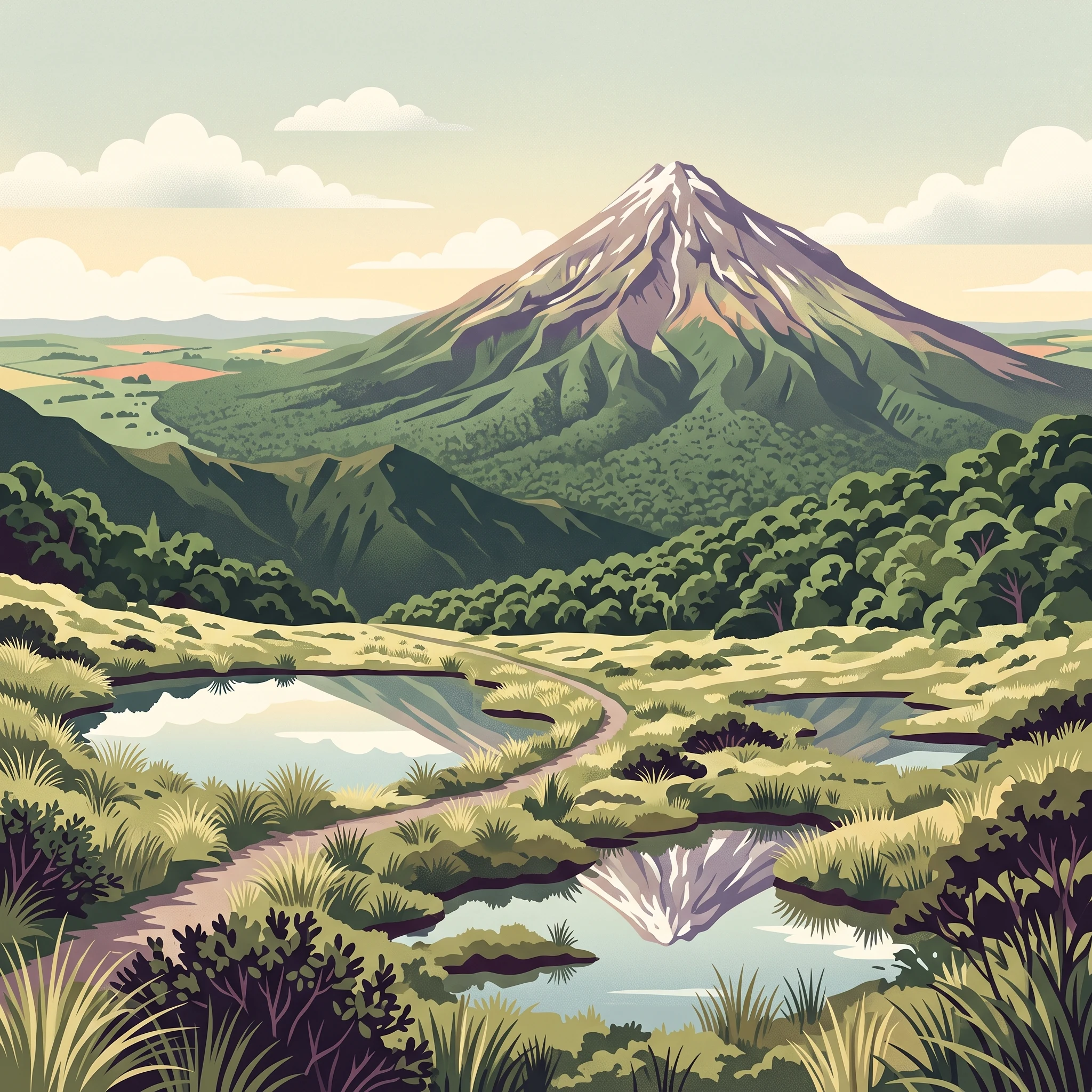
The high-elevation Ahukawakawa Swamp, a unique sphagnum moss wetland, serves as a primary draw for photographers and nature observers. The timing of visits to this area is best aligned with the late summer months of February and March. During this window, the surrounding alpine vegetation is at its most stable, and the tracks leading through the Pouakai Range are generally less prone to the saturation levels common in the wetter winter months. Early-season visitors in October and November may encounter boggy, saturated ground as the alpine snowmelt concludes, which can make the boardwalk sections and surrounding trails challenging to navigate. The reflective tarns near the Pouakai Range, famous for their mountain vistas, are sensitive to wind and precipitation levels, both of which are statistically higher in the shoulder months, making the summer period the most reliable time to witness the still conditions required for the classic reflection viewpoint.
Winter Recreation and Alpine Conditions
The Manganui Ski Area operates within a specific climatic niche on the eastern flank of the mountain. Visitation here is tightly coupled with the presence of snow, typically supported from June through early October. Unlike lowland forest walking, which can be sustained in most weather conditions, the winter experience in the park is localized to these upper slopes. Visitors arriving for snow sports should prioritize the mid-winter months of July and August, when average minimum temperatures are at their lowest, providing the best chance for consolidated snow conditions at the ski area's elevation. Throughout this period, the broader park landscape remains rugged and often shrouded in clouds, emphasizing the necessity of separating the specialized winter activity window from the general hiking season. Outside of this ski window, the upper slopes are often subject to unstable scree and alpine hazards, which remain present regardless of the time of year, reinforcing the importance of verifying current trail reports from the Department of Conservation before attempting any high-altitude movement.
Travel Priorities
Optimizing Your Visit to Egmont National Park by Personal Interest
Identifying the Right Time for High-Altitude Hiking
For trekkers prioritising the Pouakai Circuit or the ascent of Mount Taranaki, the window between January and March offers the most reliable conditions. During these months, daylight hours peak at over 14 hours, providing the necessary buffer for navigating technical terrain safely. While these months see average maximum temperatures reaching roughly 23 degrees Celsius, the compromise is that these warmer periods do not guarantee stable weather. Hikers must remain prepared for the mountain to generate its own microclimate regardless of the calendar month. Those seeking to avoid the peak heat of the day for strenuous exertion should target early mornings, as afternoon cloud buildup is a common pattern regardless of the season.
Balancing Dry Conditions with Longer Daylight
Visitors who prioritize drier, more stable walking conditions often look for months with lower average rainfall. February and March stand out in the climate record as periods when precipitation levels are relatively lower compared to the wetter winter months. By aligning your trip with these late summer months, you gain the benefit of longer daylight and slightly reduced rainfall probability. The trade-off is a higher likelihood of encountering other visitors on the most popular sections of the Pouakai Circuit, as this window is widely known among enthusiasts. Travelers should interpret these lower rainfall averages as a relative improvement rather than a guarantee, as the mountain environment remains prone to rapid weather shifts.
Prioritizing Milder Temperatures for Low-Level Exploration
If your primary goal is to explore the forest tracks and coastal margins of the park without the intensity of mountain temperatures, the shoulder months of November and April offer a distinct advantage. During these periods, mean temperatures hover between 11 and 13 degrees Celsius, which is often more comfortable for extended walking than the full heat of mid-summer. These months avoid the highest thermal peaks while still offering decent daylight duration. The main compromise here is the increased volatility in weather patterns. You are more likely to encounter transitional, mixed conditions during these months, requiring a more versatile approach to gear and daily planning compared to the more consistent, albeit warm, heart of summer.
Winter Recreation Priorities
For those specifically visiting to engage with the Manganui Ski Area, the window is narrowed significantly to the June through October period. This priority requires a complete shift in expectations from the rest of the year. While these months offer the only viable conditions for snow sports, they also coincide with the park's lowest daylight hours, bottoming out in June with just over nine hours. The thermal mean drops significantly, often falling below 10 degrees Celsius, and wind speeds remain a constant factor at higher elevations. The primary compromise for this priority is the sacrifice of general hiking accessibility, as many higher tracks become unsuitable for casual walkers, leaving the mountain environment strictly to those with the appropriate alpine equipment and experience.
Access and Operations
Seasonal Access and Operational Considerations for Egmont National Park
Access to Te Papa Kura o Taranaki is influenced by its unique volcanic geography and the high-altitude conditions of the North Island. Because the park is a protected reserve, infrastructure like roads and visitor centers exists to facilitate access to the lower forest zones, while the higher alpine environments remain subject to rapid weather shifts and terrain-specific risks. Visitors planning their trip must account for the fact that access to trails and facilities can change based on current conditions, maintenance schedules, or weather alerts, requiring verification through official Department of Conservation channels before departure. ### Road Access and Infrastructure Reliability Road access to the primary visitor entrances is generally maintained year-round, though the steep, winding nature of the roads leading to the mountain base necessitates cautious driving in all seasons. While road clearing is standard, winter weather,including frost, ice, and occasional snow,can temporarily impact accessibility to the higher-elevation parking areas. There is no public transport network that provides consistent, direct access into the heart of the park. Most visitors arrive by private vehicle, making personal transport arrangements the primary planning factor for your itinerary. Because road conditions can deteriorate quickly during storms or heavy precipitation events, checking local road reports and park alerts is a mandatory step before any drive to the mountain. ### Visitor Centre Availability and Operations The park is supported by two main service points, the Taranaki/Egmont National Park Visitor Centre on Egmont Road and the Dawson Falls Visitor Centre. These facilities serve as hubs for safety information, track status updates, and regional guidance. Their operational hours are not guaranteed to remain static and often reflect seasonal demand or administrative capacity. You should check the current opening hours and contact details for these centers directly on the official park website before finalizing your arrival times. Relying on outdated travel guides or third-party mapping descriptions for facility hours can lead to arrival at closed doors, particularly outside of peak summer visitation windows. ### Route Status and Track Maintenance The vast, circular nature of the park means that trail accessibility is highly variable. Popular routes like the Pouakai Circuit or the climb toward the summit may be subject to closures for maintenance, track restoration, or environmental protection measures. Because the park undergoes ongoing management to protect its fragile ecosystems, such as the alpine bogs, you should always consult the Department of Conservation trail report portal for real-time status updates on your chosen routes. Never assume that a trail is open based on historical travel data or long-term climate averages; specific, localized weather patterns can render even well-marked trails temporarily unsafe or inaccessible.
Safety and Preparation
Seasonal Safety and Essential Preparation for Egmont National Park
Preparing for Rapidly Changing Mountain Weather
Te Papa-Kura-o-Taranaki presents a dynamic environment where the transition between lowland forests and exposed alpine zones creates sudden shifts in conditions. Because the mountain is a prominent, isolated volcanic cone, it serves as a magnet for moisture-bearing winds. Even during the warmer summer months from December through March, you must anticipate significant variability. High humidity levels, which hover around 82 percent to 85 percent across the year, contribute to frequent cloud cover and rapid changes in visibility. Regardless of the season, the most effective preparation involves monitoring official weather forecasts and park alerts immediately before your departure, as long-term climatic normals cannot predict the specific wind speeds or cloud ceilings you will encounter on the day of your trek.
Navigating Seasonal Temperature and Daylight Constraints
The park's climate necessitates different preparations based on the time of year. During the winter months of June through September, temperatures at lower elevations often drop into the low single digits, and the likelihood of encountering snow, ice, or sub-zero wind chills increases significantly at higher altitudes. Visitors preparing for winter recreation in the Manganui Ski Area should prioritize gear suitable for cold, wet, and windy conditions. In contrast, summer hikers benefit from longer daylight, which extends to nearly 15 hours in December. While these longer days provide more flexibility for navigating the Pouakai Circuit, the afternoon temperatures can still shift quickly. Dressing in layers remains the standard approach, allowing you to manage heat during strenuous climbs and wind exposure along exposed ridgelines. Always verify the status of specific tracks with the Department of Conservation, as seasonal closures or damage can affect trail accessibility.
Essential Considerations for Alpine Exposure
Safety in the park is fundamentally tied to acknowledging your own experience level against the terrain. The mountain's elevation gain and exposure to wind mean that weather conditions at the summit are often vastly different from the conditions at the park entrance. When planning your visit, assume that the weather will be volatile. Packing should focus on being prepared for rain, wind, and temperature fluctuations rather than a single set of conditions. Since the park lacks the protective canopy of heavy forest once you reach the subalpine tussock fields, sun protection is equally important in summer as warmth is in winter. Before entering the wilderness, always register your intentions and check the latest official safety guidance for the specific track you intend to use. Never rely on historical averages to determine if a route is safe, as the mountain environment is subject to real-time changes that require direct observation and local authority advice.
Final Planning
How to Choose the Right Time to Visit Egmont National Park
Evaluating Your Priorities for a Taranaki Visit
Choosing the right time to visit Te Papa-Kura-o-Taranaki requires balancing the physical realities of a volatile alpine climate against your specific recreational goals. If your primary objective is long-distance hiking, such as the Pouakai Circuit or the Around the Mountain Circuit, the summer window between December and March remains the most supported choice. During these months, the extended daylight hours and higher mean temperatures provide the most reliable conditions for navigating the park's diverse terrain, though you must still remain prepared for sudden shifts in weather regardless of the season.
For those drawn to winter recreation, the window from June to October transforms the mountain into a destination for snow sports at the Manganui Ski Area. This period offers the necessary thermal conditions for snow cover, yet it brings significantly higher wind speeds and lower daylight availability compared to the summer months. Selecting this time involves a clear trade-off: you prioritize access to specific winter slopes and alpine scenery over the warmth and accessibility characteristic of the warmer months.
Navigating Climate Variability in Your Planning
It is essential to distinguish between historical climate normals and the reality of any specific week or day. While the provided temperature and precipitation data illustrate general annual patterns, the mountain environment is susceptible to rapid meteorological changes. No single month guarantees specific weather, and the park’s elevation gradients mean that conditions at the visitor centers often bear little resemblance to those found at higher altitudes. Your decision should be guided by a flexible itinerary that accounts for the possibility of inclement weather regardless of the time you choose.
Before finalizing your travel dates, always verify current access information, trail status updates, and official weather warnings provided by the Department of Conservation. This step is the most critical component of your planning, as infrastructure status and safety alerts change independently of seasonal trends. By matching your preferred intensity of activity with the established seasonal windows, and maintaining awareness of the need for real-time verification, you can effectively align your visit with the environmental characteristics of this unique volcanic park.