
Mori Atlas logo
Park guides

Explore targeted insights and seasonal planning for the iconic Mount Taranaki region.

Comprehensive Guide Collection for Egmont National Park in New Zealand

This index provides a curated set of instructional guides designed for exploring the diverse volcanic terrain of Egmont National Park. Discover detailed information regarding peak visitation periods for the Pouakai Circuit and seasonal considerations for the Manganui Ski Area throughout the year.

Related tags

volcanic landscapetemperate rainforestdormant volcanoNew Zealand national parkalpine environment

A volcanic wilderness of sacred peaks and temperate rainforests on New Zealand's North Island

Egmont National Park

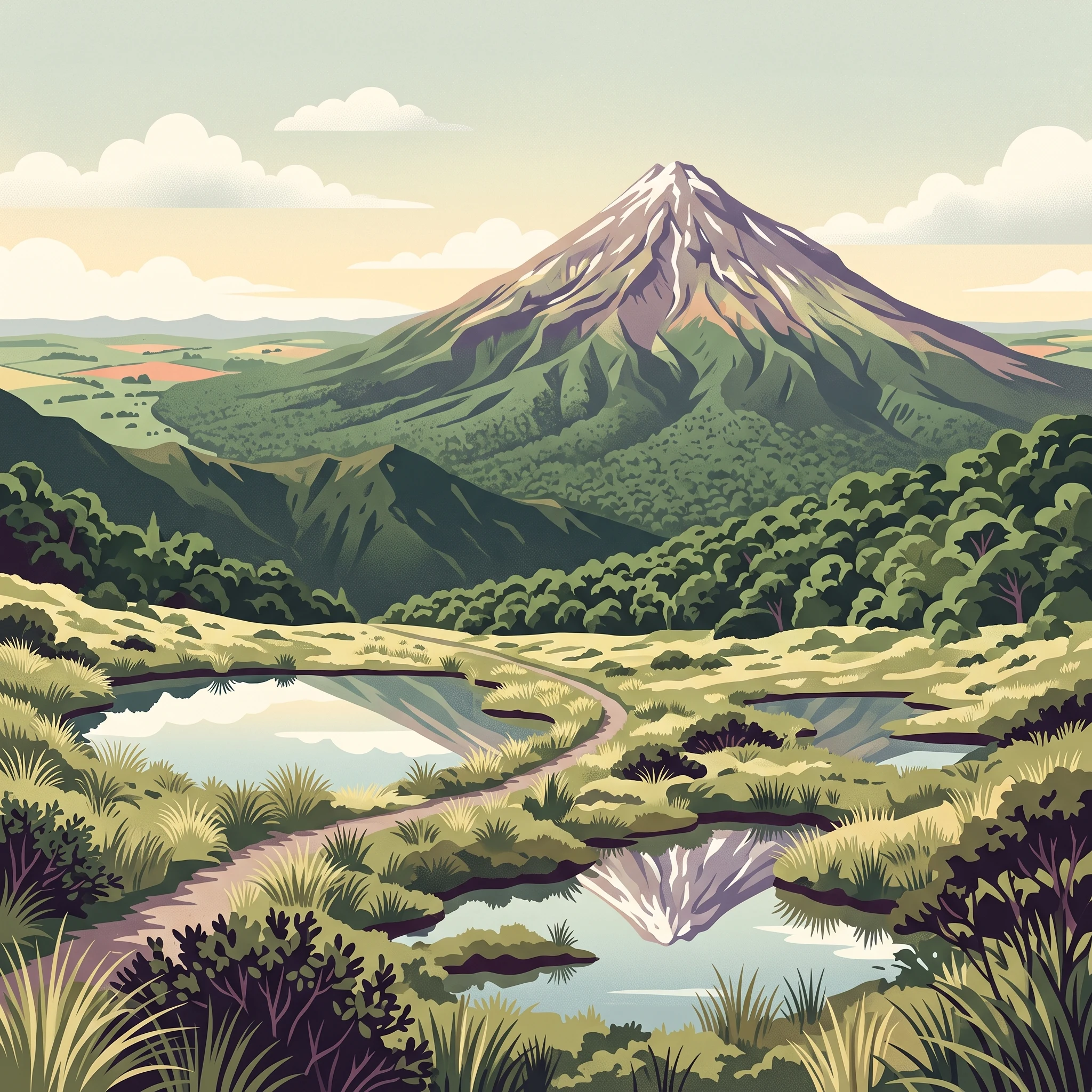
Egmont National Park represents a remarkable convergence of geological, ecological, and cultural significance in New Zealand's protected landscape network. The park's central feature, Mount Taranaki, is a dormant stratovolcano that has been active for approximately 200,000 years, with the last major eruption occurring around 1655. The mountain's presence dominates the landscape, creating dramatic climatic gradients through orographic precipitation as moist westerly winds from the Tasman Sea are forced upward against the peaks. This meteorological influence supports extensive temperate rainforest at lower elevations, a ecosystem that is nationally unusual for its complete absence of beech trees. The park was first protected in 1881 as a forest reserve created within a six-mile radius of the summit, driven by concerns over widespread deforestation and burning. The establishment of Egmont National Park in 1900 marked a pivotal moment in New Zealand conservation history, creating the nation's second national park and establishing precedents for protected area management. In 2025, the park underwent significant transformation through the Taranaki Maunga Collective Redress Act, which renamed the park to Te Papa-Kura-o-Taranaki, granted legal personhood to both the park and the mountain, and established co-management arrangements between the Crown and regional iwi.

Location
New Zealand
Park type
National park
Established
1900
Area
341.7 km²
Highest point
2,518 m
Egmont National Park Protected Landscape
1 guide

Compare published park guides to match your specific seasonal research questions

Egmont National Park Published Guide Collection and Visit Timing Resources

Published guides for Egmont National Park deliver focused coverage centered on essential visit planning and seasonal timing considerations. Topic-led articles help readers examine peak summer hiking windows along mountain trails alongside winter recreation periods across alpine terrain.
MoriAtlas Explorer

Continue Exploring Egmont National Park's Volcanic Geography and Landscapes

Delve deeper into the geographic identity of Egmont National Park by examining its precise mapped boundaries and the unique volcanic terrain that defines this New Zealand landmark. Understanding its position within the broader regional geography offers a richer perspective on protected landscapes and their natural features. Continue your exploration of this iconic park to uncover its distinct ecosystem context and importance.