
Why European Bird Protection Area Nuthe-Nieplitz Lowlands stands out
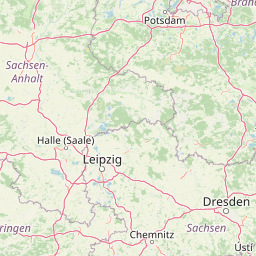
The Nuthe-Nieplitz Lowlands SPA is best known for being a vital refuge for waterbirds and meadow-nesting species within a richly structured floodplain landscape. Its lakes, reed beds, wet meadows, and river valleys attract large numbers of breeding birds such as white storks, black storks, marsh harriers, and aquatic warblers, while also serving as a critical staging and wintering ground for migratory waterfowl and cranes. The area's two sleeping sites host up to around 2,600 migrating cranes each autumn, a phenomenon that defines much of the area's regional identity as a birdwatching destination. Sincwgs (singschwäne) winters there in numbers that have grown to over 200 individuals, reinforcing the site's importance to long-term waterbird conservation in central Germany.
European Bird Protection Area Nuthe-Nieplitz Lowlands history and protected-area timeline
The conservation story of the Nuthe-Nieplitz Lowlands begins well before the formal creation of the European bird protection area. The two nature reserves that today form the core of the SPA were established by the Ministry for the Environment, Nature Conservation, and Spatial Planning of the state of Brandenburg during the 1990s.
The Nuthe-Nieplitz Lowlands Nature Reserve was formally established on 9 June 1995 through a dedicated regulation of the Brandenburg state government. Three years later, on 27 April 1998, the Rangsdorf Lake Nature Reserve was designated under its own regulation, protecting the western shoreline of the Rangsdorfer See. Together, these two reserves created a strong foundation of habitat protection within the broader river and lake landscape south of Berlin.
In 2007, the European bird protection area itself was formally registered under the EU Birds Directive with the designation DE 3744-421 and the national site number 7023. This step elevated the prior nature reserve protections to an EU-level instrument, linking the region into the transnational Natura 2000 network and explicitly recognizing the site's value for breeding, migrating, and wintering bird populations. The federal agency responsible for nature conservation, the Bundesamt für Naturschutz, took on administrative oversight as part of this process.
The creeping rise of wintering whooper swan (Singschwan) numbers since 1998, reaching more than 200 individuals, has become a de facto marker of the area's growing importance for waterbirds across the years. Similarly, the consistent autumn staging of common cranes, which gather in numbers approaching 2,600, has cemented the site's place in regional birdwatching tradition and given its protection history a tangible, observable outcome.
European Bird Protection Area Nuthe-Nieplitz Lowlands landscape and geographic character
The Nuthe-Nieplitz Lowlands occupy a broad glacial lowland between morainic hills, river valleys, and shallow lake basins typical of southern Brandenburg. The terrain is largely flat to gently undulating, shaped by the legacy of Pleistocene glaciation. Meltwater drainage and ice retreat left behind numerous small depressions that today form kettle mires, sedge meadows, ponds, and lakes, including the Blankensee, which is visible from the surrounding hill vantage points such as the Löwendorfer Berg.
The hydrological skeleton of the area is supplied by the Nuthe and its tributary the Nieplitz, whose floodplains carve out wide ribbons of alluvial grassland, reed beds, and wet forest. Where the rivers widen or join former glacial channels, the landscape transitions into open water. The Rangsdorfer See forms the largest contiguous body of water within the SPA, its western margins being protected by the Rangsdorf Lake Nature Reserve. Along the lake's edges, fringed by reeds and bordered by occasional wooded shores, the topography softens into mosaics of marshland and meadow.
Forest stands穿插 (intermixed) within this wetland matrix are dominated by mixed deciduous and coniferous types characteristic of the Brandenburg lowlands. They form denser blocks on drier rises while thinning into gallery-like strips along the watercourses. Open meadows, pastures, and arable fields stretch between these wooded patches, giving the landscape a patchwork quality that is highly valued from a habitat perspective.
From elevated points such as the Löwendorfer Berg, the broader landscape opens into a panoramic view of this interwoven system: lakes to one side, river floodplains to another, and forests framing the horizon. The visual character is understated and typically north German lowland in feel: open skies, broad horizons, subtle color transitions between water, meadow, and woodland, and a sense of quiet openness that defines the entire protected area.
European Bird Protection Area Nuthe-Nieplitz Lowlands ecosystems, habitats, and plant life
Ecologically, the Nuthe-Nieplitz Lowlands represent a textbook example of a lowland river-lake mosaic shaped by the interplay of glacial geomorphology and historic land use. The vegetation gradient moves from aquatic plant communities in the lakes and slow-flowing rivers, through reed belts and tall-sedge marshes, into wet meadows and then progressively drier grassland and woodland communities.
Reed beds (Phragmites stands) line the edges of many water bodies and constitute important nesting habitat for species such as the Eurasian bittern, great reed warblers, and Savi's warbler. Behind the reeds lie wet meadows dominated by tall sedges and flood-tolerant grasses, where species like the bluethroat find breeding territory. Slightly higher ground supports mesic grassland habitats that host ortolan buntings and whinchats.
Woodland communities within the site include mature mixed stands, often dominated by oak, pine, birch, and alder, particularly along the riverbanks. These woodlands are important for species such as the middle spotted woodpecker, black woodpecker, and red-breasted flycatcher during the breeding season. The combination of structurally diverse forest and open habitats at close range is a key feature that elevates the site beyond a simple wetland reserve.
The hydrological dynamics of the floodplain also play a central ecological role. Seasonal flooding of the Nuthe and Nieplitz, combined with the management of water levels in the lakes and meadows, supports nutrient cycling that maintains open, dynamic habitats. This regime also benefits amphibians, aquatic invertebrates, and fish communities, which in turn sustain predator populations and complete the broader food web of the area.
European Bird Protection Area Nuthe-Nieplitz Lowlands wildlife and species highlights
While the Nuthe-Nieplitz Lowlands are explicitly designated for birds, the site also supports a broad array of other wildlife. Among mammals, the mosaic of fields, meadows, and woodland fragments provides habitat for red deer, roe deer, wild boar, and foxes. Otters may use the river and lake systems, especially where banks remain structurally diverse, while small carnivores such as pine martens and stone martens find refuge in the more extensive woodland patches.
Amphibians benefit from the abundance of seasonal pools and slow-moving water, while reptiles such as grass snakes and slowworms occupy wet meadow edges and sunny forest glades. Invertebrate communities, including dragonflies and damselflies, are particularly rich around the reed-fringed lake margins and slow-flowing sections of the rivers, adding to the area's ecological complexity.
Nevertheless, birds are the dominant focus of the protected area. The Nuthe-Nieplitz Lowlands host breeding populations of many Annex I species under the EU Birds Directive, including white stork, black stork, common crane, Eurasian bittern, marsh harrier, hen harrier, Montagu's harrier, black kite, red kite, osprey, white-tailed eagle, honey buzzard, hobby, merlin, peregrine falcon, kingfisher, middle spotted woodpecker, black woodpecker, red-backed shrike, bar-tailed godwit, great snipe, and aquatic warbler.
Migratory use is equally significant. Large flocks of ducks and geese use the lakes and wet meadows as resting and feeding grounds, including species such as wigeon, teal, pintail, garganey, common pochard, tufted duck, white-fronted goose, bean goose, and barnacle goose. Waders, including ruff, golden plover, lapwing, common snipe, and several sandpiper species, also occur during migration. Two sleeping sites within the protected area regularly host up to about 2,600 migrating common cranes each autumn, and the whooper swan winter population has grown since 1998 to over 200 birds.
European Bird Protection Area Nuthe-Nieplitz Lowlands conservation status and protection priorities
As an EU Special Protection Area, the Nuthe-Nieplitz Lowlands represent one of the higher tiers of conservation recognition available to a site in Germany. Registered under the Birds Directive as DE 3744-421 and linked to the broader Natura 2000 network, its conservation status is anchored in European as well as national legal frameworks. This dual anchor makes it particularly important for transnational bird conservation, as many of the species it hosts migrate across multiple EU member states.
The site reflects the precautionary logic of the EU Birds Directive: rather than reacting to local declines, it protects areas that host Annex I species or significant numbers of migratory birds regardless of national rarity. By incorporating two pre-existing nature reserves into one bird-focused area, the designation also strengthens legal protection for habitats that would otherwise only be secured through state-level measures. This integration of mechanisms, EU-level SPA and state-level nature reserve, gives the site a robust and layered conservation regime.
The presence of multiple raptor species, including white-tailed eagle, osprey, red kite, black kite, hen harrier, and Montagu's harrier, alongside large aggregations of common cranes and wintering whooper swans, gives the Nuthe-Nieplitz Lowlands a strong conservation identity. The habitats that underpin these populations, reed beds, wet meadows, alluvial forests, and open water, are precisely those most threatened by drainage, agricultural intensification, and infrastructure development in lowland Brandenburg, making their formal protection all the more relevant.
Management of the site is overseen by the Bundesamt für Naturschutz at the federal level, while practical land management involves the state of Brandenburg, the Nuthe-Nieplitz Nature Park administration, and local stakeholders. The conservation approach emphasizes continuity of traditional land uses such as meadow management and grazing, which maintain the open habitat structure that the protected bird species depend upon.
European Bird Protection Area Nuthe-Nieplitz Lowlands cultural meaning and human context
The Nuthe-Nieplitz Lowlands reflect a long-standing relationship between local communities and the broader river-lake landscape of southern Brandenburg. Traditionally, the meadows surrounding the rivers and lakes have been used for hay-making and seasonal grazing, practices that have shaped the open character of the landscape for generations. These land uses continue to align remarkably well with the habitat needs of meadow-breeding birds, illustrating how historical cultural practice can become part of modern conservation logic.
The name "Niederung," meaning lowland or floodplain, evokes the centuries-old identity of this region as a productive but periodically waterlogged landscape. Villages and small towns in the area, including those within the Nuthe-Nieplitz Nature Park, have historically depended on the rivers for milling, fishing, and the fertilization of fields through seasonal flooding. While modern agriculture has reduced some of these connections, the overall mosaic of fields, meadows, and woodland retains elements of this older cultural layering.
Local birdwatching traditions in Brandenburg extend back decades. Sites such as the Nuthe-Nieplitz Lowlands have become informal gathering places for ornithologists and naturalists, with crane roosts in autumn being a particular cultural fixture. The area thus occupies a quiet but distinctive place in regional nature culture, valued not only ecologically but also as a setting for seasonal observation and community engagement with the landscape.
Top sights and standout views in European Bird Protection Area Nuthe-Nieplitz Lowlands
The Nuthe-Nieplitz Lowlands stand out for being among Brandenburg's most important inland bird protection areas, combining two distinct nature reserves into one ecologically coherent SPA. Its defining highlights include the autumn crane staging, with up to around 2,600 cranes using two sleeping sites within a single protected area, and a wintering whooper swan population that has grown since 1998 to more than 200 individuals.
The site's value lies less in dramatic scenery than in ecological richness: a finely grained mosaic of lakes, river floodplains, reed beds, wet meadows, and forests that supports breeding raptors such as white-tailed eagle, osprey, and black kite, alongside Annex I meadow and wetland species such as corncrake, great snipe, and aquatic warbler. The combination of state-level nature reserve protection and EU-level SPA designation gives it one of the more layered conservation profiles in the Berlin-Brandenburg region.
Best time to visit European Bird Protection Area Nuthe-Nieplitz Lowlands
The Nuthe-Nieplitz Lowlands offer distinctive experiences across the seasons, but each period favors a different facet of the area's bird life. Spring is the breeding season for many resident and summer visitor species, with white storks, marsh harriers, and several woodpecker species becoming highly active around the meadows, lake edges, and woodland patches.
Autumn is the single most dramatic season. From late September through October, large flocks of migrating common cranes gather at the area's sleeping sites, sometimes reaching several thousand birds and offering one of central Germany's signature birdwatching experiences. Morning flights at dawn and evening returns at dusk are the most rewarding moments.
Winter highlights the area's waterfowl populations. The whooper swans that have wintered here in growing numbers, alongside congregations of ducks and geese, can be observed on the lakes and larger water bodies, often best seen during quieter, colder weather when ice-free stretches concentrate waterbirds. Summer, while less spectacular for mass movements, is ideal for observing breeding birds such as bitterns, reed warblers, and meadow specialists in full song.