Mori Atlas logo
National parkGreat Basin National Park

Explore the distinct geography and mapped boundaries of this vital national park.

Great Basin National Park: Nevada's Protected Landscape Atlas and Map Context

Great Basin National Park stands as a key protected national park within Nevada, offering rich opportunities for geographic and landscape exploration. This page provides detailed map context and atlas-level information to understand the park's protected area identity, its surrounding regional geography, and the unique natural terrain it encompasses. Discover the mapped boundaries and the significance of Great Basin National Park as a distinct natural landscape.

National ParksNevadaBristlecone PinesLehman CavesDark Sky ParksSnake Range

Great Basin National Park

National park

Park overview

Structured park overview, official facts, and landscape profile for Great Basin National Park

Great Basin National Park park facts, protected area profile, and essential visitor context
Review the core facts for Great Basin National Park, including designation, size, terrain, visitor scale, habitats, and operating context in one park-focused overview.

About Great Basin National Park

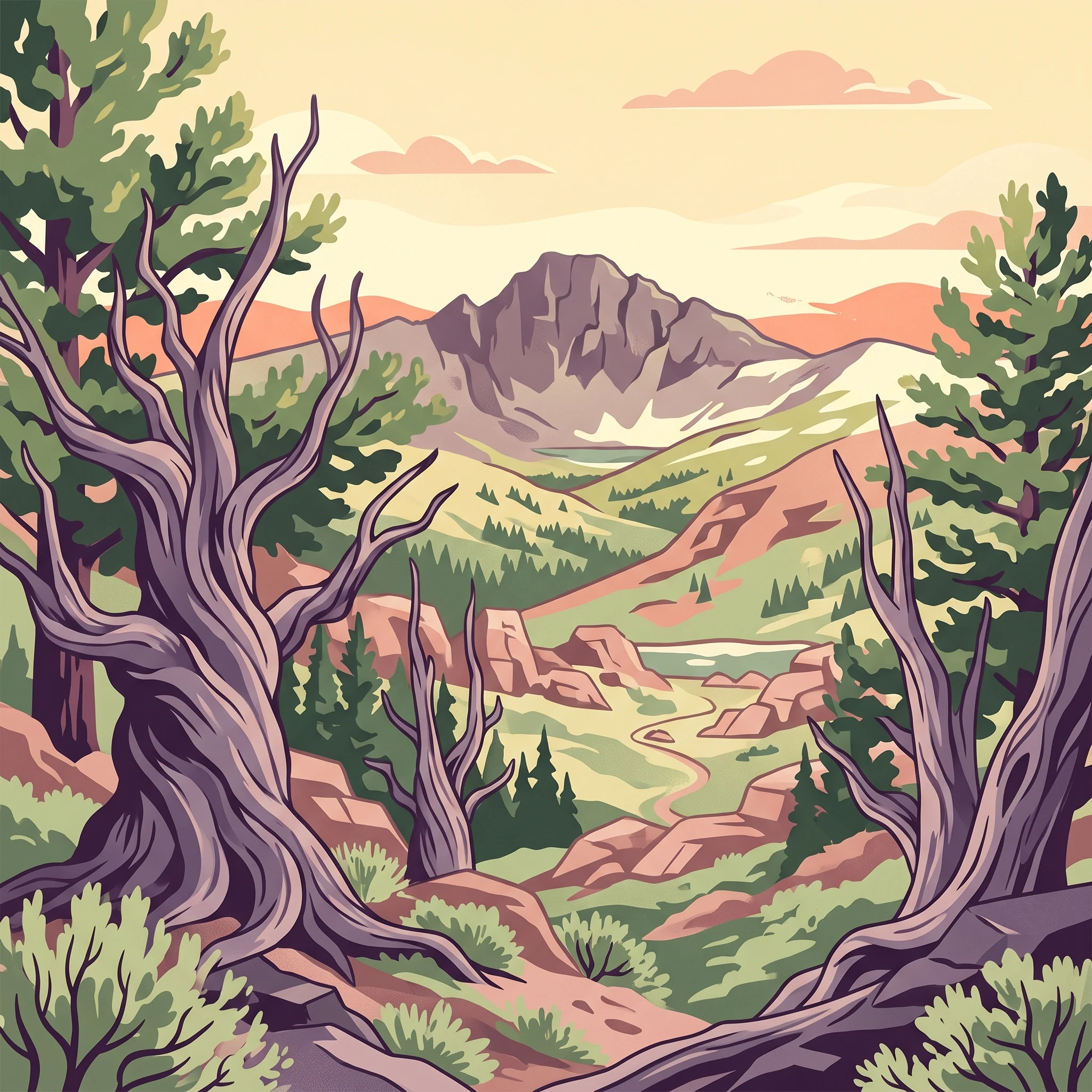
Great Basin National Park occupies a unique position in the American national park system as a showcase of Great Basin ecology and geology. The park's landscape tells a story spanning over 500 million years, from ancient seas that deposited the limestone and marble that would become Lehman Caves to the glacial carving of the Snake Range during the Pleistocene. The park's elevation gradient from approximately 6,000 feet to over 13,000 feet at Wheeler Peak creates distinct ecological zones that support remarkable biodiversity. The bristlecone pines growing at treeline near Wheeler Peak have become symbols of resilience, their twisted forms shaped by centuries of harsh conditions. Beyond the ancient trees, the park offers visitors the opportunity to explore underground wonders in Lehman Caves, hike through diverse habitats, and experience some of the nation's darkest night skies, making it a destination that rewards repeated visits.

Quick facts and research context for Great Basin National Park

Great Basin National Park spans 77,180 acres in eastern Nevada's Snake Range, protecting one of the most ecologically diverse regions in the Great Basin. The park contains eleven species of conifer trees and over 800 plant species, alongside 61 mammal species, 238 bird species, 18 reptile species, and notable amphibians and fish. The park is home to the oldest known living non-clonal organisms on Earth, ancient bristlecone pines that can exceed 5,000 years in age. Lehman Caves, a two-mile cave system, represents the longest known cave in Nevada and contains remarkable marble and limestone formations dating back approximately 550 million years.

Park context

Deeper park guide and search-rich context for Great Basin National Park

Great Basin National Park history, landscape, wildlife, and travel context
Explore Great Basin National Park through its history, landscape character, ecosystems, wildlife, conservation priorities, cultural context, and seasonal travel timing in a structured park guide built for atlas discovery and search intent.

Why Great Basin National Park stands out

Great Basin National Park is best known for its ancient bristlecone pine groves, which contain the oldest known living non-clonal organisms on Earth. The most famous of these, a tree nicknamed Prometheus, was at least 5,000 years old when it was cut down in 1964 for research purposes. The park is also renowned for Lehman Caves, a spectacular limestone cave system featuring elaborate formations including stalactites, stalagmites, and rare formations such as shields and flowstone. Wheeler Peak Glacier, one of the few remaining glaciers in the Great Basin, and the exceptional dark night skies that rank among the darkest in the contiguous United States round out the park's most distinctive features.

Great Basin National Park history and protected-area timeline

The area that would become Great Basin National Park has a layered conservation history. Lehman Caves was first protected as a national monument by President Warren G. Harding on January 24, 1922, following its discovery and documentation by Absalom Lehman, a local rancher who began guiding tours into the cave in 1885. For decades, the cave operated as a national monument while the surrounding lands remained under various designations. The movement to establish a national park gained momentum in the 1970s and 1980s, led by Congressman Harry Reid, who recognized the importance of protecting both the cave system and the surrounding Great Basin ecosystems. On October 27, 1986, the monument and its surroundings were redesignated as Great Basin National Park, creating a unified protected area that preserved both underground and surface wonders.

Great Basin National Park landscape and geographic character

Great Basin National Park showcases the dramatic topography of the Basin and Range Province, characterized by north-south trending mountain ranges separated by flat valleys. The Snake Range, which forms the park's backbone, contains Wheeler Peak, rising to 13,063 feet and supporting the park's only remaining glacier. The landscape displays the marks of Pleistocene glaciation, with U-shaped valleys, cirques, and moraines carved into the peaks. Lexington Arch, one of the largest limestone arches in the western United States, represents another remarkable geological feature. The contrast between the harsh, arid valleys below and the forested slopes above creates a visually striking environment that changes dramatically with elevation.

Great Basin National Park ecosystems, habitats, and plant life

The ecological diversity of Great Basin National Park reflects the park's significant elevation range and location at the meeting point of multiple biogeographic regions. At lower elevations, sagebrush and saltbush dominate the valleys, interspersed with single-leaf pinyon and Utah juniper. Middle elevations support mixed conifer forests of white fir, Engelmann spruce, and Ponderosa pine, with quaking aspen groves adding seasonal color. The subalpine zone near treeline gives way to alpine meadows and rocky outcrops where conditions are too harsh for most trees. The park contains several endemic plant species, including Mt. Wheeler sandwort and Holgrem's buckwheat, found nowhere else on Earth. The transition from desert to alpine environments within a relatively compact area makes the park an outdoor laboratory for understanding Great Basin ecology.

Great Basin National Park wildlife and species highlights

Great Basin National Park supports a remarkable diversity of wildlife adapted to the region's varied habitats. At lower elevations, jackrabbits, pygmy rabbits, ground squirrels, and various small mammals thrive in the sagebrush desert, while pronghorns, coyotes, kit foxes, and badgers represent the larger mammals of these arid areas. The conifer forests and mountain slopes are home to cougars, bobcats, bighorn sheep, and mule deer, with elk also present in the region. The park's avian population includes over 238 species, fromCanada geese and mallards at lakes to bald eagles, golden eagles, and great horned owls soaring above the ridges. The Bonneville cutthroat trout represents the only fish native to the park's waters, while Lehman Caves provides habitat for unique cave-adapted species including Townsend's big-eared bat and various invertebrates that complete their lifecycles in the dark.

Great Basin National Park conservation status and protection priorities

Great Basin National Park plays a critical role in conserving Great Basin ecosystems that have been significantly altered by human activity throughout the region. The park protects some of the last remaining old-growth bristlecone pine forests and serves as a refuge for species adapted to the harsh Great Basin environment. The establishment of the park, combined with the adjacent Highland Ridge Wilderness, creates a contiguous protected area of nearly 228 square miles that provides wildlife corridors through the otherwise fragmented basin lands. The park's dark night sky designation helps preserve natural nocturnal conditions important for both wildlife and astronomical observation. Lehman Caves receives careful management to protect its fragile cave formations and the unique organisms that have adapted to its dark environment.

Great Basin National Park cultural meaning and human context

While Great Basin National Park is primarily known for its natural features, the region has a human history extending back thousands of years. The Lehman Caves were known to indigenous peoples long before European settlement, and evidence of their use appears in historical inscriptions. The arrival of European settlers in the late 19th century led to the cave's documentation and eventual protection. The park preserves the legacy of more recent human activity through features like the Lehman Orchard and Aqueduct and Rhodes Cabin, representing the agricultural and settlement history of the Baker area. The Great Basin visitor center in Baker and the Lehman Caves visitor center near the cave entrance provide context for understanding both the natural and human history of this remote Nevada landscape.

Top sights and standout views in Great Basin National Park

Great Basin National Park offers visitors multiple signature experiences across its diverse landscape. The bristlecone pine trees near Wheeler Peak represent living monuments to endurance, with some specimens dating back over 4,000 years. Lehman Caves provides a subterranean wonderland of formations, with guided tours revealing chambers decorated with stalactites, stalagmites, and rare shield formations. The Wheeler Peak Scenic Drive ascends through changing ecosystems to reach trailheads for hiking to alpine lakes and the summit of Nevada's second-highest peak. The park's exceptionally dark night skies make it a destination for stargazers seeking views of the Milky Way largely unavailable in more populated regions.

Best time to visit Great Basin National Park

The park can be visited year-round, though each season offers distinct experiences. Summer brings warm temperatures to the valleys and mild conditions at higher elevations, making it the most popular season for hiking and cave tours. The Lehman Caves maintain a constant 50°F with 90% humidity year-round, providing a comfortable underground escape from summer heat. Fall offers cooler temperatures and the opportunity to witness autumn color aspen groves turn gold. Winter transforms the higher elevations into a snowy landscape accessible for cross-country skiing and snowshoeing, though some roads and facilities may close. Spring can bring variable weather, with snow lingering at higher elevations while wildflowers bloom in the lower elevations. The park's relatively remote location means visitors should plan for limited services and prepare for variable mountain weather regardless of season.
Park location guide

Geography guide, regional context, and park location map for Great Basin National Park

Great Basin National Park park geography, regions, and map view in United States of America
Understand where Great Basin National Park sits in United States of America through a broader geographic reading of the surrounding landscape, nearby location context, and its mapped position within the national park landscape.

How Great Basin National Park fits into United States of America

The United States of America is a federal presidential republic and one of the world's largest countries by area and population. It consists of 50 states across a vast territory spanning multiple time zones, with its capital in Washington, D.C. and largest city in New York City. The nation has a diverse economy, influential political system, and significant cultural and military presence globally.

Wider geography shaping Great Basin National Park in United States of America

The United States occupies a vast territory in North America, bordered by Canada to the north and Mexico to the south. The 48 contiguous states stretch from the Atlantic to the Pacific Ocean, while Alaska occupies the northwestern region and Hawaii is an archipelago in the Pacific. The country encompasses diverse terrain including the Rocky Mountains, Appalachian Mountains, Great Plains, and extensive river systems.

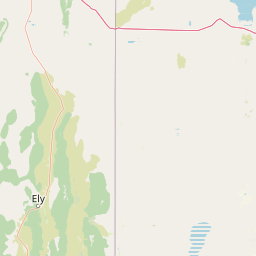
Map view of Great Basin National Park

Use this park location map to pinpoint Great Basin National Park in United States of America, understand its exact geographic position, and read its mapped placement within the surrounding landscape more clearly.

Pigeon | © OpenStreetMap contributors

Location context for Great Basin National Park

Nevada
Park atlas

Trace surrounding protected landscapes and compare regional park geography in Nevada and Utah.

Discover Other National Parks and Protected Areas Near Great Basin National Park
Explore a curated list of national parks and protected areas in the Great Basin region and its adjacent landscapes, allowing for focused geographic discovery beyond Great Basin National Park. Compare diverse protected landscapes, trace regional conservation efforts, and map the spread of unique ecosystems across Nevada and Utah, enhancing your atlas-style park exploration.
National parkUtah

Zion National Park National Park: Detailed Mapped Geography and Protected Landscape Identity

Explore the mapped terrain and regional context of this Utah national park.

Zion National Park represents a key protected area within Utah, ideal for detailed geographic exploration. This canonical page offers insights into the park's specific mapped boundaries, its inherent landscape character, and its regional geographic setting. It is designed for users seeking to understand the atlas-level significance of Zion National Park as a national park entity, focusing on its protected terrain and natural geography.

Area
593.26 km²
Established
1919
IUCN
II
Visitors
4.9M annual
National parkUtah

Bryce Canyon National Park: Utah's Mapped Protected Landscape and Geographic Context

Explore the unique geology and protected boundaries of Bryce Canyon National Park.

Bryce Canyon National Park offers a distinct protected landscape within the geography of Utah, characterized by its unique geological formations. This entry provides essential context for understanding its mapped boundaries and natural terrain, serving as a vital component for atlas-based discovery of protected areas. Investigate the specific geographic setting and conservation significance of this iconic national park.

Area
145.02 km²
Established
1928
IUCN
II
Visitors
2.5M annual
National parkUtah

Capitol Reef National Park: Utah National Park Protected Landscape and Geography

Explore Capitol Reef National Park's mapped terrain and boundaries.

Delve into the protected landscape and geographic identity of Capitol Reef National Park, a key national park in Utah. This resource provides detailed context on its mapped terrain and regional setting, supporting a structured understanding of protected areas for atlas exploration. Discover the specific geographic features and park boundaries that define this protected natural area.

Area
978.95 km²
Established
1971
IUCN
II
Visitors
1.4M annual
National parkCalifornia

Death Valley National Park: Exploring California's Mapped Protected Landscape

View the geographic boundaries and desert terrain.

Access a detailed atlas perspective of Death Valley National Park, a protected national park situated in California. Understand the park's distinct mapped boundaries and its role within the regional geography. This resource highlights the unique desert landscape, offering focused insights into its protected-area identity and natural terrain for geographic discovery.

Area
13,848.4 km²
Established
1994
IUCN
II
Visitors
1.1M annual
National parkArizona

Grand Canyon National Park: Arizona National Park Protected Landscape & Geography

Explore mapped boundaries and regional atlas context.

Grand Canyon National Park stands as a premier national park, showcasing a unique protected landscape within Arizona's diverse geography. This detailed entry focuses on the park's specific geographic identity, its mapped boundaries, and its significance within the regional atlas. Discover the contours of this protected area and its place in the natural terrain of the American Southwest.

Area
4,926.08 km²
Established
1919
IUCN
II
Visitors
4.9M annual
National parkUtah

Canyonlands National Park: A Mapped Protected Landscape in Utah's Geography

Explore its vast geography and protected area boundaries.

Canyonlands National Park stands as a significant protected entity within the state of Utah, characterized by its immense scale and dramatic geological formations. This page facilitates an atlas-style exploration of its terrain, emphasizing its mapped boundaries and its crucial role as a protected landscape. Gain a deeper appreciation for its unique geographic setting and its place within the broader regional context.

Area
1,366.21 km²
Established
1964
IUCN
II
Visitors
818.5K annual
National parkUtah

Arches National Park: Utah National Park Protected Landscape Exploration

Explore mapped terrain and geographic context.

Delve into the specifics of Arches National Park, a protected national park located in Utah. This atlas-focused entry provides detailed insight into the park's protected landscape features and geographic distribution. Understand the mapped park boundaries and the unique natural terrain that shapes this significant conservation area within the United States' broader regional geography.

Area
310.31 km²
Established
1971
IUCN
II
Visitors
1.5M annual
National parkCalifornia

Kings Canyon National Park National Park: California Protected Landscape & Geography Atlas

Mapped park boundaries and regional natural context.

Kings Canyon National Park stands as a key protected national park within California, offering a specific focus for geographic understanding and atlas-based exploration. This page details the park's mapped boundaries and its integration into the broader regional geography of California. For users interested in the distribution of protected lands and the mapping of natural landscapes, Kings Canyon National Park provides a crucial point of study within the comprehensive park atlas.

Area
1,869.25 km²
Established
1890
IUCN
II
Visitors
641K annual

Common questions about visiting, size, designation, and location context for Great Basin National Park

Great Basin National Park FAQs for park facts, access, geography, and protected area context
Find quick answers about Great Basin National Park, including protected-area facts, park geography, trail and visitor context, and how the park fits into its surrounding country and regional landscape.
MoriAtlas Explorer

Continue Your Protected Areas Search Across the Global Atlas

Deepen your exploration by continuing the structured search for national parks and protected areas worldwide. Utilize the comprehensive filtering capabilities to compare different conservation landscapes and refine your understanding of global park geography. Discover more about the distribution and characteristics of protected natural areas.

Global natural geography