Mori Atlas logo
Nature reserveJezioro Sporackie Nature Reserve

Tracing the mapped boundaries and ecological gradient from lobelia lake to transitional peatland

Jezioro Sporackie Nature Reserve: A Detailed Geographic Overview of Protected Lowland Landscapes

(Rezerwat przyrody Jezioro Sporackie)

Jezioro Sporackie Nature Reserve occupies a distinct postglacial lowland setting on the Charzykowska Plain in Pomeranian Voivodeship. This protected area integrates a rare, clear-water lobelia lake known as Sporacz with a sensitive transitional peatland and surrounding forest margin. The reserve creates a coherent ecological mosaic, preserving fragile aquatic habitats and specialized flora that remain increasingly rare throughout the Polish lowlands.

water nature reservelobelia laketransitional peatlandlowland forestglacial landscapePomeranian Voivodeship

Jezioro Sporackie Nature Reserve

Nature reserve

Park overview

Structured park overview, official facts, and landscape profile for Jezioro Sporackie Nature Reserve

Jezioro Sporackie Nature Reserve park facts, protected area profile, and essential visitor context

Review the core facts for Jezioro Sporackie Nature Reserve, including designation, size, terrain, visitor scale, habitats, and operating context in one park-focused overview.

About Jezioro Sporackie Nature Reserve

Jezioro Sporackie Nature Reserve is a compact but ecologically rich protected area in the northern Polish region of Pomerania. It lies at the southern edge of the Charzykowska Plain, a lowland mesoregion shaped by glacial history, and belongs administratively to gmina Człuchów in Człuchów County. The reserve wraps around a small forest lake called Sporacz, extending protection outward to include the transitional peatland and surrounding woodland that together form the functioning ecological system of the site.

The reserve belongs to the category of water nature reserves and is further classified as biocoenotic and physioceenotic, a designation that emphasizes the conservation of natural and semi-natural ecological communities rather than individual species. Its current protected footprint of 17.64 hectares, together with a 51.49-hectare buffer zone, reflects a management approach that recognizes the lake, peatland, and forest margin as inseparable components of one ecosystem. The oversight role is held by the Regional Director for Environmental Protection in Gdańsk.

Although the reserve is small in size and not open to visitors, it carries significant ecological weight within the regional protected-area network. It lies within the Natura 2000 habitat site "Czerwona Woda pod Babilonem" and inside the broader Protected Landscape Area around Lakes Krępsko and Szczytno, layering formal protections across European, national, and regional levels. Within the Polnica forest district of Człuchów Forest Inspectorate, it functions as a quiet but important refuge for the kind of clean-water, peatland-influenced habitats that have largely disappeared from intensively used lowland Poland.

Quick facts and research context for Jezioro Sporackie Nature Reserve

Jezioro Sporackie Nature Reserve lies in gmina Człuchów, within Człuchów County of Pomeranian Voivodeship, at the southern edge of the Charzykowska Plain. It is classified as a water nature reserve of the biocoenotic and physioceenotic type, focused on natural and semi-natural biocoenoses.

The reserve covers 17.64 hectares with a 51.49-hectare buffer zone. It sits within the Polnica forest district of Człuchów Forest Inspectorate and falls inside the Natura 2000 habitat site "Czerwona Woda pod Babilonem" (PLH220056) as well as a protected landscape area around Lakes Krępsko and Szczytno. The lake itself, Sporacz, is a small lobelia lake of about 0.113 square kilometers with maximum dimensions near 640 by 180 meters.

Protection and recognition

Examine the documented terrestrial protection framework and administrative scope.

Jezioro Sporackie Nature Reserve Protection Status and Governance

Jezioro Sporackie Nature Reserve maintains a documented terrestrial protection scope without imported international recognition sources. Researchers and visitors can review the established conservation framework, management jurisdiction, and administrative records.

Protection details

Protection scope
Terrestrial
Transboundary protection
No
Buffer area
0.52 km²
Park context

Deeper park guide and search-rich context for Jezioro Sporackie Nature Reserve

Jezioro Sporackie Nature Reserve history, landscape, wildlife, and travel context

Explore Jezioro Sporackie Nature Reserve through its history, landscape character, ecosystems, wildlife, conservation priorities, cultural context, and seasonal travel timing in a structured park guide built for atlas discovery and search intent.

Why Jezioro Sporackie Nature Reserve stands out

The reserve is best known for protecting Sporacz, a small clear-water lobelia lake, together with the transitional peatland and forest margin around it. Lobelia lakes are a rare and ecologically distinctive habitat in the Polish lowlands, characterized by soft, nutrient-poor water that supports specialized aquatic flora such as Lobelia dortmanna, poryblin jeziorny, and elisma wodna. The reserve is equally recognized for the way it integrates three tightly linked habitats: the lobelia lake itself, the transitional peatland that fringes it, and the surrounding woodland. Together these form a single ecological unit whose rare plant communities and sensitive water chemistry are the core reason the area has been under formal protection since 1965 and was expanded in 2017.

Jezioro Sporackie Nature Reserve history and protected-area timeline

The reserve was created on 23 October 1965 by order of the Minister of Forestry and the Wood Industry, originally covering 11.36 hectares. Its founding purpose was explicitly framed in scientific and educational terms: to preserve rare freshwater vegetation associated with a small lobelia-type lake and its surroundings, at a time when such habitats were already becoming scarce in the Polish lowlands.

In the decades that followed, understanding of the site evolved from interest in individual rare plant species toward a fuller ecosystem perspective. On 6 June 2017, the Regional Director for Environmental Protection in Gdańsk issued a new order enlarging the reserve to 17.64 hectares and establishing a 51.49-hectare buffer zone around it. The updated conservation goal moved beyond "rare freshwater vegetation" to the broader objective of preserving the entire lobelia lake ecosystem together with its peatland and forest margins, along with the characteristic plant communities and valuable species populations they support.

Despite its long history under protection, the reserve still operates without a formal protection plan, though it continues to be supervised by the Regional Director for Environmental Protection in Gdańsk. Its management is shaped by its location within the larger Polnica forest district and by overlapping designations that include the Natura 2000 site "Czerwona Woda pod Babilonem" and the regional protected landscape area around Lakes Krępsko and Szczytno.

Jezioro Sporackie Nature Reserve landscape and geographic character

The reserve occupies a quietly expressive piece of postglacial lowland landscape typical of the Charzykowska Plain. The terrain is flat to gently undulating, shaped by the glacial processes that produced the lakes, peatlands, and sandy forest soils of this part of Pomerania. Within this subdued setting, the central feature is Sporacz, a small mid-depth lobelia lake nested inside forest.

The lake itself is elongated and modest in scale, with a maximum length of roughly 640 meters and a maximum width of around 180 meters, giving it an area near 0.113 square kilometers. Its shoreline transitions sharply into a transitional peatland, a soft, waterlogged belt where open mire gives way to wet woodland. Beyond the peatland fringe, the reserve extends into the surrounding forest compartment of the Polnica forest district, anchoring the protected complex in a wooded landscape that buffers the more sensitive habitats at its core.

Although the area is small and not shaped for public access, the landscape has a coherent, layered character, moving from open water through mire to forest. This gradient from aquatic through semi-aquatic to terrestrial environments is, in itself, one of the defining physical traits of the reserve and the reason its protection was extended outward in 2017.

Jezioro Sporackie Nature Reserve ecosystems, habitats, and plant life

Ecologically, the reserve is defined by its lobelia lake system. Lobelia lakes are clear, nutrient-poor, often acidic water bodies whose soft hydrology supports a specialized community of submerged and floating aquatic plants that cannot survive in more eutrophic waters. Sporacz is described as a mid-depth lake of this type, and it functions as the ecological heart of the protected area.

Around the lake, a transitional peatland forms a delicate ring of waterlogged habitat. Transitional peatlands, as opposed to raised bogs or strongly mineral fens, occupy a hydrological middle ground and are valued for their capacity to filter water, store carbon, and support moisture-dependent plant species. In the reserve, this peatland zone functions as a hydrological and ecological connector between the lake and the surrounding forest.

The forest belt completes the ecological gradient. Within the Polnica forest district, the woodland surrounding Sporacz provides structural habitat, shading for the lake's margins, and ecological continuity with other protected forest patches nearby. Together, the lake, peatland, and forest create a three-stage habitat mosaic that supports species requiring different parts of this gradient, and that is increasingly rare across intensively managed lowland landscapes.

Jezioro Sporackie Nature Reserve wildlife and species highlights

Although the reserve is small and primarily valued for its plant communities, its ecological structure supports wildlife associated with clean-water lakes, peatlands, and wet forest margins. The conservation rationale for the 2017 enlargement explicitly refers to populations of valuable plant and animal species found within the lake, its peatland fringe, and the adjacent woodland, indicating that fauna is recognized as part of what the reserve protects.

The lake itself, being a clear, low-nutrient lobelia system, is the kind of habitat that historically supports fish and invertebrate communities adapted to soft, slightly acidic, oxygen-rich water. In Polish lobelia lakes, such conditions often favor cold-water fish species, diverse dragonfly and damselfly assemblages, and other invertebrate groups sensitive to nutrient enrichment. The surrounding peatland adds amphibians, dragonflies, and moisture-dependent invertebrates, while the forest belt supports woodland birdlife and mammal species typical of Pomeranian mixed and coniferous forest.

The reserve lies within the Natura 2000 habitat site "Czerwona Woda pod Babilonem," suggesting that the wider area is considered important at the European scale for its habitats and species associations. Specific species-level lists are not detailed in available sources, so the reserve's wildlife value is best understood in terms of habitat-driven patterns rather than as a species inventory.

Jezioro Sporackie Nature Reserve conservation status and protection priorities

Conservation significance at Jezioro Sporackie rests on the rarity of its habitat type. Lobelia lakes are a declining and inherently vulnerable feature of the Polish lowlands, sensitive to nutrient enrichment, acidification shifts, hydrological disturbance, and shoreline modification. By keeping Sporacz and its surroundings formally protected, the reserve acts as a refuge for the kind of clear-water, peatland-influenced ecosystems that have been widely lost to drainage, agriculture, and forestry intensification across lowland Poland.

The reserve sits within multiple overlapping frameworks of protection. At the European level, it lies inside the Natura 2000 habitat site "Czerwona Woda pod Babilonem" (PLH220056). At the regional level, it falls within the Protected Landscape Area around Lakes Krępsko and Szczytno. At the national level, it is a designated water nature reserve managed under the supervision of the Regional Director for Environmental Protection in Gdańsk, with a buffering perimeter of 51.49 hectares beyond its core 17.64 hectares.

The 2017 expansion of the reserve marked an important conceptual shift, broadening the conservation goal from saving "rare freshwater vegetation" to preserving the full lake-plus-peatland-plus-forest ecosystem and its characteristic species populations. Even without a formal written protection plan, the layering of designations and the explicit framing of ecosystem-scale conservation indicate that the site is treated as a long-term ecological asset within the local protected-area network.

Jezioro Sporackie Nature Reserve cultural meaning and human context

The reserve has a modest but distinctive cultural footprint rooted in regional naming and identity. The lake is known locally as Sporacz and in Kashubian, the regional language of Pomerania, as Spòracczé Jezoro, reflecting how strongly the site is embedded in the linguistic landscape of the Charzykowska Plain.

The nearest settlements are small forest-related communities rather than villages. Babilon, a small inland forest settlement, lies to the northeast of the lake along with a forester's lodge of the same name. These are not tourist centers but quiet nodes in a working forest landscape, and their proximity underscores the way the reserve sits inside an actively managed forest district, the Polnica forest district of Człuchów Forest Inspectorate, rather than in a purely wilderness or recreational setting.

The cultural context is therefore primarily one of working Pomeranian forestland, in which a small but ecologically sensitive lake has been set aside for protection. There is no developed visitor or heritage narrative around the site; instead, its cultural relevance is best framed through regional language, the local settlement pattern, and the long-standing role of state forestry in shaping this part of northern Poland.

Top sights and standout views in Jezioro Sporackie Nature Reserve

The reserve's standout quality is the way a small glacial lake anchors a complete ecological gradient: open water transitioning into transitional peatland, then into forest. Protecting this gradient as one unit, rather than focusing narrowly on the lake, is what gives Jezioro Sporackie its distinctive conservation profile.

Sporacz itself is notable as a representative Polish lowland lobelia lake, a habitat increasingly rare in central Europe, and one whose clear, nutrient-poor water supports specialized aquatic flora such as Lobelia dortmanna, poryblin jeziorny, and elisma wodna. The reserve's location inside both a Natura 2000 site and a regional protected landscape area adds international and regional layers of recognition to what is, on the ground, a very small and deliberately quiet site.

Best time to visit Jezioro Sporackie Nature Reserve

Seasonal guidance for Jezioro Sporackie needs to be framed carefully because the reserve is not open to visitors, and there is no infrastructure for public access. As a general matter, the surrounding Pomeranian landscape has a temperate climate with warm, often humid summers and cold, sometimes snowy winters, and the lake and peatland are likely to be most visually expressive in late spring and summer, when the characteristic aquatic flora of lobelia lakes is most active and the surrounding forest is fully leafed.

In cooler seasons, the peatland and forest margins take on a different character, with lower water levels, frost effects, and quieter wildlife activity, but any potential approach to the reserve should be understood as an appreciation of the landscape at a distance rather than an entry into the protected area itself, given its prohibited-access status.

Monthly climate preview

Long-term representative temperature patterns and monthly precipitation averages

Jezioro Sporackie Nature Reserve Climate Normals and Annual Weather Rhythm

Representative coordinate records show measured monthly temperature variations and precipitation distributions across the reserve. Reviewing the complete twelve-month climatology dataset reveals detailed shifts in average minimum and maximum thresholds.
Annual mean8 °C
-3 °C18 °C
Jan-3°
Feb-2°
Mar
Apr
May12°
Jun16°
Jul18°
Aug18°
Sep14°
Oct
Nov
Dec-1°
Warmest month
July

18.3 °C

Coolest month
January

-2.7 °C

Wettest month
July

2.8 mm/day

Driest month
April

1.3 mm/day

Park location guide

Geography guide, regional context, and park location map for Jezioro Sporackie Nature Reserve

Jezioro Sporackie Nature Reserve park geography, regions, and map view in Poland

Understand where Jezioro Sporackie Nature Reserve sits in Poland through a broader geographic reading of the surrounding landscape, nearby location context, and its mapped position within the national park landscape.

How Jezioro Sporackie Nature Reserve fits into Poland

Poland, officially the Republic of Poland, is a Central European country spanning from the Baltic Sea in the north to the Carpathian Mountains in the south. It borders Germany, Czech Republic, Slovakia, Ukraine, Belarus, Lithuania, and Kaliningrad Oblast. The country has a temperate climate, diverse landscapes, and is known for its rich history, cultural heritage, and strong economic position within the EU.

Wider geography shaping Jezioro Sporackie Nature Reserve in Poland

Poland occupies 312,696 km2 in Central Europe, extending from the Baltic Sea coast in the north to the Sudetes and Carpathian Mountains in the south. It borders Germany to the west, Czech Republic and Slovakia to the south, Ukraine and Belarus to the east, and Lithuania and Kaliningrad Oblast to the northeast. The landscape includes lowland plains, uplands, and mountain ranges.

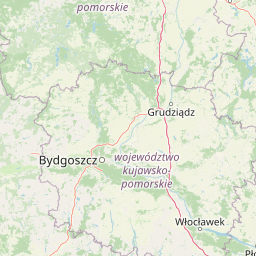
Map view of Jezioro Sporackie Nature Reserve

Use this park location map to pinpoint Jezioro Sporackie Nature Reserve in Poland, understand its exact geographic position, and read its mapped placement within the surrounding landscape more clearly.

Pigeon | © OpenStreetMap contributors

Location context for Jezioro Sporackie Nature Reserve

Pomeranian Voivodeship
Park atlas

Compare regional postglacial terrain, lobelia lakes, and connected forest reserves

Exploring Parks Near Jezioro Sporackie Nature Reserve and Surrounding Protected Landscapes

Browsing other protected areas near Jezioro Sporackie Nature Reserve reveals the broader postglacial lowland terrain and wetland networks of the Charzykowska Plain. Expanding the geographic comparison connects single water reserves to a wider regional network of protected landscapes across northern Poland.
Protected landscapePomeranian Voivodeship
About 0.9 km away#1 closest

Northeast

Zaborski Park Krajobrazowy: Geographic Profile of a Polish Protected Landscape Area

Tuchola Forest region, Pomeranian Voivodeship

Investigate the unique terrain of Zaborski Park Krajobrazowy, a protected landscape defined by its dense network of glacial lakes and sandy outwash plains. This territory provides a comprehensive view of northern Polish lowland geography, highlighting the ecological significance of its river valleys and relic forest habitats within the broader Tuchola Forest ecosystem.

Area
340.3 km²
Established
1990
Relief
Lowland
Climate
Temperate
Nature reservePomeranian Voivodeship
About 3.1 km away#2 closest

Northeast

Rezerwat przyrody Jezioro Małe Łowne: Protected Bog and Lake Landscape in Poland

A nature reserve in Pomeranian Voivodeship's wetland geography.

Located in the heart of the Bory Tucholskie forest region, this nature reserve protects a shallow post-glacial lake and its surrounding mire habitats. The protected area features a dynamic floating bog mat, boggy pine forests, and transitional peatlands, offering a clear look at the lowland hydrology and glacial topography that characterizes this specific part of northern Poland.

Area
0.378 km²
Established
1993
Relief
Lowland
Climate
Temperate
Protected areaPomeranian Voivodeship
About 5.7 km away#3 closest

Northeast

Sandr Brdy: Protected Glacial Landscapes and Hydrological Networks in Pomeranian Voivodeship

A vital reference site for lowland habitat conservation and post-glacial terrain.

Sandr Brdy spans 7,492 hectares of outwash plains in northern Poland. Its terrain hosts a complex mosaic of calcareous fens, acid oak forests, and lobelia lakes, established to preserve fragile aquatic and terrestrial species like the gray wolf and lady's slipper orchid within a unique glacial framework.

Area
74.926 km²
Scope
Terrestrial
Water
Major water bodies
A pale, soft-toned watercolor painting of a calm lake shore with marshy grasses in the foreground and a line of green trees and rolling hills in the background.
National parkPomeranian Voivodeship
About 5.7 km away#4 closest

Northeast

Park Narodowy „Bory Tucholskie”: Geography of a Polish National Park and Protected Forest

Lowland pine ecosystems and glacial water networks

Located in the Pomeranian Voivodeship, Park Narodowy „Bory Tucholskie” protects a significant remnant of the Tuchola Forest. The terrain, characterized by postglacial sandy plains, inland dunes, and acidic lobelia lakes, provides a critical reference site for studying forest ecology and glacial geomorphology within the Polish national park system.

Area
46.13 km²
Established
1996
Visitors
33K annual
Relief
Lowland
Watercolor painting of a river flowing through a forested area with colorful fields
National parkPomeranian Voivodeship
About 5.7 km away#5 closest

South

Tuchola Forest National Park: Explore Poland's Largest Protected Woodland and Glacial Lakes

Detailed maps and geographic context of unique forest ecosystems and terrain.

MoriAtlas offers a comprehensive geographic overview of Tuchola Forest National Park, a vital protected area in Pomeranian Voivodeship, Poland. This page delves into the park's identity as Poland's largest contiguous forest, distinguished by its post-glacial landscape. Users can explore the mapped boundaries of its extensive coniferous forests, numerous interconnected glacial lakes, dynamic dunes, and ecologically rich peatlands. It serves as a key entry point for understanding the park's unique terrain and its significant place within the broader regional geography and protected lands atlas.

Area
46.13 km²
Established
1996
IUCN
II
Visitors
33K annual
Nature reservePomeranian Voivodeship
About 14 km away#6 closest

East

Rezerwat przyrody Moczadło: Protected Nature Reserve and Lobelia Lake in Pomeranian Voivodeship

Mapped ecological zone within the Bory Tucholskie lake region

Gain insight into the protected landscape of Rezerwat przyrody Moczadło, a nature reserve in Pomeranian Voivodeship defined by its exceptionally clear oligotrophic waters. This site offers valuable data for those studying post-glacial lake ecosystems, rare aquatic flora, and the sensitive transition zones between open water and peat-forming pine forest landscapes.

Area
0.262 km²
Established
2011
Water
Major water bodies
Protected landscapeKuyavian-Pomeranian Voivodeship
About 19 km away#7 closest

East

Tuchola Landscape Park: Mapped Protected Area and Riverine Geography in Poland

Pine-covered outwash plains and the meandering Brda River corridor

Covering a significant portion of northern Poland, Tuchola Landscape Park protects a distinctive postglacial landscape of sandy plains and dense pine forests. The park geography is anchored by the Brda River, which flows through a series of rapids and breakthroughs before reaching deep into the surrounding pine-clad outwash plain. Detailed map data provides insight into the park's eight nature reserves, which preserve critical wetland, bog, and riverine habitats.

Area
369.83 km²
Established
1985
Relief
Lowland
Climate
Temperate
Nature reservePomeranian Voivodeship
About 23 km away#8 closest

East

Rezerwat przyrody Mętne: An Atlas View of Peatlands in the Pomeranian Voivodeship, Poland

A preserved mosaic of mires, bog ecosystems, and forest lake habitats.

Rezerwat przyrody Mętne is a specialized protected area in northern Poland, centered on the intricate peat-building processes of the Tuchola Forest. The reserve features rare dwarf birch populations and sensitive bog communities, functioning as a critical natural site for hydrological stability. Gain insights into the mapped extent of these mire habitats and their ecological integration within the wider Bory Tucholskie landscape.

Area
1.034 km²
Established
1963
Relief
Lowland
Scope
Terrestrial

Common questions about visiting, size, designation, and location context for Jezioro Sporackie Nature Reserve

Jezioro Sporackie Nature Reserve FAQs for park facts, access, geography, and protected area context

Find quick answers about Jezioro Sporackie Nature Reserve, including protected-area facts, park geography, trail and visitor context, and how the park fits into its surrounding country and regional landscape.
MoriAtlas Explorer

Continue Your Protected Areas Search Across the Global Atlas

Deepen your exploration by continuing the structured search for national parks and protected areas worldwide. Utilize the comprehensive filtering capabilities to compare different conservation landscapes and refine your understanding of global park geography. Discover more about the distribution and characteristics of protected natural areas.

Global natural geography