Why Katzenberge Nature Reserve stands out
Katzenberge is best known for its closed, structurally rich oak forest on glacial moraine soils. The presence of old, acidophilous oak woodlands on sandy substrates with pedunculate oak gives the reserve its distinctive conservation identity and connects it to a broader pattern of valuable lowland forest habitats in Brandenburg. The site is also notable within the regional network of small Brandenburg nature reserves for its role in protecting habitat-dependent woodland invertebrates, particularly saproxylic beetle species of European conservation concern.
Katzenberge Nature Reserve history and protected-area timeline
Katzenberge was placed under formal nature protection by ordinance of the state of Brandenburg on 28 May 2004. Its designation as a Naturschutzgebiet brought the area into the broader German system of strict nature reserves and established the management framework administered by the state's environmental office.
The reserve's inclusion in the European Natura 2000 network followed the framework of the EU Habitats Directive (Richtlinie 92/43/EWG). Under this framework, the area was registered as the FFH site DE3848304, recognising the significance of its oak woodland and sand grassland habitats at the European level and binding it to the coherence requirements of the Natura 2000 network.
Earlier history of the woodland itself is not documented in detail in the available source material, though the forest's old-growth character suggests long continuity of forest cover at the site level, typical of glacial moraine woodlands in Brandenburg.
Katzenberge Nature Reserve landscape and geographic character
The landscape of Katzenberge is typical of the gently undulating terrain of the Brandenburg moraine country. Glacial processes during the Pleistocene shaped the substrate into sandy, relatively infertile soils that today support a particular kind of dry, species-rich deciduous forest rather than the wetter wetland and bog habitats found elsewhere in the Dahme-Spreewald district.
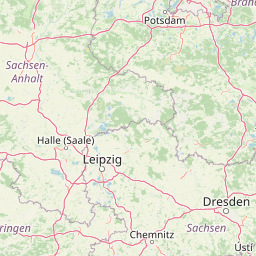
The reserve sits within a wider lakescape, with the Schmöldesee to the north-west and the Hölzerne See to the west framing the woodland. To the east flows the Dahme river, a tributary of the Spree, which forms part of the broader hydrological setting of the Dahme-Heideseen Nature Park. The federal road B179 passes to the west of the area, and the small settlement of Neubrück, part of the municipality of Groß Köris, lies to the south-west.
This combination of moraine woodland, surrounding lakes, and proximity to a major glacial river valley gives the reserve its regional landscape character: a piece of surviving ancient forest set within a mosaic of water, settlement, and other protected woodlands characteristic of the south-eastern Brandenburg countryside.
Katzenberge Nature Reserve ecosystems, habitats, and plant life
Ecologically, Katzenberge is defined by its forest habitats on glacial moraine. The principal habitat type is old acidophilous oak woodland on sandy soils, coded as habitat type 9190 in the European Natura 2000 classification. These forests, dominated by pedunculate oak, are valued for their structural richness, including age-class diversity, deadwood presence, and a characteristic understorey adapted to nutrient-poor sandy conditions.
In addition, the reserve contains areas of subcontinental base-rich sand grassland of the Koelerion glaucae type, classified as habitat 6120. This dry, open grassland formation is adapted to warm, sunny sandy substrates and represents a habitat of European conservation interest that contrasts ecologically with the closed woodland, increasing the overall botanical and structural diversity of the site.
Together these habitats give the reserve an ecological identity typical of valuable Brandenburg moraine woodlands, where sandy soils, long forest continuity, and locally open grasslands sustain a distinct, irreplaceable assemblage of lowland species.
Katzenberge Nature Reserve wildlife and species highlights
Wildlife information for Katzenberge is limited in the source material, but the reserve's conservation documentation highlights two invertebrate species of particular European importance. The great capricorn beetle (Cerambyx cerdo) and the stag beetle (Lucanus cervus) are both listed under Annex II of the Habitats Directive and are afforded specific protection within the reserve, along with the habitats that support their reproduction, feeding, dispersal, and overwintering.
Both beetles are saproxylic species dependent on old, decaying or sun-exposed broadleaved trees, particularly oaks. Their presence indicates that the reserve supports the kind of mature, veteran-tree-rich woodland structure that these species require and underscores the broader ecological value of the site's old oak forests.
The presence of nearby lakes and adjacent protected areas suggests that the wider region supports a broader community of woodland and lake-margin fauna typical of the Dahme-Heideseen landscape, but specific detail beyond the two beetle species is not provided in the available sources.
Katzenberge Nature Reserve conservation status and protection priorities
Katzenberge is protected under multiple, overlapping conservation frameworks. At the national level it is designated as a Naturschutzgebiet, Germany's strictest category of terrestrial nature reserve, administered by the Brandenburg State Office for the Environment. Its designation as a Fauna-Flora-Habitat site (DE3848304) under the EU Habitats Directive integrates it into the European Natura 2000 network, requiring the maintenance or restoration of the site's qualifying habitat types and protected species in favourable condition.
The site's IUCN Category IV status reflects its management purpose as a Habitat/Species Management Area, in which targeted conservation rather than full wilderness is the central objective. The federal nature conservation agency's habitat profile for the site explicitly identifies the reserve as a closed woodland area with a high proportion of structurally rich oak forest on moraine substrates, framing its value primarily in terms of habitat quality and habitat-dependent species.
By protecting old oak woodland and associated sand grassland, Katzenberge contributes to the conservation of habitat types that are scarce and declining in central European lowlands. Its position within a broader cluster of Brandenburg nature reserves further enhances its conservation role as part of a habitat network in the Dahme-Spreewald region.
Katzenberge Nature Reserve cultural meaning and human context
The source material does not provide substantive cultural or historical human-context information about Katzenberge beyond noting its geographic relationship to local settlements such as Neubrück and to the broader Dahme-Heideseen Nature Park landscape. The reserve's cultural framing is therefore primarily regional and ecological rather than historical, and no deeper cultural dimension is documented in the available sources.
Top sights and standout views in Katzenberge Nature Reserve
Katzenberge's principal highlight is its concentration of structurally rich, old oak woodland on glacial moraine soils, a habitat type that gives the reserve its European conservation significance and connects it to the broader Dahme-Heideseen forested landscape. The presence of protected saproxylic beetle species, including the great capricorn beetle and the stag beetle, further distinguishes the site as a refuge for species dependent on mature deciduous trees.
The reserve also gains value from its setting between lakes and the Dahme river, and from its position within a wider network of Brandenburg protected areas that together sustain habitat continuity across the south-eastern Brandenburg lowlands.
Best time to visit Katzenberge Nature Reserve
The available source material is focused on the reserve's legal, ecological, and administrative profile rather than on visitor experience, so detailed seasonal visiting guidance cannot be drawn from the sources. In such north-east German lowland forest reserves, late spring and summer are typically the most productive periods for observing woodland flora, beetles, and overall forest atmosphere, while autumn adds colour in the deciduous canopy. Visitors should be aware that as a formal Naturschutzgebiet, access is regulated, and the site is primarily a conservation area rather than a developed visitor destination.