Why Klingnauer Stausee stands out
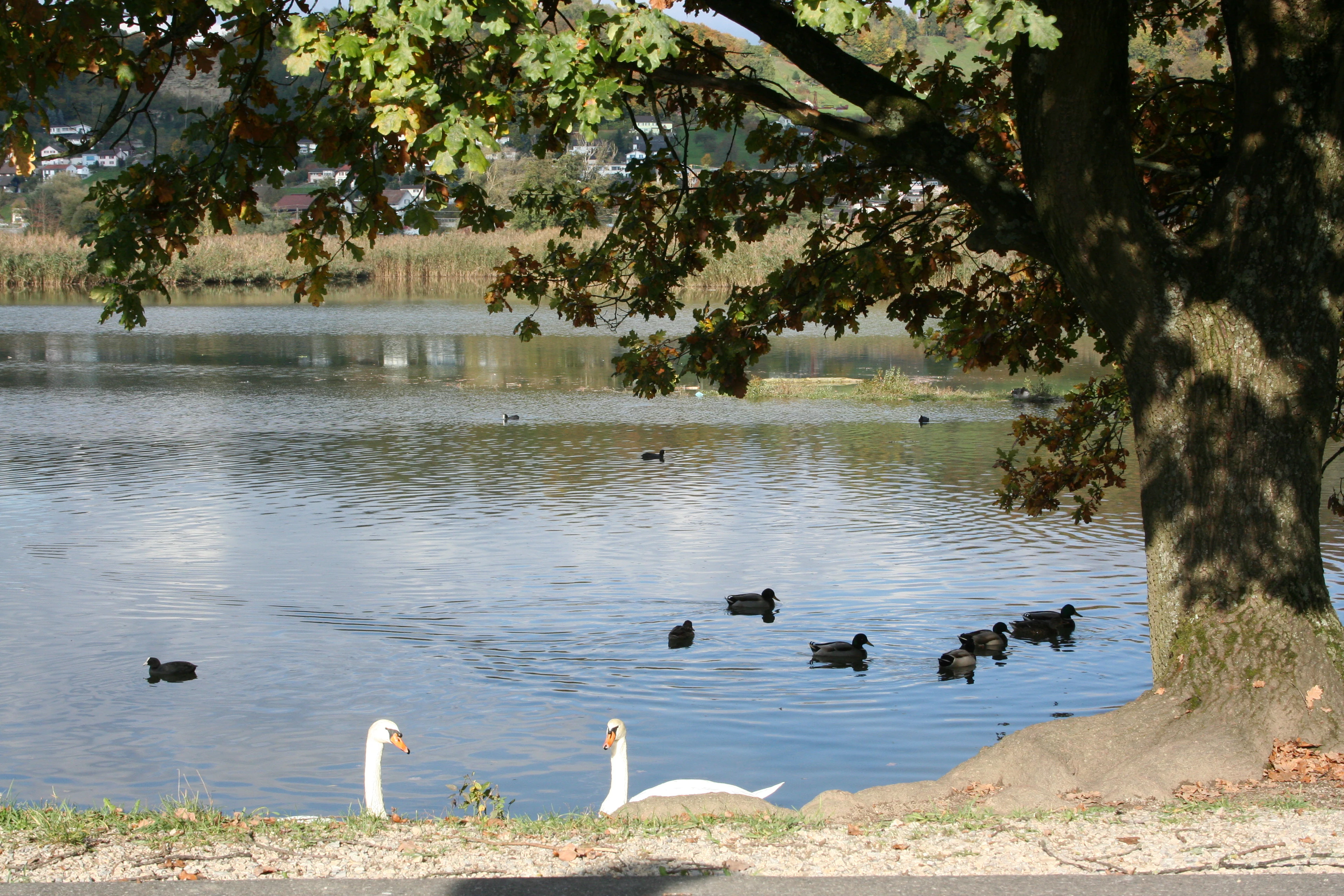
The Klingnauer Stausee is best known as one of Switzerland's most rewarding inland birdwatching destinations and as a showcase example of how a man-made reservoir can evolve into a nationally protected floodplain habitat. The combination of open water, sheltered bays, reedy margins, and adjacent alluvial forest remnants attracts large numbers of waterbirds, including herons, ducks, grebes, and seasonal migrants, while rare visitors draw birders from across the country. Equally important is its setting within the broader Aarelandschaft bei Klingnau, a landscape unit of national importance that preserves traces of the historic dynamic Aare floodplain. This pairing of engineered infrastructure and ecological recovery has defined the site's reputation, making it a textbook case of integrated hydropower and conservation in the northern Swiss lowlands.
Klingnauer Stausee history and protected-area timeline
The history of the Klingnauer Stausee stretches back well beyond the lake itself, into centuries of struggle with flooding along the lower Aare. Communities in the valley endured repeated devastating inundations, and at the close of the 19th century, embankments were built on both sides of the river, reaching from Böttstein almost to Koblenz. These flood protection works straightened the river's course, cut off a meander near Gippingen, and gave rise to a still backwater fed only by groundwater, while another relic arm persists below Klingnau. Around the same era, a large floodplain landscape flourished along the Aare.
Hydroelectric development arrived early. Around 1900 a power plant was built at Beznau near Böttstein, and material excavated for its headrace canal was partly used to fill portions of the old riverbed, which were then planted with forest. About half of that former channel, roughly twenty-three hectares, survived as Auenwald, alluvial floodplain forest, and remains protected today as part of the Gippinger Grien nature reserve. During the First World War, investors began planning a new electricity works north of Klingnau, even starting an access road and a bridge, but abandoned the scheme over concerns about insufficient demand for the power it would have generated. The unfinished bridge stood as a ruin until it was dismantled for safety reasons in 2005.
The reservoir itself came into being between 1931 and 1935 with the construction of the Klingnau hydroelectric power station near the railway bridge between Koblenz and Felsenau, about a kilometer above the Aare's mouth. A weir set between the embankments raised the river level, producing a roughly three-kilometer-long lake up to five hundred meters wide. The power station is integrated into the weir on the right bank, while the Surb joins the Aare at the head of the lake and smaller streams such as the Leuggernbach are diverted around the dam structures to enter downstream of the works.
Within a few years of the lake's filling, several migratory bird species had adopted the new waterbody as a wintering or breeding area, and resident species also expanded into it. More recently, beavers have returned to the lakeshore surroundings, marking the site's further evolution as a wildlife refuge.
Klingnauer Stausee landscape and geographic character
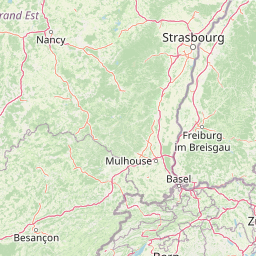
The Klingnauer Stausee is set in a broad, low-elevation stretch of the northern Swiss Jura, where the Aare has been channeled between high flood embankments for over a century. The lake itself is a long, narrow sheet of still water, running approximately three kilometers along the river's course and reaching up to about five hundred meters in width within the historic dike lines. Its surface lies near 318 meters above sea level, reflecting the gentle topography of the Aargau lowlands rather than any mountainous setting.
Surrounding the reservoir, the terrain combines engineered elements with naturally expressive floodplain features. The flood protection embankments form the immediate visual frame, while beyond them the valley floor holds relics of the former braided river system. The old meander near Gippingen now supports quiet backwaters and groundwater-fed ponds, and below Klingnau another disused channel survives as a sheltered wetland corridor. These features contrast with the open expanses of the main lake, producing a varied mosaic of water, marsh, and riparian woodland.
From a scenic standpoint, the lake is most appreciated from its eastern end near Kleindöttingen, where viewpoints and the Klingnauer Beobachtungsturm observation tower offer broad views over the water, reed belts, and the wooded opposite shore near Klingnau. The wider landscape integrates easily into regional walking and cycling routes, with the surrounding Jura ridgelines providing a quiet backdrop to the otherwise flat, water-dominated scene.
Klingnauer Stausee ecosystems, habitats, and plant life
The ecological identity of the Klingnauer Stausee rests on the interplay between an open, regulated lake and a set of surviving and recovering floodplain habitats around it. The lake's shallow margins and relatively quiet waters support diverse aquatic vegetation, while reedbeds and muddy shorelines provide important feeding and resting habitat for waterbirds. The artificial origin of the lake has not prevented it from developing into a functioning wetland ecosystem.
A key ecological partner to the reservoir is the adjacent Gippinger Grien, where around twenty-three hectares of Auenwald, softwood floodplain forest, has been preserved along the relic Aare meander. Together, the lake, the backwaters, and the surrounding woodland form a coherent landscape unit of national importance and are partly protected as Auengebiete von nationaler Bedeutung, floodplain areas of national significance. This designation reflects not just rarity but also the ecological function of these habitats as transition zones between aquatic and terrestrial environments.
Surrounding land use is a mix of forest, agricultural fields, and small settlements, giving the site ecological edges that further enhance its habitat diversity. The combination of standing water, slow-flowing back channels, alluvial forest, and seasonally inundated areas allows a wide range of species to coexist within a relatively compact area, including amphibians, fish, and mammals such as the recently returned beaver.
Klingnauer Stausee wildlife and species highlights
The Klingnauer Stausee is, above all, a birding site. The combination of open water, sheltered bays, reed margins, and adjacent woodland attracts a rich community of waterbirds throughout the year, including various species of ducks, grebes, and herons. Migratory species recognized the lake's value within just a few years of its creation, and the site has continued to develop as a wintering and staging area alongside its role for breeding birds.
Beyond the immediate lakeshore, the Gippinger Grien and other relic floodplain fragments host woodland and scrub species that benefit from the alluvial forest structure. The broader mosaic of habitats supports a varied mammal community as well, with the beaver noted in recent decades as a returning presence around the lake and its connected channels.
The site's relatively compact size and concentration of habitat types make it unusually productive for wildlife observation. The presence of the Klingnauer Beobachtungsturm observation tower near Kleindöttingen underscores this role, providing an accessible vantage point for visitors interested in the lake's diverse fauna.
Klingnauer Stausee conservation status and protection priorities
The Klingnauer Stausee and its surrounding Aare landscape are protected on multiple levels within Switzerland's conservation framework. The entire landscape unit is recorded in the Bundesinventar der Landschaft und Naturdenkmäler von nationaler Bedeutung, the federal Inventory of Landscapes and Natural Heritage Sites of National Importance, recognizing its combined scenic, ecological, and cultural value. In addition, specific areas around the lake, including the Auenwald remnants at Gippinger Grien, are designated as Auengebiete von nationaler Bedeutung, floodplain areas of national significance.
These designations reflect the importance of conserving functioning floodplain and wetland ecosystems in a country where most major rivers have been heavily modified. The lake illustrates how artificial waterbodies, when paired with relic natural features and managed for ecological values, can support nationally significant biodiversity. Conservation of the site also depends on managing conflicts between hydropower operation, recreation, and water quality, a tension made visible by recent disputes over PCB-contaminated sediment that had been proposed for transfer downstream toward the Rhine.
Management of the reserve involves both formal protection and practical measures such as regulated access, public observation infrastructure, and coordination with fisheries and conservation associations. The Klingnauer Stausee therefore stands as a working example of how industrial infrastructure and nature protection can coexist within a Swiss lowland landscape.
Klingnauer Stausee cultural meaning and human context
The Klingnauer Stausee sits within a region shaped by centuries of interaction with the Aare. Communities along the river developed in close relation to its flood dynamics, and the historic struggles with inundation left a lasting imprint on local identity, settlement patterns, and agricultural land use. The decision to construct embankments in the late 19th century, and later to dam the river for hydroelectric power, marked a turning point in which the valley's communities increasingly took control of the river rather than simply adapting to it.
The hydropower era brought industrial infrastructure and electricity-led economic development to the area, with the Klingnau power station and the older Beznau plant becoming part of the regional identity. Around the same time, conservation-minded protection of relic floodplain features such as the Gippinger Grien reflected an emerging awareness of the value of these habitats in an otherwise heavily modified valley.
For visitors and residents, the lake now serves as a familiar everyday landmark and a focal point for outdoor recreation, angling, and birdwatching, while retaining the deeper cultural resonance of a valley whose communities have long learned to live with, and ultimately reshape, a powerful river.
Top sights and standout views in Klingnauer Stausee
The Klingnauer Stausee's most distinctive highlights are the depth of its birdlife, the integrity of its surrounding floodplain landscape, and the unusual story of an industrial reservoir that has become a national nature reserve. The lake serves as a year-round stage for waterbirds, with seasonal shifts that bring new species and new viewing opportunities across every part of the annual cycle.
Equally striking are the surviving relics of the Aare's original floodplain, including the protected Auenwald at Gippinger Grien and the calmer backwaters near Gippingen. These features, combined with accessible viewpoints such as the Klingnauer Beobachtungsturm observation tower and well-developed walking and cycling routes, make the Klingnauer Stausee a compact yet richly layered destination where hydropower heritage, river history, and modern conservation come together.
Best time to visit Klingnauer Stausee
The Klingnauer Stausee rewards visits across much of the year, with each season emphasizing different aspects of its character. In winter, the lake hosts one of its most significant phases, with large numbers of waterfowl gathering on the open water and along sheltered margins, drawing birdwatchers who come specifically for the wintering populations.
Spring and early summer bring breeding activity and the return of migratory species, with reedbeds and wooded shorelines becoming particularly lively. Late summer and autumn offer quieter conditions and often mild weather suitable for walking and cycling around the lake. Birdwatchers tend to favor early morning hours in any season, when activity around the water is at its peak.