Why Lovćen National Park stands out
Lovćen is best known as the mountain that gave Montenegro its name, since both 'Montenegro' and 'Crna Gora' literally mean 'Black Mountain,' a reference to the dark, forested appearance of its slopes. The park is equally celebrated for the Mausoleum of Petar II Petrović-Njegoš, one of the most important cultural monuments in the country, which sits dramatically atop Jezerski vrh at the park's summit. The park's defining natural character is its dramatic Dinaric karst landscape: rugged limestone and dolomite slopes dotted with fissures, pits, and deep depressions, and positioned at the meeting point of Mediterranean and continental climates. This unique position creates a wide range of habitats and supports a remarkable botanical diversity, including endemic plant species found only in Montenegro.
Lovćen National Park history and protected-area timeline
The national park itself was proclaimed in 1952, formalizing protection of the central and most elevated portion of the Lovćen massif, but the mountain's history runs much deeper. The name Crna Gora, meaning 'Black Mountain,' was first recorded in a charter issued by Stefan Milutin in 1276 and referred to the dark forested appearance of Lovćen and its surroundings; over time, this regional name expanded to describe several medieval Serbian regions before settling on the country itself.
The park's cultural heritage is anchored by the village of Njeguši, birthplace of the House of Petrović, the historic royal dynasty of Montenegro, and by the architectural legacy of traditional stone houses, guvna, and the seasonal katun dwellings of cattle breeders that still dot the mountain. These features are protected as integral elements of the national park landscape, reflecting a long continuum of human presence in the mountains.
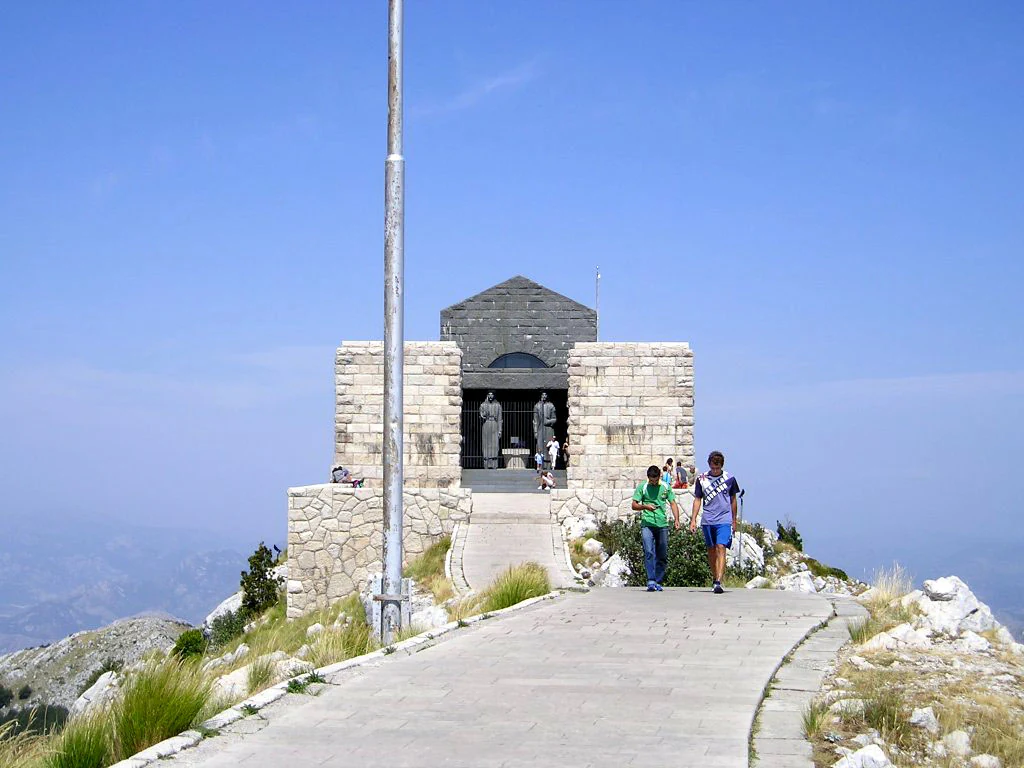
The most iconic cultural monument in the park is the Mausoleum of Petar II Petrović-Njegoš, constructed in 1971 at the summit of Jezerski vrh. The location was chosen by Njegoš himself as his final wish, making the site both a literary and political landmark. Lovćen's history also includes a dramatic military chapter during World War I, when Montenegrin and French forces used the mountain's commanding position to bombard the Austro-Hungarian naval base at Kotor. The bombardment of Mount Lovćen ultimately broke the morale of its defenders, leading to an armistice request in early 1916 after the Austro-Hungarian army captured the Lovćen Pass and adjacent heights.
Lovćen National Park landscape and geographic character
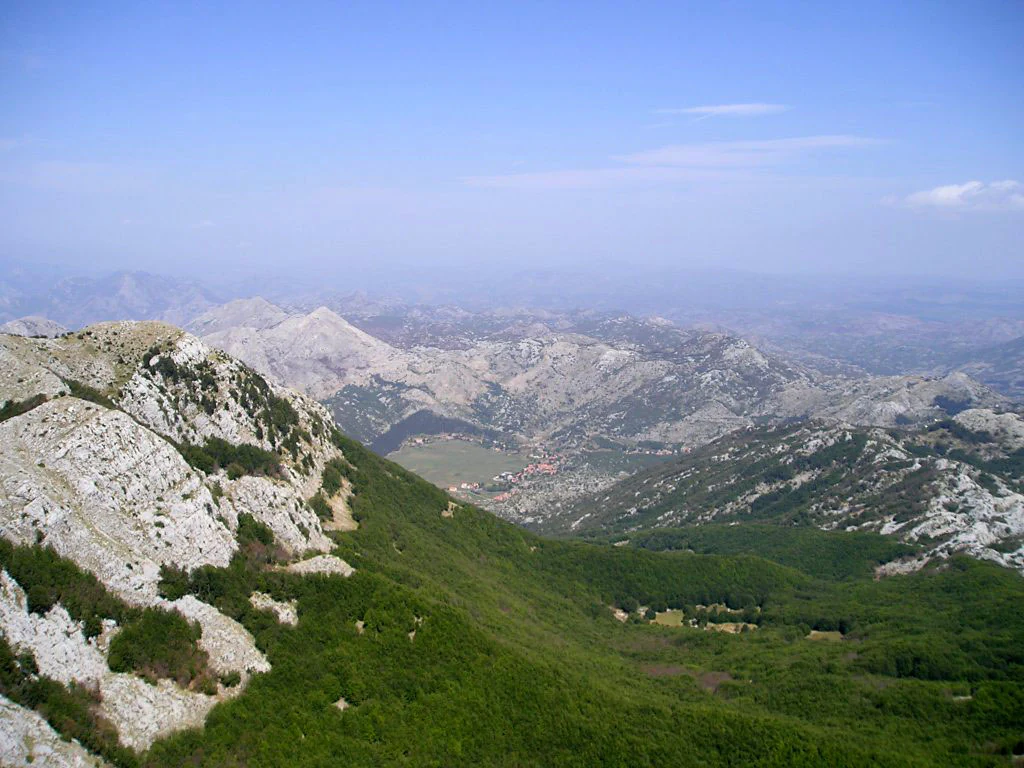
Lovćen's landscape is a textbook example of Dinaric karst terrain. Rising to its two main peaks, Štirovnik at 1,749 meters and Jezerski vrh at 1,657 meters, the mountain commands the air above the Adriatic basin. Its slopes are rocky, deeply scored by fissures, pits, and sudden depressions that give the scenery its signature rugged character, shaped by millennia of weathering of the underlying limestone and dolomite.
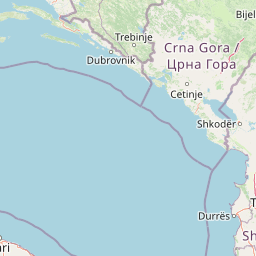
The massif's geography is defined by its transitional role between sea and land. On one side, Lovćen faces the Adriatic and the deep, fjord-like bays of Boka Kotorska, with the coastal town of Kotor sitting at its foot. On the other, it slopes back into the interior Dinaric highlands. This geographic compression creates sharp elevation gains within short distances, dramatic cliff faces, and the kind of sweeping viewpoints for which the park is famous. The winding old road from Kotor to Njeguši remains one of the most evocative ways to experience the changing landscape of the mountain.
Lovćen National Park ecosystems, habitats, and plant life
Ecologically, Lovćen sits at the crossroads of two climatic worlds: Mediterranean influences from the nearby Adriatic and continental influences from the interior Dinaric hinterland. This dual climate, combined with the variability of karst soils and altitudes, has produced an unusually rich biological mosaic within a relatively compact protected area.
The park supports more than 1,158 documented plant species, an exceptionally high figure given its modest size, reflecting the diversity of microhabitats carved into the mountain's limestone and dolomite bedrock. Among these species, two are endemic to Montenegro: Cardamine montenegrina and Taraxacum validum, both of which underscore the area's botanical uniqueness. Vegetation patterns shift with elevation and exposure, from Mediterranean-influenced coastal slopes below to denser forests and rocky upland communities above, all interleaved with the characteristic open karst formations that define much of the park's scenery.
Lovćen National Park wildlife and species highlights
Lovćen's wildlife is shaped by the same Mediterranean-continental transition that defines its vegetation. The mosaic of rocky karst, woodland, shrubland, and upland pasture creates a varied habitat structure that supports a wide range of animal species typical of the Dinaric Alps and the northern Adriatic fringe. The traditional katun grazing system has also shaped the open landscapes that some species depend on.
While the park's international reputation rests more on its botanical richness and cultural monuments than on flagship megafauna, the combination of climatic influences, varied topography, and protected status makes it an important refuge for species adapted to Dinaric karst and Mediterranean-montane environments. The presence of endemic plant species reinforces the broader significance of the park for regional biodiversity conservation.
Lovćen National Park conservation status and protection priorities
Lovćen has been formally protected since 1952, when the central and highest portion of the massif was designated a national park. Its conservation value lies in the combination of a classic Dinaric karst landscape, a transitional Mediterranean-continental climate, and an unusually high concentration of plant species for an area of its size, including two endemic to Montenegro.
Protection extends beyond purely natural features. By law, the park safeguards the mountain's historical, cultural, and architectural heritage, including traditional stone houses, guvna, katun settlements, the old road from Kotor to Njeguši, and the Mausoleum of Njegoš on Jezerski vrh. This integrated approach to conservation recognizes that the cultural landscape has shaped the park's character for centuries and remains inseparable from its natural value.
Lovćen National Park cultural meaning and human context
Lovćen carries an unusual weight of cultural meaning for Montenegro. The mountain is widely regarded as the source of the country's name: both 'Montenegro' and the local 'Crna Gora' literally translate to 'Black Mountain,' a name inspired by the dark, forested appearance of Lovćen's slopes. The phrase Crna Gora appeared as early as 1276 in a charter of Stefan Milutin and gradually came to refer to the broader region that became modern Montenegro.
The park also preserves the architectural heritage of the Petrović dynasty through the village of Njeguši, birthplace of the royal House of Petrović. Traditional Montenegrin rural architecture is protected across the park in the form of stone houses, village guvna, and the seasonal katun cottages of cattle breeders, which continue to define the mountain's human landscape. Crowning all of this is the Mausoleum of Petar II Petrović-Njegoš, the prince-bishop and poet who chose Jezerski vrh as his final resting place, anchoring the mountain as a site of national memory as much as a natural landscape.
Top sights and standout views in Lovćen National Park
The most striking features of Lovćen National Park include the rugged karst terrain of limestone and dolomite, the panoramic position above the Bay of Kotor, and the symbolic importance of the mountain as the namesake of Montenegro. The park's botanical richness, with more than a thousand plant species and two Montenegrin endemics, gives it scientific weight beyond its scenic appeal.
Equally distinctive is the layering of cultural and natural heritage: the Mausoleum of Njegoš on Jezerski vrh, the royal village of Njeguši, the winding old road from Kotor, and the traditional katun communities all sit within the protected area. The combination of commanding viewpoints, karst landforms, and a quintessentially Montenegrin cultural landscape makes Lovćen a compact but deeply layered park experience.
Best time to visit Lovćen National Park
Lovćen's character shifts meaningfully with the seasons. Summer brings warm Mediterranean-influenced conditions on the lower slopes, with the Adriatic climate making the coastal approach from Kotor pleasant and the upper elevations offering a cooler escape. Spring and early summer are typically the most rewarding periods for appreciating the park's botanical richness, as montane and Mediterranean-continental flora are active at lower altitudes.
Late spring and early autumn tend to combine the clearest panoramic views across the Bay of Kotor with comfortable temperatures for exploring the road to Njeguši and the higher peaks around Jezerski vrh and Štirovnik. Winter can bring cold continental conditions and occasional snow at higher elevations, giving the mountain a stark and dramatic atmosphere, though visitors should expect more challenging mountain weather. As always in coastal-mountain transition zones, conditions can change quickly with elevation.