Mori Atlas logo
Nature reserveMechowisko Manowo Nature Reserve

Analyzing the wetland terrain and post glacial peatland geography in West Pomeranian Voivodeship

Mechowisko Manowo Nature Reserve: Geographic Context of a Protected Alkaline Fen Landscape

(Rezerwat przyrody Mechowisko Manowo)

Mechowisko Manowo Nature Reserve represents a critical protected landscape situated within the Dzierżęcinka river valley of northern Poland. This reserve preserves a complex mosaic of soligenic alkaline fens, transitional bogs, and swamp forests that occupy the gently undulating terrain of the Równina Białogardzka plain. By safeguarding these rare, spring-fed peatland habitats from intensive land use, the area serves as a vital ecological anchor for the regional geography of the West Pomeranian Voivodeship.

peatlandalkaline fentransitional bogswamp forestriparian forestNatura 2000

Mechowisko Manowo Nature Reserve

Nature reserve

Park overview

Structured park overview, official facts, and landscape profile for Mechowisko Manowo Nature Reserve

Mechowisko Manowo Nature Reserve park facts, protected area profile, and essential visitor context

Review the core facts for Mechowisko Manowo Nature Reserve, including designation, size, terrain, visitor scale, habitats, and operating context in one park-focused overview.

About Mechowisko Manowo Nature Reserve

Mechowisko Manowo Nature Reserve is a compact yet ecologically rich protected area situated in the Dzierżęcinka river valley, just outside the village of Manowo in Koszalin County, northern Poland. Set within the Równina Białogardzka, a flat mesoregion shaped by Pleistocene glaciation and later by Holocene peat-forming processes, the reserve captures a representative cross-section of the lake-district peatland landscape that once blanketed much of Pomerania.

Designated as a peatland nature reserve focused on non-forest plant communities, the area safeguards a complex in which soligenic alkaline fens, transitional bogs, and swamp forests sit side by side. These habitats are fed by calcareous groundwater discharge, producing the base-rich conditions that support specialized flora, including communities of brown mosses as well as stands of round-fruited sedge and beaked sedge. The reserve's value extends beyond plants, providing conditions that shelter rare invertebrates as well.

The reserve's legal foundation reflects a layered conservation strategy. Long before formal reserve status was granted, the site had been integrated into the European Natura 2000 network as a special area of conservation (site PLH320057) in 2011, recognizing its priority alkaline fen habitat. In 2018, the Polish authorities elevated the protection level by establishing the nature reserve through a decree of the Regional Director for Environmental Protection in Szczecin, giving the area a stronger national-level status. This combination of European and national protection highlights the site's recognized importance for biodiversity conservation in northern Poland's young glacial landscapes.

Quick facts and research context for Mechowisko Manowo Nature Reserve

Mechowisko Manowo Nature Reserve is a phyticenotic peatland reserve (rezerwat torfowiskowy) of the non-forest community subtype, located in the Manowo commune within the Równina Białogardzka mesoregion in northern Poland's West Pomeranian Voivodeship. Covering roughly 55.47 hectares, it is managed as part of the Zacisze forest district within the Manowo forest administration unit and lies in the valley of the Dzierżęcinka river.

The site has held Natura 2000 special area of conservation status since 2011 (site code PLH320057) and was formally designated as a national nature reserve on 13 September 2018 under a regulation issued by the Regional Director for Environmental Protection in Szczecin. Its core mission is the conservation of alkaline fen complexes layered with transitional bog, riparian, and swamp forest habitats, a habitat mosaic that is nationally and EU-protected.

Protection and recognition

Examine documented terrestrial conservation metrics and official management records.

Mechowisko Manowo Nature Reserve Protection Status and Recognition Data

Mechowisko Manowo Nature Reserve holds established terrestrial protection parameters within its documented boundary framework. Professional conservation records outline official designation history and international recognition sources for structural analysis.

Protection details

Protection scope
Terrestrial
Park context

Deeper park guide and search-rich context for Mechowisko Manowo Nature Reserve

Mechowisko Manowo Nature Reserve history, landscape, wildlife, and travel context

Explore Mechowisko Manowo Nature Reserve through its history, landscape character, ecosystems, wildlife, conservation priorities, cultural context, and seasonal travel timing in a structured park guide built for atlas discovery and search intent.

Why Mechowisko Manowo Nature Reserve stands out

The reserve is best known for protecting a complex of soligenic alkaline fens associated with transitional bogs, swamp forests, and riparian woodlands in a young glacial landscape. These calcium-rich, spring-fed peatlands support brown-moss communities, młaki spring-mire vegetation, and luxuriant sedge stands that are collectively rare and recognized at the European level. The protected habitat mosaic includes willow, poplar, alder, and ash floodplain forests alongside base-rich sedge-moss communities. Such a combination of alkaline fens, transitional mires, and swamp forests in close proximity is unusual in the intensively used lowlands of West Pomerania and gives Mechowisko Manowo its distinctive conservation value.

Mechowisko Manowo Nature Reserve history and protected-area timeline

The conservation history of Mechowisko Manowo stretches back more than a decade before its formal designation as a nature reserve. Recognizing the ecological significance of its alkaline fens, transitional bogs, and associated swamp forests, Polish conservation authorities designated the area as a special area of conservation under the Natura 2000 network in 2011, assigning it the identification code PLH320057. This integration into Europe's central network of protected sites marked the first formal acknowledgment of the area's habitat values at the European level.

Efforts to strengthen this protection culminated in 2018, when the Regional Director for Environmental Protection in Szczecin issued an order on 28 August 2018 to officially recognize the territory as a national nature reserve. The reserve was formally established on 13 September 2018 through a regulation published in the official journal of the West Pomeranian Voivodeship. The reserve's creation was actively promoted by the Klub Przyrodników, a long-standing Polish conservation organization, as part of a broader project dedicated to the protection of alkaline fens in the young glacial landscapes of northern Poland. Through this initiative, the reserve became part of a wider effort to safeguard one of Poland's most threatened peatland habitat types.

Mechowisko Manowo Nature Reserve landscape and geographic character

Mechowisko Manowo occupies a low-relief stretch of the Dzierżęcinka river valley, part of the post-glacial Równina Białogardzka plain in West Pomerania. This is terrain shaped by the last Ple frozen glaciation: a flat to gently undulating landscape of glacial outwash, till, and meltwater deposits that has subsequently been modified by peat-forming processes over thousands of years. Within that broader setting, the reserve lies in a shallow valley position where calcareous groundwater emerges as springs and seepages, sustaining a distinctive peatland topography.

The result is a wet, basin-like environment where waterlogged depressions alternate with slightly elevated hummocks and ridges formed by accumulating organic matter. Brown-moss carpets, sedge tussocks, and reed stands create a textured, low-growing mosaic rather than a tall, forested canopy, except where floodplain and swamp forests develop along the more stable watercourses. The proximity to the village of Manowo and to National Road 11 underlines how the reserve sits at the interface between a heavily used lowland landscape and a fragile, water-dependent ecological system that depends on the integrity of its groundwater and surface flow patterns.

Mechowisko Manowo Nature Reserve ecosystems, habitats, and plant life

The nature of Mechowisko Manowo is defined by its base-rich peatland ecosystems, a relatively uncommon feature in the predominantly acidic peatlands of the north Polish lowlands. Spring-fed discharge of calcium-rich water has produced soligenic alkaline fens characterized by młaki spring-mire vegetation, luxuriant turzycowiska sedge communities, and brown-moss-dominated ground layers. These habitats are recognized at the EU level and form the core of the reserve's conservation interest.

Around and between these open peatland patches lies a layered sequence of forested wetlands. Willow, poplar, alder, and ash floodplain forests occupy periodically flooded sites along the Dzierżęcinka valley, while swamp forests occupy more persistently waterlogged ground. The mosaic of open fen, transitional bog, riparian woodland, and swamp forest creates a gradient of wet conditions and supports a correspondingly diverse community of plants, mosses, and invertebrates adapted to each niche. The overall ecological character is one of hydrological continuity, where groundwater chemistry, not just water quantity, controls the biological composition of the site.

Mechowisko Manowo Nature Reserve wildlife and species highlights

The wildlife profile of Mechowisko Manowo is shaped by the unusual combination of alkaline fens, transitional mires, and floodplain forests, which together provide habitats for moisture-loving and base-rich-soil specialists. Among the protected species recorded in the reserve are the orchid Lipiennik Loesela (Liparis loeselii), a fen specialist of conservation concern across Europe, and the shining sickle-moss sierpowiec błyszczący, a bryophyte associated with undisturbed peatland communities. Invertebrates are represented by the narrow-mouthed snail poczwarówka zwężona, one of several rare mollusks tied to calcareous wetland habitats.

The reserve's reed beds, sedge stands, and brown-moss carpets provide foraging and breeding habitat for a range of wetland-dependent fauna, while the surrounding swamp and riparian forests extend the ecological gradient into more typical lowland forest conditions. Although the reserve is small, the diversity of habitats packed into its 55 hectares makes it ecologically disproportionate to its size, supporting rare and protected species that depend on contiguous, undisturbed peatland.

Mechowisko Manowo Nature Reserve conservation status and protection priorities

The conservation significance of Mechowisko Manowo lies in its role as a refuge for one of central Europe's most threatened peatland types: soligenic alkaline fens and their associated transitional bog and swamp forest complexes. Since 2011, the area has been part of the European Natura 2000 network as a special area of conservation, under the site code PLH320057, recognizing its importance for the EU-protected habitat of alkaline fens. The 2018 designation as a nature reserve under Polish law added a stricter national protection regime, reinforcing restrictions on land use, drainage, and disturbance.

The reserve was created specifically to maintain the integrity of its peatland complex, its characteristic plant communities, and the associated flora and fauna, an objective set out directly in the formal protection declaration. Its contribution to conservation goes beyond the local level, fitting into a broader initiative led by the Klub Przyrodników that aims to secure a network of alkaline fen sites across the young glacial landscapes of northern Poland. In this way, Mechowisko Manowo is both a stand-alone protected site and a node in a wider regional strategy for preserving one of Poland's rarest wetland ecosystems.

Top sights and standout views in Mechowisko Manowo Nature Reserve

Mechowisko Manowo stands out for the high concentration of EU-protected alkaline fen habitat packed into a small, easily accessible reserve along the Dzierżęcinka valley. Its layered protection, first through Natura 2000 and then through Polish reserve status, reflects strong recognition of its ecological value at both European and national levels.

The reserve's mix of spring-mire vegetation, sedge-moss communities, willow-poplar-alder floodplain forests, and swamp forest habitats provides a compact but complete picture of Pe-related biodiversity. Its location just outside Manowo village, near National Road 11, means it functions not only as a stronghold for rare species such as Liparis loeselii and poczwarówka zwężona, but also as a living example of how base-rich peatlands can survive within an intensively used lowland landscape.

Monthly climate preview

Long-term representative point measurements for annual temperature and precipitation patterns

Mechowisko Manowo Nature Reserve Climate Normals and Temperature Rhythm

Representative coordinate records show measured monthly temperature variation alongside consistent precipitation values across the historical baseline. Reviewing the complete twelve-month profile provides deeper context on long-term thermal swings and precipitation distribution.
Annual mean8 °C
-2 °C18 °C
Jan-2°
Feb-1°
Mar
Apr
May12°
Jun16°
Jul18°
Aug18°
Sep14°
Oct
Nov
Dec
Warmest month
July

18.3 °C

Coolest month
January

-1.6 °C

Wettest month
July

2.9 mm/day

Driest month
April

1.3 mm/day

Park location guide

Geography guide, regional context, and park location map for Mechowisko Manowo Nature Reserve

Mechowisko Manowo Nature Reserve park geography, regions, and map view in Poland

Understand where Mechowisko Manowo Nature Reserve sits in Poland through a broader geographic reading of the surrounding landscape, nearby location context, and its mapped position within the national park landscape.

How Mechowisko Manowo Nature Reserve fits into Poland

Poland, officially the Republic of Poland, is a Central European country spanning from the Baltic Sea in the north to the Carpathian Mountains in the south. It borders Germany, Czech Republic, Slovakia, Ukraine, Belarus, Lithuania, and Kaliningrad Oblast. The country has a temperate climate, diverse landscapes, and is known for its rich history, cultural heritage, and strong economic position within the EU.

Wider geography shaping Mechowisko Manowo Nature Reserve in Poland

Poland occupies 312,696 km2 in Central Europe, extending from the Baltic Sea coast in the north to the Sudetes and Carpathian Mountains in the south. It borders Germany to the west, Czech Republic and Slovakia to the south, Ukraine and Belarus to the east, and Lithuania and Kaliningrad Oblast to the northeast. The landscape includes lowland plains, uplands, and mountain ranges.

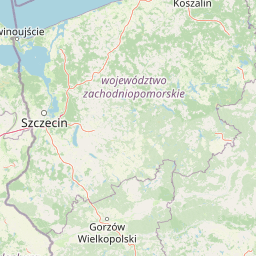
Map view of Mechowisko Manowo Nature Reserve

Use this park location map to pinpoint Mechowisko Manowo Nature Reserve in Poland, understand its exact geographic position, and read its mapped placement within the surrounding landscape more clearly.

Pigeon | © OpenStreetMap contributors

Location context for Mechowisko Manowo Nature Reserve

West Pomeranian Voivodeship
Park atlas

Compare regional wetland reserves, glacial lowland habitats, and adjacent protected natural areas.

Explore Parks Near Mechowisko Manowo Nature Reserve and Surrounding Protected Landscapes

Continue your geographic exploration by browsing other protected areas situated near Mechowisko Manowo Nature Reserve. Comparing adjacent lowland terrain helps frame regional biodiversity and wetland conservation patterns across the wider Pomeranian landscape.
Protected areaWest Pomeranian Voivodeship
About 5.6 km away#1 closest

West

Wiązogóra Protected Area: Geography and Wetland Habitat Mosaic in West Pomeranian Voivodeship

Exploring the ecological significance of a post-glacial lowland mire landscape

Wiązogóra forms an intricate network of twelve bog and mire vegetation complexes situated within the Równina Białogardzka. This site showcases a diverse assembly of dystrophic ponds, transitional mires, and acidophilous beech and oak woodlands, providing a distinct study in northern European wetland conservation and regional post-glacial topography.

Area
4.9 km²
Established
2011
Relief
Lowland
Climate
Temperate
Nature reserveZachodniopomorskie
About 15 km away#2 closest

Southeast

Dolina Zgniłej Strugi Nature Reserve: Geographic Overview of Protected Mires and River Valleys

A diverse wetland corridor in the West Pomeranian region.

Dolina Zgniłej Strugi Nature Reserve protects a mosaic of spring-mire, peatland, and riparian forest habitats along the Zgniła Struga river. This landscape offers a rare example of naturally occurring lowland river dynamics and diverse mire communities within the Wysoczyzna Polanowska, anchoring an important ecological network in north-western Poland.

Area
1.523 km²
Established
2024
Relief
Lowland
Climate
Temperate
Nature reserveZachodniopomorskie
About 16 km away#3 closest

North

Rezerwat przyrody Jodły Karnieszewickie: Mapped Geography and Protected Forest Landscapes

A rare botanical refuge for mature silver fir stands in Zachodniopomorskie.

Rezerwat przyrody Jodły Karnieszewickie is a specialized nature reserve in northern Poland that serves as a living laboratory for forest conservation. The site maintains a dense, closed canopy of silver fir trees that deviate from the region's typical woodland patterns, fostering a microclimate suitable for rare epiphytes. This protected area offers deep insight into postglacial lowland forest composition and the survival of relict plant populations.

Area
0.368 km²
Established
1978
Relief
Lowland
Climate
Temperate
Nature reserveZachodniopomorskie
About 20 km away#4 closest

Southwest

Dolina Rzeki Leśnicy Nature Reserve: Mapped Protected Landscapes in Zachodniopomorskie

A glacial valley reserve featuring riverine forest habitats.

Dolina Rzeki Leśnicy Nature Reserve preserves a distinct young glacial river valley characterized by its tightly meandering stream, amphitheater-like springheads, and diverse gallery forests. Located on the Białogard Plain, this protected landscape demonstrates the intersection of humid riparian ecosystems and undulating glacial relief, providing an essential study of Polish lowland geography and forest conservation.

Area
0.593 km²
Established
2024
Relief
Upland
Climate
Temperate
Nature reserveZachodniopomorskie
About 27 km away#5 closest

East

Rezerwat przyrody Dolina Pustynki: Geography and Protected River Valley Landscapes in Zachodniopomorskie

Mapped riverine corridors and ancient deciduous forest ecosystems

Explore the detailed ecological landscape of Rezerwat przyrody Dolina Pustynki in the West Pomeranian region. This nature reserve serves as an essential example of submontane river habitats and well-preserved oak-hornbeam forests within the Polanów High Plain, maintaining vital connections between regional water catchments and protected woodlands.

Area
0.392 km²
Established
2024
Relief
Upland
Climate
Temperate
Nature reserveZachodniopomorskie
About 32 km away#6 closest

West

Trzebiatowsko-Kołobrzeski Pas Nadmorski: Protected Coastal Habitat and Regional Geography

Nature reserve covering Baltic dunes, wetlands, and estuaries.

Spanning across the Szczecin Coastal Plain, this extensive nature reserve protects vital coastal habitats, including rare dune sequences, brackish lagoons, and bog forests. The area serves as a critical geographic corridor for migratory bird species and diverse sand-loving plant communities in the Zachodniopomorskie region of Poland.

Area
174.69 km²
Established
2008
Relief
Lowland
Climate
Temperate
Nature reserveWest Pomeranian Voivodeship
About 32 km away#7 closest

Southeast

Jezioro Szare Nature Reserve: Regional Geography and Protected Freshwater Landscape Analysis

Analyzing the forest-fringed lobelia lake basin in West Pomeranian Voivodeship

Situated in the West Pomeranian Voivodeship, Jezioro Szare Nature Reserve protects a distinct lobelia-type lake ecosystem. The reserve is characterized by its steep, forested basin rim and clear, low-nutrient water, functioning as a significant reference site for rare freshwater habitats within the Pomeranian lake district landscape.

Area
0.087 km²
Established
1974
Relief
Upland
Scope
Terrestrial
A horizontal watercolor painting showing a winding river flowing through a lush green valley with distant hills under a soft light.
Nature reserveZachodniopomorskie
About 48 km away#8 closest

South

Dolina Pięciu Jezior Nature Reserve: Geographic Atlas and Protected Area Map

A glacial valley and lake system in the Drawsko Lakeland

Located in the heart of the Drawsko Lakeland, Dolina Pięciu Jezior represents a protected nature reserve centered on a narrow valley system. The area showcases a distinctive post-glacial terrain with five linked lakes and mature beech forests. This geographic corridor serves as a vital protected area, preserving the headwaters of the Drawa River and its surrounding ecosystem within the Zachodniopomorskie region.

Area
2.288 km²
Established
1987
Relief
Upland
Climate
Temperate

Common questions about visiting, size, designation, and location context for Mechowisko Manowo Nature Reserve

Mechowisko Manowo Nature Reserve FAQs for park facts, access, geography, and protected area context

Find quick answers about Mechowisko Manowo Nature Reserve, including protected-area facts, park geography, trail and visitor context, and how the park fits into its surrounding country and regional landscape.
MoriAtlas Explorer

Continue Your Protected Areas Search Across the Global Atlas

Deepen your exploration by continuing the structured search for national parks and protected areas worldwide. Utilize the comprehensive filtering capabilities to compare different conservation landscapes and refine your understanding of global park geography. Discover more about the distribution and characteristics of protected natural areas.

Global natural geography