Why Mechowisko Manowo Nature Reserve stands out
The reserve is best known for protecting a complex of soligenic alkaline fens associated with transitional bogs, swamp forests, and riparian woodlands in a young glacial landscape. These calcium-rich, spring-fed peatlands support brown-moss communities, młaki spring-mire vegetation, and luxuriant sedge stands that are collectively rare and recognized at the European level. The protected habitat mosaic includes willow, poplar, alder, and ash floodplain forests alongside base-rich sedge-moss communities. Such a combination of alkaline fens, transitional mires, and swamp forests in close proximity is unusual in the intensively used lowlands of West Pomerania and gives Mechowisko Manowo its distinctive conservation value.
Mechowisko Manowo Nature Reserve history and protected-area timeline
The conservation history of Mechowisko Manowo stretches back more than a decade before its formal designation as a nature reserve. Recognizing the ecological significance of its alkaline fens, transitional bogs, and associated swamp forests, Polish conservation authorities designated the area as a special area of conservation under the Natura 2000 network in 2011, assigning it the identification code PLH320057. This integration into Europe's central network of protected sites marked the first formal acknowledgment of the area's habitat values at the European level.
Efforts to strengthen this protection culminated in 2018, when the Regional Director for Environmental Protection in Szczecin issued an order on 28 August 2018 to officially recognize the territory as a national nature reserve. The reserve was formally established on 13 September 2018 through a regulation published in the official journal of the West Pomeranian Voivodeship. The reserve's creation was actively promoted by the Klub Przyrodników, a long-standing Polish conservation organization, as part of a broader project dedicated to the protection of alkaline fens in the young glacial landscapes of northern Poland. Through this initiative, the reserve became part of a wider effort to safeguard one of Poland's most threatened peatland habitat types.
Mechowisko Manowo Nature Reserve landscape and geographic character
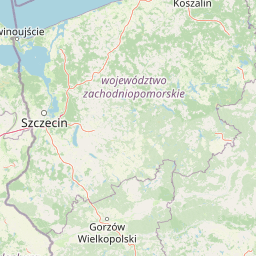
Mechowisko Manowo occupies a low-relief stretch of the Dzierżęcinka river valley, part of the post-glacial Równina Białogardzka plain in West Pomerania. This is terrain shaped by the last Ple frozen glaciation: a flat to gently undulating landscape of glacial outwash, till, and meltwater deposits that has subsequently been modified by peat-forming processes over thousands of years. Within that broader setting, the reserve lies in a shallow valley position where calcareous groundwater emerges as springs and seepages, sustaining a distinctive peatland topography.
The result is a wet, basin-like environment where waterlogged depressions alternate with slightly elevated hummocks and ridges formed by accumulating organic matter. Brown-moss carpets, sedge tussocks, and reed stands create a textured, low-growing mosaic rather than a tall, forested canopy, except where floodplain and swamp forests develop along the more stable watercourses. The proximity to the village of Manowo and to National Road 11 underlines how the reserve sits at the interface between a heavily used lowland landscape and a fragile, water-dependent ecological system that depends on the integrity of its groundwater and surface flow patterns.
Mechowisko Manowo Nature Reserve ecosystems, habitats, and plant life
The nature of Mechowisko Manowo is defined by its base-rich peatland ecosystems, a relatively uncommon feature in the predominantly acidic peatlands of the north Polish lowlands. Spring-fed discharge of calcium-rich water has produced soligenic alkaline fens characterized by młaki spring-mire vegetation, luxuriant turzycowiska sedge communities, and brown-moss-dominated ground layers. These habitats are recognized at the EU level and form the core of the reserve's conservation interest.
Around and between these open peatland patches lies a layered sequence of forested wetlands. Willow, poplar, alder, and ash floodplain forests occupy periodically flooded sites along the Dzierżęcinka valley, while swamp forests occupy more persistently waterlogged ground. The mosaic of open fen, transitional bog, riparian woodland, and swamp forest creates a gradient of wet conditions and supports a correspondingly diverse community of plants, mosses, and invertebrates adapted to each niche. The overall ecological character is one of hydrological continuity, where groundwater chemistry, not just water quantity, controls the biological composition of the site.
Mechowisko Manowo Nature Reserve wildlife and species highlights
The wildlife profile of Mechowisko Manowo is shaped by the unusual combination of alkaline fens, transitional mires, and floodplain forests, which together provide habitats for moisture-loving and base-rich-soil specialists. Among the protected species recorded in the reserve are the orchid Lipiennik Loesela (Liparis loeselii), a fen specialist of conservation concern across Europe, and the shining sickle-moss sierpowiec błyszczący, a bryophyte associated with undisturbed peatland communities. Invertebrates are represented by the narrow-mouthed snail poczwarówka zwężona, one of several rare mollusks tied to calcareous wetland habitats.
The reserve's reed beds, sedge stands, and brown-moss carpets provide foraging and breeding habitat for a range of wetland-dependent fauna, while the surrounding swamp and riparian forests extend the ecological gradient into more typical lowland forest conditions. Although the reserve is small, the diversity of habitats packed into its 55 hectares makes it ecologically disproportionate to its size, supporting rare and protected species that depend on contiguous, undisturbed peatland.
Mechowisko Manowo Nature Reserve conservation status and protection priorities
The conservation significance of Mechowisko Manowo lies in its role as a refuge for one of central Europe's most threatened peatland types: soligenic alkaline fens and their associated transitional bog and swamp forest complexes. Since 2011, the area has been part of the European Natura 2000 network as a special area of conservation, under the site code PLH320057, recognizing its importance for the EU-protected habitat of alkaline fens. The 2018 designation as a nature reserve under Polish law added a stricter national protection regime, reinforcing restrictions on land use, drainage, and disturbance.
The reserve was created specifically to maintain the integrity of its peatland complex, its characteristic plant communities, and the associated flora and fauna, an objective set out directly in the formal protection declaration. Its contribution to conservation goes beyond the local level, fitting into a broader initiative led by the Klub Przyrodników that aims to secure a network of alkaline fen sites across the young glacial landscapes of northern Poland. In this way, Mechowisko Manowo is both a stand-alone protected site and a node in a wider regional strategy for preserving one of Poland's rarest wetland ecosystems.
Top sights and standout views in Mechowisko Manowo Nature Reserve
Mechowisko Manowo stands out for the high concentration of EU-protected alkaline fen habitat packed into a small, easily accessible reserve along the Dzierżęcinka valley. Its layered protection, first through Natura 2000 and then through Polish reserve status, reflects strong recognition of its ecological value at both European and national levels.
The reserve's mix of spring-mire vegetation, sedge-moss communities, willow-poplar-alder floodplain forests, and swamp forest habitats provides a compact but complete picture of Pe-related biodiversity. Its location just outside Manowo village, near National Road 11, means it functions not only as a stronghold for rare species such as Liparis loeselii and poczwarówka zwężona, but also as a living example of how base-rich peatlands can survive within an intensively used lowland landscape.