Mori Atlas logo
Nature reserveRezerwat przyrody Moczydło

Analyzing the protected wetland and forest boundaries of this crucial ornithological site

Rezerwat przyrody Moczydło: A Regional Faunistic Reserve within the Mazowieckie Landscape

Rezerwat przyrody Moczydło serves as a vital faunistic sanctuary within the Masovian Voivodeship, providing essential breeding grounds for diverse bird communities. Nested inside the wider protected geography of the Nadbużański Landscape Park, this site represents a dense mosaic of wetland, marsh, and forest terrain. The atlas records for this reserve highlight its function as a concentrated refuge that integrates with the broader ecological network of the middle Bug River region.

faunistic reservebird reservewetland birdsforest birdsblack storkmarsh harrier

Rezerwat przyrody Moczydło

Nature reserve

Park overview

Structured park overview, official facts, and landscape profile for Moczydło Nature Reserve

Moczydło Nature Reserve park facts, protected area profile, and essential visitor context

Review the core facts for Moczydło Nature Reserve, including designation, size, terrain, visitor scale, habitats, and operating context in one park-focused overview.

About Moczydło Nature Reserve

Moczydło Nature Reserve is a faunistic protected area in the Masovian Voivodeship of east-central Poland, situated within the Stoczek commune and managed through the Stoczek forestry division of the Łochów Forest Inspectorate. It sits inside the larger Nadbużański Landscape Park, a regional designation that protects the natural and cultural values of the area around the middle Bug River valley.

The reserve's defining purpose is ornithological. It was created to maintain, for scientific and educational reasons, the breeding sites of rare and endangered bird species and to conserve a varied and species-rich bird assemblage in the area. Field inventories have confirmed the presence of about 66 bird species, with roughly 48 of those recorded as breeding species. This bird community spans a mix of wetland, marsh, waterbody, and forest habitats, supporting species such as the little grebe, water rail, mallard, tufted duck, teal, black stork, common greenshank, western marsh harrier, and common reed bunting.

Although small in physical extent, the reserve is a meaningful component of the wider conservation network of the Nadbużański Landscape Park. Its faunistic designation focuses protection efforts on habitat conditions that sustain nesting populations, while its location within a larger landscape park places it in a broader mosaic of protected forests, wetlands, and riverside environments. The reserve thus contributes both to local biodiversity protection and to the ecological coherence of the regional park system around the Bug River.

Quick facts and research context for Moczydło Nature Reserve

Moczydło Nature Reserve is a faunistic nature reserve, meaning it was established primarily to protect animal species and their habitats rather than geological or botanical features. It was created on 9 October 1991 by formal legal order, and its protection regime is classified as partial.

The reserve covers roughly 58 hectares within Gmina Stoczek, in the forested area administered by the Stoczek forest district of the Łochów Forest Inspectorate. Its entire footprint lies inside the Nadbużański Landscape Park in the Masovian Voivodeship. Its defining conservation purpose is the safeguarding of breeding populations of rare and threatened birds and the preservation of a species-rich bird community.

Protection and recognition

Examine the terrestrial conservation framework and recognized status parameters.

Rezerwat przyrody Moczydło Protection Status and Designation Records

Rezerwat przyrody Moczydło maintains a documented terrestrial protection scope within national conservation records. Structured attributes compile management parameters and official designation context for comprehensive analysis.

Protection details

Protection scope
Terrestrial
Transboundary protection
No
Park context

Deeper park guide and search-rich context for Moczydło Nature Reserve

Moczydło Nature Reserve history, landscape, wildlife, and travel context

Explore Moczydło Nature Reserve through its history, landscape character, ecosystems, wildlife, conservation priorities, cultural context, and seasonal travel timing in a structured park guide built for atlas discovery and search intent.

Why Moczydło Nature Reserve stands out

Moczydło Nature Reserve is best known as a dedicated bird protection site, established specifically to conserve breeding habitats for rare and threatened bird species. Bird surveys have documented around 66 bird species in total, including some 48 breeding species, making it a regionally important ornithological site. Among the notable breeding species recorded are the little grebe, common reed bunting, water rail, mallard, black stork, common greenshank, tufted duck, Eurasian teal, and western marsh harrier, illustrating the reserve's mix of wetland, marsh, and forest-associated birdlife.
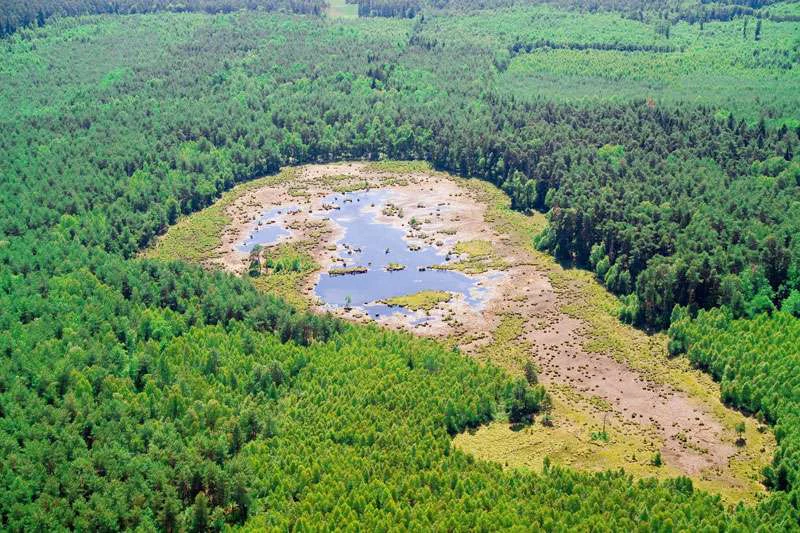
An aerial view of the Moczydlo Nature Reserve showing a central marshy wetland area surrounded by a lush green forest canopy.
Aerial view of Moczydlo Nature Reserve, showcasing the wetland habitat surrounded by dense forest.

Moczydło Nature Reserve history and protected-area timeline

The Moczydło Nature Reserve was formally established on 9 October 1991, following the legal designation published in the Polish monitor of that year. The reserve was created within the forestry territory of the Stoczek forest district, which is part of the Łochów Forest Inspectorate, and was placed within the boundaries of the existing Nadbużański Landscape Park.

The decision to designate the area as a faunistic reserve reflected an explicit scientific and educational aim: to safeguard the breeding habitats of rare and threatened bird species and to conserve a bird community of notable species richness in this part of the Masovian region. Subsequent ornithological work in the reserve has documented around 66 bird species, with breeding status confirmed for approximately 48 of them, supporting the original rationale for protection.

The reserve continues to operate under a partial protection regime, consistent with a faunistic designation focused on species and habitat conservation rather than strict landscape preservation.

Moczydło Nature Reserve landscape and geographic character

The reserve occupies a relatively compact forested area on generally low-relief terrain typical of the central Masovian plain, within the wider landscape setting of the Nadbużański Landscape Park. The surrounding region is characterized by extensive forests, river valleys associated with the Bug River system, and transitional wetland and marsh habitats that create diverse ecological conditions.

Within this broader landscape, the reserve captures a small but ecologically significant mosaic of habitats that support its rich birdlife. The mix of forest stands, water features, wet depressions, and shore vegetation supports nesting sites for waterbirds, marsh birds, and forest-dwelling species alike. This habitat variation, set within the larger forested surroundings of the Stoczek forestry district, gives the reserve its character as a concentrated bird refuge within a much wider protected landscape.

Moczydło Nature Reserve ecosystems, habitats, and plant life

Ecologically, the reserve is shaped by the intersection of forest, wetland, and aquatic habitats. The forested setting within the Łochów Forest Inspectorate provides tree cover and nesting substrate for woodland and cavity-using birds, while wet depressions, pools, and marshy ground support waterbirds, rails, grebes, and ducks. This habitat diversity underpins the species-rich bird community that the reserve was specifically created to protect.

The reserve's faunistic status places the focus of ecological management squarely on maintaining habitat conditions suitable for breeding birds throughout their nesting seasons. The presence of both open water-associated species and forest-nesting birds reflects a habitat mosaic typical of the transitional landscapes of the broader Nadbużański area.

Moczydło Nature Reserve wildlife and species highlights

Birds are the central focus of wildlife interest at Moczydło Nature Reserve. Surveys have recorded approximately 66 bird species in the area, with about 48 confirmed as breeding species. This community includes a notable mix of wetland, marsh, and forest-associated birds.

Documented breeding species of conservation interest include the little grebe, water rail, mallard, tufted duck, Eurasian teal, black stork, common greenshank, western marsh harrier, and common reed bunting. The presence of the black stork is particularly notable, as this species is regarded as sensitive and dependent on quiet, well-wooded wetland habitats. Together, these species illustrate the reserve's role as a refuge for both specialist wetland birds and more generalist waterfowl and passerines breeding in the area.

Moczydło Nature Reserve conservation status and protection priorities

Moczydło Nature Reserve was established with an explicit scientific and educational conservation mandate: to preserve the breeding sites of rare and threatened bird species and to maintain a species-rich bird community in this part of Poland. As a faunistic reserve, its protection is centered on animal species and their habitats rather than on geological or botanical features, and its regime is classified as partial protection.

The reserve's location entirely within the Nadbużański Landscape Park adds a layer of landscape-scale conservation context. Smaller reserves such as Moczydło function as focused biodiversity refuges that complement the broader protective measures of the surrounding landscape park, contributing to habitat connectivity and to the long-term viability of breeding bird populations in the Bug River region.

Top sights and standout views in Moczydło Nature Reserve

The defining highlight of Moczydło Nature Reserve is its role as a dedicated breeding-ground refuge for rare and threatened birds within a much larger protected landscape. The presence of around 66 recorded bird species, including roughly 48 breeders, demonstrates that the reserve supports a genuinely diverse avian community in a comparatively small area.

Equally important is the reserve's setting inside the Nadbużański Landscape Park, where it contributes to a layered system of conservation that begins with focused faunistic protection and extends outward to broader landscape-scale preservation of the forests, wetlands, and river valleys of the middle Bug River region.

Monthly climate preview

Track long-term monthly temperature and precipitation patterns across the landscape

Rezerwat przyrody Moczydło Climate Normals and Annual Temperature Rhythm

Long-term representative point measurements record annual temperature fluctuations from subzero winter minima to warm summer maximums alongside consistent daily precipitation rates. Reviewing the complete twelve-month climatology dataset reveals detailed seasonal weather variations across the protected terrain.
Annual mean8 °C
-4 °C20 °C
Jan-4°
Feb-3°
Mar
Apr
May14°
Jun18°
Jul20°
Aug19°
Sep14°
Oct
Nov
Dec-2°
Warmest month
July

19.8 °C

Coolest month
January

-4.2 °C

Wettest month
July

2.4 mm/day

Driest month
March

1.3 mm/day

Park location guide

Geography guide, regional context, and park location map for Moczydło Nature Reserve

Moczydło Nature Reserve park geography, regions, and map view in Poland

Understand where Moczydło Nature Reserve sits in Poland through a broader geographic reading of the surrounding landscape, nearby location context, and its mapped position within the national park landscape.

How Moczydło Nature Reserve fits into Poland

Poland, officially the Republic of Poland, is a Central European country spanning from the Baltic Sea in the north to the Carpathian Mountains in the south. It borders Germany, Czech Republic, Slovakia, Ukraine, Belarus, Lithuania, and Kaliningrad Oblast. The country has a temperate climate, diverse landscapes, and is known for its rich history, cultural heritage, and strong economic position within the EU.

Wider geography shaping Moczydło Nature Reserve in Poland

Poland occupies 312,696 km2 in Central Europe, extending from the Baltic Sea coast in the north to the Sudetes and Carpathian Mountains in the south. It borders Germany to the west, Czech Republic and Slovakia to the south, Ukraine and Belarus to the east, and Lithuania and Kaliningrad Oblast to the northeast. The landscape includes lowland plains, uplands, and mountain ranges.

Map view of Moczydło Nature Reserve

Use this park location map to pinpoint Moczydło Nature Reserve in Poland, understand its exact geographic position, and read its mapped placement within the surrounding landscape more clearly.

Pigeon | © OpenStreetMap contributors

Location context for Moczydło Nature Reserve

Mazowieckie

Visual reference for wetland habitats and protected forest terrain in Poland

Rezerwat przyrody Moczydło Photos and Landscape Scenery

Visual documentation captures the forested terrain, marsh depressions, and wetland habitats that characterize Rezerwat przyrody Moczydło. Examining field imagery reveals the protected landscape features and environmental conditions supporting regional bird populations.

An aerial view of the Moczydlo Nature Reserve showing a central marshy wetland area surrounded by a lush green forest canopy.

Park atlas

Compare nearby regional nature reserves and connected river valley habitats

Other Parks Near Rezerwat przyrody Moczydło and Surrounding Protected Landscapes

Browse protected areas and natural reserves located near Rezerwat przyrody Moczydło across the Masovian plain. Regional park comparisons reveal wider wetland ecosystems and forest habitats throughout the Bug River valley.
Nature reserveMazovia Voivodeship
About 15 km away#1 closest

North

Rezerwat przyrody Mokry Jegiel: Protected Wetland Forest Geography in Mazovia Voivodeship

A rare mosaic of bog and riparian forest communities

Rezerwat przyrody Mokry Jegiel functions as a key protected area within the Lower Bug valley of east-central Poland. The reserve preserves an increasingly rare sequence of hydrologically sensitive forest types, ranging from nutrient-poor coniferous bogs to dense alder swamps and periodically inundated riparian forests, making it a focal point for regional wetland studies.

Area
1.161 km²
Established
2002
Relief
Lowland
Climate
Temperate
A pale, soft-focus watercolor illustration showing a horizontal landscape of rolling green hills, distant hills in shades of purple and grey, and groups of conifer trees.
Protected landscapeMasovian Voivodeship
About 20 km away#2 closest

Northwest

Puszcza Biała Protected Landscape: Map and Geography of the Mazovian Lowland Forests

Extensive pine-dominated woodlands of Masovian Voivodeship

Puszcza Biała is a massive, continuous lowland forest in east-central Poland, characterized by its dominant Scots pine stands and post-glacial sandy soils. Positioned between the Bug and Narew rivers, this protected landscape provides a quiet, expansive green space that serves as an essential component of the regional natural geography of the Masovian Voivodeship.

Area
850 km²
Relief
Lowland
Scope
Terrestrial
Water
Major water bodies
A flat vector illustration of a grassy meadow with yellow dandelions, a winding dirt path lined with fence posts, a forest in the midground, and large mountains in the background under a sky with pink clouds.
Protected areaMazovia Voivodeship
About 38 km away#3 closest

Northwest

Bagno Pulwy: A Geographic Overview of the Mazovian Wetland and Peatland Mosaic

Protected marshland landscapes and Narew valley terrain

Bagno Pulwy represents an extensive lowland wetland in Poland's Mazovia region, characterized by its wide meadows, peat-rich soil, and intricate network of historical drainage canals. This protected area offers a distinct geographic contrast to the surrounding forested uplands, functioning as a vital open habitat situated within the broader Narew river valley drainage system.

Area
60 km²
Water
Major water bodies
A wide watercolor illustration showing a river flowing through a grassy landscape with a line of trees in the background, rendered in soft greens, pinks, and purples.
Nature reserveMazovian Voivodeship
About 40 km away#4 closest

West

Rezerwat przyrody Dębina Nature Reserve: Exploring Protected Landscapes in Mazovian Voivodeship

A preserved oak-hornbeam forest featuring glacial erratics and ancient woodland

Rezerwat przyrody Dębina is a significant nature reserve situated in the Mazovian Voivodeship, noted for its 200-year-old oak stands and multi-species deciduous canopy. As the oldest protected area in the region, it preserves a vital remnant of the Polish Lowlands landscape, offering a dense, ecologically rich forest environment defined by subtle topography and unique Pleistocene glacial boulders.

Area
0.512 km²
Established
1952
Relief
Lowland
Climate
Temperate
Nature reserveMazowieckie
About 49 km away#5 closest

East

Rezerwat przyrody Dębniak: Protected Forest Landscapes and Bug River Escarpment Geography

A preserved old-growth oak and linden woodland in Mazowieckie.

Rezerwat przyrody Dębniak offers an intimate look at the grąd deciduous forest ecosystem within the Mazowieckie landscape. Situated along the Bug River escarpment, this twenty-hectare reserve provides a rare glimpse into mature oak and linden woodland, monumental trees, and a floristically diverse understory. The area functions as a vital conservation zone, maintaining the integrity of riparian woodland transitions and providing a protected habitat for orchids and lilies on the slopes above the valley.

Area
0.208 km²
Established
1978
Relief
Lowland
Scope
Terrestrial
Nature reserveMazovia Voivodeship
About 56 km away#6 closest

South

Dąbrowy Seroczyńskie Nature Reserve: Protected Lowland Forest Geography and Mapped Boundaries

Regional woodland complex in Mazovia Voivodeship

Dąbrowy Seroczyńskie Nature Reserve protects a substantial sessile oak forest in central-eastern Poland. This lowland woodland area features varied topography between 175 and 192 meters above sea level, preserving significant forest floor plant communities and characteristic lowland fauna within the broader context of the Siedlce region and the Łuków protected landscape.

Area
5.502 km²
Established
1987
Relief
Lowland
Access
Access unknown
A pale, soft-focus watercolor painting of a wetland area with grassy banks, distant rolling hills, and a calm body of water reflecting sunset-toned light.
Nature reserveMazowieckie Voivodeship
About 61 km away#7 closest

Southwest

Rezerwat przyrody Bagno Bocianowskie: Protected Nature Reserve and Forest Geography

Inland dune and peatland mosaics in central Poland

The nature reserve Rezerwat przyrody Bagno Bocianowskie provides a protected study of how glacial sand dunes and peat-filled depressions shape forest distribution. Located in Mazowieckie Voivodeship, this site preserves rare wetland flora and diverse woodland communities within a 69-hectare lowland forest landscape.

Area
0.689 km²
Established
1982
Relief
Lowland
Climate
Temperate
Nature reserveMasovian Voivodeship
About 62 km away#8 closest

Southwest

Rezerwat przyrody Mszar Pogorzelski: Peatland Protected Area and Wetland Landscape Mapping

Regional landscape context in Masovian Voivodeship

Located in the eastern reaches of Otwock, Rezerwat przyrody Mszar Pogorzelski preserves a rare gradient of raised bogs and pine forest edge habitats. This site offers valuable insight into the sandy lowland geography of east-central Poland and acts as a localized refuge for bog vegetation within the protected Mazovian Landscape Park zone.

Area
0.351 km²
Established
1987
Relief
Lowland
Climate
Temperate

Common questions about visiting, size, designation, and location context for Moczydło Nature Reserve

Moczydło Nature Reserve FAQs for park facts, access, geography, and protected area context

Find quick answers about Moczydło Nature Reserve, including protected-area facts, park geography, trail and visitor context, and how the park fits into its surrounding country and regional landscape.
MoriAtlas Explorer

Continue Your Protected Areas Search Across the Global Atlas

Deepen your exploration by continuing the structured search for national parks and protected areas worldwide. Utilize the comprehensive filtering capabilities to compare different conservation landscapes and refine your understanding of global park geography. Discover more about the distribution and characteristics of protected natural areas.

Global natural geography