Mori Atlas logo
Nature reserveRezerwat przyrody Mokry Jegiel

Examining the hydrology and forest mosaic within the Lower Bug valley floodplain corridor

Rezerwat przyrody Mokry Jegiel: An Atlas of Wetland Forest Geography and Protected Landscapes in Poland

Rezerwat przyrody Mokry Jegiel represents a significant protected enclave of wetland forest within the Mazovia Voivodeship of Poland. This nature reserve, situated in the Lower Bug valley, preserves a complex sequence of bog woodlands, alder swamps, and riparian floodplains that provide essential habitats for uncommon breeding bird populations. The site serves as a crucial point of study for lowland hydrologic patterns and undisturbed forest communities in eastern Poland.

wetland forestbog woodlandalder swampfloodplain forestbird breeding habitatriver valley

Rezerwat przyrody Mokry Jegiel

Nature reserve

Park overview

Structured park overview, official facts, and landscape profile for Mokry Jegiel Nature Reserve

Mokry Jegiel Nature Reserve park facts, protected area profile, and essential visitor context

Review the core facts for Mokry Jegiel Nature Reserve, including designation, size, terrain, visitor scale, habitats, and operating context in one park-focused overview.

About Mokry Jegiel Nature Reserve

Mokry Jegiel Nature Reserve is one of the numerous small nature reserves that make up the constellation of protected sites along Poland's eastern border region. Although it is modest in size, it represents an unusually complete cross-section of the wetland forest habitats typical of the Lower Bug valley. By protecting coniferous bog forest, alder swamp forest, and periodically flooded lowland forest on a single compact site, the reserve offers a representative sample of the natural woodland communities that once dominated this part of the Mazovian lowlands.

The reserve's presence within the Nadbużański Landscape Park strengthens its role in the regional conservation network. The surrounding landscape park provides a buffer and ecological context, while the reserve itself preserves a stricter core where vegetation dynamics, hydrology, and breeding bird populations can be protected with limited direct intervention. This layered protection reflects the broader Polish approach of combining landscape-level protection with smaller, tightly focused nature reserves.

Ecologically, Mokry Jegiel is shaped by water. The northern edge of the reserve borders the Kanał Kacapski, and the surrounding floodplain terrain supports both permanently waterlogged alder stands and seasonally inundated riparian forests, alongside drier bog woodland dominated by conifers. The resulting habitat mosaic is unusually rich for lowland Poland and explains why the site has attracted both botanical and ornithological interest. The reserve has been the subject of scientific studies, including a published characterization of its vascular flora by researchers from the Warsaw University of Life Sciences.

Quick facts and research context for Mokry Jegiel Nature Reserve

Mokry Jegiel Nature Reserve is a Polish forest reserve (rezerwat leśny) of roughly 116 hectares, created on 24 July 2002 by a decision of the Masovian Voivodeship governor. It sits within the Sadowne commune in Węgrów County, Masovian Voivodeship, and its territory overlaps with the Nadbużański Landscape Park.

Geographically the reserve belongs to the Dolina Dolnego Bugu mesoregion, the broad Lower Bug River valley near the Polish-Belarusian-Ukrainian border area. Its northern boundary follows the Kanał Kacapski watercourse, from which an early working name for the reserve was derived. The protection purpose combines scientific, educational, and landscape values, and the reserve primarily safeguards wetland forest communities and wet meadows used by rare breeding birds.

Protection and recognition

Review documented terrestrial protection scope and conservation management context.

Rezerwat przyrody Mokry Jegiel Protection Status and Designated Area Facts

Rezerwat przyrody Mokry Jegiel maintains a documented terrestrial protection scope within its regional landscape boundary. Detailed conservation records track administrative status, management guidelines, and verified designation history without external recognition programs.

Protection details

Protection scope
Terrestrial
Transboundary protection
No
Park context

Deeper park guide and search-rich context for Mokry Jegiel Nature Reserve

Mokry Jegiel Nature Reserve history, landscape, wildlife, and travel context

Explore Mokry Jegiel Nature Reserve through its history, landscape character, ecosystems, wildlife, conservation priorities, cultural context, and seasonal travel timing in a structured park guide built for atlas discovery and search intent.

Why Mokry Jegiel Nature Reserve stands out

Mokry Jegiel is best known for the combination of bog, alder, and floodplain forests found on a relatively compact area within the Lower Bug valley. The reserve preserves a sequence of natural forest communities that are increasingly rare in the lowland Polish landscape, where most coniferous and mixed stands have been altered by drainage or forestry. It is equally recognized as a refuge for uncommon breeding birds. Species documented in or around the reserve include the Eurasian woodcock, the Eurasian hoopoe, the hawfinch, the common reed bunting, and several tit species, giving the reserve a distinct ornithological identity beyond its floristic value.

Mokry Jegiel Nature Reserve history and protected-area timeline

Mokry Jegiel was established relatively recently in the history of Polish nature conservation, on 24 July 2002, through a decision of the Masovian Voivodeship governor. Its designation as a forest reserve (rezerwat leśny) reflects its primary purpose of protecting native woodland communities rather than individual tree specimens.

The reserve was created within an already recognized landscape-scale framework, as it lies entirely inside the Nadbużański Landscape Park. This placed the new site within a broader strategy of strengthening protection across the Bug valley, where the combination of river floodplains, wetlands, and adjacent forests had already been recognized as regionally significant.

Following its establishment, the reserve became a subject of scientific research. A 2008 publication by researchers from the Warsaw University of Life Sciences, titled "Charakterystyka flory naczyniowej rezerwatu 'Mokry Jegiel' i jego otoczenia," documented the vascular plant flora of the reserve and its surroundings, helping to establish a baseline for future monitoring of its botanical values.

Mokry Jegiel Nature Reserve landscape and geographic character

The landscape of Mokry Jegiel is shaped by its position in the Lower Bug valley, a broad, relatively flat floodplain terrain typical of this part of east-central Poland. Elevations are low, and the terrain is largely waterlogged for much of the year. Sightlines within the reserve are generally short, given the closed canopy of the forests and the density of wet vegetation in the meadow openings.

The reserve contains three distinguishable forest types arranged according to local hydrology. Coniferous bog woodland occupies the higher, peatier ground, where acidic, nutrient-poor conditions favor bog species. Alder swamp forest sits in the wettest depressions, where standing or slowly moving groundwater supports black alder and associated wetland flora. Between these extremes, riparian floodplain forest stretches across land subject to periodic inundation by the Bug river system and its tributaries.

The northern boundary of the reserve follows the Kanał Kacapski, an artificial watercourse whose name contributed to the reserve's early working documentation. This channel, together with the broader floodplain hydrology, defines the water regime that sustains the distinct forest communities inside the reserve.

Mokry Jegiel Nature Reserve ecosystems, habitats, and plant life

The nature of Mokry Jegiel is defined by the close relationship between forest type and water. Rather than forming a uniform block of woodland, the reserve preserves a natural mosaic of community types whose distribution mirrors subtle changes in soil moisture, groundwater level, and flood exposure. This patterning is one of the key ecological reasons for the reserve's protection.

Bog woodland communities provide acidic, peaty conditions typical of lowland boreal-style forests, while alder swamp forests mark the permanently wet zones, and riparian forests occupy the dynamic interface between forest and open water. Wet meadows within and around the reserve extend the diversity of habitats, supporting herbaceous plant communities that complement the forested zones.

This combination of bog, swamp, floodplain forest, and wet meadow is increasingly uncommon in the intensively managed lowlands of Poland, and it forms the foundation of the reserve's ecological value and its significance for both flora and fauna.

Mokry Jegiel Nature Reserve wildlife and species highlights

The most prominent feature of Mokry Jegiel's fauna is its bird assemblage. The reserve and its surroundings function as a breeding, feeding, and sheltering area for several species that are uncommon elsewhere in the Polish lowlands. Documented species include the Eurasian woodcock, a ground-nesting wader of damp forest, and the Eurasian hoopoe, a striking insectivorous bird associated with open forest edges and meadows.

Other breeding species of note include the hawfinch, a large finch reliant on mature broadleaf forest for food and nesting, the common reed bunting, typical of wetland edges and wet meadows, and several tit species that use the mixed and broadleaf elements of the woodland. Together these species indicate a forest structure rich in both mature trees and a varied understory.

Beyond birds, the wetland forest mosaic supports the broader fauna expected of bog, alder, and floodplain forest in eastern Poland, including small mammals, amphibians tied to wet habitats, and invertebrates associated with decaying wood and saturated soils, although the reserve's published focus has been primarily ornithological and botanical.

Mokry Jegiel Nature Reserve conservation status and protection priorities

From a conservation perspective, Mokry Jegiel fulfils several roles at once. It preserves a representative example of wetland forest communities that have become fragmented across the Polish lowlands, offering a baseline for understanding natural bog, alder, and riparian forest dynamics. Its protected status also buffers these communities against drainage, conversion, and intensive forestry that have affected similar sites elsewhere in the region.

The reserve is embedded within the Nadbużański Landscape Park, which adds a layer of regional-scale protection around the strict reserve zone. This integration with a larger protected landscape means the reserve contributes to ecological connectivity along the Bug valley, supporting species that require both core habitat and surrounding landscape-level conditions.

Scientific and educational values are also explicitly invoked in the legal act establishing the reserve, alongside landscape values. The reserve has been used as a subject of academic study, most notably in vascular flora research, contributing baseline botanical data that supports ongoing monitoring and management decisions.

Mokry Jegiel Nature Reserve cultural meaning and human context

Mokry Jegiel does not have a strongly documented cultural dimension beyond its role within the broader Polish system of nature protection. Its location in the Sadowne commune places it in a rural part of Masovia, where traditional land use has long combined small-scale agriculture with forestry along the Bug floodplain.

The use of an early working name derived from the Kanał Kacapski watercourse reflects a broader Polish practice of borrowing administrative or hydrological labels when documenting protected areas, embedding the reserve within the local cultural and infrastructural geography of the region. Beyond this, the reserve represents primarily a scientific and ecological heritage resource rather than a strongly defined cultural landscape.

Top sights and standout views in Mokry Jegiel Nature Reserve

A compact mosaic of bog, alder, and floodplain forest on the Lower Bug valley, hosting breeding populations of uncommon woodland and wetland birds. Integral part of the Nadbużański Landscape Park's protected corridor along the eastern Polish border. Subject of published botanical research, providing a baseline for the vascular flora of lowland wetland forest in Masovia.

Best time to visit Mokry Jegiel Nature Reserve

The reserve is best appreciated during the late spring and early summer breeding season, when woodland and wetland birds are most active and the wet meadows surrounding the forest are at their greenest. Late spring is also the most favorable period for observing species such as the hoopoe and woodcock, which are typically easier to detect through vocal activity.

Autumn can also be rewarding for visitors interested in forest structure and seasonal hydrology, when fruiting bodies appear in the bog woodland and changing water levels expose the dynamic relationship between forests and the floodplain. Access in any season depends on the regulations of the surrounding Nadbużański Landscape Park, and visitors should expect wet ground conditions throughout much of the year due to the reserve's floodplain setting.

Monthly climate preview

Long term temperature and precipitation averages recorded at representative coordinates

Rezerwat przyrody Mokry Jegiel Climate Normals and Annual Weather Patterns

Historical data compiled from NASA Power tracks monthly mean temperatures ranging from negative values through warm summer peaks alongside steady precipitation rates across the year. Examining the full twelve month record provides deeper insight into measured meteorological trends without relying on live forecasts or generalized assumptions.
Annual mean8 °C
-4 °C20 °C
Jan-4°
Feb-3°
Mar
Apr
May14°
Jun18°
Jul20°
Aug19°
Sep14°
Oct
Nov
Dec-2°
Warmest month
July

19.8 °C

Coolest month
January

-4.2 °C

Wettest month
July

2.4 mm/day

Driest month
March

1.3 mm/day

Park location guide

Geography guide, regional context, and park location map for Mokry Jegiel Nature Reserve

Mokry Jegiel Nature Reserve park geography, regions, and map view in Poland

Understand where Mokry Jegiel Nature Reserve sits in Poland through a broader geographic reading of the surrounding landscape, nearby location context, and its mapped position within the national park landscape.

How Mokry Jegiel Nature Reserve fits into Poland

Poland, officially the Republic of Poland, is a Central European country spanning from the Baltic Sea in the north to the Carpathian Mountains in the south. It borders Germany, Czech Republic, Slovakia, Ukraine, Belarus, Lithuania, and Kaliningrad Oblast. The country has a temperate climate, diverse landscapes, and is known for its rich history, cultural heritage, and strong economic position within the EU.

Wider geography shaping Mokry Jegiel Nature Reserve in Poland

Poland occupies 312,696 km2 in Central Europe, extending from the Baltic Sea coast in the north to the Sudetes and Carpathian Mountains in the south. It borders Germany to the west, Czech Republic and Slovakia to the south, Ukraine and Belarus to the east, and Lithuania and Kaliningrad Oblast to the northeast. The landscape includes lowland plains, uplands, and mountain ranges.

Map view of Mokry Jegiel Nature Reserve

Use this park location map to pinpoint Mokry Jegiel Nature Reserve in Poland, understand its exact geographic position, and read its mapped placement within the surrounding landscape more clearly.

Pigeon | © OpenStreetMap contributors

Location context for Mokry Jegiel Nature Reserve

Mazovia Voivodeship
Park atlas

Compare adjacent wetland reserves and connected lowland river valley landscapes

Explore Protected Areas and Parks Near Rezerwat przyrody Mokry Jegiel

Browse other protected areas and regional reserves located near Rezerwat przyrody Mokry Jegiel in east-central Poland. Expanding the geographic comparison reveals broader ecological networks and neighboring wetland forest habitats across the surrounding river valley.
A pale, soft-focus watercolor illustration showing a horizontal landscape of rolling green hills, distant hills in shades of purple and grey, and groups of conifer trees.
Protected landscapeMasovian Voivodeship
About 6.4 km away#1 closest

West

Puszcza Biała Protected Landscape: Map and Geography of the Mazovian Lowland Forests

Extensive pine-dominated woodlands of Masovian Voivodeship

Puszcza Biała is a massive, continuous lowland forest in east-central Poland, characterized by its dominant Scots pine stands and post-glacial sandy soils. Positioned between the Bug and Narew rivers, this protected landscape provides a quiet, expansive green space that serves as an essential component of the regional natural geography of the Masovian Voivodeship.

Area
850 km²
Relief
Lowland
Scope
Terrestrial
Water
Major water bodies
Nature reserveMazowieckie
About 15 km away#2 closest

South

Rezerwat przyrody Moczydło: Protected Ornithological Landscapes in the Masovian Voivodeship

Mapping wetland habitats and forest bird refuges

Rezerwat przyrody Moczydło occupies a compact, ecologically significant forested area within the Mazowieckie region. As a designated faunistic reserve, it preserves critical breeding sites for water and marsh birds, contributing to the regional biodiversity and the expansive conservation efforts of the Nadbużański Landscape Park. This profile traces the reserve's geographic boundaries and its role in regional environmental protection.

Area
0.581 km²
Established
1991
Scope
Terrestrial
Water
Major water bodies
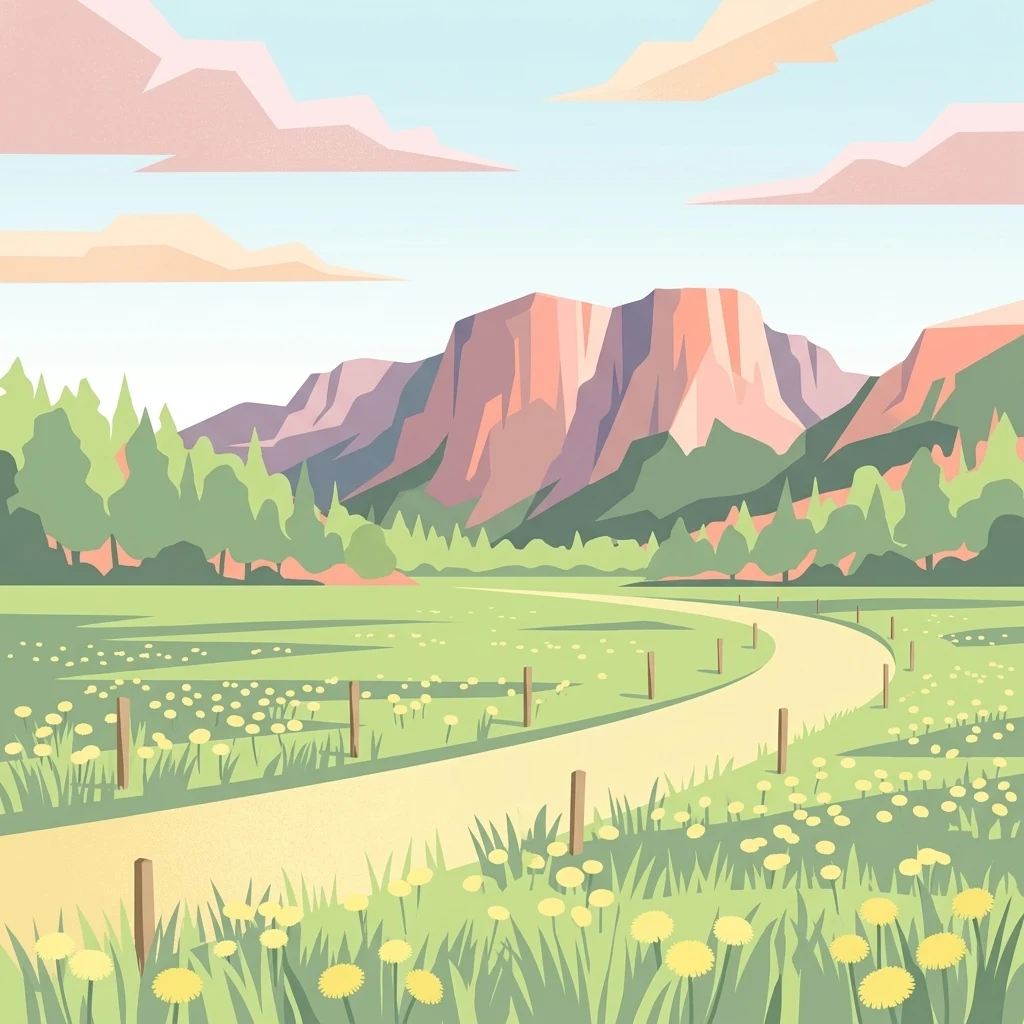
A flat vector illustration of a grassy meadow with yellow dandelions, a winding dirt path lined with fence posts, a forest in the midground, and large mountains in the background under a sky with pink clouds.
Protected areaMazovia Voivodeship
About 27 km away#3 closest

West

Bagno Pulwy: A Geographic Overview of the Mazovian Wetland and Peatland Mosaic

Protected marshland landscapes and Narew valley terrain

Bagno Pulwy represents an extensive lowland wetland in Poland's Mazovia region, characterized by its wide meadows, peat-rich soil, and intricate network of historical drainage canals. This protected area offers a distinct geographic contrast to the surrounding forested uplands, functioning as a vital open habitat situated within the broader Narew river valley drainage system.

Area
60 km²
Water
Major water bodies
A wide watercolor illustration showing a river flowing through a grassy landscape with a line of trees in the background, rendered in soft greens, pinks, and purples.
Nature reserveMazovian Voivodeship
About 44 km away#4 closest

Southwest

Rezerwat przyrody Dębina Nature Reserve: Exploring Protected Landscapes in Mazovian Voivodeship

A preserved oak-hornbeam forest featuring glacial erratics and ancient woodland

Rezerwat przyrody Dębina is a significant nature reserve situated in the Mazovian Voivodeship, noted for its 200-year-old oak stands and multi-species deciduous canopy. As the oldest protected area in the region, it preserves a vital remnant of the Polish Lowlands landscape, offering a dense, ecologically rich forest environment defined by subtle topography and unique Pleistocene glacial boulders.

Area
0.512 km²
Established
1952
Relief
Lowland
Climate
Temperate
Nature reservePodlaskie Voivodeship
About 53 km away#5 closest

North

Rezerwat przyrody Dębowe Góry: Protected Sessile Oak Forest in Podlaskie Voivodeship

Ecologically intact lowland forest and rare plant habitat

Rezerwat przyrody Dębowe Góry stands as a protected sanctuary for light-loving sessile oak communities in Podlaskie Voivodeship. Its rolling lowland terrain and rich understory flora represent an essential fragment of Poland's natural woodland heritage, functioning as a key study area within the broader Czerwony Bór forest landscape context.

Area
0.993 km²
Established
2001
Relief
Lowland
Scope
Terrestrial
Nature reserveMazowieckie
About 59 km away#6 closest

Southeast

Rezerwat przyrody Dębniak: Protected Forest Landscapes and Bug River Escarpment Geography

A preserved old-growth oak and linden woodland in Mazowieckie.

Rezerwat przyrody Dębniak offers an intimate look at the grąd deciduous forest ecosystem within the Mazowieckie landscape. Situated along the Bug River escarpment, this twenty-hectare reserve provides a rare glimpse into mature oak and linden woodland, monumental trees, and a floristically diverse understory. The area functions as a vital conservation zone, maintaining the integrity of riparian woodland transitions and providing a protected habitat for orchids and lilies on the slopes above the valley.

Area
0.208 km²
Established
1978
Relief
Lowland
Scope
Terrestrial
Nature reservePodlaskie Voivodeship
About 62 km away#7 closest

Northeast

Rezerwat przyrody Bagno Wizna II: Protected Peatland and Bog Terrain in Podlaskie Voivodeship

Mapped nature reserve and raised bog geography in northeastern Poland.

Rezerwat przyrody Bagno Wizna II functions as a specialized nature reserve in the Kotlina Biebrzańska, protecting rare raised bog vegetation. The site illustrates the intersection of active conservation efforts and regional drainage history, serving as a distinct geographic landmark within the wider protected land network of Podlaskie Voivodeship.

Area
0.796 km²
Established
1967
Relief
Lowland
Climate
Temperate
Nature reserveMasovian Voivodeship
About 70 km away#8 closest

Northwest

Zachodniokurpiowskie Bory Sasankowe: Protected Forest Geography and Reserve Map

A study of dry pine habitats in the Masovian Voivodeship

The Zachodniokurpiowskie Bory Sasankowe nature reserve serves as an essential reference for continental pine forest ecosystems. By protecting the delicate interplay between sandy dune topographies and lichen-rich woodland floors, this site provides a rare window into the post-glacial geography of the Kurpie Plain.

Area
22.141 km²
Established
2018
Relief
Lowland
Climate
Temperate

Common questions about visiting, size, designation, and location context for Mokry Jegiel Nature Reserve

Mokry Jegiel Nature Reserve FAQs for park facts, access, geography, and protected area context

Find quick answers about Mokry Jegiel Nature Reserve, including protected-area facts, park geography, trail and visitor context, and how the park fits into its surrounding country and regional landscape.
MoriAtlas Explorer

Continue Your Protected Areas Search Across the Global Atlas

Deepen your exploration by continuing the structured search for national parks and protected areas worldwide. Utilize the comprehensive filtering capabilities to compare different conservation landscapes and refine your understanding of global park geography. Discover more about the distribution and characteristics of protected natural areas.

Global natural geography