
Why Na Kozenku stands out
Na Kozenku is best known for safeguarding a confirmed population of the wood anemone (Anemonoides sylvestris), a protected herbaceous species that anchors the site's ecological value. The locality also stands out for combining thermophilic dry grassland vegetation, including sheep's fescue (Festuca ovina) and red fescue (Festuca rubra), with the presence of rare butterflies such as Apatura ilia and Papilio machaon. Together these elements justify the small site's protected status despite its tiny footprint amid surrounding agricultural land.
Na Kozenku history and protected-area timeline
Na Kozenku was declared a protected natural monument by decree of the District National Committee in Prostějov. The first declaration was issued on 31 October 1985, followed by a related declaration on 1 November 1990 that reinforced the site's protected status.
The protected area has since been administered by the Olomouc Regional Authority (Krajský úřad Olomouckého kraje) and has been formally categorized under IUCN Category IV as a habitat or species management area. Over time, the locality has also become recognized as part of the broader Kladecko natural park, situating the small monument within a wider regional landscape protection framework.
Na Kozenku landscape and geographic character
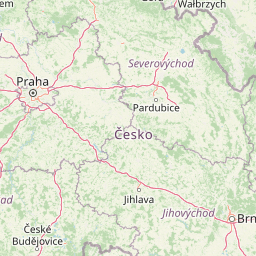
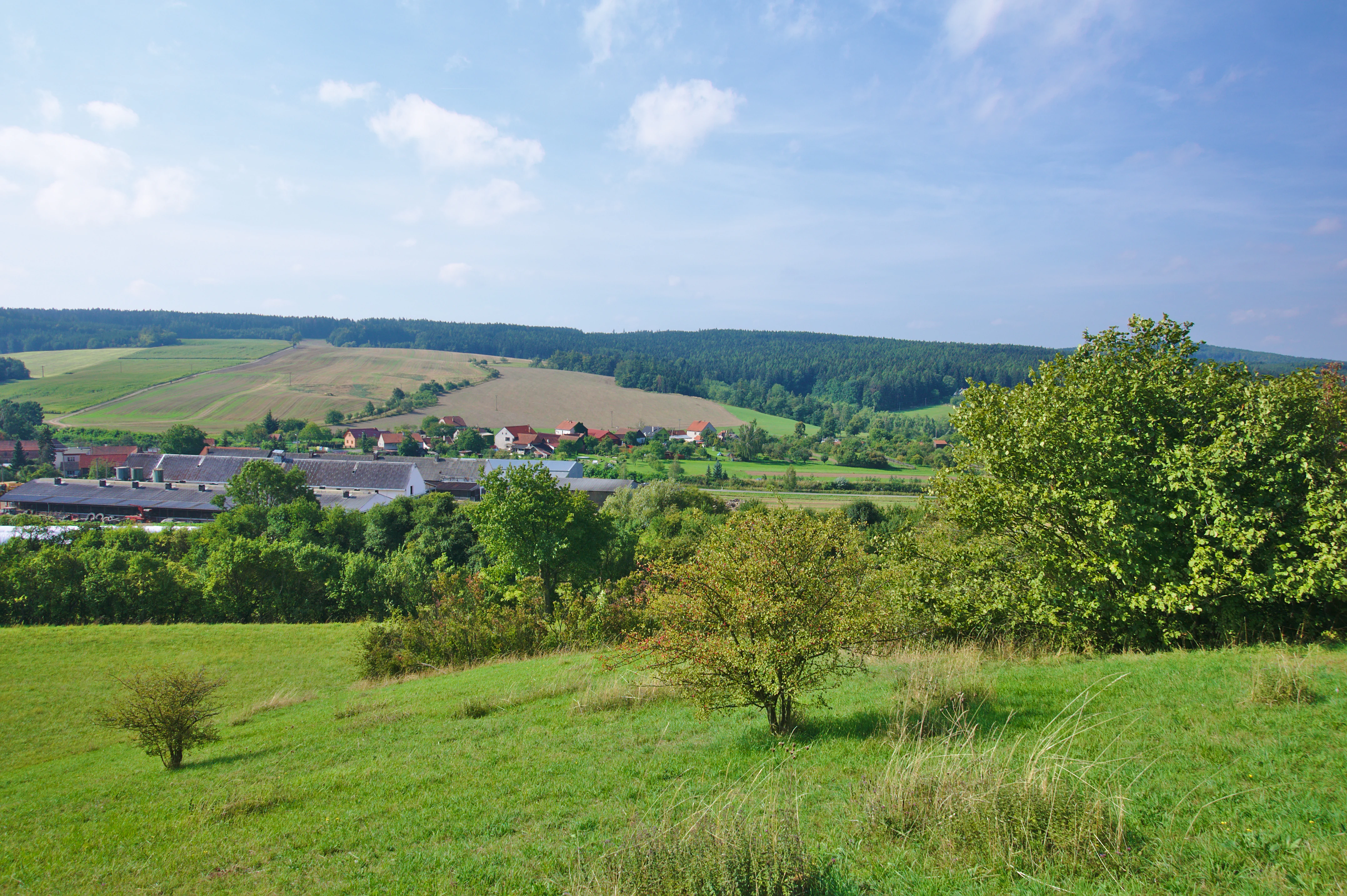
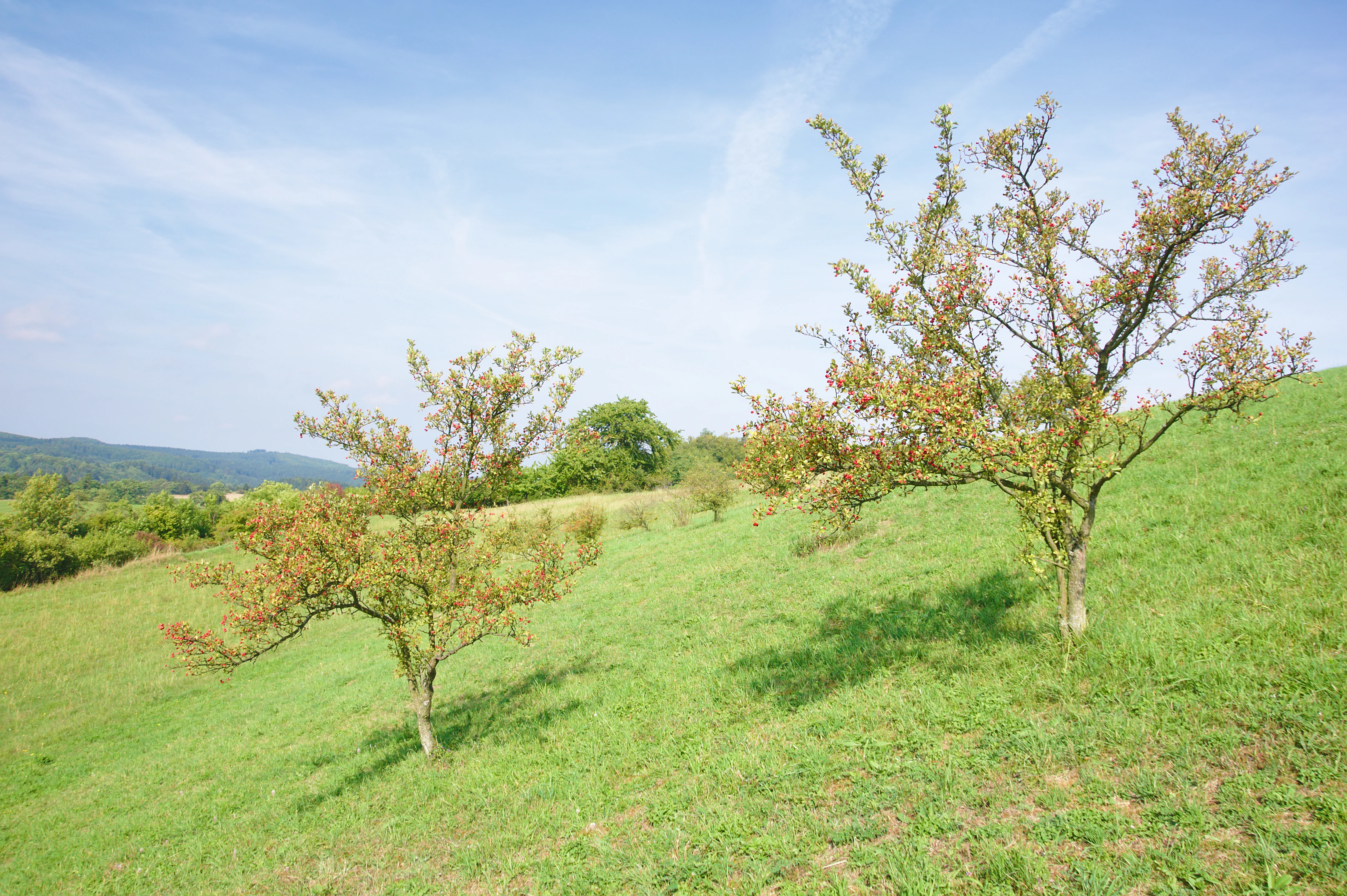
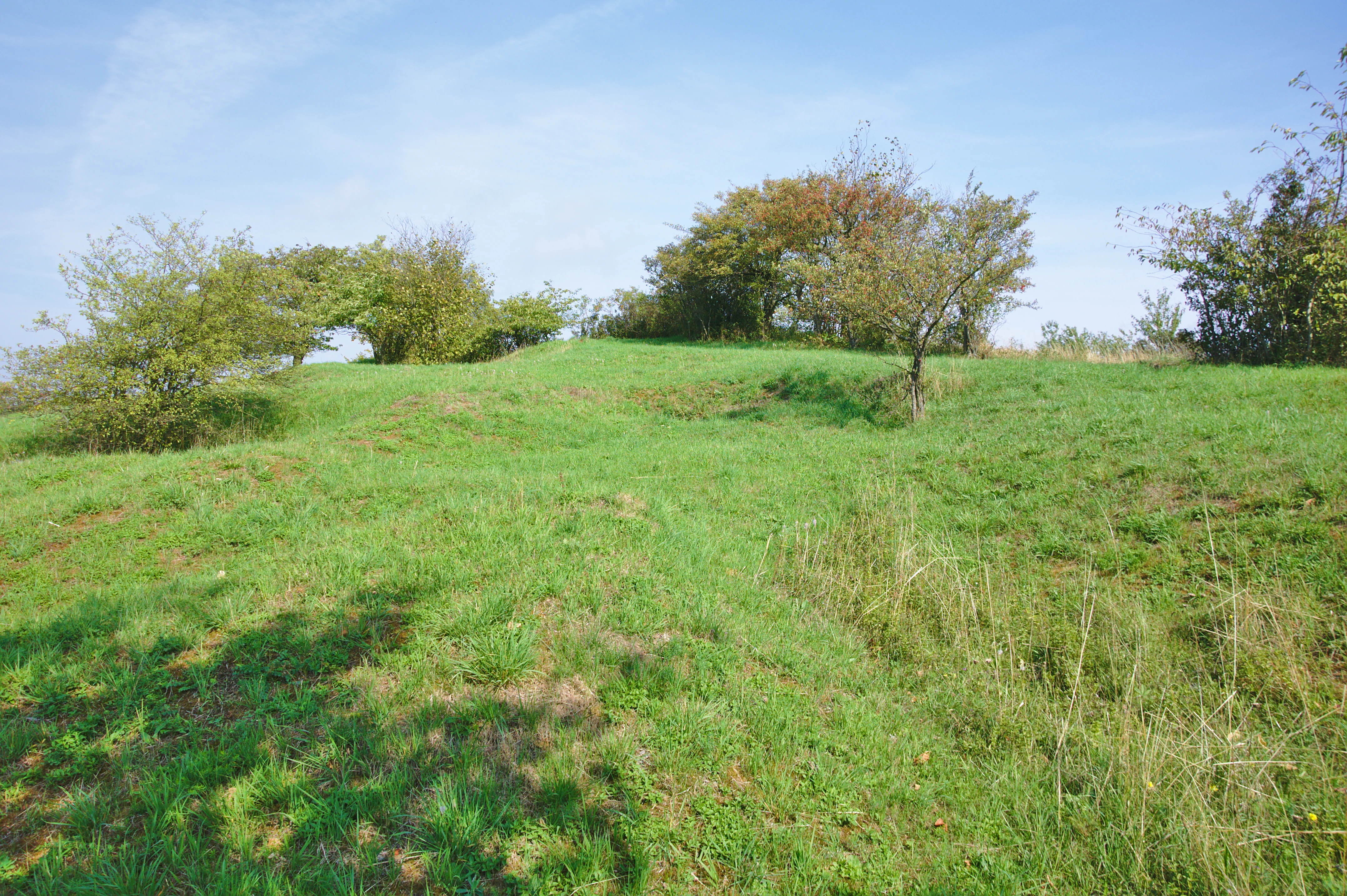
The protected area sits on the sun-exposed southwestern slope of the hill known as Vršky, which reaches about 577 metres in elevation, while the protected zone itself lies at roughly 530 metres. A disused limestone quarry is found in the immediate vicinity, indicating the calcareous geological substrate that supports the site's specialized vegetation.
Geomorphologically, the broader setting belongs to the Zábřežská vrchovina (Zábřežská highlands), while from a phytogeographical perspective the locality falls within the Bouzovská vrchovina subunit. Surrounding the reserve is mostly agricultural farmland, making the small grassland patch a notable remnant of natural habitat set within an otherwise cultivated landscape. The sunny, dry character of the slope creates the warm microclimate essential for its thermophilic plant communities.
Na Kozenku ecosystems, habitats, and plant life
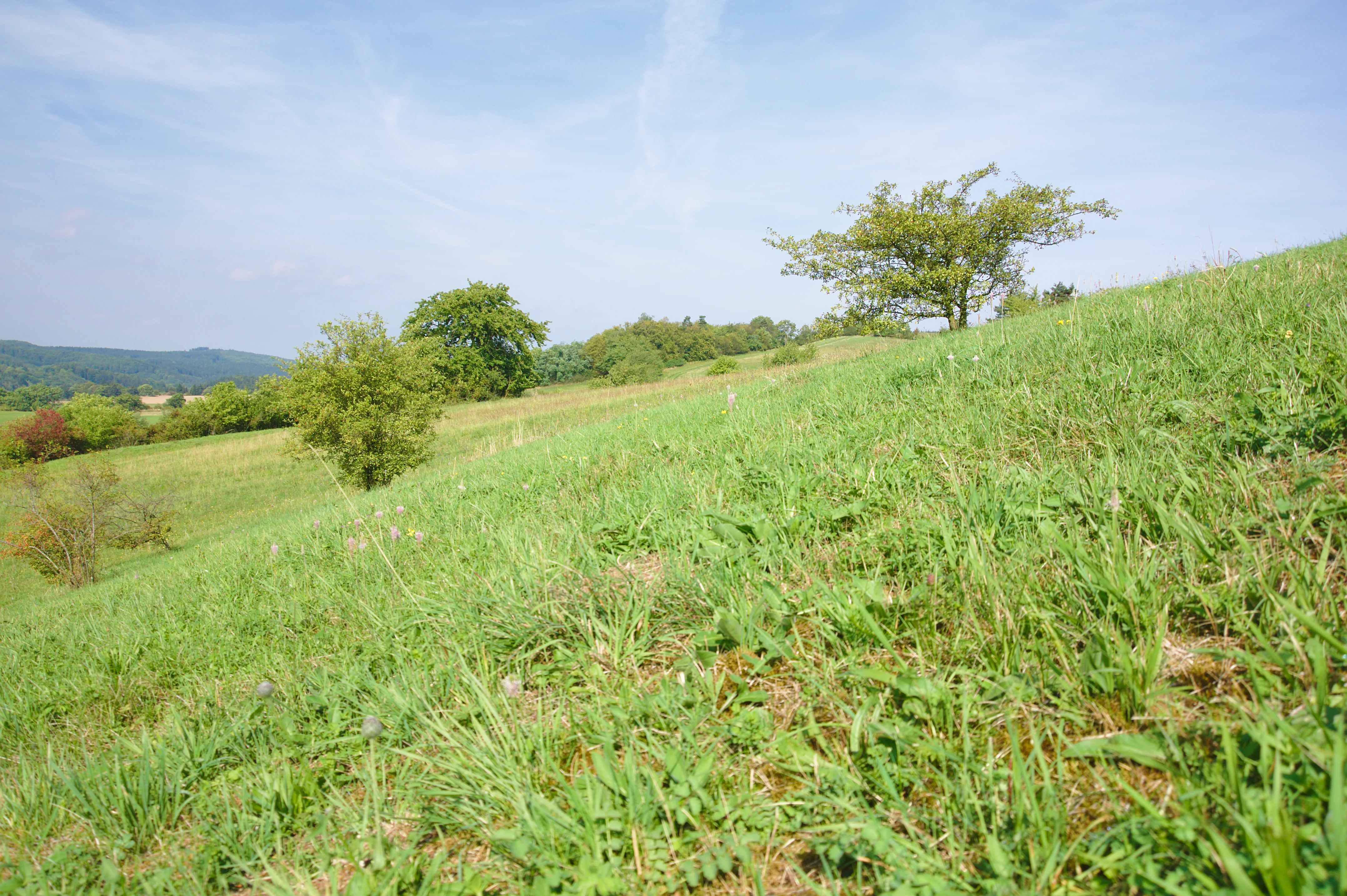
Ecologically, Na Kozenku is a patch of thermophilic, dry grassland vegetation developed on a sunny limestone slope. Its characteristic grasses include species such as Festuca ovina and Festuca rubra, accompanied by a diverse mixture of other sun-loving herbs and grasses typical of calcareous substrates in central Moravia.
The site's defining ecological feature is the occurrence of Anemonoides sylvestris (wood anemone), a species with formal legal protection in the Czech Republic and an important botanical anchor for the protected designation. The combination of calcareous soil, open sun exposure, and traditional grassland management appears to have maintained the open character required for this species to persist in a setting outside its more typical shaded woodland habitat.
Na Kozenku wildlife and species highlights
The wildlife profile of Na Kozenku is modest but ecologically meaningful, with a particular emphasis on its butterfly fauna. The site harbors documented populations of Apatura ilia (a relatively scarce butterfly) and Papilio machaon, the well-known swallowtail.
These butterfly species add conservation and educational value to the site, complementing the botanical interest of the reserve. While the small surface area limits the breadth of vertebrate fauna that can be permanently supported, the grassland and adjacent scrub landscape extend habitat connectivity with the broader Kladecko natural park, allowing diverse invertebrate communities to persist.
Na Kozenku conservation status and protection priorities
Na Kozenku holds conservation significance primarily because it sustains a legally protected population of Anemonoides sylvestris on a warm, calcareous hillside in a region otherwise dominated by agriculture. Protecting a small, isolated habitat of this kind maintains the regional distribution of a protected plant species and preserves a representative example of thermophilic limestone grassland that has become rare across much of central Moravia.
The site also contributes to the conservation framework of the broader Kladecko natural park and falls within the IUCN Category IV classification, indicating its role as a habitat and species management area. Administrative oversight by the Olomouc Regional Authority provides institutional continuity for active habitat protection. The site's combination of protected flora and rare butterflies makes it disproportionate in conservation value relative to its very small surface area.
Na Kozenku cultural meaning and human context
Na Kozenku has limited but distinctive cultural context tied to its locality near the village of Dzbel in the Prostějov district of central Moravia. The site is embedded in a traditionally agricultural landscape, and the persistence of dry grassland vegetation on this limestone slope reflects a long history of low-intensity grassland use in an otherwise intensively farmed region.
The nearby limestone quarry is also a quiet reminder of the region's geological and industrial heritage, while the broader area has been recognized through its inclusion in the Kladecko natural park, a regional designation that reflects the local value placed on landscape character and biodiversity beyond the small protected site itself.
Top sights and standout views in Na Kozenku
A small but ecologically focused natural monument on a sunny limestone slope of hill Vršky near Dzbel, Na Kozenku stands out for sheltering a protected population of the wood anemone (Anemonoides sylvestris) and for its rich thermophilic dry grassland flora of fescues and other warm-loving species. Its protected butterfly fauna, including Apatura ilia and Papilio machaon, adds further zoological interest, while its position within the Kladecko natural park connects it to a wider regional conservation framework.
Best time to visit Na Kozenku
Because Na Kozenku is valued primarily for its grassland flora and, especially, for its flowering population of Anemonoides sylvestris, late spring is the most relevant natural period for visiting, when the wood anemone is in bloom and the dry grassland shows its most vivid botanical character. Summer visits also work well for appreciating the thermophilic vegetation as a whole, while autumn visits can offer quieter conditions for observing the site's butterfly and insect fauna in warm, sunny weather.