Why Schatthangwald Hohe Liete Nature Reserve stands out
The reserve is best known for its small but ecologically meaningful stand of native slope forest, dominated by sycamore maple and ash, on a shaded mid-slope above the Linnepe valley. It is valued as a rare example of an autochthonous deciduous forest fragment within an otherwise spruce-dominated landscape, and it provides habitat for species such as the bulbous toothwort.
Schatthangwald Hohe Liete Nature Reserve history and protected-area timeline
The Schatthangwald Hohe Liete was first placed under formal nature protection in 1993, when the Hochsauerlandkreis district council designated it as a Naturschutzgebiet within the original Sundern landscape plan. At that time, the reserve covered approximately 0.73 hectares of slope forest above the Linnepe valley near Meinkenbracht.
When the Sundern landscape plan was comprehensively revised and republished, the area was redesigned as a nature reserve again and modestly enlarged to its present size of roughly 0.9 hectares. The reaffirmation of protection reflects both the ecological rarity of the slope forest fragment and its recognized role in stabilizing the local hillside soils within a landscape otherwise dominated by spruce plantations.
Schatthangwald Hohe Liete Nature Reserve landscape and geographic character
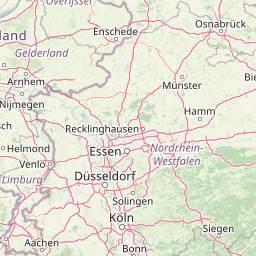
The reserve occupies a mid-slope position on an east-facing hillside of the Linnepe valley, a tributary valley within the broader Sauerland uplands. The terrain is steep enough to create a gorge-like, shaded woodland character, and the trees grow on shallow, gravel-rich ranker soils derived from local slope deposits. These soils are loose enough that the forest performs an important slope protection function, helping to anchor the hillside against erosion into the Linnepe valley below.
Surrounding the reserve, the broader landscape is dominated by planted spruce forest typical of the central Sauerland, which makes the small broadleaf stand visually and ecologically distinctive within the local scenery. The Linnepe valley itself, which gives the protected area its geographic setting, is a steep-sided, forested side valley of the larger Röhr river system.
Schatthangwald Hohe Liete Nature Reserve ecosystems, habitats, and plant life
The reserve protects a fragment of mixed deciduous forest dominated by sycamore maple and ash, accompanied by other broadleaf species that contribute to a dense shrub and understory layer. The forest has a shaded, multi-layered structure in which old trees are rare, and most of the canopy and subcanopy is made up of vigorous young growth that has locally become almost impenetrable.
Beneath the dense canopy, the ground flora remains surprisingly rich, with locally conspicuous stands of ferns and other shade-adapted herbs occupying openings where light reaches the forest floor. The woodland is thought to be of native origin, a valuable genetic and ecological remnant of the once widespread deciduous forests of the uplands, and it is embedded within an otherwise conifer-dominated forest landscape. The reserve also harbors a population of bulbous toothwort, a woodland herb typical of mature broadleaf stands.
Schatthangwald Hohe Liete Nature Reserve wildlife and species highlights
The reserve does not host a wide array of large or conspicuous animal species, but its dense, multi-layered structure provides important refuge habitat for woodland fauna typical of central European mixed broadleaf forests. The shaded, partly impenetrable young growth and the local fern thickets create sheltered conditions for invertebrates, small mammals, and birds that favor dense understory cover.
The broader ecological significance of the site lies in the presence of bulbous toothwort, a characteristic woodland herb associated with old, undisturbed broadleaf forest, which indicates the continuity and natural quality of the woodland community.
Schatthangwald Hohe Liete Nature Reserve conservation status and protection priorities
The reserve is recognized as an ecologically important fragment of native, presumably autochthonous broadleaf forest set within a region where most of the original woodland has long since been replaced by spruce plantations. Protecting this small stand preserves both a genetic reservoir of native tree stock and a representative example of the deciduous forest community that historically covered the Sauerland uplands.
The forest also has a practical conservation function: by stabilizing the gravel-rich, erosion-prone slope above the Linnepe valley, the woodland helps protect soil and water quality downstream. As with all German nature reserves, the formal designation cites the rarity, special character, and natural beauty of the area as the reasons for its protection.
Top sights and standout views in Schatthangwald Hohe Liete Nature Reserve
A compact but ecologically valuable representative of native Sauerland slope forest, the reserve preserves a rare stand of maple and ash woodland surrounded by spruce plantations. Its shaded, gorge-like character, dense young growth, fern-rich ground flora, and population of bulbous toothwort together make it a notable reference site for the original deciduous forests of the central German uplands.