
Why Schmittwassertal Nature Reserve stands out
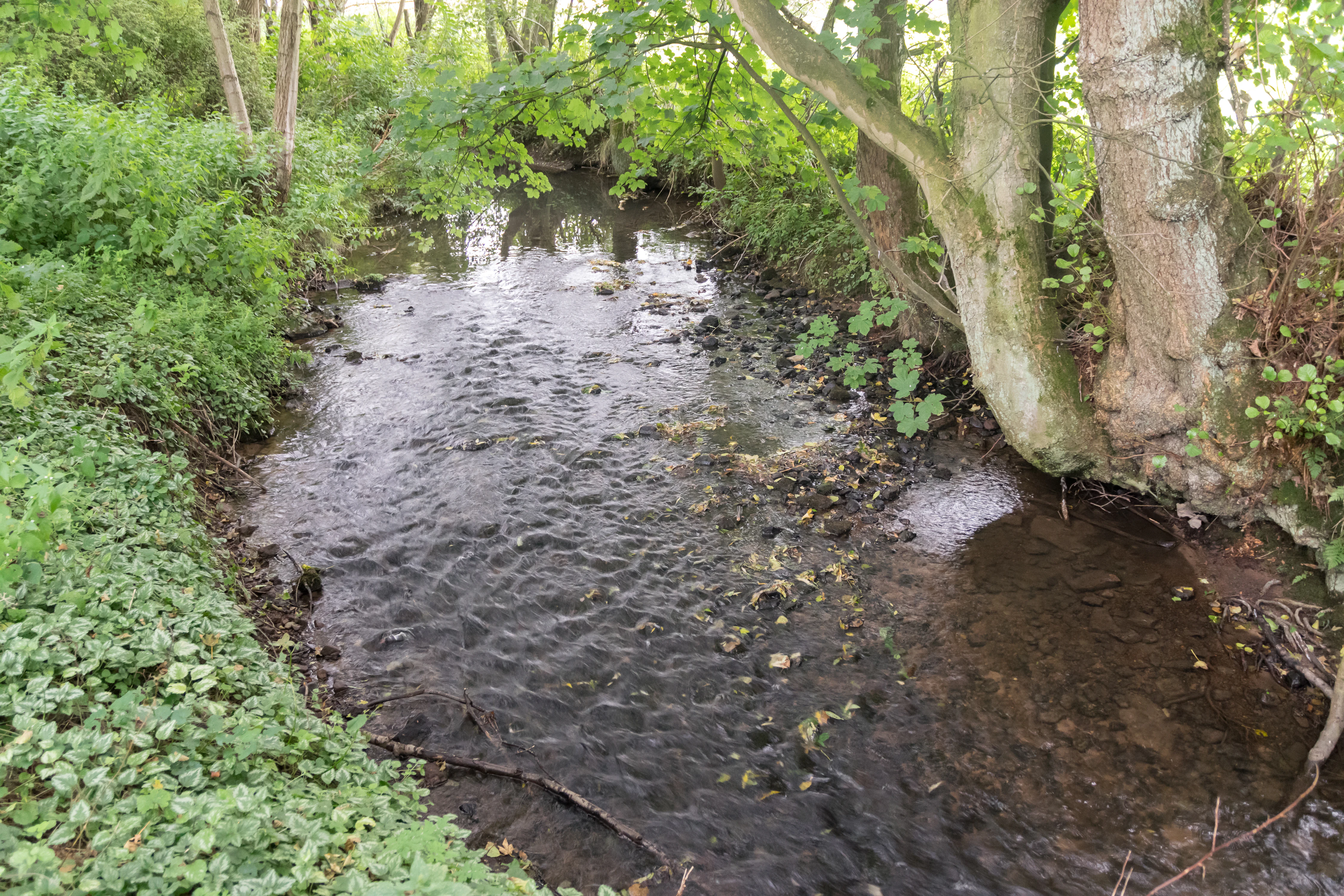
Schmittwassertal is best known for its small, ecologically rich lowland stream valleys, particularly the alder woodland that fringes the Schmittwasser and Glasebach. The reserve stands out for the close coexistence of flowing water habitats, damp meadow communities and unusually species-rich grassland types on the adjacent slopes. A second defining feature is the calcareous character of some of the slopes, where thin, dry soils support Borstgrasrasen and Kalkhalbtrockenrasen, semi-dry limestone grassland communities that are otherwise rare in the surrounding Paderborn landscape. Together, the brook, the wet meadows and the dry grassland create a tightly compressed mosaic of habitat types within a very small area.
Schmittwassertal Nature Reserve history and protected-area timeline
The Schmittwassertal reserve has a relatively short formal history. Its present-day boundaries and conservation status date from 2014, when the Paderborn district council adopted the Lichtenau landscape plan and, through that plan, designated the area around the Schmittwasser, parts of the Glasewasser and the Glasebach as a Naturschutzgebiet.
The reserve was established not as a completely new concept but as one element in a broader restructuring of nature protection around the town of Lichtenau. The 2014 scheme recognized the importance of the existing small brooks and their associated grassland habitats and gave them a unified statutory framework. Before 2014, much of the same land was used traditionally as meadow, pasture and fish ponds, but without the consolidated protection that the reserve now provides.
The published landscape plan remains the primary reference document for the reserve, and its detailed conservation objectives effectively serve as the working history of the area's transition into formal protection.
Schmittwassertal Nature Reserve landscape and geographic character
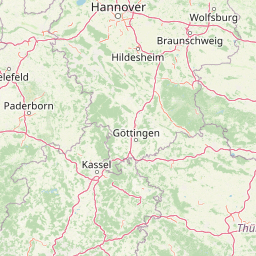
Schmittwassertal occupies a gently undulating to moderately steep section of the Westphalian lowland between Herbram and Iggenhausen. The defining landform is the shallow valley of the Schmittwasser and its continuation into the Glasewasser and Glasebach, narrow brook-cut corridors that shape both the relief and the ecology of the reserve.
The valley floors are flat and damp, supporting wet meadow and stream-side habitats, while the transitions onto the surrounding land include steeper slopes. On these slopes, thin soils and a calcareous influence give rise to dry, species-rich grassland. The result is a compressed mosaic in which watercourse, wet meadow and dry grassland lie extremely close to one another, sometimes within a single hillside.
The reserve also lies close to inhabited areas, bordering village settlement zones directly. This juxtaposition of small-scale agricultural landscape, scattered villages and protected stream valley gives Schmittwassertal its particular character: a small but tightly organized piece of countryside shaped by both human land use and the natural drainage of the Schmittwasser system.
Schmittwassertal Nature Reserve ecosystems, habitats, and plant life
Ecologically, the reserve is defined by the interaction between its small lowland brooks and the contrasting grassland types that line them. The flowing waters of the Schmittwasser, Glasewasser and Glasebach form the hydrological backbone of the area, and the conservation plan explicitly aims at restoring their ecological continuity.
Along the brooks, alder-dominated gallery woodlands, Erlengehölze, occupy the narrow riparian zones. Where the valley floor widens, damp meadow and wet grassland communities take over, depending on the water regime of the soils. These wet habitats make up a significant portion of the four reserve sections.
A distinctive element of the reserve is the presence of calcareous and nutrient-poor dry grassland on the steeper slopes. Borstgrasrasen, a community dominated by matgrass typical of acid to moderately base-rich thin soils, occurs alongside Kalkhalbtrockenrasen, semi-dry calcareous grasslands that are particularly notable in this otherwise rural lowland setting. These dry grassland types are ecologically valuable because they support specialized flowering plants and invertebrate communities that cannot survive in more intensively used farmland.
Schmittwassertal Nature Reserve wildlife and species highlights
Detailed wildlife records are not a major focus of the source material, but the reserve's design gives clear indications of its faunal significance. The brook and its alder-lined banks provide habitat for stream-dwelling invertebrates, fish and amphibians, while the planned restoration of ecological continuity along the streams is explicitly intended to benefit these communities. The wet meadows and damp grasslands offer additional habitat for meadow-breeding birds and insect life.
The dry grassland slopes, especially the Borstgrasrasen and Kalkhalbtrockenrasen, are particularly important for invertebrates, including butterflies, wild bees and other pollinators that depend on open, species-rich vegetation. Maintaining these grasslands by removing invading shrubs is therefore a key conservation measure for the park's wildlife value.
The reserve also functions as part of a wider ecological corridor linking the Glasebruch reserve, Schmittwassertal and the Sauertal reserve, allowing wildlife movement along the connected brook system between Herbram, Asseln and Iggenhausen.
Schmittwassertal Nature Reserve conservation status and protection priorities
Schmittwassertal is a conservation-focused reserve built around small lowland brooks and a tight mosaic of meadow and dry grassland habitats. Its official status as a Naturschutzgebiet under North Rhine-Westphalia law gives the area statutory protection and binds land use within its boundaries to the conservation objectives laid out in the 2014 Lichtenau landscape plan.
The reserve's conservation significance is twofold. First, it protects a chain of small watercourses that would otherwise be vulnerable to hydrological disruption and fragmentation. Second, it conserves dry grassland communities, especially the semi-dry calcareous grasslands, that are rare and easily lost in intensively used agricultural landscapes.
A core conservation goal is the long-term ecological integrity of the streams themselves. Existing fish pond installations are intended to be dismantled or redesigned once current permits expire, in order to restore the natural connectivity of the brooks. At the same time, the reserve's management plan aims to keep its dry and wet grassland communities open, valuable and botanically rich, by promoting extensive agricultural use, controlling shrub encroachment and converting ecologically problematic spruce stands into more natural habitat.
Schmittwassertal Nature Reserve cultural meaning and human context
The surroundings of Schmittwassertal reflect a long tradition of small-scale rural land use in eastern Westphalia. The stream valleys have historically been used for water-powered mills such as the Singermühle, for fish ponds and for hay meadows, and these traditional uses are still visible in the structure of today's landscape, with old pond systems, scattered farmsteads and maintained meadows coexisting inside and next to the reserve.
The reserve's location directly bordering village settlement areas is itself part of its cultural context. Rather than separating nature from settlement, the protected area folds into the existing rural fabric of Herbram, Asseln and Iggenhausen, illustrating how small protected stream valleys in this region have long been shared spaces between farming communities and the broader countryside.
Top sights and standout views in Schmittwassertal Nature Reserve
A four-section, 53.6-hectare nature reserve around the Schmittwasser stream in the Paderborn district, designated in 2014 through the Lichtenau landscape plan. It forms a central link between the Glasebruch reserve to the east and the Sauertal reserve to the west, preserving a continuous corridor of protected lowland brooks.
The reserve combines extremely contrasting habitats in a compact area: alder-lined brook corridors, wet meadows on the valley floor and steep slopes carrying Borstgrasrasen and Kalkhalbtrockenrasen, semi-dry calcareous grasslands that are notable for this part of Westphalia. Active management is aimed at restoring the streams' ecological continuity, controlling shrub encroachment and removing ecologically problematic spruce stands.
Best time to visit Schmittwassertal Nature Reserve
Because Schmittwassertal is a grassland and stream-valley reserve rather than a high-mountain park, seasonal experience depends mainly on the flowering and grass growth in its meadows and on water levels in the brooks. Late spring and early summer are generally the most rewarding period to view the dry grassland slopes, when Kalkhalbtrockenrasen and Borstgrasrasen communities reach peak botanical diversity and pollinators are most active.
Summer brings lush growth in the wet meadows and full canopy in the alder galleries, while autumn gives strong contrast between the yellowing meadows, the still-green brook-side woodland and the bright fall colors along the brooks. Winter is typically quieter, but low water levels can make the small streams and their banks more visible, and the open dry grassland remains structurally interesting throughout the year. The reserve's small size and proximity to villages mean that daylight visits are most practical, but it is accessible year-round as an outdoor landscape rather than a visitor attraction in the conventional sense.