Why Nicoll Scrub National Park stands out
Nicoll Scrub National Park is best known for protecting critical remnant rainforest in the Currumbin Valley and serving as a refuge for several significant species, most notably the Richmond birdwing butterfly (Ornithoptera richmondia), an Australian endemic. The park's five rainforest types and exceptional plant diversity, including two endangered and six vulnerable species, make it botanically significant. The area also supports important populations of flying foxes, including the Grey-headed flying fox and Black flying fox, which play key roles in seed dispersal and ecosystem function.
Nicoll Scrub National Park history and protected-area timeline
Nicoll Scrub National Park was established in 1986 through the formal declaration of the area as a national park under Queensland Parks and Wildlife Service management. The park's creation came during a period of increased environmental awareness in Australia during the 1980s, when many remaining natural areas received formal protection. The declaration of Nicoll Scrub as a national park was particularly significant given the extensive clearing of rainforest that had occurred throughout South East Queensland and the Gold Coast region. The park was incorporated into the Queensland national park system with IUCN Category II classification, reflecting its primary purpose of ecosystem conservation. The adjacent Currumbin Valley Reserve provides additional protection to the surrounding landscape, creating a combined conservation area that offers greater ecological resilience than either area alone.
Nicoll Scrub National Park landscape and geographic character
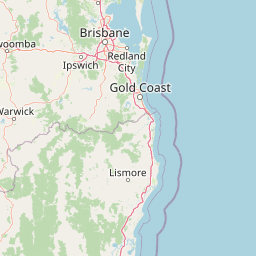
The landscape of Nicoll Scrub National Park is defined by its position in the McPherson Range, a mountain range that forms part of the Great Dividing Range system in northern New South Wales and southern Queensland. The park occupies the slopes and valleys between two named peaks, Mount Coolagang and Mount Boololuzumab, creating a terrain of moderate relief with slopes descending into the valley floor. The highest point within the park reaches 180 meters above sea level, while the terrain drops to lower elevations toward the valley floor where rainforest is most dense. The geological foundation consists of ancient Palaeozoic metasediments and phyllites, with Tertiary basalt capping certain ridge areas, creating edaphic conditions that support different vegetation communities across the park. This combination of mountainous terrain, varied geology, and the wet microclimate created by the range's orographic effect supports the diverse rainforest types found within the park.
Nicoll Scrub National Park ecosystems, habitats, and plant life
The ecological character of Nicoll Scrub National Park is defined by its five distinct rainforest types, each supporting different plant assemblages adapted to varying light, moisture, and soil conditions. The park contains approximately 200 plant species, representing a remarkable diversity for such a small area. Two of these species are classified as endangered and six are considered vulnerable, highlighting the conservation significance of this protected remnant. The rainforests of Nicoll Scrub are the only remaining examples of their type in the middle and lower Currumbin Valley, making them critical reference ecosystems for the region. The rainforest structure ranges from tallerclosed canopy forest on the lower slopes and valleys to more open communities on ridges and upper slopes. The combination of basalt caps on ridges and metasedimentary substrates on lower slopes creates habitat diversity that contributes to the overall species richness.
Nicoll Scrub National Park wildlife and species highlights
Nicoll Scrub National Park supports a diverse vertebrate community of over 78 species, including seven mammals, 56 bird species, six reptiles, and eight amphibians. Among the most notable inhabitants is the Richmond birdwing butterfly, a species endemic to Australia whose conservation is closely associated with the park's rainforest habitats. This striking butterfly relies on specific host plants found within the park and represents one of the park's flagship species. The bat fauna is particularly significant, with three species of flying fox recorded: the Grey-headed flying fox, Black flying fox, and the little red flying fox. These megabats play crucial ecological roles as pollinators and seed dispersers, making them essential to the maintenance and regeneration of the rainforest ecosystem. The bird population includes numerous species typical of subtropical rainforest, while the reptile and amphibian communities add to the overall biodiversity.
Nicoll Scrub National Park conservation status and protection priorities
The conservation significance of Nicoll Scrub National Park derives primarily from its role as the only remaining rainforest in the middle and lower Currumbin Valley, representing what was once a much more extensive forest ecosystem across this region. The park protects two endangered plant species and six vulnerable species, providing these taxa with formal protection within a national park framework. The Richmond birdwing butterfly, an Australian endemic, benefits from the park's habitat protection, as do populations of flying foxes that serve as key seed dispersers for rainforest regeneration. The park's location adjacent to Currumbin Valley Reserve creates a larger conservation complex that provides greater ecological connectivity than either area could achieve alone. As a representative example of subtropical rainforest in South East Queensland, the park serves as a living reference for understanding regional biodiversity and the ecological processes that shaped these ecosystems before widespread clearing.
Nicoll Scrub National Park cultural meaning and human context
Nicoll Scrub National Park does not appear to have significant documented indigenous cultural associations in the available source material, though the broader Currumbin Valley region has traditional connections to Aboriginal peoples. The park's name references the Nicoll family, who were early settlers in the area and whose property eventually became incorporated into the protected area system. The park's cultural context is primarily associated with the broader history of European settlement and subsequent conservation movement in South East Queensland.
Top sights and standout views in Nicoll Scrub National Park
Nicoll Scrub National Park stands out as a compact but ecologically rich rainforest preserve that protects the last remaining examples of subtropical rainforest in the Currumbin Valley. The park's five distinct rainforest types support exceptional plant diversity including eight threatened species. The Richmond birdwing butterfly, an Australian endemic, makes this park significant for invertebrate conservation. Three flying fox species found here play essential roles as pollinators and seed dispersers. The geological diversity of Palaeozoic metasediments with Tertiary basalt caps creates varied microhabitats within the small park boundary.
Best time to visit Nicoll Scrub National Park
The best time to visit Nicoll Scrub National Park is during the cooler months from late autumn through early spring, when temperatures are more comfortable for walking through the rainforest and the risk of summer storms is reduced. The subtropical climate of South East Queensland means the park can be visited year-round, though summer months bring higher temperatures, increased humidity, and the potential for heavy rainfall that may make exploration less comfortable. The rainforest is generally most vibrant during the warmer months when many plant species are in flower, though this is also when flying foxes are most active. Visitors seeking to observe wildlife should consider that early morning offers the best chances for bird watching, while flying foxes can often be observed at dusk as they leave the forest to feed.