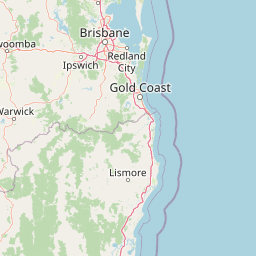
Why Sarabah National Park stands out
Sarabah National Park is best known for being Queensland's smallest national park and for preserving a remnant patch of lowland subtropical rainforest. The forest ecosystem represents a once-widespread habitat type that has largely disappeared from the South East Queensland region due to historical land clearing. The park's riparian zone along Canungra Creek supports additional ecological value, with fringing open forest providing habitat connectivity within the broader catchment landscape.
Sarabah National Park history and protected-area timeline
The area that now comprises Sarabah National Park was formally protected in 1973 when the Queensland government declared it a national park. This designation came during a period when Queensland was expanding its protected area system to include smaller but ecologically significant remnants of native vegetation. The park was created to preserve the subtropical rainforest and associated forest communities that survived along Canungra Creek. Prior to protection, the surrounding region had undergone extensive clearing for farming and settlement, making the survival of this forest patch particularly noteworthy. The park remains under the management of the Queensland Parks and Wildlife Service.
Sarabah National Park landscape and geographic character
The park's landscape is characterized by lowland terrain flanking Canungra Creek, where the subtropical rainforest forms a relatively dense canopy over the creek corridor. The surrounding terrain of South East Queensland is gently undulating, with the park sitting within a landscape that has been extensively modified by historical land use. Within the park boundaries, the rainforest gives way to fringing riparian open forest along the water's edge, creating a transition zone between the closed rainforest and the more open environments beyond the protected area.
Sarabah National Park ecosystems, habitats, and plant life
The nature of Sarabah National Park centers on its lowland subtropical rainforest, a vegetation community that once covered extensive areas of South East Queensland's valleys and lower slopes but now exists in highly fragmented remnants. This rainforest type is characterized by dense, species-diverse canopy vegetation adapted to the warm, humid conditions of the region. The park's position along Canungra Creek adds ecological value through the riparian corridor, where fringing open forest provides structural variety and supports different species assemblages. The creek itself forms part of the Albert River catchment, connecting the park to broader hydrological systems in the region.
Sarabah National Park wildlife and species highlights
While detailed species inventories for the park are limited in the source material, the subtropical rainforest and riparian environment would support various native wildlife species typical of South East Queensland's forest communities. Birds, reptiles, amphibians, and invertebrates would find habitat within the forest structure, with the creek providing water access for many species. The remnant forest patch, while small, contributes to habitat connectivity within the fragmented landscape of the greater region.
Sarabah National Park conservation status and protection priorities
Sarabah National Park represents a conservation island within a heavily modified landscape. Its primary significance lies in preserving a sample of lowland subtropical rainforest that would otherwise be absent from the protected area network given the extensive clearing that has occurred throughout South East Queensland. The park demonstrates the value of protecting even small remnants, as these areas can serve as reference points for understanding pre-development ecosystem composition and as reservoirs of biodiversity. The park's inclusion in the Albert River catchment also connects it to broader watershed conservation considerations.
Sarabah National Park cultural meaning and human context
The park is situated within the traditional territory of Indigenous peoples of the South East Queensland region. The land surrounding Sarabah and Canungra has historical significance for local Aboriginal communities, though detailed cultural heritage information specific to the park area is not extensively documented in the available source material. The township of Canungra itself has developed as a small rural community in the decades since European settlement, with the nearby national park representing one of the few protected natural areas in the immediate vicinity.
Top sights and standout views in Sarabah National Park
The defining highlight of Sarabah National Park is its distinction as Queensland's smallest national park, making it a point of interest for those curious about the state's protected area system. The subtropical rainforest remnant represents a rare surviving example of lowland forest that once characterized much of the Brisbane Valley region before extensive development. The park offers a compact but meaningful example of riparian and rainforest ecology within easy reach of Brisbane for those interested in observing remnants of the region's original vegetation.
Best time to visit Sarabah National Park
The park can be visited year-round given its location in South East Queensland's subtropical climate. The warmer months from spring through autumn offer the most typical conditions for exploring the forest environment, though the park's small size means that even brief visits can encompass the entire protected area. The proximity to Brisbane makes Sarabah accessible as a day trip for those interested in experiencing a remnant of the region's pre-development vegetation.