
Visit Timing
Best Time to Visit Northeast Greenland National Park: The Essential Window
For those seeking the best time to visit Northeast Greenland National Park, the window is exceptionally narrow. The only viable period for travel exists during the brief Arctic summer from June through August. Because this park is the northernmost in the world and lacks permanent human infrastructure, visiting outside of these three months is generally not feasible for most travellers due to extreme sub-zero temperatures and the total absence of daylight for much of the year. While the summer months offer relative warmth and the phenomenon of round-the-clock daylight, they remain harsh environments defined by the realities of a polar desert.
Understanding the Summer Travel Window
During the months of June, July, and August, the park experiences its most manageable climate conditions. Daylight becomes a constant, providing 24 hours of sun in June and July, which is essential for navigation and safety in a region characterized by its massive, unforgiving landscape. Temperatures during this window reach their annual peaks, though they remain cold by temperate standards. Even in the height of July, mean temperatures hover near minus 9 degrees Celsius. The transition into September sees a rapid decline in light and a sharp drop in temperatures, marking the end of the viable exploration season.
Balancing Daylight and Harsh Conditions
Choosing when to visit requires a careful negotiation between the benefit of extended daylight and the persistence of severe weather. While the summer months are the warmest, they do not guarantee comfort. The park's climate is shaped by its high-latitude position and interior ice-covered geography, resulting in consistent wind and potential for rapid weather changes. Precipitation levels are generally low, typical of an Arctic desert, but the interplay between ambient temperature and wind chill can create challenging conditions for any outdoor activity. Prospective visitors should understand that this is not a destination for traditional tourism. Instead, the timing of a visit serves as a hedge against the most extreme manifestations of the Arctic climate, allowing for limited access to a landscape that is otherwise inaccessible to human activity for the vast majority of the year. Deciding on a travel date within the June-August window should be based on your readiness for cold-weather environments, as every month in this region demands significant preparation regardless of the seasonal shift.
Seasonal Availability
Best Visiting Windows for Northeast Greenland National Park
The Primary Summer Explorer Window: June through August
The most viable period for visiting the park coincides with the peak of the Arctic summer. Between June and August, the region experiences its highest temperatures, with monthly mean temperatures ranging from approximately -11.01°C to -9.1°C at the highest elevations. This window offers the only realistic possibility for ground-level exploration, as it is the only time of year when daylight is either constant or nearing it, significantly aiding navigation in a landscape devoid of marked trails or permanent infrastructure. Visitors during this window face the persistent challenge of extreme cold, with average daily maximums struggling to climb above freezing, even in the warmest months of July and August.
Early Summer: June and the Transition to Constant Daylight
June marks the shift into 24-hour daylight, an essential condition for those seeking to maximize their time in the field. The climate remains harsh, with average minimums sinking to -19.6°C. This period is best suited for travelers who prioritize the unique experience of the midnight sun and are equipped for freezing conditions. Because the landscape is still deeply affected by the tail end of the polar winter, terrain access is unpredictable. The primary trade-off in June is between the psychological advantage of endless light and the physical necessity of surviving sub-zero temperatures that prevent most thawing from occurring.
Peak Summer: July and August
July and August are the warmest months, characterized by slightly higher average maximum temperatures of -2.23°C and -4.26°C, respectively. These two months represent the core visiting season. During this time, the relative humidity remains high (around 90-92%), and the environment is at its most receptive to research or photography expeditions. July serves as the peak for potential terrestrial movement, though travelers should expect damp, raw conditions rather than anything resembling temperate summer weather. By late August, the daylight duration begins to decline, dropping toward 21 hours as the transition back toward the dark season commences. This period is suited for those requiring the most stable, albeit still extreme, environmental conditions.
The Polar Winter: September through May
The remainder of the year is marked by near-total or complete darkness and plummeting temperatures, with mean values often dropping below -30°C. From November through January, the park experiences 0 hours of daylight. During these months, the environment is essentially closed to conventional tourism. The extreme wind speeds, often exceeding 9 m/s, combined with average minimum temperatures reaching nearly -50°C, create an environment where sustained human presence is limited to specialized, long-term research operations. Attempting to visit outside the summer window requires significant logistical support and expertise, as the park is inaccessible by standard commercial means.
Climate Conditions
Northeast Greenland National Park Weather and Climate by Month
Understanding the climate of Northeast Greenland National Park requires shifting away from conventional seasonal models. Because the park encompasses vast, high-altitude interior landscapes, the long-term climate normals reveal a reality of extreme cold, where even the summer months operate below the freezing point of water. These statistics, based on multi-year data, provide a baseline for the environment but cannot account for the daily variability, rapid shifts in visibility, or localized weather patterns that define an Arctic expedition.
The Arctic Summer Window
True to its polar location, the park experiences a very brief window where temperatures rise from their winter depths. From June through August, the climate normals show a consistent thermal floor. June marks the transition from the deep freeze of spring, with average maximum temperatures nearing -2.9 degrees Celsius. July typically represents the peak of the annual thermal cycle, though the mean temperature remains around -9.1 degrees Celsius. Even at the height of this short summer, the potential for sub-zero conditions persists, and the average minimums stay firmly within the -16 to -25 degree range. Travelers should note that while these months offer the most hospitable conditions, they are characterized by persistent cold rather than warmth.
Daylight Cycles and Solar Influence
The most dramatic driver of seasonal change in the park is the daylight cycle rather than the temperature. The transition is stark: from the total darkness of the midwinter months, the park moves into 24 hours of daylight starting in May. This constant solar exposure continues through June and July, providing the only viable period for navigation and movement across the terrain. By August, the daylight duration begins to recede to approximately 21 hours, signaling the rapid approach of the autumn freeze. This perpetual light does not correlate with significant heat, as the high-latitude angle of the sun limits its warming effect on the landscape. Instead, the primary function of these light-filled months is to allow for safe, around-the-clock movement, which is essential given the lack of infrastructure and the physical difficulty of travel.
Wind, Humidity, and Thermal Stress
The climate statistics highlight that the park is a high-humidity environment, with relative humidity levels consistently remaining above 89 percent throughout the year. This moisture content, paired with constant wind, significantly increases the risk of cold-related stress. Wind speeds are most moderate during the summer months, with averages between 6.3 and 7.1 meters per second, providing a slight respite compared to the winter months where wind intensity often peaks. However, in an exposed, treeless landscape, even these moderate wind speeds can lead to dangerous wind-chill factors. Precipitation is notably low throughout the year, appearing primarily as trace snowfall, yet the combination of high humidity and wind means that any storm activity can rapidly degrade visibility and create hazardous conditions for those on the ground. Readers should interpret these averages as a multi-decade reflection of the park climate, recognizing that local terrain factors such as fjords and glaciers can concentrate or deflect winds in ways that historical averages cannot predict.
Seasonal dynamics
Arctic seasonal phases and transition patterns in Northeast Greenland National Park
Polar winter and the long darkness
The vast majority of the year in Northeast Greenland is defined by the polar winter, a period stretching roughly from September through May. During this long interval, the park experiences extreme thermal conditions and the near-total absence of solar energy for several months. In the core of this phase, from November to January, the park enters a period of permanent darkness where daylight totals hit zero. Temperatures during these months are frequently the most severe, with means dipping well below -35 degrees Celsius and absolute minimums regularly challenging the threshold of -50 degrees Celsius. This is not a season in the conventional sense but rather a sustained period of environmental dormancy. Travelers should understand that human activity is essentially non-existent during this phase, as the combination of persistent high winds, extreme cold, and lack of visibility creates an environment that is inaccessible for conventional exploration.
The spring transition phase
March and April serve as the critical transition between the deep winter and the return of the sun. While temperatures remain firmly sub-freezing, the gradual return of daylight is the most significant environmental shift during this time. By March, the park gains over 10 hours of daylight, and by April, this figure stretches to over 18 hours. This transition is marked by a shift in light quality rather than a reprieve from the cold. The landscape remains locked in ice and snow, and the risks associated with winter travel persist. The movement from late winter to early spring is purely a function of solar geometry, meaning the environmental reality on the ground does not warm significantly until well into the following phase.
The short summer window
June, July, and August constitute the only period where the park environment shifts toward a phase that could be described as an active window. By May and June, the park reaches 24 hours of daylight, which triggers the primary change in the landscape. Unlike the rest of the year, the summer phase is defined by the cessation of the deep-freeze darkness, though temperatures remain consistently cold. Even at the height of summer in July, the mean temperature typically hovers near -9 degrees Celsius. This window is characterized by increased humidity and the highest precipitation rates of the year, though given the ambient temperatures, this often manifests as light snow or frost rather than liquid rain. This is the only period when the physical state of the fjords and coastal terrain allows for any form of movement, yet even then, the climate remains hostile to any standard definition of summer weather. The transition out of this window begins in late August, when sunlight levels start to drop rapidly and the downward trend in temperature accelerates back toward the winter baseline.
Seasonal Experiences
What Visiting Northeast Greenland National Park Is Like Throughout the Year
Navigating the Arctic Landscape During the Summer Window
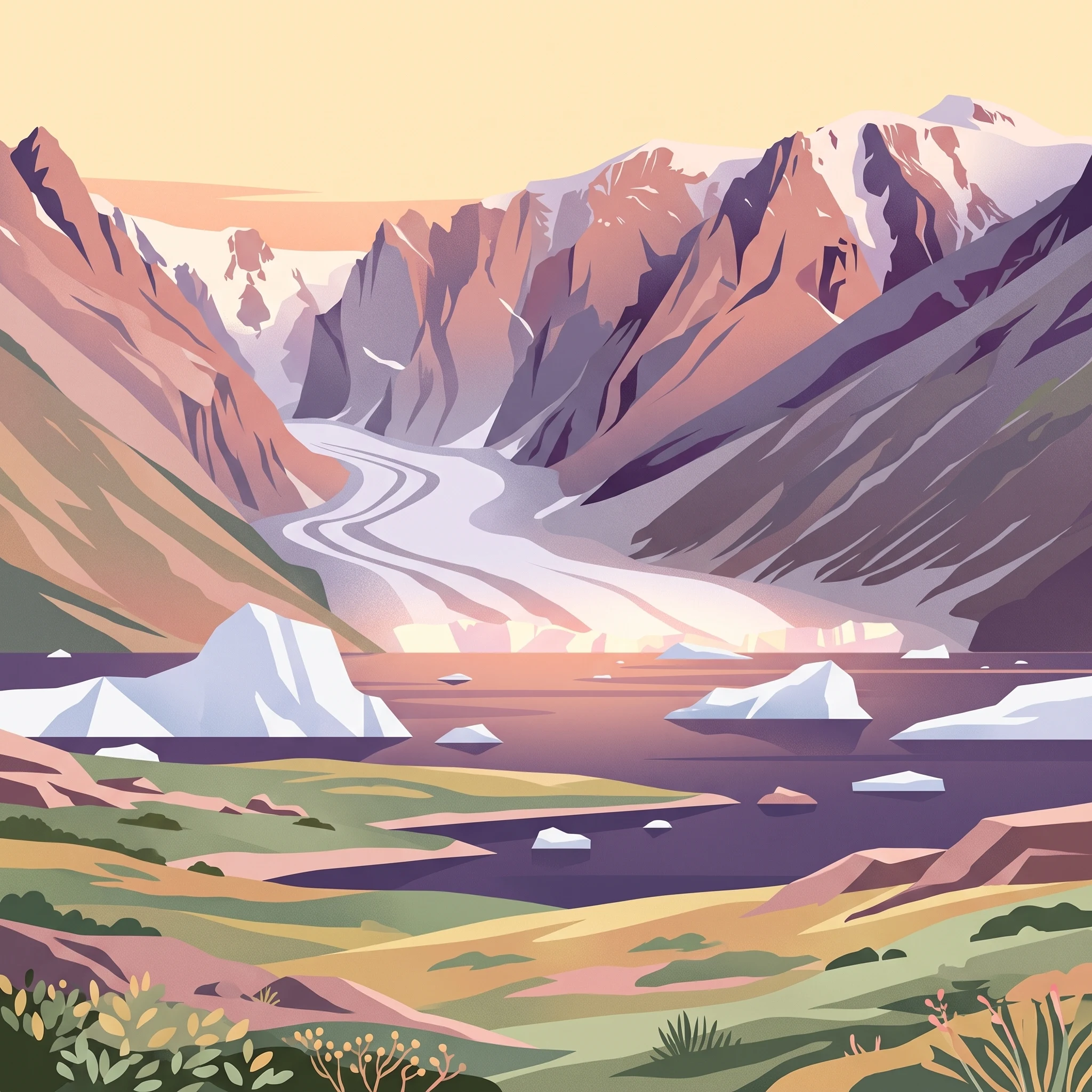
Visitors to Northeast Greenland National Park find their experiential possibilities defined entirely by the transition from the polar winter to the brief, light-saturated summer. Because the park contains no permanent infrastructure or maintained roads, activities are tethered to the accessibility of the coastal fjords. During June, July, and August, the retreating sea ice and the onset of 24-hour daylight permit navigation of waterways that are otherwise locked away for most of the year. This period is the only time the Franz Josef Fjord system becomes a focal point for exploration, as it provides a rare, protected corridor into the park interior.
Wildlife Observation and Seasonal Distribution
The park is globally significant for hosting large populations of musk oxen and diverse Arctic fauna, yet encounters are dictated by seasonal terrain conditions. During the warmer weeks of July and August, when average daily maximum temperatures hover slightly above or below the freezing point, the ice-free highlands become more hospitable for terrestrial wildlife. Observers often focus on the coastal tundra where vegetation emerges from the permafrost, providing necessary forage for musk oxen. While polar bears remain in the region throughout the year, their presence along the coast is influenced by the movement of sea ice. Travel during the summer peak offers the best opportunity for spotting these animals from sea-based platforms, though sightings are entirely contingent on wildlife migration patterns rather than scheduled events.
Scientific and Remote Wilderness Exploration
For those drawn to the park for its status as a pristine scientific biosphere, the summer season allows for access to sites like the Zackenberg Station. This research facility occupies a unique ecological niche, and timing a visit during the height of the summer ensures that the local environment is free of deep winter snow, allowing for ground-level study of Arctic vegetation and permafrost features. Similarly, interest in reaching extreme geographic markers, such as Kaffeklubben Island, is restricted to the brief window when sea ice conditions allow vessel passage. Because these areas remain among the most isolated and northernmost terrestrial environments on the planet, any activity here requires reliance on specialized expedition transport rather than independent travel. The lack of trails or visitor centers means that every experience, from coastal fjord trekking to documenting glacial movement, depends heavily on the specific weather patterns of that calendar year, which can deviate significantly from established climate normals.
Visitor Priorities
Selecting the Best Time for Northeast Greenland National Park Exploration
Navigating for Milder Arctic Temperatures
For visitors whose primary concern is managing the extreme cold, the window of late June through July offers the most tolerable thermal conditions. During this period, the average daily maximum temperatures hover closer to the freezing point, reaching approximately -2.23°C in July. While this remains firmly in the sub-freezing range, it represents a significant departure from the deeper cold experienced in the shoulder months like May or September, where average minimums can plummet well below -30°C. Choosing this mid-summer window reduces the physiological strain of exposure, although the trade-off remains the persistent dampness of the polar desert environment and the necessity of high-grade technical insulation regardless of the date.
Prioritizing Extended Daylight for Exploration
If your primary objective is maximizing daylight for viewing the vast fjord systems or monitoring wildlife behavior, the period between late May and July is the only logical choice. During these months, the park experiences 24-hour daylight, eliminating the standard transition from day to night. This continuous illumination provides a practical advantage for safety and navigation, as there is no risk of losing visibility during transit or expedition activities. However, the trade-off is a total loss of the natural circadian rhythm and the psychological challenge of living in an environment where the sun never sets. Travelers must also account for the fact that high-latitude daylight does not imply warmth, meaning the constant sun is not a proxy for a temperate climate.
Identifying the Drier Arctic Periods
Those aiming to visit when precipitation is at its lowest should focus on the early transition into summer. Monthly climate normals indicate that precipitation is at its relative minimum during April and May, with values around 0.25 to 0.28 mm per day. While these months are technically the driest, they are also significantly colder and precede the primary window for coastal fjord access. If you prioritize dry conditions over all else, you must accept the compromise of operating in a landscape that is still deeply locked in winter conditions, which may limit your ability to traverse or observe coastal ecosystems that only become accessible when the ice begins to break up later in June.
Matching Movement with Environmental Stability
Wildlife viewing and movement through the park are highly dependent on the ice melt cycle. Late July and August are generally preferred for those wishing to navigate coastal waters or traverse rocky terrain that is free of persistent snow cover. While these months see a slight increase in precipitation to 0.53 mm per day compared to the spring months, the environmental stability provided by the thaw is essential for any land-based activity. The trade-off for this accessibility is a gradual reduction in daylight hours as August progresses, signaling the return of the polar darkness and the hardening of the landscape as the park shifts toward its long, inaccessible winter phase.
Logistics and Access
Seasonal Access and Operational Planning for Northeast Greenland National Park
Access to Northeast Greenland National Park is defined by extreme geographical isolation and the total absence of standard park infrastructure. Because the park contains no roads, marked trails, or permanent visitor facilities, all travel must be planned as an independent or commercial expedition. Visitors should not view this destination through the lens of traditional national park access, where seasonal road openings or visitor centers dictate travel schedules. Instead, access is entirely dependent on specialized transport logistics and individual regulatory compliance.
Expedition Permits and Regulatory Requirements
Entry into this protected territory is strictly regulated. All visitors must obtain formal expedition permits from the Danish government before arrival. These requirements serve as the primary gatekeeper for the park, as the government assesses the feasibility, safety, and environmental impact of each proposed itinerary. Because permit regulations can shift to reflect changing conservation priorities or geopolitical conditions, you must verify current application timelines, specific permit categories, and required proof of insurance directly through the official Greenlandic authorities. Do not rely on historical accounts of permit processing times, as these are subject to administrative updates that can significantly affect your planning window.
Transport and Entry Points
Reaching the park typically involves a multi-stage journey. Most expeditions utilize Nerlerit Inaat Airport as a regional gateway. Upon arrival, travelers often require onward transport via helicopter shuttle to access the more remote coastal fjords that define the park’s primary exploration zones. Since commercial flight availability to these remote Greenlandic hubs is limited and weather-dependent, it is essential to coordinate transport arrangements well in advance. Air service schedules, baggage restrictions, and shuttle frequency are not guaranteed and are subject to immediate adjustment based on weather conditions, which, as noted in previous chapters, can turn volatile even during the summer months. Always confirm the operational status of your chosen transport providers immediately before departing, as seasonal flight patterns are not persistent throughout the year.
Navigating Operational Dependencies
Planning a visit requires acknowledging that no entity manages a seasonal opening or closing date for the park itself. While the climate naturally restricts movement to the short summer window between June and August, the park remains technically accessible or inaccessible based on the capability of your transport and the validity of your permits. You must interpret operational information from expedition operators and local authorities as fluid; what is possible one season may be constrained the next due to sea ice movement or changes in local aviation support. Always verify current access rules through official government channels to ensure your visit aligns with the latest safety protocols and land-use regulations.
Safety and Preparation
Arctic Weather Hazards and Seasonal Gear for Northeast Greenland National Park
Navigating Arctic Climate Risks
Preparation for the park relies on acknowledging that even in the height of the summer window, you remain in a high-latitude polar environment. While the summer months see temperatures rising toward the freezing point, the reality of the climate is one of persistent cold and wind. Humidity levels often exceed 90 percent throughout the year, which exacerbates the cooling effect of the wind. Even when temperatures reach their seasonal maximum, the absence of heat means that any moisture from rain or sea spray creates an immediate risk of hypothermia if clothing becomes wet. Because there is no local infrastructure or search-and-rescue support within the park boundaries, safety protocols must center on self-sufficiency and the ability to maintain thermal regulation independently in extreme conditions.
Essential Gear for Polar Wilderness
Packing for the park requires a focus on moisture management and wind protection rather than insulation against heat. The primary hazard is the unpredictable nature of Arctic weather, where calm conditions can transition to high-velocity winds that impact tent stability and heat retention. Because you will be operating in a remote environment where you may be on your own for extended periods, your gear must be proven for technical, expedition-style use. This includes high-performance outer layers capable of blocking consistent wind speeds that remain significant even during the warmest months of July and August. You must ensure your equipment is suited for high latitudes, particularly regarding communication devices. Standard satellite phones may encounter signal issues due to the park's extreme northern position where geostationary satellites often sit near or below the horizon. Always consult with your expedition operators or local authorities regarding current connectivity requirements and signal limitations.
Wildlife Awareness and Distance Protocols
Safety in the park extends to managing interactions with Arctic wildlife. While animals like musk oxen are iconic to the region, they are wild and potentially defensive. It is essential to maintain a distance of several hundred meters at all times. Using long-range camera lenses is the primary way to observe fauna without disturbing their behavior or provoking an aggressive response. Polar bears represent a significant, constant danger in coastal and fjord areas, and travelers should receive professional guidance on bear safety protocols prior to departure. Never approach wildlife, and always prioritize the safety of the animals and your own party by remaining observant of environmental cues. Ensure you have obtained and reviewed the latest park-specific safety alerts, as wildlife movement patterns and localized hazards are subject to change based on current seasonal conditions.
Final Planning Decisions
How to Choose the Right Time to Visit Northeast Greenland National Park
Navigating the Arctic Decision Window
Choosing when to visit this vast Arctic landscape ultimately comes down to prioritizing either the extreme, unwavering daylight of the height of summer or the slightly more manageable transition periods of the shoulder season. Because the park lacks permanent tourist infrastructure, there is no single best month that provides a comfortable experience. Instead, the right time for your visit depends entirely on your tolerance for sub-freezing temperatures and your specific objectives for being in the High Arctic. If your priority is maximizing the window for exploration and movement, mid-summer remains the only logical choice. However, if you are looking to capture specific lighting conditions or witness the distinct transition between winter and spring, the earlier, colder, and darker months require a different level of logistical preparation.
Matching Personal Priorities to Arctic Realities
Visitors who aim for the peak of the summer season in July and August must accept that even the warmest months maintain temperatures where the daily maximum rarely climbs far above freezing. This is not a destination for temperate exploration, but rather a place where the environment dictates your itinerary. Those who value the perpetual daylight of late June and July gain a significant advantage in terms of activity time, as the sun does not set, allowing for flexible expedition schedules. This constant light is a profound asset for navigation and safety in a region where human presence is minimal and the terrain is demanding.
Alternatively, if you find yourself drawn to the fringes of the season, such as late May or early September, you must weigh the benefit of solitude and unique atmospheric conditions against the stark reality of plummeting temperatures and diminishing light. These periods offer a more authentic, albeit more hazardous, view of the Arctic, yet they also increase the probability of needing to retreat due to sudden weather shifts. Each prospective traveller should audit their ability to remain entirely self-sufficient, as the park is a remote wilderness where help is not readily available.
Before finalizing your travel dates, ensure you have secured the necessary permits and confirmed the logistical feasibility of your transport. Because weather systems in this region are volatile, climate normals serve only as a baseline for expectations rather than a guarantee of conditions. Always verify current park alerts, access regulations, and regional weather forecasts shortly before your departure. Your final decision should reflect a realistic assessment of your experience with extreme environments and your commitment to operating within a strictly regulated, unserviced protected area.