
Mori Atlas logo
Protected landscapePřírodní park Chlum

Understanding the asymmetric horst ridge, forest ecology, and regional boundaries of the Mladá Boleslav District

Přírodní park Chlum: A Comprehensive Protected Landscape and Geographic Atlas Entry

Přírodní park Chlum represents a regionally significant protected area in the Czech Republic, centered on the striking geological profile of the Chloumecký hřbet. This asymmetric horst ridge features Cretaceous sandstone bedrock and relict Pliocene surfaces, creating a wooded backbone above the Bohemian lowlands. By examining its interconnected forest corridors and distinct topographic features, observers gain insight into the conservation of varied woodland flora and localized sedimentary landforms within the Mladá Boleslav District.

nature parkprotected landscapebroadleaf forestoak-hornbeam forestwoodland reserveCretaceous sandstone ridge
A flat vector-style illustration showing a waterfall cascading down a cliff into a stream, with willow-like trees and a lily pad pond in the foreground.

Přírodní park Chlum

Protected landscape

Park overview

Structured park overview, official facts, and landscape profile for Přírodní park Chlum

Přírodní park Chlum park facts, protected area profile, and essential visitor context

Review the core facts for Přírodní park Chlum, including designation, size, terrain, visitor scale, habitats, and operating context in one park-focused overview.

About Přírodní park Chlum

Přírodní park Chlum is one of the smaller but ecologically meaningful přírodní parky (nature parks) of the Czech Republic. It sits in the lowland transition zone of central Bohemia, where the generally flat countryside is interrupted by a single pronounced geological feature: the Chloumecký hřbet. By protecting the entire length and slopes of this ridge, the park safeguards an entire landscape unit rather than a single habitat patch, which is part of what gives the area its value.

The park's identity is strongly geological. The Chloumecký hřbet is described as an asymmetric horst in the east–west direction, built from Cretaceous-age sediments. The dominant bedrock is kaolinitic and clay-rich sandstone, which shapes both the topography and the soils. On the broad summit of the ridge, remnants of a Pliocene planation surface have been preserved, giving the crest a noticeably flatter profile than might be expected from the surrounding terrain. On the gentler southern slope, which historically attracted more settlement, loess deposits accumulated and contribute to a finer, more fertile substrate that contrasts with the sandier northern face.

Ecologically, the park functions as a large forested block embedded in agricultural central Bohemia. Oak–hornbeam forests dominate, with local variations into acidophilic oak woodland on poorer substrates and small enclaves of herb-rich beech forest in more sheltered positions. The herb layer is unusually rich, with several rare or protected species recorded in the area. A small artificial waterbody known as Jezírko pod Chlumem adds wetland-edge habitat and contributes to the diversity of the understorey and amphibian assemblages. Together, these features create a multi-layered woodland environment that stands out in an otherwise heavily cultivated region.

The park's value is also connective. Přírodní park Chlum directly borders přírodní park Čížovky, and together the two form a continuous protection corridor along the ridge and its associated slopes. In a part of the Czech Republic where forest fragmentation, agricultural intensification, and suburban growth around Mladá Boleslav are ongoing pressures, this connected protected area helps maintain forest interior conditions, allows more demanding woodland species to persist, and preserves the visual and ecological character of the Chloumecký hřbet.

Quick facts and research context for Přírodní park Chlum

Přírodní park Chlum lies in the Mladá Boleslav district of the Central Bohemian Region. It was designated as a nature park in 2000 by the municipality of Mladá Boleslav. The protected area covers roughly 1,300 hectares and spans elevations of about 225 to 362 meters above sea level. The park follows the east–west trending Chloumecký hřbet ridge and adjoins přírodní park Čížovky to the east. Its landscape is shaped by Cretaceous sandstones with Pliocene relict surfaces and loess deposits, and most of the territory is covered by oak–hornbeam and mixed deciduous forest.

Protection and recognition

Documented terrestrial protection scope and official recognition details

Přírodní Park Chlum Protection Status and Conservation Framework

Přírodní park Chlum maintains a documented terrestrial protection scope within the regional landscape network. Official conservation records outline the registered designation framework without external international recognition sources.

Protection details

Protection scope
Terrestrial
Transboundary protection
No
Park context

Deeper park guide and search-rich context for Přírodní park Chlum

Přírodní park Chlum history, landscape, wildlife, and travel context

Explore Přírodní park Chlum through its history, landscape character, ecosystems, wildlife, conservation priorities, cultural context, and seasonal travel timing in a structured park guide built for atlas discovery and search intent.

Why Přírodní park Chlum stands out

The park is best known for its central role in protecting the Chloumecký hřbet, an asymmetric horst ridge that forms a distinct wooded spine above the lowlands around Mladá Boleslav. Its combination of Cretaceous sandstone geology, Pliocene relict summit surfaces, and loess-mantled southern slopes gives the area a layered landscape that is unusual within central Bohemia. Botanically rich oak, hornbeam and beech forests, a notable presence of protected herb-layer species, and a continuous forest corridor with the adjacent Čížovky park reinforce its reputation as a regionally important woodland reserve.
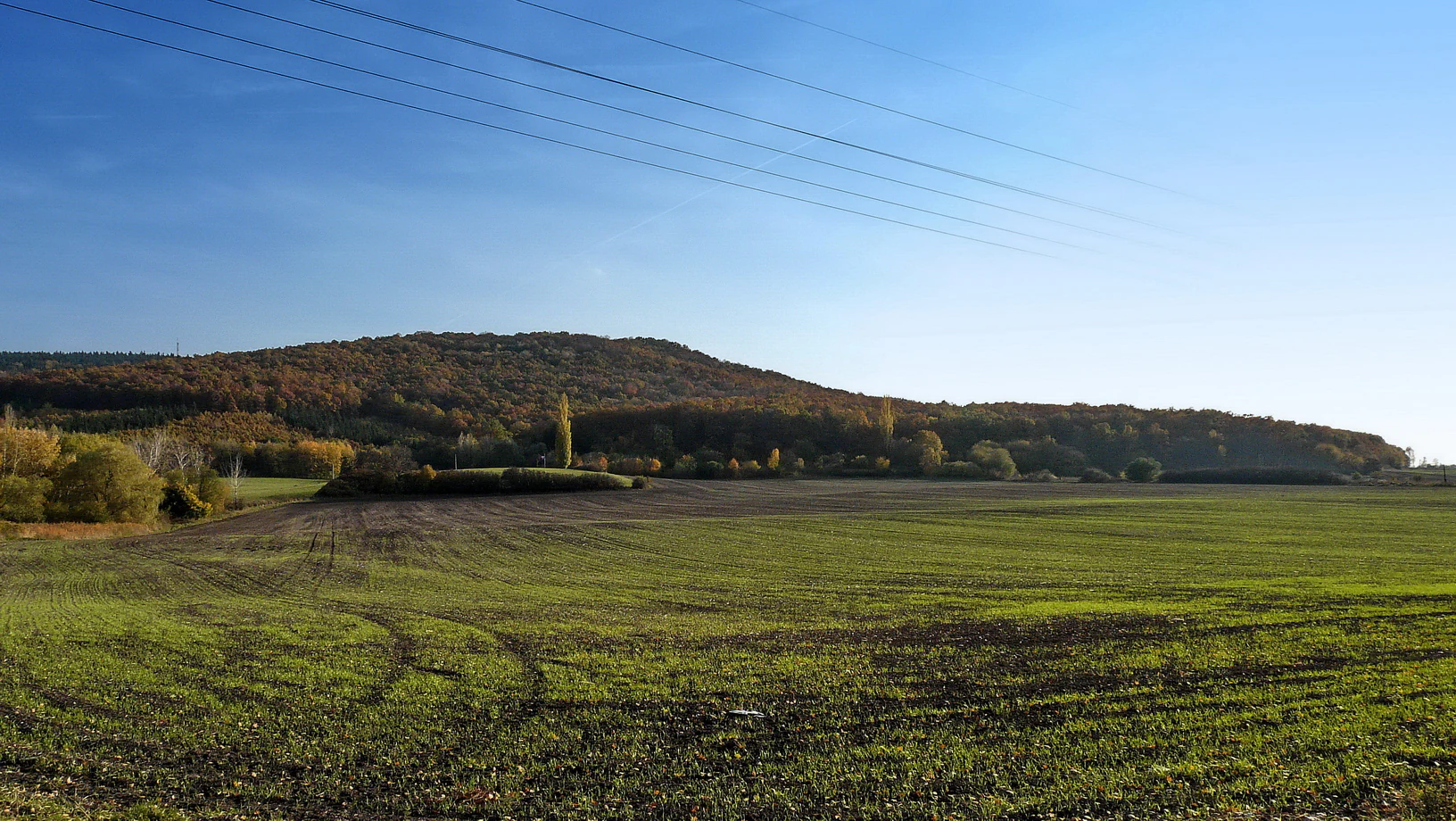
A wide landscape view of an agricultural field in the foreground with a forested hill, the Chloumecký ridge, visible in the background under a clear blue sky.
A view of the landscape surrounding the Chloumecký ridge in Přírodní park Chlum.

Přírodní park Chlum history and protected-area timeline

Přírodní park Chlum was formally declared in the year 2000 by the municipal office of Mladá Boleslav, the administrative center of the surrounding district. The designation as a přírodní park placed the ridge under a recognized regional protection category applied to areas of significant landscape, ecological, or aesthetic value in the Czech Republic.

The park's creation reflected growing awareness of the conservation importance of the Chloumecký hřbet and its forests, and it deliberately aligns with the adjacent přírodní park Čížovky to the east, allowing the two reserves to function as a continuous protected unit. Beyond the act of designation, the park's history is principally a geological one, with the current landscape shaped by Cretaceous sedimentation, Pliocene planation that left an unusually broad summit, and Quaternary loess deposition on the southern slope that gradually attracted denser human settlement.

Přírodní park Chlum landscape and geographic character

The landscape of Přírodní park Chlum is defined almost entirely by the Chloumecký hřbet, an asymmetric horst ridge running east–west through the Mladá Boleslav district. The ridge is sharply asymmetric, with a noticeably steeper and more dissected northern face descending toward the lowlands and a gentler southern slope that has historically been more accessible to settlement and agriculture. This profile is one of the park's most recognizable features when seen from the surrounding countryside.

The crest of the ridge is unusually broad and comparatively flat, owed to the preservation of a relict Pliocene planation surface. Beneath this ancient leveled surface, Cretaceous sediments, predominantly kaolinitic and clay-rich sandstones, form the structural backbone of the landscape. The combination of bedrock type and the long-term weathering process has produced sandy, often nutrient-poor soils on the upper slopes, while finer loess deposits accumulated on the lower southern side, creating a gradient of substrates within a relatively compact area.

Terrain features within the park include forested ridges, sandstone outcrops along steeper faces, and the small artificial lake known as Jezírko pod Chlumem near the foot of the slope. The contrast between the abrupt northern edge and the softer southern declivity makes the park visually distinct from the flatter agricultural land surrounding it, reinforcing its role as a wooded landmark on the Bohemian plain east of Mladá Boleslav.

Přírodní park Chlum ecosystems, habitats, and plant life

Ecologically, Přírodní park Chlum is dominated by forest. Oak–hornbeam communities are the most extensive forest type, a typical association for warm lowland slopes in central Bohemia, and they reflect the park's elevation range and substrate conditions. On poorer, more acidic soils, especially where sandstone prevails, the forest shifts locally into acidophilic oak woodland, while in more sheltered and nutrient-richer pockets, fragments of herb-rich beech forest remain, adding compositional diversity to the canopy.

Mixed broadleaf stands prevail, with pedunculate and sessile oaks, small-leaved linden, hornbeam, sycamore maple, ash, and beech all contributing to the canopy in different microhabitats. The herb layer is the area's botanical highlight. Documented species include several protected or regionally rare plants such as the white helleborine, hepatica, lily of the valley, European wild ginger, hairy sedge and wood sedge, winter cherry, sweet woodruff, the golden-headed lily, wood anemone, Solomon's seal, and various smaller woodland herbs, indicating a well-developed understorey in many parts of the forest.

The varied soil and moisture conditions, combined with the presence of the Jezírko pod Chlumem and small streams, also create contrasts between dry ridge habitats, shaded slope forests, and damp transitional zones near water, supporting a wider range of ecological niches than the park's compact size might suggest.

Přírodní park Chlum wildlife and species highlights

The wildlife of Přírodní park Chlum reflects its character as a lowland deciduous forest reserve embedded in an agricultural landscape. The canopy and understorey host a typical central European woodland bird community, including common redstart, great spotted woodpecker, Eurasian nuthatch, Eurasian collared dove, Eurasian jay, common buzzard, and larger warblers such as the greater whitethroat, alongside woodpeckers and other cavity-nesting species linked to mature broadleaf trees.

Insect diversity is a notable element of the park's faunal character. Among the recorded species are several butterflies and moths, including the scarce chequered skipper and the lesser purple emperor, as well as longhorn beetles such as the small capricorn beetle and members of the jewel beetle and longhorn beetle families. These insects are associated with old, structurally varied broadleaf forest, where dead wood and ancient trees are present.

At the ground and water interface, the park supports amphibians typical of central European woodland ponds and damp depressions, including common frog, pool frog, European tree frog, and common toad. Wetland-edge habitats around Jezírko pod Chlumem and along small watercourses provide breeding and feeding grounds for these species and contribute to the overall connectivity of forest, water, and open habitats.

Přírodní park Chlum conservation status and protection priorities

Conservation significance in Přírodní park Chlum rests on its role in protecting an entire geological feature rather than an isolated patch of habitat. By safeguarding the crest and slopes of the Chloumecký hřbet, the park preserves a landscape unit whose combination of Cretaceous sandstone bedrock, Pliocene relict surfaces, and loess deposits would otherwise be vulnerable to quarrying, agricultural expansion, and suburban development radiating from Mladá Boleslav.

The forested character of the reserve is itself a conservation priority. Oak–hornbeam and associated deciduous forests are increasingly rare as continuous stands in the Czech lowlands, where centuries of land use have reduced woodland cover and fragmented what remains. The herb-rich understorey, with multiple protected plant species, indicates well-preserved forest interior conditions and the presence of habitats sensitive to disturbance.

The park's direct connection to přírodní park Čížovky strengthens its conservation value by creating an extended protected corridor. Together, the two parks enhance habitat connectivity for woodland birds, insects, and amphibians, and they help maintain ecological processes across a broader area than either could protect alone. In this way, Přírodní park Chlum functions less as an isolated reserve and more as a key structural node in the regional network of protected lowland forests.

Přírodní park Chlum cultural meaning and human context

The area around Přírodní park Chlum has long been shaped by human settlement on the gentler southern slope of the Chloumecký hřbet, where loess soils and easier terrain attracted villages and farmland. Today the park spans portions of several municipalities, including areas associated with Mladá Boleslav, Dobrovice, Nepřevázka, Nová Telib, Březno, Lhotky, Semčice, and Žerčice, reflecting the way the ridge has long been embedded in a populated rural landscape.

The ridge itself has acted historically as a wooded landmark above the Bohemian lowlands, shaping local identity and serving as a recognizable geographic reference. Continued access to the forests for traditional uses such as gathering, hunting, and small-scale forestry is part of the relationship between surrounding villages and the park. Přírodní park Chlum does not protect a wilderness in any strict sense; rather, it preserves a culturally familiar wooded ridge whose meaning has long been tied to the communities living along its flanks.

Top sights and standout views in Přírodní park Chlum

The most distinctive feature of Přírodní park Chlum is the Chloumecký hřbet itself: an asymmetric horst ridge with a broad Pliocene summit, Cretaceous sandstone bedrock, and a softer loess-mantled southern slope. The continuity of oak–hornbeam and mixed deciduous forest across this entire landform gives the park its strong woodland identity, reinforced by a rich herb layer that includes several protected species.

The small reservoir of Jezírko pod Chlumem is a notable focal point within the park, adding wetland-edge habitat and supporting amphibians and associated forest fauna. Equally important is the park's direct linkage with přírodní park Čížovky, which together form a long, continuous protected forest corridor in the wider Mladá Boleslav area and enhance the regional significance of both reserves.

Best time to visit Přírodní park Chlum

Spring is generally the most rewarding time to experience Přírodní park Chlum, when the herb layer of the oak–hornbeam forests comes alive with flowering species such as hepatica, wood anemone, and lily of the valley, and breeding birds are most active across the canopy. The broad ridge crest and forest edges are pleasant for walking at this time, before the dense summer canopy fully closes in.

Early autumn brings colorful broadleaf foliage and cooler, more comfortable conditions for longer walks along the ridge, and is also a good period for observing insects and woodland fungi. In winter, the bare deciduous canopy opens up views across the ridge and toward the surrounding villages, and snow can highlight the asymmetric profile of the Chloumecký hřbet, though visitors should expect typical central Bohemian winter conditions.
Monthly climate preview

Long-term monthly temperature and precipitation rhythm for Přírodní park Chlum

Přírodní park Chlum Climate Normals and Annual Temperature Range

Temperature and precipitation normals recorded across representative coordinates in Přírodní park Chlum show a measured annual rhythm ranging from freezing winter lows to warm summer maximums. Reviewing the complete twelve-month climatology profile reveals detailed variations in average daily conditions across the protected terrain.
Annual mean8 °C
-3 °C19 °C
Jan-3°
Feb-2°
Mar
Apr
May13°
Jun17°
Jul19°
Aug18°
Sep13°
Oct
Nov
Dec-2°
Warmest month
July

18.7 °C

Coolest month
January

-3.1 °C

Wettest month
July

2.9 mm/day

Driest month
April

1.3 mm/day

Park location guide

Geography guide, regional context, and park location map for Přírodní park Chlum

Přírodní park Chlum park geography, regions, and map view in Czechia

Understand where Přírodní park Chlum sits in Czechia through a broader geographic reading of the surrounding landscape, nearby location context, and its mapped position within the national park landscape.

How Přírodní park Chlum fits into Czechia

Czech Republic is a landlocked Central European country with a population of approximately 10.9 million people. The nation was established as an independent state on January 1, 1993, following the dissolution of Czechoslovakia. Its capital and largest city is Prague, with other major urban centers including Brno, Ostrava, Plzeň, and Liberec.

Wider geography shaping Přírodní park Chlum in Czechia

The Czech Republic is a landlocked country in Central Europe. It is bordered by Germany to the west, Austria to the south, Poland to the northeast, and Slovakia to the southeast. The landscape is predominantly hilly, with the territory covering 78,871 square kilometers.

Map view of Přírodní park Chlum

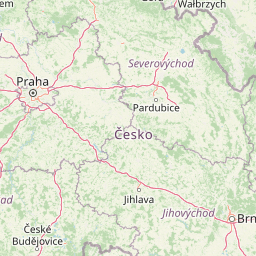
Use this park location map to pinpoint Přírodní park Chlum in Czechia, understand its exact geographic position, and read its mapped placement within the surrounding landscape more clearly.

Pigeon | © OpenStreetMap contributors

Location context for Přírodní park Chlum

Mladá Boleslav District

Visualizing the asymmetric horst ridge, forest habitats, and terrain character

Přírodní park Chlum Photos and Landscape Scenery Visual Exploration

Visual records reveal the distinctive wooded spine and sandstone formations that define the protected landscape. Examining these field photographs helps clarify the complex topography and dense broadleaf forests characterizing the regional reserve.

A wide landscape view of an agricultural field in the foreground with a forested hill, the Chloumecký ridge, visible in the background under a clear blue sky.

A panoramic shot of a small, quiet pond surrounded by dense forest, featuring water lilies on the surface and a large tree centered on the small shoreline.

Park atlas

Compare adjacent woodland reserves and connected regional landscapes in Bohemia

Explore Other Parks and Protected Areas Near Přírodní park Chlum

Browsing other parks near Přírodní park Chlum reveals related forest reserves and protected landscapes across the surrounding region. Extending the geographic comparison helps trace similar sandstone ridges, lowland woodland corridors, and regional conservation areas.
A horizontal watercolor painting depicting a soft landscape with green hills, light forest foliage, and a water body in a muted, warm color palette.
Protected landscapeMladá Boleslav District
About 6.7 km away#1 closest

East

Přírodní park Čížovky: Geographic Overview of the Protected Landscape in Mladá Boleslav District

Mapping wetlands, aquatic ecosystems, and rural terrain

Přírodní park Čížovky serves as a significant protected landscape in the Mladá Boleslav District. It features a dense mosaic of ponds, marshes, and orchards. Explore the mapped boundaries of this terrain, ranging from the Křesovský potok valley to the elevated Křemenice ridge, showcasing a classic Central Bohemian ecological heritage.

Area
386 km²
Established
1998
Relief
Upland
Climate
Temperate
A soft watercolor illustration depicting a riverbank with light green trees and a prominent rocky outcrop or cliff face near the water.
Natural monumentCentral Bohemian Region
About 14 km away#2 closest

North

Skalní sruby Jizery Natural Monument: Sandstone Landforms and River Geography

Protected riparian sandstone terrain in the Central Bohemian Region

This natural monument protects a rare geological formation along the Jizera River, where lateral erosion has created an extensive sandstone rock shelter. The site showcases advanced pseudokarst weathering and supports a dense concentration of botanical and avian diversity within its two-hectare boundary in the Central Bohemian Region.

Area
0.02 km²
Established
1979
IUCN
III
Relief
Upland
Natural monumentStředočeský kraj
About 14 km away#3 closest

Northwest

Valcha Natural Monument: Mapping Protected Wetland Ecosystems in Středočeský Kraj

A rare mosaic of forest ponds and mire habitats

Situated in the Středočeský kraj region, Valcha Natural Monument protects a distinctive silting pond and marshland ecosystem. This site demonstrates the ecological significance of small, hydrologically active ravine landscapes nestled within the broader Jizerská tabule plateau terrain, providing critical refuge for rare wetland species.

Area
0.024 km²
Established
2013
IUCN
III
Relief
Lowland
Natural monumentStředočeský kraj
About 17 km away#4 closest

Northeast

V Dubech Natural Monument: Protected Wetland Landscapes and Geography in Czech Republic

A compact wetland mosaic in the Středočeský kraj region

V Dubech is a protected natural monument situated at the base of the Příhrazské skály sandstone formations in the Czech Republic. This site preserves a valuable wetland mosaic, including base-rich peat meadows and alder woodlands that support rare species. The park provides an essential look at the localized, water-dominated geography within the broader context of the Bohemian Paradise protected landscape.

Area
0.047 km²
Established
1998
IUCN
III
Relief
Lowland
Natural monumentCentral Bohemian Region
About 18 km away#5 closest

North

Vrch Káčov Natural Monument: Mapped Geological Features in Central Bohemia

Volcanic rock formations and regional terrain context

Vrch Káčov is a designated natural monument preserving a unique volcanic hill and rock suk in the Central Bohemian Region. Its landscape is defined by contact metamorphism and porcelanite formations, offering a concentrated look at the geological evolution of the Jičínská pahorkatina hill country. The site provides a valuable reference for analyzing protected Bohemian terrain and its surrounding geographic characteristics.

Area
0.019 km²
Established
1953
IUCN
III
Relief
Upland
Natural monumentKrálovéhradecký kraj
About 18 km away#6 closest

Northeast

Meziluží Natural Monument: Mapping Protected Landscape Geography in Královéhradecký Kraj

A study of sandstone terrain and historic conservation within the Bohemian Paradise

Meziluží provides a detailed look at the geography of small-scale protected sites in the Czech Republic. By analyzing its steep sandstone slopes and traditional orchard-pasture land use, users gain a clearer understanding of the complex relationship between regional geology and botanical conservation history in the Bohemian Paradise area.

Area
0.015 km²
Established
1997
Relief
Upland
Scope
Terrestrial
A soft, light-filled watercolor painting of a rolling Czech landscape featuring deciduous trees, grassy meadows, and distant hills.
Natural monumentStředočeský kraj
About 18 km away#7 closest

Southwest

Slepeč Natural Monument: Protected Woodland Geography in the Central Bohemian Region

A rare botanical sanctuary in the Jizera basin.

The Slepeč natural monument represents a concentrated area of high botanical importance, shielding a remnant oak-hornbeam woodland from surrounding cultivation. Located in the Středočeský kraj, this site is renowned for housing diverse orchid species, including the lady's slipper, within a specialized microclimate found in the lowland terrain. Its protected status offers a unique look at forest conservation in an agricultural heartland.

Area
0.088 km²
Established
1984
IUCN
IV
Relief
Upland
Natural monumentCentral Bohemian Region
About 19 km away#8 closest

Northwest

Velký Radechov Natural Monument: Geography and Protected Habitat Mapping

Neovolcanic upland terrain within the Central Bohemian Region

Explore the mapped boundaries and natural features of Velký Radechov. This protected site in the Central Bohemian Region serves as an ecological mosaic, showcasing how neovolcanic hill slopes and formerly managed habitats provide refuge for a wide range of flora and fauna in the Czech landscape.

Area
0.22 km²
Established
1999
IUCN
IV
Relief
Upland

Common questions about visiting, size, designation, and location context for Přírodní park Chlum

Přírodní park Chlum FAQs for park facts, access, geography, and protected area context

Find quick answers about Přírodní park Chlum, including protected-area facts, park geography, trail and visitor context, and how the park fits into its surrounding country and regional landscape.
MoriAtlas Explorer

Continue Your Protected Areas Search Across the Global Atlas

Deepen your exploration by continuing the structured search for national parks and protected areas worldwide. Utilize the comprehensive filtering capabilities to compare different conservation landscapes and refine your understanding of global park geography. Discover more about the distribution and characteristics of protected natural areas.

Global natural geography