
Why Přírodní park Chlum stands out
The park is best known for its central role in protecting the Chloumecký hřbet, an asymmetric horst ridge that forms a distinct wooded spine above the lowlands around Mladá Boleslav. Its combination of Cretaceous sandstone geology, Pliocene relict summit surfaces, and loess-mantled southern slopes gives the area a layered landscape that is unusual within central Bohemia. Botanically rich oak, hornbeam and beech forests, a notable presence of protected herb-layer species, and a continuous forest corridor with the adjacent Čížovky park reinforce its reputation as a regionally important woodland reserve.
Přírodní park Chlum history and protected-area timeline
Přírodní park Chlum was formally declared in the year 2000 by the municipal office of Mladá Boleslav, the administrative center of the surrounding district. The designation as a přírodní park placed the ridge under a recognized regional protection category applied to areas of significant landscape, ecological, or aesthetic value in the Czech Republic.
The park's creation reflected growing awareness of the conservation importance of the Chloumecký hřbet and its forests, and it deliberately aligns with the adjacent přírodní park Čížovky to the east, allowing the two reserves to function as a continuous protected unit. Beyond the act of designation, the park's history is principally a geological one, with the current landscape shaped by Cretaceous sedimentation, Pliocene planation that left an unusually broad summit, and Quaternary loess deposition on the southern slope that gradually attracted denser human settlement.
Přírodní park Chlum landscape and geographic character
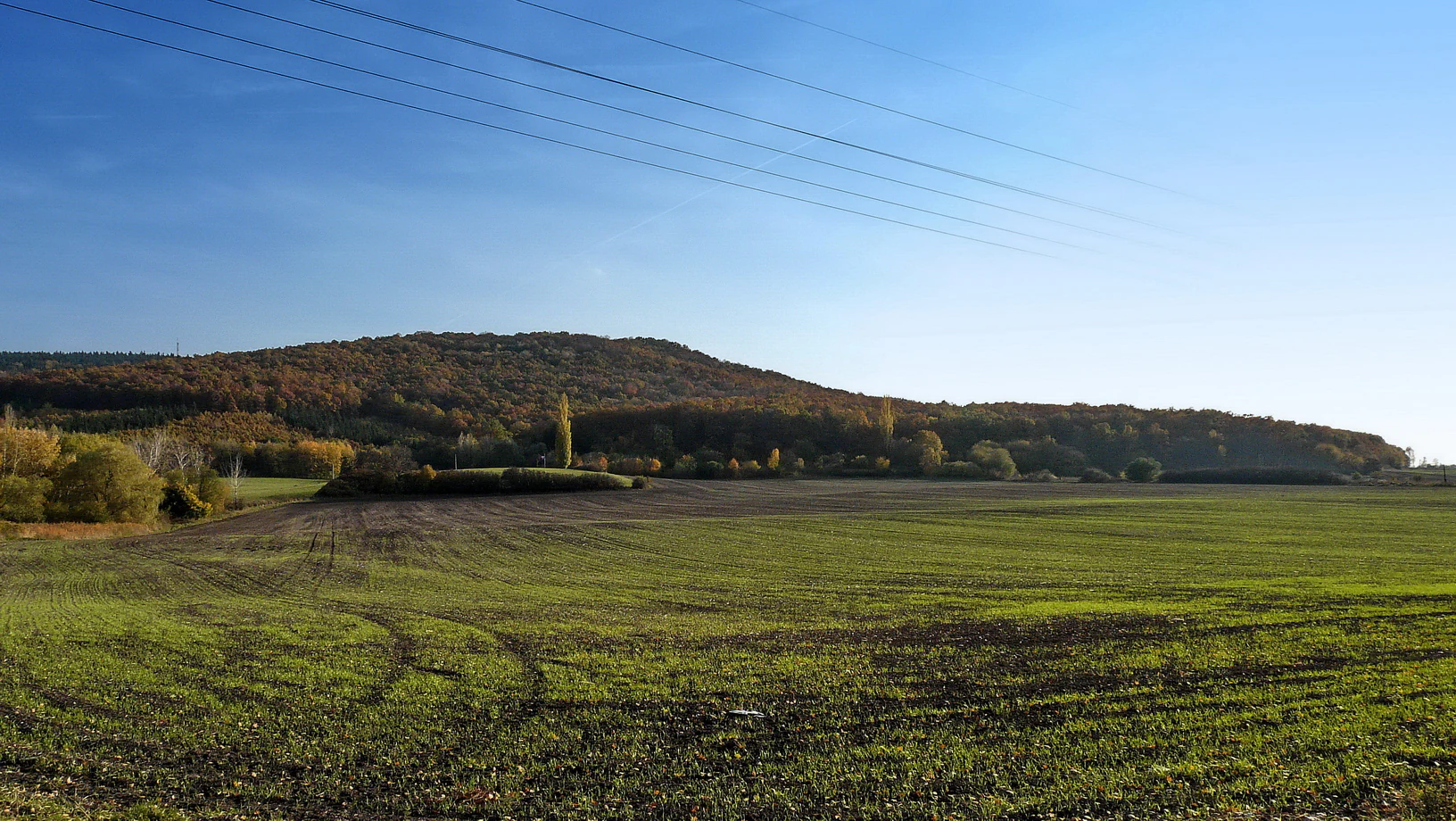
The landscape of Přírodní park Chlum is defined almost entirely by the Chloumecký hřbet, an asymmetric horst ridge running east–west through the Mladá Boleslav district. The ridge is sharply asymmetric, with a noticeably steeper and more dissected northern face descending toward the lowlands and a gentler southern slope that has historically been more accessible to settlement and agriculture. This profile is one of the park's most recognizable features when seen from the surrounding countryside.
The crest of the ridge is unusually broad and comparatively flat, owed to the preservation of a relict Pliocene planation surface. Beneath this ancient leveled surface, Cretaceous sediments, predominantly kaolinitic and clay-rich sandstones, form the structural backbone of the landscape. The combination of bedrock type and the long-term weathering process has produced sandy, often nutrient-poor soils on the upper slopes, while finer loess deposits accumulated on the lower southern side, creating a gradient of substrates within a relatively compact area.
Terrain features within the park include forested ridges, sandstone outcrops along steeper faces, and the small artificial lake known as Jezírko pod Chlumem near the foot of the slope. The contrast between the abrupt northern edge and the softer southern declivity makes the park visually distinct from the flatter agricultural land surrounding it, reinforcing its role as a wooded landmark on the Bohemian plain east of Mladá Boleslav.
Přírodní park Chlum ecosystems, habitats, and plant life
Ecologically, Přírodní park Chlum is dominated by forest. Oak–hornbeam communities are the most extensive forest type, a typical association for warm lowland slopes in central Bohemia, and they reflect the park's elevation range and substrate conditions. On poorer, more acidic soils, especially where sandstone prevails, the forest shifts locally into acidophilic oak woodland, while in more sheltered and nutrient-richer pockets, fragments of herb-rich beech forest remain, adding compositional diversity to the canopy.
Mixed broadleaf stands prevail, with pedunculate and sessile oaks, small-leaved linden, hornbeam, sycamore maple, ash, and beech all contributing to the canopy in different microhabitats. The herb layer is the area's botanical highlight. Documented species include several protected or regionally rare plants such as the white helleborine, hepatica, lily of the valley, European wild ginger, hairy sedge and wood sedge, winter cherry, sweet woodruff, the golden-headed lily, wood anemone, Solomon's seal, and various smaller woodland herbs, indicating a well-developed understorey in many parts of the forest.
The varied soil and moisture conditions, combined with the presence of the Jezírko pod Chlumem and small streams, also create contrasts between dry ridge habitats, shaded slope forests, and damp transitional zones near water, supporting a wider range of ecological niches than the park's compact size might suggest.
Přírodní park Chlum wildlife and species highlights
The wildlife of Přírodní park Chlum reflects its character as a lowland deciduous forest reserve embedded in an agricultural landscape. The canopy and understorey host a typical central European woodland bird community, including common redstart, great spotted woodpecker, Eurasian nuthatch, Eurasian collared dove, Eurasian jay, common buzzard, and larger warblers such as the greater whitethroat, alongside woodpeckers and other cavity-nesting species linked to mature broadleaf trees.
Insect diversity is a notable element of the park's faunal character. Among the recorded species are several butterflies and moths, including the scarce chequered skipper and the lesser purple emperor, as well as longhorn beetles such as the small capricorn beetle and members of the jewel beetle and longhorn beetle families. These insects are associated with old, structurally varied broadleaf forest, where dead wood and ancient trees are present.
At the ground and water interface, the park supports amphibians typical of central European woodland ponds and damp depressions, including common frog, pool frog, European tree frog, and common toad. Wetland-edge habitats around Jezírko pod Chlumem and along small watercourses provide breeding and feeding grounds for these species and contribute to the overall connectivity of forest, water, and open habitats.
Přírodní park Chlum conservation status and protection priorities
Conservation significance in Přírodní park Chlum rests on its role in protecting an entire geological feature rather than an isolated patch of habitat. By safeguarding the crest and slopes of the Chloumecký hřbet, the park preserves a landscape unit whose combination of Cretaceous sandstone bedrock, Pliocene relict surfaces, and loess deposits would otherwise be vulnerable to quarrying, agricultural expansion, and suburban development radiating from Mladá Boleslav.
The forested character of the reserve is itself a conservation priority. Oak–hornbeam and associated deciduous forests are increasingly rare as continuous stands in the Czech lowlands, where centuries of land use have reduced woodland cover and fragmented what remains. The herb-rich understorey, with multiple protected plant species, indicates well-preserved forest interior conditions and the presence of habitats sensitive to disturbance.
The park's direct connection to přírodní park Čížovky strengthens its conservation value by creating an extended protected corridor. Together, the two parks enhance habitat connectivity for woodland birds, insects, and amphibians, and they help maintain ecological processes across a broader area than either could protect alone. In this way, Přírodní park Chlum functions less as an isolated reserve and more as a key structural node in the regional network of protected lowland forests.
Přírodní park Chlum cultural meaning and human context
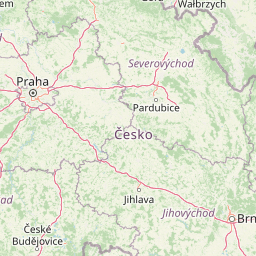
The area around Přírodní park Chlum has long been shaped by human settlement on the gentler southern slope of the Chloumecký hřbet, where loess soils and easier terrain attracted villages and farmland. Today the park spans portions of several municipalities, including areas associated with Mladá Boleslav, Dobrovice, Nepřevázka, Nová Telib, Březno, Lhotky, Semčice, and Žerčice, reflecting the way the ridge has long been embedded in a populated rural landscape.
The ridge itself has acted historically as a wooded landmark above the Bohemian lowlands, shaping local identity and serving as a recognizable geographic reference. Continued access to the forests for traditional uses such as gathering, hunting, and small-scale forestry is part of the relationship between surrounding villages and the park. Přírodní park Chlum does not protect a wilderness in any strict sense; rather, it preserves a culturally familiar wooded ridge whose meaning has long been tied to the communities living along its flanks.
Top sights and standout views in Přírodní park Chlum
The most distinctive feature of Přírodní park Chlum is the Chloumecký hřbet itself: an asymmetric horst ridge with a broad Pliocene summit, Cretaceous sandstone bedrock, and a softer loess-mantled southern slope. The continuity of oak–hornbeam and mixed deciduous forest across this entire landform gives the park its strong woodland identity, reinforced by a rich herb layer that includes several protected species.
The small reservoir of Jezírko pod Chlumem is a notable focal point within the park, adding wetland-edge habitat and supporting amphibians and associated forest fauna. Equally important is the park's direct linkage with přírodní park Čížovky, which together form a long, continuous protected forest corridor in the wider Mladá Boleslav area and enhance the regional significance of both reserves.
Best time to visit Přírodní park Chlum
Spring is generally the most rewarding time to experience Přírodní park Chlum, when the herb layer of the oak–hornbeam forests comes alive with flowering species such as hepatica, wood anemone, and lily of the valley, and breeding birds are most active across the canopy. The broad ridge crest and forest edges are pleasant for walking at this time, before the dense summer canopy fully closes in.
Early autumn brings colorful broadleaf foliage and cooler, more comfortable conditions for longer walks along the ridge, and is also a good period for observing insects and woodland fungi. In winter, the bare deciduous canopy opens up views across the ridge and toward the surrounding villages, and snow can highlight the asymmetric profile of the Chloumecký hřbet, though visitors should expect typical central Bohemian winter conditions.