Why Grotte du Carroussel National Nature Reserve stands out
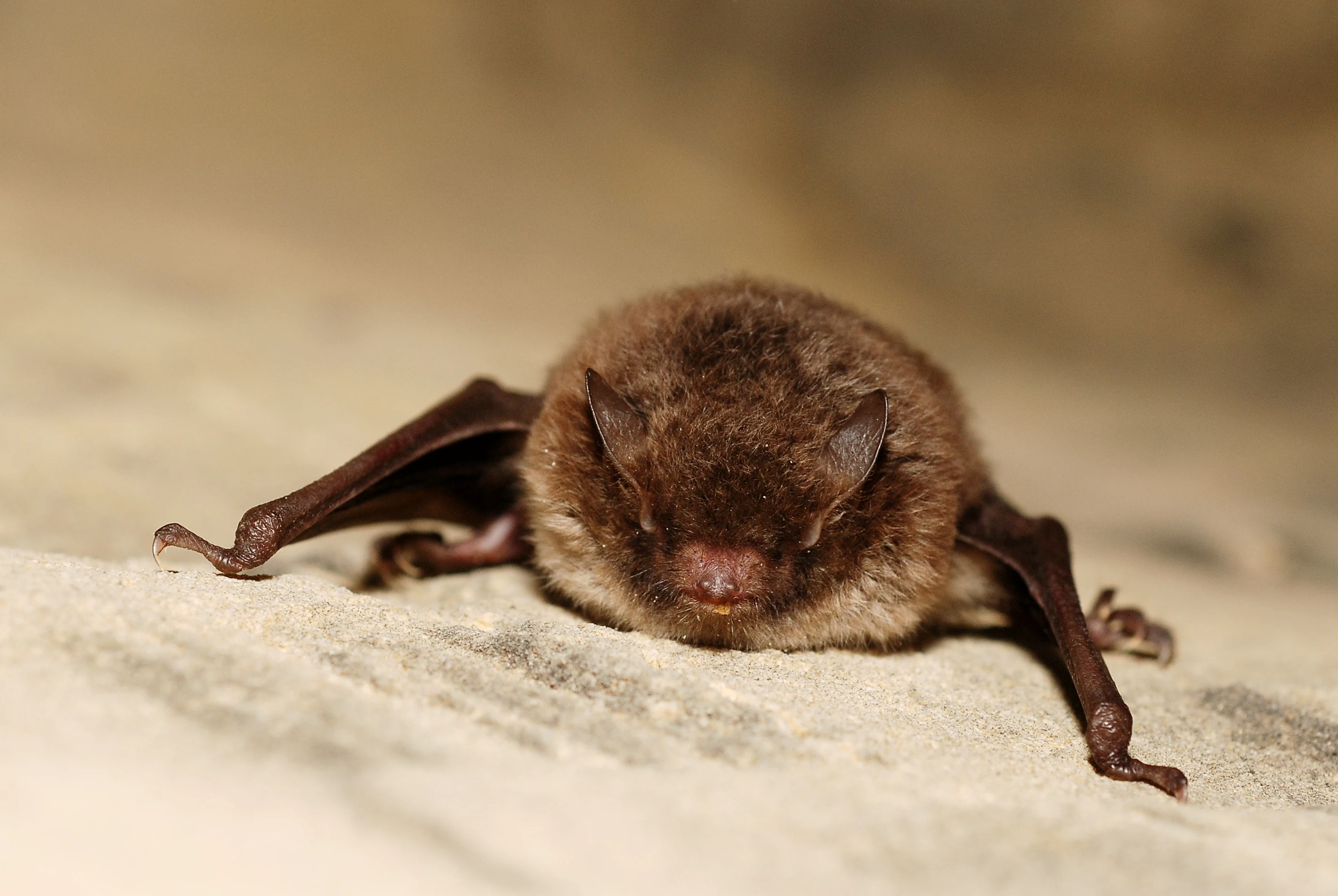
The reserve is internationally recognized for the protection of Schreiber's bent-winged bat (Miniopterus schreibersii), a highly cave-dependent species that completes its entire annual biological cycle within underground sites. The Grotte du Carroussel serves as one of the key summer maternity colonies in the region, with seasonal gatherings often exceeding a thousand individuals and an average of around 900 bats recorded during the birthing period between 1998 and 2012. It is also valued as part of a coherent network of underground shelters that bats use throughout their annual cycle, including hibernation, transitional periods, and reproduction. The cave's microclimate, stable temperatures, and protected position within a forested limestone plateau make it a reliable refuge for at least thirteen bat species across the seasons.
Grotte du Carroussel National Nature Reserve history and protected-area timeline
The cave at Carroussel, also known historically as the Grande Baume or the cave of Chaux-lès-Port, has served as a natural refuge for cave-dwelling wildlife for centuries. Among the species that have long used the cavity, bats; particularly chiroptères; are the most emblematic.
In 1850, guano was extracted from the cave and transported by barge along the Saône. By 1946, the presence of bats in the cave was formally documented, leading to ringing operations in 1949 during which around 2,500 individuals were tagged. From 1983 onward, members of what would become CPEPESC Franche-Comté began regular monitoring of the site. In 1994, a protective perimeter with fencing was installed to limit disturbance.
The formal protection of the site came with the decree of 27 March 1990, creating the Réserve naturelle nationale de la grotte du Carroussel. The managing body, CPEPESC, was officially designated on 16 November 1990. A first management plan covered the period 2006 to 2010, and a second (2014-2018) followed. The reserve is also recorded within the ZNIEFF Type 2 area known as the Vallée de la Saône de Corre à Broye.
Grotte du Carroussel National Nature Reserve landscape and geographic character
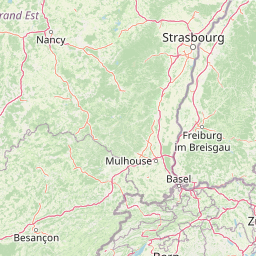
The reserve sits in the Val de Saône natural region, where the Saône river carves a broad corridor through eastern France. The protected site occupies a forested Bajocian limestone plateau that rises to roughly 245 meters above sea level, dropping down toward the Saône riverbank at around 214 meters. The cave itself opens into a cliff face facing east across the river, near the village of Chaux-lès-Port on the right bank of the Saône.
The cave entrance is a wide natural porch, around five meters high and six meters wide, set within the wooded limestone landscape. Inside, the cave extends into approximately 400 meters of passages. A meandering joint gallery branches south, while an axial gallery runs about 80 meters with widths varying between two and four meters and ceiling heights between three and eight meters. Other passages are narrower, with one leading after about fifty meters into an additional tight gallery of roughly 80 meters that descends to a siphon. The cave sits entirely within forest cover, with no direct road access, though departmental roads pass nearby in the surrounding Saône valley.
Grotte du Carroussel National Nature Reserve ecosystems, habitats, and plant life
Ecologically, the Grotte du Carroussel reserve is structured around two defined units: the wooded surface sectors and the cave entrance along with its subterranean passages. Although the surface area is small and a 2008 floral inventory identified no particularly rare plant species, the bryophyte communities of the site remain of ecological note.
The cave maintains a stable microclimate relative to the wider landscape. Internal temperatures vary from around 2 to 10 degrees Celsius depending on the gallery and the season, with the meandering joint gallery holding a near-constant temperature of about 10 degrees Celsius. These conditions make the cavity a reliable refuge across seasons.
On a larger scale, the reserve belongs to a coherent set of protected underground sites used by bats across eastern France and the Jura massif. Within this network, the Grotte du Carroussel is integrated into the seasonal cycle of Schreiber's bent-winged bat, contributing to habitat connectivity that extends well beyond the national frontier.
Grotte du Carroussel National Nature Reserve wildlife and species highlights
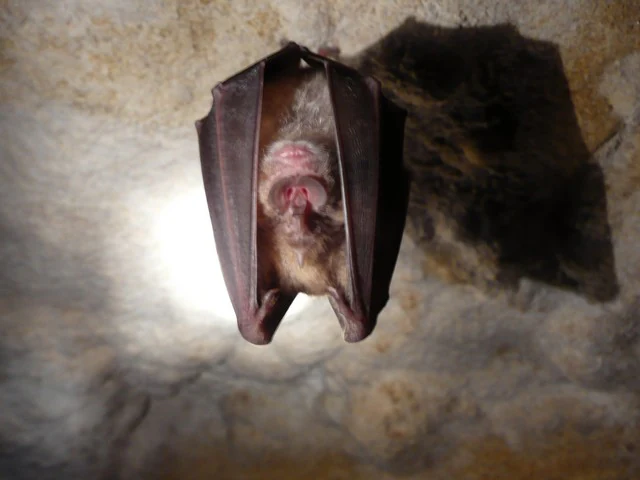
The cave is most notable for its bat fauna. Two principal families are recorded: Vespertilionidae and Rhinolophidae. Six species regularly occupy the site in summer, including Schreiber's bent-winged bat, the greater mouse-eared bat, Natterer's bat, Daubenton's bat, the greater horseshoe bat, and the lesser horseshoe bat. Other species occur occasionally, such as the whiskered bat, Geoffroy's bat, Bechstein's bat, the common serotine, the common and Nathusius's pipistrelles, the brown and grey long-eared bats, and the western barbastelle.
In total, eleven species and two genera of bats have been recorded across all seasons at the Grotte du Carroussel, out of the thirty-four species known in France. The average colony size during the birthing period over 1998 to 2012 was around 900 individuals for Schreiber's bent-winged bat, with breeding gatherings frequently exceeding one thousand bats in the broader network.
Beyond bats, invertebrate inventories since 1950 have produced a preliminary list of sixteen taxa and two genera inhabiting the cave system. The presence of guano-related fauna reflects the long-standing use of the cavity by colonial bat populations, though detailed invertebrate records remain comparatively limited.
Grotte du Carroussel National Nature Reserve conservation status and protection priorities
The Grotte du Carroussel National Nature Reserve exists because the cave environment is highly sensitive. Even minor alterations to temperature, humidity, air circulation, or acoustic conditions can disrupt bat colonies during hibernation and maternity periods. Human disturbance has been linked to bat mortality and to displacement of colonies to less favorable sites, which is why public access to the cave is strictly prohibited.
The reserve combines formal protection, a fenced perimeter installed in 1994, and active ecological monitoring by the CPEPESC Franche-Comté commission. Its status as a Réserve naturelle nationale since 1990 places it among the strongest protection categories available for natural sites in France, while its IUCN Category IV designation reflects its focus on habitat and species conservation through active management.
On a wider scale, the reserve contributes to the conservation of Schreiber's bent-winged bat across eastern France by maintaining one of the key maternity and hibernation sites in the Saône valley and the Jura foothills. The reserve is also integrated into the ZNIEFF Type 2 area known as the Vallée de la Saône de Corre à Broye, connecting it to broader landscape-level biodiversity planning.
Grotte du Carroussel National Nature Reserve cultural meaning and human context
The cave carries a layered human history. Beyond its natural history, it functioned in the mid-nineteenth century as a source of guano, which was extracted and shipped along the Saône by barge. The cave is also known by multiple historical names, including the Grande Baume and the cave of Chaux-lès-Port; the name Carroussel was chosen for the reserve itself.
In the surrounding landscape, the cave stands within a traditional rural corridor of the Haute-Saône where small villages such as Chaux-lès-Port, Conflandey, and Port-sur-Saône line the Saône river. The reserve's indirect relationship to local transport and settlement; with departmental roads in the area but no direct road across the protected site; reflects a long-standing balance between human use of the valley and the conservation of its underground heritage.
Top sights and standout views in Grotte du Carroussel National Nature Reserve
The Grotte du Carroussel reserve punches well above its weight in ecological importance. Despite covering only about 2.3 hectares, it anchors part of an international network of bat shelters across eastern France and the Jura. The cave's role as a major summer maternity site for Schreiber's bent-winged bat is its defining conservation feature.
Equally important is the cave's role in hibernation: thirteen bat species seek out its stable microclimate for the winter months. The reserve integrates protection, long-term monitoring, and active management through CPEPESC Franche-Comté, with completed and ongoing management plans guiding the future of the site.
Best time to visit Grotte du Carroussel National Nature Reserve
Public access to the Grotte du Carroussel is forbidden, as the cave is one of the most sensitive bat shelters in the Saône valley. Any visit to the cave interior would directly conflict with the core conservation purpose of the reserve.
The surrounding landscape of the Val de Saône, including the Saône river corridor and the wooded limestone plateau near Chaux-lès-Port, can be appreciated at any time of year. Late spring and early summer are generally favorable for observing the broader Saône valley landscape, while cooler months emphasize the quiet, stable character of the surrounding forest. Because bat colonies use the cave across all seasons, the reserve's protection is active year-round.