
Mori Atlas logo
Nature reserveRohrberg

Discover the mapped landscape and cultural geography of one of the oldest nature reserves in Bavaria

Rohrberg Nature Reserve: An Ancient Oak Woodland Protected Area in the Hochspessart Region of Bayern

(Naturschutzgebiet Rohrberg)

Rohrberg Nature Reserve represents a critical protected woodland in the Hochspessart hills of Bayern, Germany. Characterized by a rare, park-like open canopy of oaks aged five to eight hundred years, this historically grazed landscape provides vital habitat continuity through abundant standing and fallen deadwood. Explore the unique topography and ecological features of this storied forest, where centuries of traditional land use have created a distinct, protected micro-climate.

ancient oak woodlandhutewaldold-growth oaksdeadwood habitatSpessart forestlow-franconia
An artistic digital illustration of a forested mountain valley with a waterfall cascading down a cliff face, seen through foreground tree trunks.

Rohrberg

Nature reserve

Park overview

Structured park overview, official facts, and landscape profile for Rohrberg Nature Reserve

Rohrberg Nature Reserve park facts, protected area profile, and essential visitor context

Review the core facts for Rohrberg Nature Reserve, including designation, size, terrain, visitor scale, habitats, and operating context in one park-focused overview.

About Rohrberg Nature Reserve

Rohrberg Nature Reserve occupies a small but ecologically distinctive corner of the Hochspessart, a wooded upland in northwestern Bavaria long associated with traditional forest management. The reserve lies in the Rohrbrunner Forst, just south of the Naturwaldreservat Eichhall and only a short distance from the Rohrbrunn autobahn exit, which situates it within a broader network of protected woodlands that characterize the Spessart landscape. Officially covering roughly ten hectares, Rohrberg is far smaller than many of the surrounding forest reserves, yet its compact size concentrates some of the most biologically valuable old-growth features of the region within an unusually accessible footprint.

The reserve's defining feature is its open oak canopy, dominated by ancient pedunculate and sessile oaks several of which are thought to be between five and eight hundred years old. Unlike typical central European forests, where beech increasingly dominates undisturbed woodland, the Rohrberg canopy retains its historic open character because the trees have been shaped by centuries of human use rather than natural succession. Younger beeches grow among the ancient oaks, demonstrating how the site would evolve if left entirely to ecological processes, and selective management has eased their competitive pressure while leaving valuable deadwood to decay in place.

Rohrberg's importance extends well beyond its oak trees. The large quantity of decaying wood and the continuity of old microhabitats within the reserve support rare birds, beetles, and fungi that depend on stable, undisturbed conditions. The combination of cultural-historical land use and ecological continuity has earned the reserve a place among the earliest formally protected sites in Bavaria, with an original protection order dating to 1928 and a modern designation in force since 1979. Managed today by the Bayerisches Landesamt für Umwelt, the reserve illustrates how a small protected site, when grounded in a long history of careful land use, can preserve ecological communities that are increasingly rare across central Europe.

Quick facts and research context for Rohrberg Nature Reserve

Rohrberg Nature Reserve lies in the Hochspessart within the Landkreis Aschaffenburg in the German state of Bavaria, positioned south of the Naturwaldreservat Eichhall and close to the Rohrbrunn autobahn exit. The protected area covers approximately 9.9 hectares, a compact footprint that belies the ecological richness of its ancient oak canopy. Official designation has been in force since 22 January 1979, while the site's original protective status dates back to 6 January 1928, making it one of the earliest nature reserves established in Bavaria. Management falls under the Bayerisches Landesamt für Umwelt, with the site catalogued under identifier NSG600.001 and recorded internationally in the World Database on Protected Areas under WDPA ID 82434.

Protection and recognition

Documented conservation status and official protected area records for Rohrberg

Rohrberg Protection Status and International Recognition Data

Examine the documented protection status, management scope, and official designation records for Rohrberg. Review verified conservation parameters and international database entries associated with this protected natural area.

Protection details

WDPA ID
82434
Park context

Deeper park guide and search-rich context for Rohrberg Nature Reserve

Rohrberg Nature Reserve history, landscape, wildlife, and travel context

Explore Rohrberg Nature Reserve through its history, landscape character, ecosystems, wildlife, conservation priorities, cultural context, and seasonal travel timing in a structured park guide built for atlas discovery and search intent.

Why Rohrberg Nature Reserve stands out

Rohrberg is best known for its grove of ancient, gnarled oaks, some of them between 500 and 800 years old, which form an unusually open woodland canopy rarely encountered in central European forests. The reserve also stands out as the home of Bavaria's only tree-nesting colony of common swifts, alongside rare species such as the Collared Flycatcher, Middle Spotted Woodpecker, Grey-headed Woodpecker, and the Hermit beetle. Together with its large volume of standing and fallen deadwood, these features make Rohrberg a flagship example of a historically grazed oak woodland preserved for its cultural and ecological continuity.
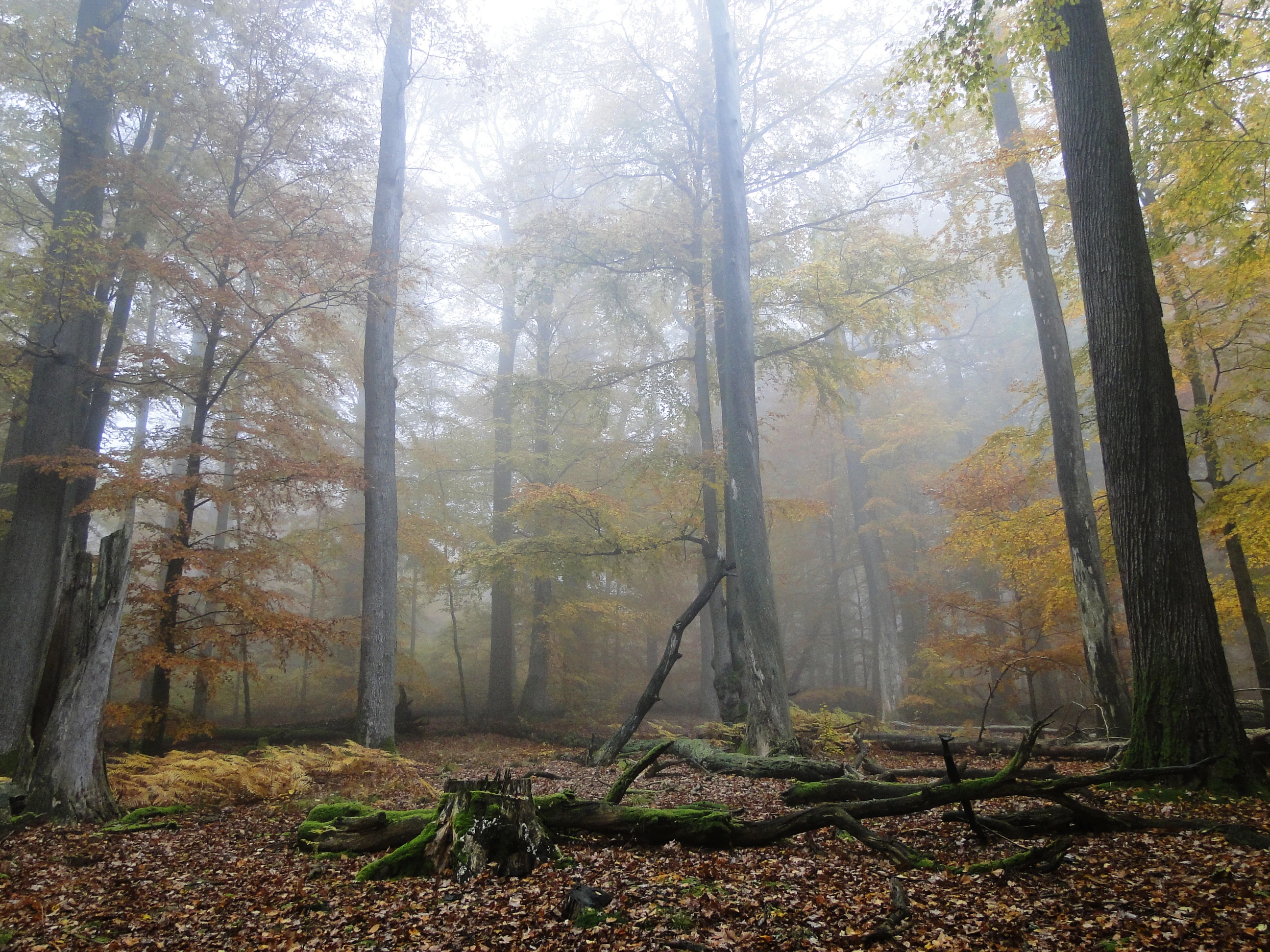
A thick, foggy forest with tall, mature trees and golden autumn foliage on the ground and branches.
Misty autumn conditions in the ancient forest of Rohrberg nature reserve.

Rohrberg Nature Reserve history and protected-area timeline

The wooded landscape at Rohrberg emerged from a long tradition of managed forest use rather than natural development. Until 1803, the area was shaped by hunting and game-keeping practices, with the acorns produced by the open oak canopy serving as feed for wild animals. This form of management, known as a Hutewald or grazing woodland, kept the canopy open and encouraged the persistence of ancient oaks that would otherwise be shaded out by faster-growing beech trees. Over the centuries, livestock from the nearby village of Rohrbrunn were also grazed beneath the trees, slowing succession and reinforcing the unusual open structure of the forest that survives to this day.

Rohrberg became one of the earliest formally protected sites in Bavaria when it was placed under protection on 6 January 1928. This original protective order laid the foundation for the site's modern status as a Naturschutzgebiet. The current regulatory framework for the reserve dates to 22 January 1979, when a revised designation formalized its present boundaries and management approach. Today the reserve is administered by the Bayerisches Landesamt für Umwelt, continuing a tradition of intervention that balances the preservation of the open oak canopy with the protection of the rare species that have come to depend on it.

Rohrberg Nature Reserve landscape and geographic character

The landscape of Rohrberg is shaped by its upland position within the Hochspessart and by the unusual openness of its forest canopy. Unlike the dense, closed canopy typical of much of the surrounding Spessart, the reserve's woodland has a park-like character, with widely spaced ancient oaks allowing light to reach the forest floor. The gentle topography of the Spessart foothills supports a coherent grove of mature trees and a small but continuous mosaic of deadwood habitats, including fallen trunks and standing snags that gradually decay in place. The interplay of open oak canopy, natural regeneration of beech, and accumulated deadwood creates an unusually textured micro-relief of light, shade, and habitat variation within a small area.

Rohrberg Nature Reserve ecosystems, habitats, and plant life

Rohrberg is classically described as a Hutewald, a grazed oak woodland whose structure reflects centuries of human management rather than ecological succession. The dominant trees are ancient oaks, many between 500 and 800 years old, whose gnarled forms and broad crowns define the reserve's character. Younger beeches grow in the understorey, demonstrating that without historic grazing and selective intervention, beech would gradually replace oak in the canopy. Selective cutting of a few beeches and larches has been used to reduce competitive pressure on the old oaks, while retaining cut wood in the forest has built up a substantial legacy of coarse deadwood.

This continuous presence of deadwood is ecologically decisive for the reserve. Fallen logs, broken limbs, and standing deadwood provide irreplaceable habitat structure for fungi, invertebrates, and cavity-nesting species that depend on long-term continuity of old-growth conditions. The reserve's small area is therefore disproportionately valuable ecologically, because the habitat features it contains have been stable over many centuries rather than managed for short-term timber production.

Rohrberg Nature Reserve wildlife and species highlights

Wildlife at Rohrberg is closely tied to the ancient oak canopy and the reserve's long-standing deadwood resources. The open structure and abundance of cavity-rich trees support a community of rare birds, including the Collared Flycatcher, Middle Spotted Woodpecker, and Grey-headed Woodpecker. The reserve is also notable for hosting the only tree-nesting colony of Common Swifts in Bavaria, an unusual breeding association that reflects the site's particular combination of mature trees and stable microclimate.

Invertebrate life is equally distinctive. The Hermit beetle, a species closely associated with ancient trees and large volumes of deadwood, breeds in the reserve, as does the Stag beetle. These beetle communities are indicators of ecological continuity that is rarely preserved at such intensity in commercial forests. Fungal biodiversity complements the fauna, with species such as the Hedgehog Mushroom fruiting on the accumulated deadwood and contributing to the reserve's importance as a refuge for saproxylic organisms.

Rohrberg Nature Reserve conservation status and protection priorities

Rohrberg is significant from a conservation perspective because it preserves a habitat type, the historically grazed oak woodland, that is increasingly rare across central Europe. The reserve's ecological value depends as much on the continuity of land use as on the formal protection regime. Without the long-standing grazing and selective management that shaped the canopy, the open oak woodland and the communities it supports would gradually disappear as beech outcompetes oak in the absence of disturbance. Conservation management therefore focuses on maintaining open conditions around the ancient oaks and preserving the deadwood legacy that supports the site's rare fauna and fungi.

The reserve's formal protection, with an original order dating to 1928 and a current designation from 1979, places it among the earliest scientifically motivated conservation efforts in Bavaria. Its inclusion in international records such as the World Database on Protected Areas, with WDPA ID 82434, underlines its broader relevance. Today Rohrberg functions as a reference site for understanding how historic woodland management can sustain biodiversity, and as a living example of the cultural and ecological heritage of the Spessart forest landscape.

Rohrberg Nature Reserve cultural meaning and human context

Rohrberg reflects centuries of interaction between local communities and the Spessart forest. Until 1803, the woodland was shaped by hunting practices, with the oaks' acorns serving as feed for game, and cattle from the village of Rohrbrunn being grazed beneath the trees. This blend of hunting, livestock grazing, and selective timber use produced a distinctive cultural landscape whose vegetation patterns still encode that history. The reserve therefore stands as more than a biological refuge: it preserves a form of forest use that shaped regional identity in the Spessart for many generations.

Top sights and standout views in Rohrberg Nature Reserve

Among the standout features of Rohrberg is the presence of ancient oaks between 500 and 800 years old, forming an open, park-like canopy that has no modern equivalent in most commercial forests. The reserve's accumulated deadwood, including large fallen trunks deliberately left in place after selective cutting, sustains a community of rare beetles, fungi, and cavity-nesting birds. Notable wildlife highlights include the Hermit beetle, Stag beetle, Collared Flycatcher, Middle and Grey-headed Woodpeckers, and Bavaria's only tree-nesting colony of Common Swifts.

Best time to visit Rohrberg Nature Reserve

Spring and early summer are particularly rewarding at Rohrberg, when the forest floor opens out beneath the bare oak canopy and bird activity is at its peak. Late spring offers the best chances to hear woodpeckers and the Collared Flycatcher and to observe breeding swifts returning to the old trees. Autumn brings fungal fruiting on the deadwood and a distinctive warm color palette from the ancient oaks. Winter visits can also be attractive, since the open canopy allows clear sightlines through the grove and reveals the structural complexity of the ancient trees.
Monthly climate preview

Long-term representative measurements and weather by month profiles for Bayern

Rohrberg Climate Normals, Annual Temperature and Precipitation Rhythm

Representative coordinate sampling records the annual temperature progression and monthly precipitation rhythm across Rohrberg from 1991 to 2020. Examining the complete twelve-month climate profile reveals detailed long-term averages for average minimum and maximum thresholds.
Annual mean9 °C
-1 °C19 °C
Jan-1°
Feb
Mar
Apr
May13°
Jun17°
Jul19°
Aug19°
Sep14°
Oct
Nov
Dec
Warmest month
July

19.5 °C

Coolest month
January

-0.6 °C

Wettest month
July

2.4 mm/day

Driest month
April

1.5 mm/day

Park location guide

Geography guide, regional context, and park location map for Rohrberg Nature Reserve

Rohrberg Nature Reserve park geography, regions, and map view in Germany

Understand where Rohrberg Nature Reserve sits in Germany through a broader geographic reading of the surrounding landscape, nearby location context, and its mapped position within the national park landscape.

How Rohrberg Nature Reserve fits into Germany

Germany is a federal republic in Western and Central Europe with a population of over 83 million across sixteen constituent states. It is Europe's largest economy by nominal GDP and a major global exporter and importer. The capital is Berlin, and the country borders Denmark, Poland, Czech Republic, Austria, Switzerland, France, Luxembourg, Belgium, and the Netherlands.

Wider geography shaping Rohrberg Nature Reserve in Germany

Germany is located in Western and Central Europe, spanning 357,022 km². It borders Denmark to the north, Poland and the Czech Republic to the east, Austria and Switzerland to the south, and France, Luxembourg, Belgium, and the Netherlands to the west. The country has coastlines on the Baltic Sea and North Sea to the north, with the Alps located in the southern region.

Map view of Rohrberg Nature Reserve

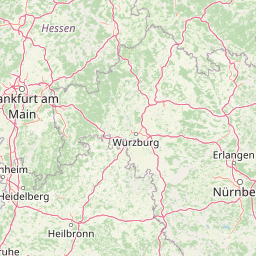
Use this park location map to pinpoint Rohrberg Nature Reserve in Germany, understand its exact geographic position, and read its mapped placement within the surrounding landscape more clearly.

Pigeon | © OpenStreetMap contributors

Location context for Rohrberg Nature Reserve

Bayern

Visualizing ancient oak canopies and protected forest habitats

Rohrberg Photos and Mapped Landscape Scenery in Bavaria

Examinations of Rohrberg reveal the open structure of ancient oak stands and decaying deadwood across the Hochspessart uplands. Visual documentation illustrates the distinct micro-relief, light patterns, and habitat continuity within Bavaria's historic protected reserve.

A thick, foggy forest with tall, mature trees and golden autumn foliage on the ground and branches.

Park atlas

Discover adjacent Bavarian forest reserves and surrounding woodland geography

Explore Other Parks Near Rohrberg and Compare Regional Protected Landscapes

Compare Rohrberg with nearby protected areas to examine similar upland forest structures and ancient woodland remnants. Continuing into surrounding regional park geography broadens your understanding of central European conservation landscapes.
Protected landscapeBaden-Württemberg
About 16 km away#1 closest

South

Freudenberg Protected Landscape: Regional Geography and Main Valley Conservation Mapping

Main-Tauber-Kreis protected land and river valley mosaic.

Freudenberg represents a significant protected landscape in Baden-Württemberg, spanning the confluence of historical settlement patterns and natural river corridors. This area preserves the integrity of the Main Valley through careful stewardship of open fields, wooded ridges, and traditional orchard landscapes that define the local regional character.

Area
17.032 km²
Established
1979
IUCN
V
Scope
Terrestrial
Protected landscapeBaden-Württemberg
About 19 km away#2 closest

Southeast

Wertheim Protected Landscape: Regional Geography and Sandstone Plateau Mapping

An enduring protected landscape within the Main-Tauber district of Baden-Württemberg.

Spanning 39 square kilometers across the towns of Wertheim, Freudenberg, and Külsheim, this protected area safeguards a classic Main-Franconian sandstone countryside. Its rolling plateau, shaped by red sandstone geology, integrates historic land use patterns with diverse woodland patches, meadows, and river valley streams to preserve a coherent regional landscape.

Area
38.98 km²
Established
1979
IUCN
V
Relief
Upland
Nature reserveLandkreis Main-Spessart
About 27 km away#3 closest

North

Sinngrund Nature Reserve: Geographic Map and Protected Landscape Overview

Riverine corridor and wet meadow habitats in Landkreis Main-Spessart

Sinngrund preserves a unique floodplain landscape along the Sinn river in Bavaria. The area features a complex mosaic of wet meadows, oxbow channels, and forest fragments that support significant botanical populations and regional wildlife. This record details the protected boundaries and landscape context of the reserve within the broader Naturpark Spessart.

Area
3.79 km²
Established
1999
Relief
Upland
Climate
Temperate
A horizontal watercolor illustration of a soft, hazy landscape with rolling hills, meadows, and indistinct patches of vegetation against a light background.
Nature reserveHessen
About 28 km away#4 closest

West

Bruchwiesen von Dorndiel Nature Reserve in Hessen: Protected Landscape and Geography

Wetland habitat and stream valley terrain in the Buntsandstein Odenwald

Bruchwiesen von Dorndiel represents a rare, compact concentration of wetland habitats, including open water, reedbeds, and moisture-gradient meadows. Located in the Amorbach stream corridor, this nature reserve is a key node for local biodiversity and regional landscape preservation within the broader Odenwald mountain range.

Area
0.087 km²
Established
1977
IUCN
IV
Relief
Upland
A horizontal watercolor illustration depicting a meandering stream through green valley meadows, flanked by soft foliage and rolling hills in the background.
Nature reserveOdenwaldkreis
About 30 km away#5 closest

Southwest

Geierstal von Vielbrunn Nature Reserve: Odenwald Landscape and Geography

Protected brook valley and floodplain ecosystems

Geierstal von Vielbrunn is a distinct nature reserve in Odenwaldkreis, characterized by a narrow valley floor carved by the Ohrenbach stream. The site preserves rare sedge fens, tall herb communities, and black alder galleries that provide essential refuge for regional wildlife. This protected landscape highlights the complex ecological transition between Hessian and Bavarian forest zones in a compact, valley-bottom geography.

Area
0.16 km²
Established
2000
Relief
Upland
Climate
Temperate
A horizontal watercolor painting showing a calm lake with marshy shores, distant tree lines, and pine branches framing the top and bottom corners, rendered in soft pastel greens and pinks.
Nature reserveHessen
About 31 km away#6 closest

Northwest

Ehemalige Tongrube von Mainhausen: Protected Nature Reserve and Wetland Habitat in Hessen

A vital sanctuary for waterbirds in the lower Main river valley

Explore the Ehemalige Tongrube von Mainhausen, an essential protected area in Hessen, Germany. Formed from a former clay pit, this site preserves a 15 hectare lake and diverse floodplain vegetation, functioning as a vital breeding and resting ground for numerous waterfowl species within the heavily modified lower Main valley.

Area
0.156 km²
Established
2005
IUCN
IV
Relief
Lowland
Watercolor painting of a green, rolling landscape with clusters of trees on the left and right against a soft, light-filled sky.
Nature reserveHessen
About 32 km away#7 closest

West

Buchertsgräben bei Schlierbach: Geographic Overview of the Hessian Nature Reserve

Protected forest landscape and geological loess ravine terrain

The Buchertsgräben bei Schlierbach nature reserve protects a vital woodland fragment in Hessen, where steep loess gullies cut through the landscape to create diverse microhabitats. This protected area supports a rare combination of semi-dry grassland relicts and forest-edge species, serving as a critical refugium for orchids and butterflies within the Odenwald foothills.

Area
0.516 km²
Established
1986
IUCN
IV
A soft watercolor painting of a wetland area with grasses, water, and a tree line in the background.
Nature reserveHessen
About 32 km away#8 closest

Northwest

Bong’sche Kiesgrube und Mainufer bei Mainflingen: Protected Wetland and River Geography

Explore the lake and riparian terrain within the Hessen river system.

Formed from former gravel extraction sites and floodplain stretches, Bong’sche Kiesgrube und Mainufer bei Mainflingen provides a vital ecological link along the Main river. The reserve preserves a distinct mosaic of open water, reeds, and willow-dominated woodland, serving as a critical habitat for diverse waterbirds in central Germany.

Area
94.52 km²
Established
1977
IUCN
IV

Common questions about visiting, size, designation, and location context for Rohrberg Nature Reserve

Rohrberg Nature Reserve FAQs for park facts, access, geography, and protected area context

Find quick answers about Rohrberg Nature Reserve, including protected-area facts, park geography, trail and visitor context, and how the park fits into its surrounding country and regional landscape.
MoriAtlas Explorer

Continue Your Protected Areas Search Across the Global Atlas

Deepen your exploration by continuing the structured search for national parks and protected areas worldwide. Utilize the comprehensive filtering capabilities to compare different conservation landscapes and refine your understanding of global park geography. Discover more about the distribution and characteristics of protected natural areas.

Global natural geography