
Mori Atlas logo
Natural monumentRukávečská obora

A preserved natural monument in the Písek district featuring rare old-growth woodland and diverse saproxylic habitats.

Rukávečská obora: Mapping the Ancient Beech Forest Protected Landscapes of South Bohemia

(Přírodní památka Rukávečská obora)

Rukávečská obora serves as a vital natural monument in the Czech Republic, protecting a rare fragment of acidophilous beech forest within the Písek district. This protected area on the northern slope of Oranice hill provides a critical habitat for threatened saproxylic invertebrates and cavity-nesting birds. By managing the forest structure through specialized fencing, the area preserves centuries-old beech trees and supports the broader ecological corridors of the Jihočeský kraj region.

beech forestold-growth forestnatural monumentprotected areaczech republicsouth bohemia
A flat vector-style illustration of a mountain valley featuring a central waterfall cascading down rocky cliffs behind a dense forest and a wooden bridge in the foreground.

Rukávečská obora

Natural monument

Park overview

Structured park overview, official facts, and landscape profile for Rukávečská obora

Rukávečská obora park facts, protected area profile, and essential visitor context

Review the core facts for Rukávečská obora, including designation, size, terrain, visitor scale, habitats, and operating context in one park-focused overview.

About Rukávečská obora

Rukávečská obora occupies a modest footprint within the rolling uplands of the Tábor Highlands in South Bohemia. Set on the northern slope of Oranice hill, the site preserves a fragment of beech forest that has resisted the strong ecological pressures of the surrounding game reserve for centuries. The character of the forest is distinctly acidophilous, belonging to the Luzulo-Fagetum association, and represents one of the most intact examples of this vegetation type remaining within its natural range in the region.

The broader Rukávečská obora game reserve has a long history as a managed hunting landscape, dating back to at least the 1540s. For over two centuries, high deer densities and foraging by wild boar severely limited natural regeneration of the beech stand, producing a forest of roughly uniform age lacking younger age classes. The enclosure of the protected fragment in 1998 marked a turning point, allowing natural seedling establishment and gradual restoration of the understory. The site is administered by the South Bohemian Regional Authority and recognized as part of the broader Otava and Vltava river valley Bird Protection Area.

The monument also stands out for its biodiversity, particularly the invertebrates associated with decaying wood in old beech stands. The hermit beetle (Osmoderma eremita) maintains a stable population here, and the forest supports a community of cavity-nesting birds and protected herpetofauna. Although the area itself is not freely accessible to visitors due to the protective fencing, an interpretive sign along the access road provides information about the site and its significance.

Quick facts and research context for Rukávečská obora

Rukávečská obora is a natural monument (přírodní památka) covering roughly 6.74 hectares of old-growth beech forest in the Písek district of South Bohemia, Czech Republic. Declared on August 6, 1929 by the Ministry of Education and National Enlightenment, it holds the distinction of being the oldest protected territory in the Písek district. It forms a small core within the 848-hectare Rukávečská obora game reserve.

The site sits on the northern slope of Oranice hill at elevations of 488 to 536 meters. The dominant vegetation is acidophilous beech forest of the Luzulo-Fagetum association, with individual trees exceeding 225 years. The monument is part of the Otava and Vltava Bird Protection Area and lies within the Tábor Highlands of the Bohemian-Moravian subprovince.

Protection and recognition

Terrestrial conservation history and official designation metrics for Rukávečská obora

Rukávečská Obora Protection Status and Designated Area Record

Rukávečská obora features a documented terrestrial protection status established in the year 2022. Official records outline the formal designation history and management scope without supplementary international listings.

Protection details

Protection scope
Terrestrial
Designated year
2022
Transboundary protection
No
Park context

Deeper park guide and search-rich context for Rukávečská obora

Rukávečská obora history, landscape, wildlife, and travel context

Explore Rukávečská obora through its history, landscape character, ecosystems, wildlife, conservation priorities, cultural context, and seasonal travel timing in a structured park guide built for atlas discovery and search intent.

Why Rukávečská obora stands out

Rukávečská obora is best known for preserving a rare fragment of ancient, acidophilous beech forest (Luzulo-Fagetum) in South Bohemia. The protected stand features beech trees over 225 years old, maintained through centuries of selective protection and, since 1998, by fencing that has restored natural regeneration of the canopy. The site is equally valued for its rich saproxylic invertebrate fauna, including the hermit beetle (Osmoderma eremita), and for cavity-nesting bird species such as the red-breasted flycatcher, stock dove, boreal owl, and black woodpecker. Its status as the oldest protected natural area in the Písek district adds a further layer of historical significance to its ecological profile.
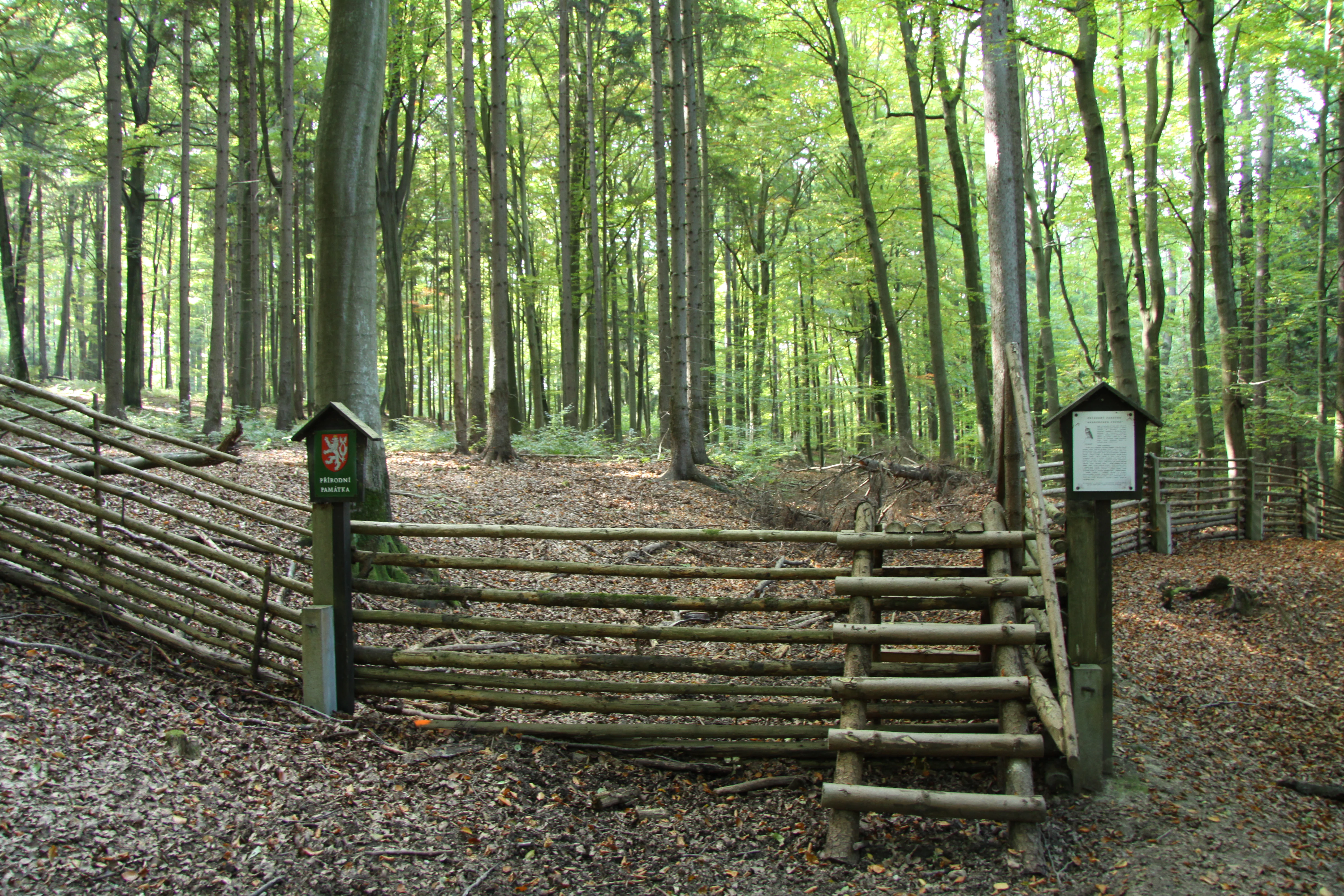
A wooden stile over a rustic fence leads into a dense deciduous forest, with informational signs mounted on posts.
A wooden stile and perimeter fencing marking the boundary of the Rukávečská obora natural monument.

Rukávečská obora history and protected-area timeline

The forests of the Rukáveč area have been documented since the 1540s, when they were first mentioned as a hunting ground. A 1734 visitation commission report described the Rukáveč reserve as containing large timber used primarily for the needs of the local manor. By the 19th century, the entire game reserve contained stands of the sixth age class, with trees exceeding 200 years.

The establishment of the game reserve under an 1848 ordinance dramatically increased herbivore pressure on the forest ecosystem. High deer populations meant for hunting caused significant damage to natural regeneration, while wild boar consumed beech mast, preventing the natural renewal of the canopy. The result was a forest of uniform age lacking a younger age class, dominated by mature and overmature trees. Mouflon were introduced to the reserve from 1887 onward.

Formal protection of the forest fragment came on August 6, 1929, when the Ministry of Education and National Enlightenment declared it a protected site, making it the oldest such designation in the Písek district. The original protected area covered 3.04 hectares. A botanical and forestry inventory was conducted in 1983. From 1992 onward, the site was recategorized as a natural monument (přírodní památka). In 1998, the core area was fenced off to exclude game animals, especially wild boar, enabling renewed natural regeneration of the beech stand. A management plan was issued in December 2006 covering the period from 2007 to 2020. By 2017, the region had initiated a renotification process, and the protection was modernized and reconfirmed by a South Bohemian Region ordinance dated November 24, 2022, with the official area adjusted to 6.74 hectares to match the actual fenced and protected forest stand.

Rukávečská obora landscape and geographic character

Rukávečská obora lies within the gentle uplands of central southern Bohemia, part of the Bohemian-Moravian subprovince. Geomorphologically, it belongs to the Tábor Highlands and more specifically the Písek Highlands subunit, within the Milevská pahorkatina geomorphological district. The protected site sits on the northern slope of Oranice hill, whose summit reaches 538 meters above sea level, with the monument itself spanning elevations from 488 to 536 meters.

The geological substrate consists largely of oriented biotite to amphibole-biotite granodiorite and quartz diorite of the Červená type, forming the bedrock of the gentler slopes. The upper portion of the hill features two-mica granite of the Central Bohemian Pluton, whose weathering has produced scattered slope debris on steeper sections. Leucocratic vein granites intrude into the bedrock in the western portion of the monument. The dominant soil type is modal cambisol, with typical acidic and dystric cambisols present in other areas.

The site is drained by an unnamed left-bank tributary of Hrejkovický potok, which ultimately flows into the Orlík reservoir on the Vltava river. Average annual precipitation in this part of the Central Bohemian Highlands ranges between 539 and 656 millimeters. The Quitt climate classification places the area in the moderately warm MT10 district, characterized by a long, warm and slightly dry summer, and a short, moderately warm and very dry winter with limited snow cover.
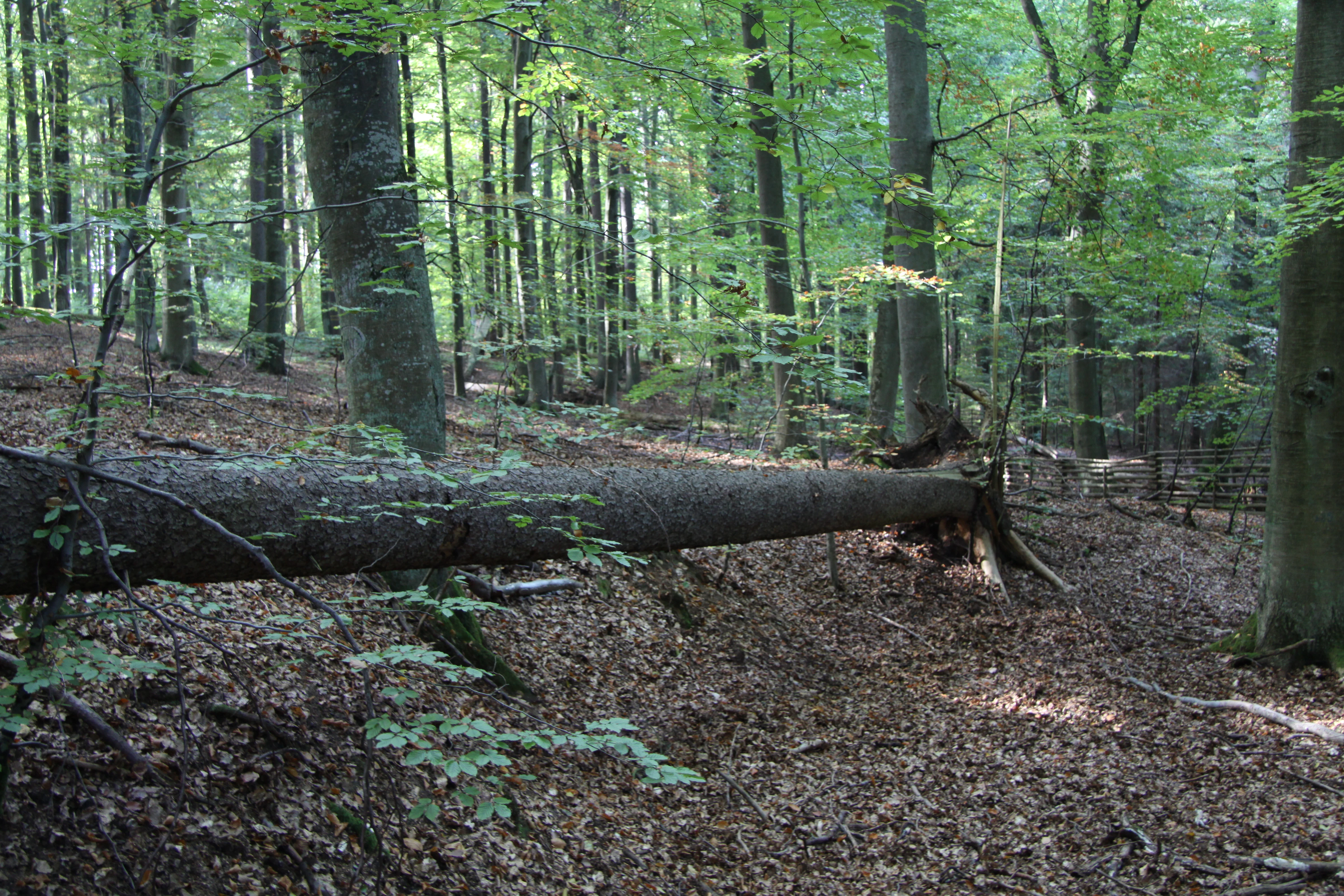
A large fallen tree trunk lying horizontally across a forest floor covered in autumn leaves, with tall mature trees in the background.
A fallen tree trunk within the beech forest of Rukávečská obora.

Rukávečská obora ecosystems, habitats, and plant life

Rukávečská obora preserves one of the few remaining fragments of acidophilous beech forest of the Luzulo-Fagetum association within its natural range in South Bohemia. This vegetation type covers approximately 98 percent of the protected area and is composed primarily of European beech (Fagus sylvatica), with some of the oldest trees exceeding 225 years. Norway spruce (Picea abies) and black alder (Alnus glutinosa) are present as accompanying species. The forest types include fresh oxalis beech forest and acidic wood-rush beech forest as the most widespread, with lesser representation of fresh hairy wood-rush beech forest, acidic wood-rush beech forest, fresh oak fir forest, and moist impatiens beech forest.

The herb layer is sparse, with cover values of just 10 to 20 percent. Characteristic species include white wood-rush (Luzula luzuloides), may lily (Maianthemum bifolium), and occasionally Prenanthes purpurea. Open patches near the summit are being colonized by reedgrass species, particularly Calamagrostis arundinacea and Calamagrostis epigejos. Younger spruce trees persist especially in the northern and southeastern parts of the site, representing up to 30 percent of the canopy in the north, though they have been partially removed over the second half of the 20th century.

Since the enclosure of the site in 1998, the exclusion of wild boar has permitted natural seedling establishment of beech, visible in patches of young growth beneath the mature canopy. An active effort is underway to gradually introduce silver fir (Abies alba) into the stand, with a target representation of 5 to 15 percent.
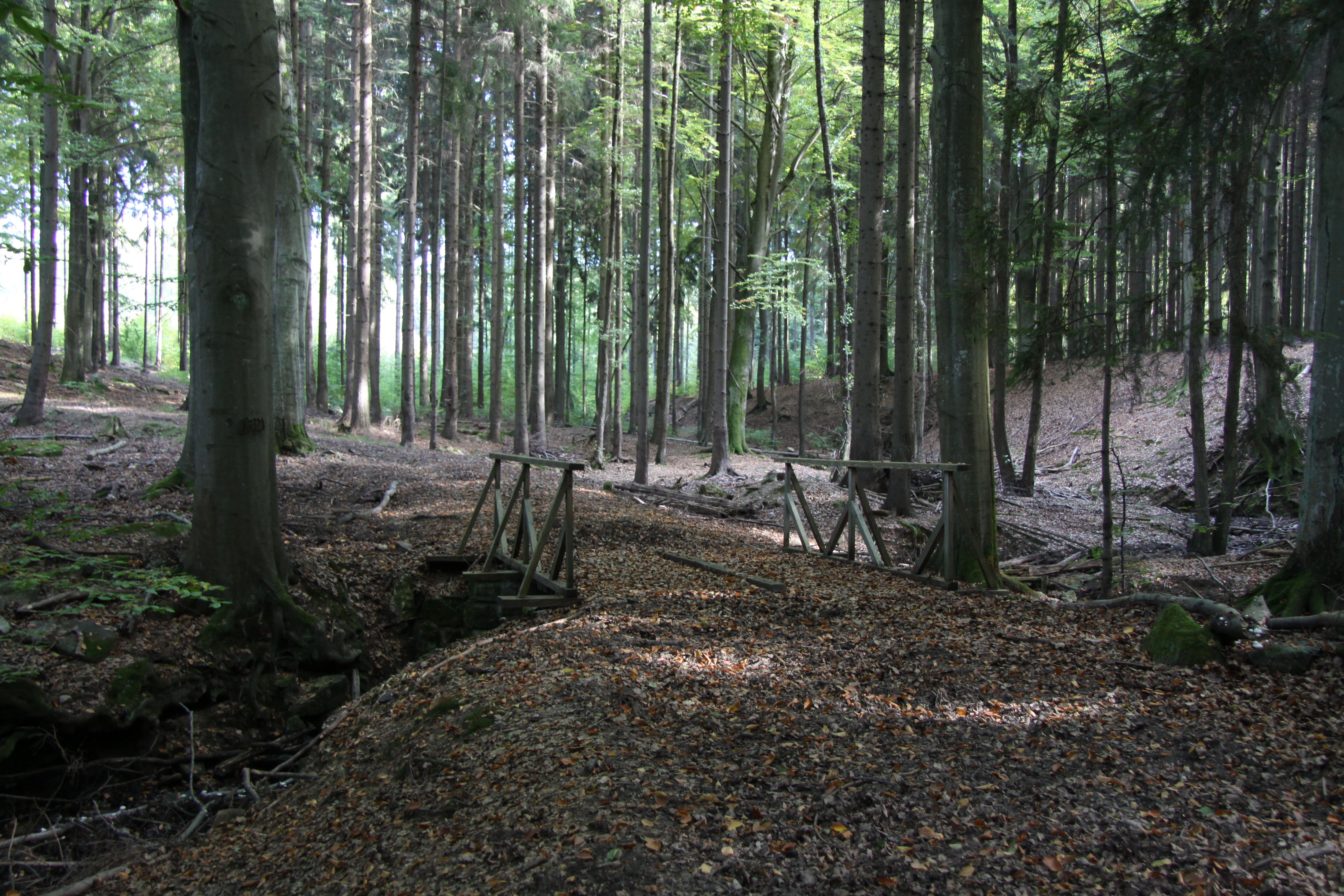
A forest path with two small wooden bridges crossing a shallow drainage ditch, surrounded by tall mature trees with leaves covering the forest floor.
A woodland path leading through the beech forest of Rukávečská obora.

Rukávečská obora wildlife and species highlights

The mature beech stands of Rukávečská obora support a community of species closely tied to old deciduous forests. Among the most notable invertebrates is the hermit beetle (Osmoderma eremita), a strongly threatened saproxylic species that inhabits decaying heartwood of fallen broadleaf trees. The same microhabitat supports Dasycerus sulcatus, while the moss layer harbors the rare rove beetle Syntomium aeneum. The stag beetle (Lucanus cervus) has been documented in the protection zone surrounding the monument. Additional invertebrates recorded include the crane fly Pedicia rivosa and the fungus gnat Zygomyia valida.

The site's old trees provide nesting cavities for several bird species of conservation interest within the Písek district. Multiple pairs of red-breasted flycatcher (Ficedula parva) breed here, alongside the stock dove (Columba oenas), boreal owl (Aegolius funereus), and black woodpecker (Dryocopus martius). The latter is associated with the middle-spotted woodpecker and other cavity-nesting species typical of mature beech forests.

Among the herpetofauna, the protected common toad (Bufo bufo) and slow worm (Anguis fragilis) inhabit the undergrowth. Historically, the broader game reserve supported larger carnivores including brown bears (mentioned as late as the 17th century), wolves (recorded as overabundant in the 18th century), and wild cats, though these are no longer present. The site's inclusion in the Otava and Vltava Bird Protection Area reflects its broader significance for bird conservation in the region.
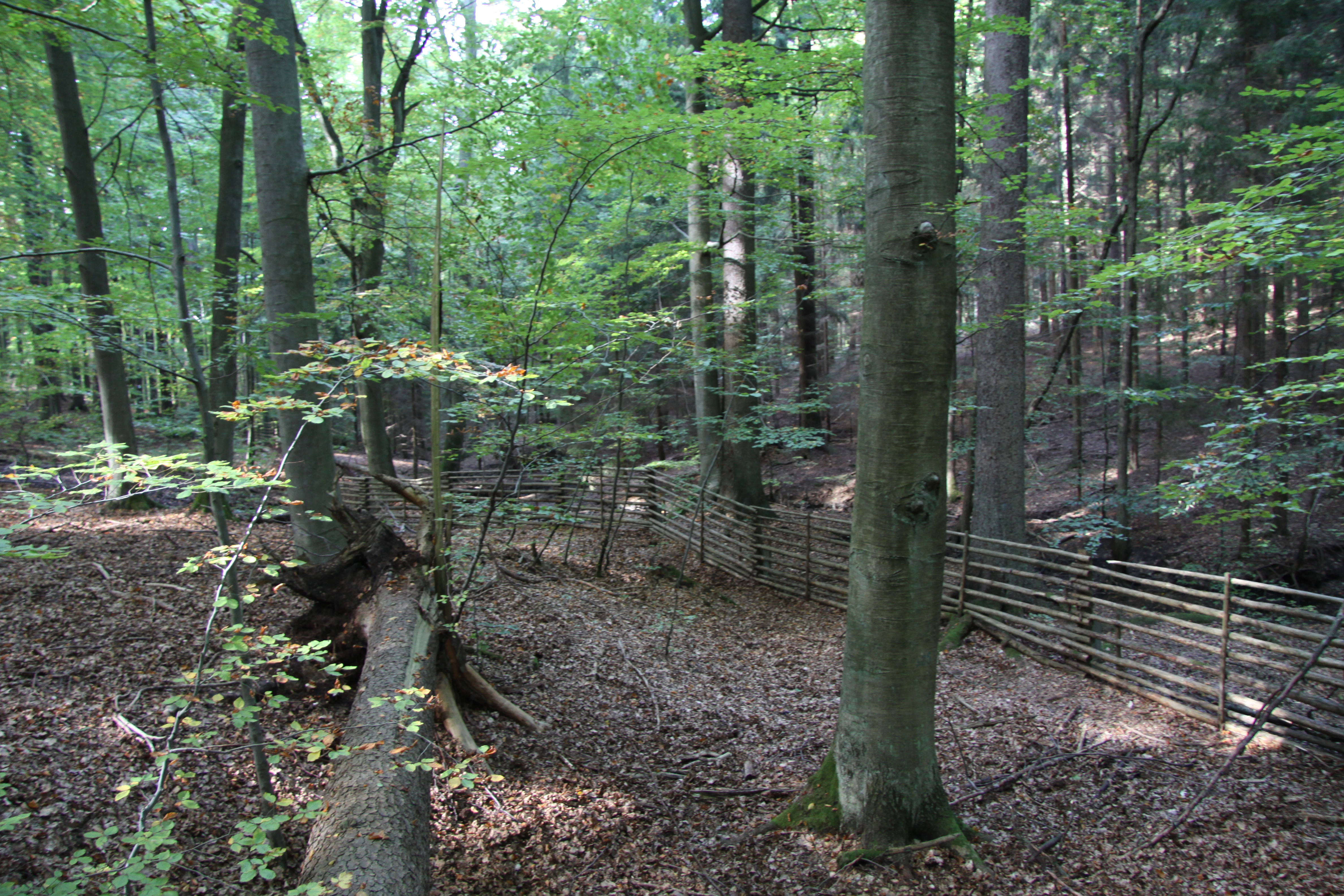
A section of dense beech forest with sunlight filtering through the canopy, showing a fallen tree trunk in the foreground and a long horizontal wooden fence running through the midground.
A woodland scene within the Rukávečská obora natural monument, featuring an old wooden fence and a fallen tree.

Rukávečská obora conservation status and protection priorities

The long-term conservation objective at Rukávečská obora is the preservation of a unique fragment of old autochthonous beech forest, together with its associated avifauna and entomofauna, both of which are closely tied to mature deciduous stands. The site contributes to the broader ecological network through its inclusion in the Otava and Vltava Bird Protection Area (Ptačí oblast Údolí Otavy a Vltavy).

The critical conservation intervention took place in 1998, when the core of the monument was fenced to exclude game animals, especially wild boar. This measure enabled the natural regeneration of beech through seedling establishment, a process that had been suppressed for generations by high herbivore pressure. Conservation efforts also include the retention of deadwood on the site, agreed with the landowner, which enhances habitat diversity for saproxylic invertebrates. Periodic removal of younger spruce is undertaken to preserve the dominance of beech, while gradual introduction of silver fir aims to diversify the species composition.

The management plan recommends avoiding any timber harvesting or clear-cutting in the protection zone surrounding the monument, to prevent wind damage to the mature beech stand. The 2022 renotification by the South Bohemian Region formalized the protected area at 6.74 hectares, aligning the official designation with the long-enforced fenced boundary.

Rukávečská obora cultural meaning and human context

The broader Rukávečská obora game reserve carries centuries of cultural and historical significance tied to aristocratic land use and hunting traditions. The site's forests were first documented in the 1540s as hunting grounds, and by the 18th century they were formally described in the reports of visitation commissions managing the rural estates. The 1848 ordinance that formalized the game reserve reflects the period's dominant pattern of managed hunting estates across Bohemia, which often had profound ecological consequences for native forest composition.

Near the protected area stands the Tyrolský dům, a hunting lodge built in 1810 in an Alpine style, which remains a local cultural landmark and historical reference point for the landscape. The persistence of large carnivores such as bears, wolves, and wild cats into the 17th and 18th centuries attests to the once-wilder character of this part of Bohemia and its gradual transformation under estate management into a controlled hunting landscape.

Top sights and standout views in Rukávečská obora

Rukávečská obora is a compact natural monument that nonetheless combines several layers of significance. Its ecological importance lies in the preservation of a rare fragment of acidophilous beech forest with trees exceeding 225 years, and a saproxylic invertebrate community that includes the threatened hermit beetle. Its historical importance rests on its status as the oldest protected natural area in the Písek district, dating back to 1929.

The monument also serves as a quiet success story of practical conservation. By simply excluding wild boar through fencing in 1998, the site has begun to recover the natural age structure that decades of herbivore pressure had suppressed. Though the site itself remains inaccessible to casual visitors, its role within the Otava and Vltava Bird Protection Area gives it a much wider conservation footprint than its small size might suggest.

Best time to visit Rukávečská obora

Rukávečská obora cannot be freely accessed due to the protective fencing surrounding the core area, so direct visits are limited to viewing the site from external paths and reading the interpretive sign along the access road. For visitors interested in observing the broader game reserve landscape or the nearby Tyrolský dům hunting lodge, late spring through early autumn offers the most pleasant conditions.

Bird enthusiasts visiting the surrounding area during the breeding season (roughly May through June) may have the best chances of encountering forest birds in adjacent woodlands, though specific access to the monument itself is restricted. Cooler, damper conditions in late spring and early autumn highlight the beech forest's character without extremes of summer heat or winter snow.
Monthly climate preview

Track monthly temperature ranges and precipitation averages measured at a representative coordinate

Rukávečská Obora Climate Normals, Long-Term Temperature and Precipitation

Representative coordinates record measured monthly temperature swings and precipitation patterns across the protected area from 1991 through 2020. Examining the complete twelve-month climatology profile reveals detailed variations in average minimum and maximum temperatures throughout the year.
Annual mean8 °C
-3 °C19 °C
Jan-3°
Feb-1°
Mar
Apr
May13°
Jun17°
Jul19°
Aug19°
Sep14°
Oct
Nov
Dec-2°
Warmest month
July

18.9 °C

Coolest month
January

-2.7 °C

Wettest month
June

2.8 mm/day

Driest month
February

1.2 mm/day

Park location guide

Geography guide, regional context, and park location map for Rukávečská obora

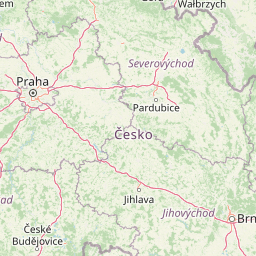
Rukávečská obora park geography, regions, and map view in Czechia

Understand where Rukávečská obora sits in Czechia through a broader geographic reading of the surrounding landscape, nearby location context, and its mapped position within the national park landscape.

How Rukávečská obora fits into Czechia

Czech Republic is a landlocked Central European country with a population of approximately 10.9 million people. The nation was established as an independent state on January 1, 1993, following the dissolution of Czechoslovakia. Its capital and largest city is Prague, with other major urban centers including Brno, Ostrava, Plzeň, and Liberec.

Wider geography shaping Rukávečská obora in Czechia

The Czech Republic is a landlocked country in Central Europe. It is bordered by Germany to the west, Austria to the south, Poland to the northeast, and Slovakia to the southeast. The landscape is predominantly hilly, with the territory covering 78,871 square kilometers.

Map view of Rukávečská obora

Use this park location map to pinpoint Rukávečská obora in Czechia, understand its exact geographic position, and read its mapped placement within the surrounding landscape more clearly.

Pigeon | © OpenStreetMap contributors

Location context for Rukávečská obora

Jihočeský kraj

Explore protected area views, old growth canopy structures, and woodland habitats in South Bohemia.

Rukávečská obora Photos and Landscape Scenery: Visualizing Ancient Beech Woodlands

Visual documentation reveals the ancient beech canopy and rugged granodiorite terrain defining the oldest protected natural monument in the Písek district. Examining photographic records clarifies the structural diversity of the forest ecosystem and its surrounding upland environment.

A wooden stile over a rustic fence leads into a dense deciduous forest, with informational signs mounted on posts.

A dense forest of tall, straight trees with a light-filled green canopy and a floor covered in fallen brown leaves.

A large fallen tree trunk lying horizontally across a forest floor covered in autumn leaves, with tall mature trees in the background.

A forest path with two small wooden bridges crossing a shallow drainage ditch, surrounded by tall mature trees with leaves covering the forest floor.

A section of dense beech forest with sunlight filtering through the canopy, showing a fallen tree trunk in the foreground and a long horizontal wooden fence running through the midground.

Park atlas

Compare surrounding forest reserves and regional conservation landscapes

Parks Near Rukávečská Obora and Related Protected Areas in South Bohemia

Browse other protected areas and woodland reserves situated within the surrounding Bohemian uplands. Expanding the geographic view helps trace connected regional ecosystems and compare similar natural monuments across the district.
A horizontal watercolor painting depicting a soft green landscape with scattered trees, rolling hills, and a pale pink sky on a white background.
Natural monumentJihočeský kraj
About 5.4 km away#1 closest

Northwest

Sobědražský Prales Natural Monument: Protected Woodland Map and Geographic Context

An ancient oak and beech forest remnant in the South Bohemian Region.

Sobědražský prales represents a significant natural monument within the Czech Republic, protecting a rare stand of aged oaks and beeches. This site offers valuable insights into the historical composition of local forests, supporting critical biodiversity such as hole-nesting birds amidst the managed landscapes of the Jihočeský kraj.

Area
0.017 km²
Established
1986
IUCN
IV
Relief
Upland
A watercolor painting of a river landscape with rolling hills in the background and soft vegetation along the banks.
Natural monumentJihočeský kraj
About 9.9 km away#2 closest

East

Smutný Natural Monument: Geographic Profile and Protected Fluvial Landscape in Jihočeský Kraj

A naturally meandering lowland stream corridor in the Czech Republic

The Smutný Natural Monument protects a significant 2.5 kilometer reach of the Smutná River, characterized by its remarkably intact fluvial morphology. Unlike typical agricultural watercourses in the region, this corridor features natural riffle-pool sequences and sediment deposition patterns along a gentle Bohemian valley. The protected site serves as a vital ecological anchor for riparian vegetation and wetland flora, demonstrating how undisturbed stream dynamics shape local terrain and provide persistent freshwater habitats.

Area
0.044 km²
Established
1985
IUCN
III
Relief
Lowland
Natural monumentJihočeský kraj
About 12 km away#3 closest

West

V Obouch Natural Monument: Geographic Profile of the Lomnice River Valley

Protected riparian corridors and riverine terrain in Jihočeský kraj

Explore the unique geomorphology of V Obouch, a protected river segment in the Czech Republic. This site provides a detailed cross-section of alder floodplain forests, boulder rapids, and canyon-like terrain that defines the ecological character of the South Bohemian river network.

Area
0.051 km²
Established
1986
IUCN
IV
Relief
Upland
Natural monumentStředočeský kraj
About 16 km away#4 closest

North

Vrškámen Natural Monument: Granite Boulder Geography and Regional Protected Area Map

Geological preservation in the Středočeský kraj region

Vrškámen is a significant natural monument defined by its massive porphyritic syenite boulder. This compact protected site highlights the erosion history of the Central Bohemian Pluton. It functions as an essential reference for geologists interested in the residual rock forms of the Vlašimská pahorkatina hill country and the broader Sedlčansko geological landscape.

Established
1977
IUCN
III
Relief
Upland
Climate
Temperate
A pale, soft watercolor painting of a rolling, grassy meadow landscape with a prominent green mushroom in the foreground and sparse, leafless trees.
Natural monumentJihočeský kraj
About 21 km away#5 closest

West

Malý Kosatín: Protected Botanical Landscapes in the South Bohemian Region of Czechia

A rare fen-meadow sanctuary in the Písek District

Located in the heart of the Czech countryside, Malý Kosatín is a natural monument distinguished by its intense botanical density and traditional meadow management. The site serves as a crucial habitat for threatened orchids and sedge communities, providing a focused view of the ecological character that defines the upland terrain surrounding the Písek District.

Area
0.01 km²
Established
1986
IUCN
IV
Relief
Upland
A watercolor painting showing a panoramic view of a marshy wetland area with sparse bare trees, grassy mounds, and rolling hills in the background.
Natural monumentJihočeský kraj
About 23 km away#6 closest

Southwest

Ražický rybník Natural Monument and Protected Wetland Geography in South Bohemia

Protected pond ecosystems and riparian terrain maps

Ražický rybník is a protected natural monument located in the Písek District of the Czech Republic, encompassing a shallow fishpond and surrounding meadows. This site serves as an essential breeding ground for waterbirds and provides a detailed look at the wetland mosaic characteristic of the Otava river lowlands. The area highlights the intersection of long-standing conservation efforts and habitat restoration through its diverse aquatic microhabitats.

Area
0.291 km²
Established
1986
IUCN
IV
Relief
Lowland
Natural monumentJihočeský kraj
About 23 km away#7 closest

Southwest

Velký Potočný: Protected Natural Monument and Wetland Geography in the South Bohemian Region

An essential migratory node and rare plant refuge in the Czech landscape.

Velký Potočný represents a unique intersection of traditional fishpond management and modern biodiversity conservation in Jihočeský kraj. This natural monument supports exceptional shoreline vegetation, including rare species like Cyperus fuscus, and serves as a critical breeding and stopover ground for diverse waterbirds. Its shallow basin geography and hydrologic connection to the Otava River make it a vital point of interest for understanding the ecological function of South Bohemia's inland wetland network.

Area
0.39 km²
Established
1986
IUCN
IV
Relief
Lowland
Watercolor painting of a tranquil pond scene with grassy shores, reeds, and rolling hills in the background under a soft sky.
Natural monumentJihočeský kraj
About 23 km away#8 closest

South

Skalský rybník a Klokočínská olšina: Protected Wetland Landscapes and Forested Terrain

Natural Monument site in South Bohemia, Czech Republic

Located in the low-lying Českobudějovická pánev basin, this natural monument protects a tightly linked wetland system. The site encompasses open water, damp meadows, and broadleaf woodland, providing a refuge for protected waterbirds and rare pond-edge vegetation amidst the traditional landscape of South Bohemia.

Area
0.128 km²
Established
1986
IUCN
IV
Relief
Lowland

Common questions about visiting, size, designation, and location context for Rukávečská obora

Rukávečská obora FAQs for park facts, access, geography, and protected area context

Find quick answers about Rukávečská obora, including protected-area facts, park geography, trail and visitor context, and how the park fits into its surrounding country and regional landscape.
MoriAtlas Explorer

Continue Your Protected Areas Search Across the Global Atlas

Deepen your exploration by continuing the structured search for national parks and protected areas worldwide. Utilize the comprehensive filtering capabilities to compare different conservation landscapes and refine your understanding of global park geography. Discover more about the distribution and characteristics of protected natural areas.

Global natural geography