
Why Seußlitzer und Gauernitzer Gründe stands out
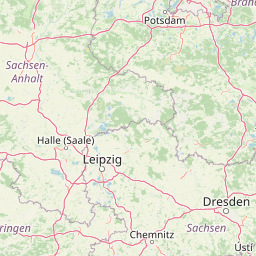
The reserve is best known for protecting the steep Elbe slopes and small brook valleys west and east of Meißen, where dry grasslands, scrub, and varied deciduous woodland grow on sunny, often calcareous terrain. These slopes form a typical stretch of the Saxon Elbe hill landscape and contribute significantly to the habitat mosaic of the Upper Elbe valley. The combination of two separate parcels on opposite Elbe banks is also a defining feature of the protected area.
Seußlitzer und Gauernitzer Gründe history and protected-area timeline
Seußlitzer und Gauernitzer Gründe gained formal nature reserve status on 17 December 2013 through an ordinance issued by the Landratsamt Meißen, with the designation published in the Saxon Law Gazette in early 2014. The reserve was established as Naturschutzgebiet number D 02 in the Landkreis Meißen.
Its creation reflects a broader Saxon effort to consolidate protection of the Elbe valley landscape, where scattered parcels of dry grassland, deciduous forest, and Elbe-facing slopes had long held high ecological value. By joining the dry slopes and small valleys east of Diesbar-Seußlitz with the wooded stream valleys between Gauernitz and Scharfenberg under a single reserve designation, the regional authority brought a coherent piece of the Elbe valley under active habitat management rather than relying on the patchwork status of earlier protections.
Seußlitzer und Gauernitzer Gründe landscape and geographic character
The landscape of the Seußlitzer und Gauernitzer Gründe is shaped by the Elbe and the steep terrain that rises from its banks. On the right (north-eastern) side of the river, the Seußlitzer Gründe occupy an arm of the Elbe hill country east of Diesbar-Seußlitz, where slopes drop toward the river and small wooded valleys cut back into the surrounding plateau.
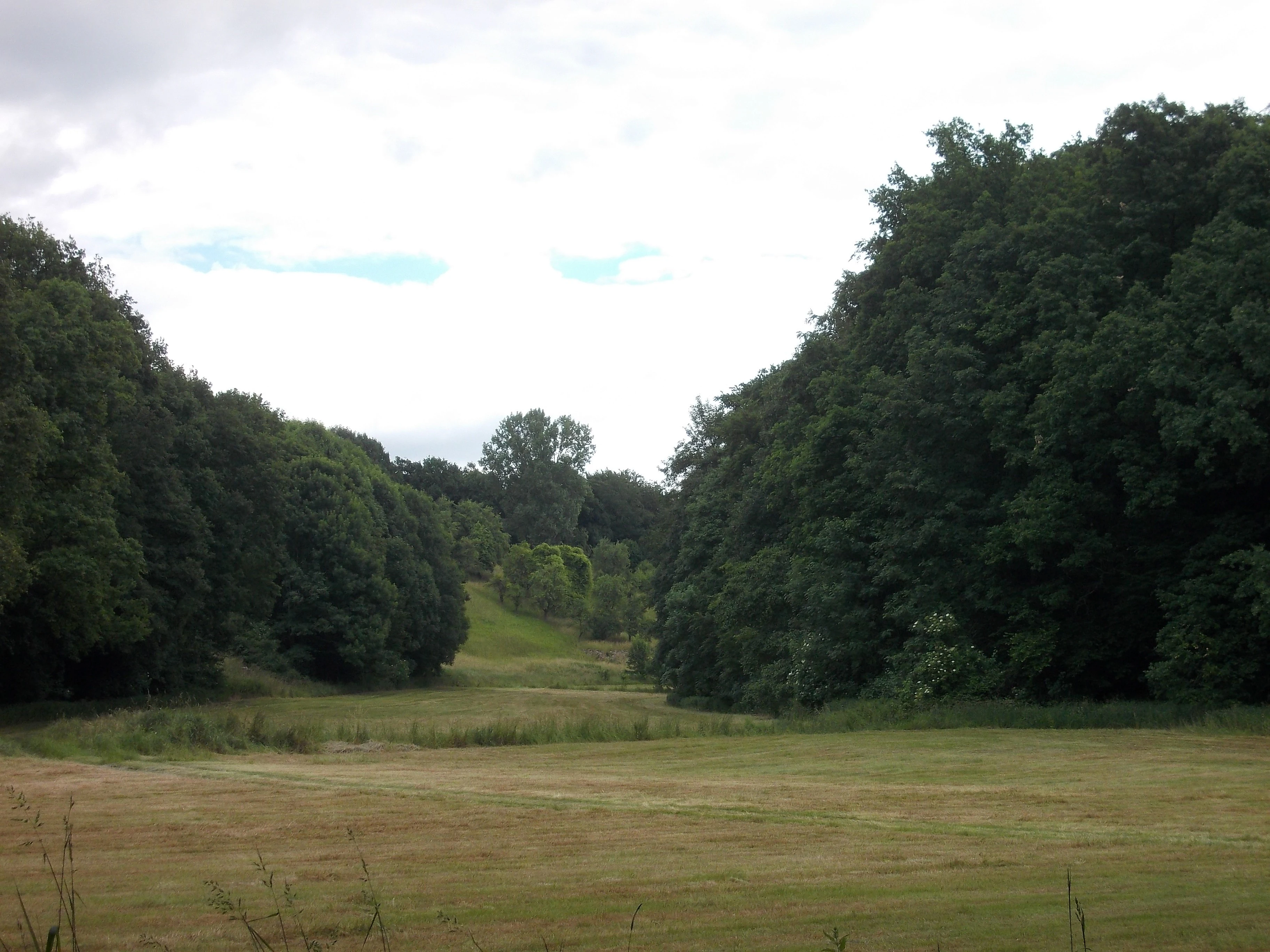
On the opposite, left bank, the Gauernitzer Gründe lie within a series of short stream valleys flowing down toward the Elbe between Gauernitz and Scharfenberg. These valleys, such as the Eichhörnchengrund near Gauernitz, combine narrow, shaded ravine bottoms with sunnier upper slopes, producing a strong contrast between cool, moist wooded corridors and drier, herb-rich slopes above.
Seußlitzer und Gauernitzer Gründe ecosystems, habitats, and plant life
The reserve protects a habitat mosaic typical of the Saxon Elbe valley. Sunny slopes support dry calcareous grassland, semi-dry meadow communities, thermophilic scrub, and scattered orchard-meadow transitions, while shaded ravine bottoms and valley flanks host structurally rich deciduous forest dominated by beech and oak. The narrow valleys among the Gauernitzer Gründe add small streams and moist deciduous woodland, increasing local habitat diversity within a compact area.
This alternation of hot, dry slopes and cool, shaded valleys creates favourable conditions for a wide range of plant and invertebrate communities within a small footprint. The ecological value of the reserve is closely tied to this fine-scale variation in slope, aspect, and moisture rather than to any single large habitat type.
Seußlitzer und Gauernitzer Gründe wildlife and species highlights
The structural diversity of the reserve, ranging from dry grassland and scrub on open slopes to mature deciduous forest in shaded valleys, supports a correspondingly varied fauna. Warm, herb-rich slopes and forest edges host insects associated with calcareous grassland habitats, while the wooded ravines and broader forest stands provide nesting habitat and shelter for woodland birds typical of the Saxon Elbe hill landscape.
Because the reserve lies within several European Birds Directive sites along the Elbe valley, it also contributes to the broader conservation of birdlife using the Elbe corridor as a migration and wintering route. Its location ensures that its wildlife interest extends beyond the steep slopes themselves into the wider floodplain and valley network.
Seußlitzer und Gauernitzer Gründe conservation status and protection priorities
The principal conservation importance of the Seußlitzer und Gauernitzer Gründe lies in its role as a protected refuge for the dry grassland and deciduous forest habitats of the Saxon Elbe valley. By bringing together two separate parcels on either side of the Elbe, the reserve helps maintain habitat continuity across the river corridor, a critical feature for populations of plants, invertebrates, and birds that depend on both slope and valley environments.
Much of the reserve overlaps with European Habitats Directive sites, including the large Elbe valley FFH area stretching from Schöna to Mühlberg, a dedicated Seußlitzer Gründe FFH site, and the left-Elbian stream valleys between Dresden and Meißen. The reserve also contributes to European Birds Directive zones covering the Elbtal between Schöna and Mühlberg, the Seußlitzer Elbhügelland und Golk area, and the left-Elbian brook valleys. This integration into the Natura 2000 network gives the reserve significance well beyond its modest size and places it within one of central Europe's most important riverine conservation landscapes.
Seußlitzer und Gauernitzer Gründe cultural meaning and human context
The reserve lies within a stretch of the Elbe valley long associated with wine-growing, small farming villages, and historic Saxon estates. Villages such as Diesbar-Seußlitz, Gauernitz, and Scharfenberg sit at the margins of the protected slopes, and traditional land uses including vineyards, orchards, and small-scale forestry have shaped the surrounding landscape for centuries. The resulting mosaic of villages, fields, and forested slopes gives the protected area a strong regional identity even though it is managed primarily for natural habitat conservation.
Top sights and standout views in Seußlitzer und Gauernitzer Gründe
The Seußlitzer and Gauernitzer parcels together protect two contrasting faces of the Saxon Elbe valley: a right-bank Elbe hillside landscape east of Diesbar-Seußlitz, and a system of left-bank brook ravines between Gauernitz and Scharfenberg. The reserve's inclusion in multiple Natura 2000 sites gives the local habitat patchwork a much larger conservation footprint along the Upper Elbe.
Best time to visit Seußlitzer und Gauernitzer Gründe
Late spring and early summer are typically the most rewarding times to experience the reserve, when dry-grassland slopes are in flower and woodland birds are active in the ravines. Autumn brings vivid leaf colour to the deciduous forest and soft light over the steep slopes above the Elbe. Cooler months offer quieter conditions and good visibility of the landscape structure, though winter weather can make the steep valley terrain more difficult to access on foot.