Why Vrbka Natural Monument stands out
Vrbka is best known for its species-rich, semi-natural dry calcareous grasslands and oak-hornbeam woodland patches growing on limestone substrate. Within its compact area it harbours an unusually diverse mix of rare flowering plants, orchids, butterflies, beetles, and fungi typical of warm lowland habitats in northern Bohemia, making it a representative example of the phytogeographic value of small Bohemian grassland reserves.
Vrbka Natural Monument history and protected-area timeline
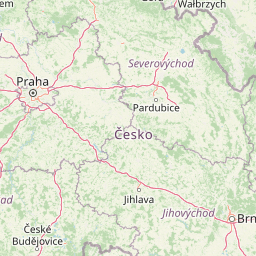
Vrbka was formally designated as a Czech natural monument on 1 November 2013, following a decision by the Regional Authority of the Ústecký Region. Its establishment was driven by the need to protect a remaining patch of species-rich dry calcareous grassland and oak-hornbeam woodland that had survived within an otherwise heavily cultivated agricultural landscape near Budyně nad Ohří.
Vrbka Natural Monument landscape and geographic character
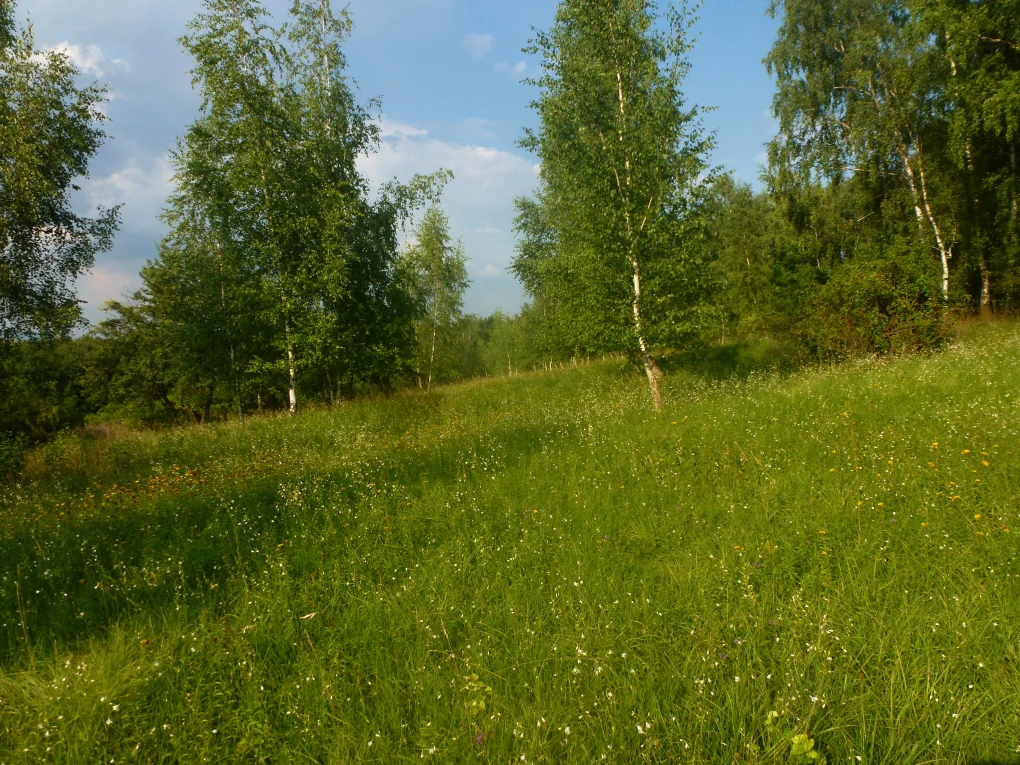
The landscape of Vrbka consists of gently undulating lowland terrain at elevations between approximately 210 and 255 metres above sea level. The protected area lies on calcareous substrate, giving rise to shallow soils that support a characteristic mix of dry grasslands, open scrub, and oak-horn woodland patches. This combination of warm, lime-rich ground conditions and small-scale relief variation creates a classic Bohemian dry-grassland setting, with thin-soil hillocks, shrubby margins, and lightly wooded areas blending into one another across the roughly 15.5-hectare site.
Vrbka Natural Monument ecosystems, habitats, and plant life
Ecologically, Vrbka is defined by the interaction between three closely linked habitat types. Semi-natural dry calcareous grasslands form the most distinctive component, providing open, sunny conditions for thermophilic herbs and grasses. Around their edges, shrubby facies on limestone create transitional scrub communities that host a different set of woodland-edge species. Oak-hornbeam woodland, present as smaller wooded patches, contributes a shaded, deciduous forest element that further diversifies the ecological character of the site.
Together these habitats produce a high turnover of plant communities at a very local scale, which is a key reason why such a small protected area holds such high botanical value. The calcareous substrate and warm microclimate favour species that are otherwise retreating from the heavily fertilised and intensified farmland of the surrounding region.
Vrbka Natural Monument wildlife and species highlights
The wildlife interest of Vrbka is concentrated among invertebrates and fungi that depend on the dry, calcareous habitat mosaic. Notable butterfly species include the scarce swallowtail Iphiclides podalirius, while the day-flying moth Euplagia quadripunctaria is also recorded. Among beetles, the species Odonteus armiger adds further entomological interest to the site. The dry grassland and woodland-edge habitats also support a rich assemblage of fungi, with uncommon species such as Camarophyllopsis atropuncta, Amanita echinocephala, Entoloma incanum, and Tricholoma orirubens documented here.
Vrbka Natural Monument conservation status and protection priorities
Vrbka plays an important conservation role as a refuge for habitat types and species that have become rare in the intensively farmed Bohemian lowlands. Its protected status, combined with its IUCN Category IV designation, recognises the site primarily for its value in conserving a particular suite of species associated with dry calcareous grassland, scrub, and oak-hornbeam woodland. By maintaining the ecological transitions between these habitats in a single compact area, Vrbka helps preserve regional biodiversity and contributes to the broader network of small protected natural monuments in the Litoměřice district.
Top sights and standout views in Vrbka Natural Monument
The key highlights of Vrbka Natural Monument include its exceptionally species-rich dry calcareous grasslands, its limestone scrub communities, and its patches of oak-hornbeam woodland, all packed into a very small area. Among its standout features are rare orchids such as Orchis purpurea and Cephalanthera damasonium, unusual plants like Dictamnus albus and Lilium martagon, scarce butterfly species, and a notable diversity of uncommon grassland fungi.
Best time to visit Vrbka Natural Monument
Vrbka is a small botanical and entomological site whose interest shifts with the growing season. Late spring through mid-summer is generally the most rewarding period for visiting, as this is when the dry grasslands and woodland edges display their richest mix of flowering plants, including orchids and other thermophilic herbs. Insects, including notable butterflies and beetles, are also most active during warmer months, while the surrounding oak-hornbeam woodland takes on additional autumn character later in the year.