
Mori Atlas logo
Natural monumentV kuksu

A specialized forest microclimate serving as a critical habitat for European orchid populations

V kuksu Natural Monument: Exploring the Protected Ravine Geography of Ústecký kraj

V kuksu is a protected natural monument situated within the Litoměřice district of the Ústecký kraj region. This compact, ecologically rich ravine landscape provides a sheltered microclimate essential for rare species, most notably the lady's slipper orchid. Through its Natura 2000 designation, the site functions as a key element of the broader regional mosaic of protected natural habitats in the northern Czech Republic.

orchid habitatlady's slipper orchidwooded ravineNatura 2000 sitenatural monumentsmall protected area
A flat-style digital illustration of a nature trail winding through a lush green valley with wildflowers in the foreground and a waterfall in the distance.

V kuksu

Natural monument

Park overview

Structured park overview, official facts, and landscape profile for V kuksu

V kuksu park facts, protected area profile, and essential visitor context

Review the core facts for V kuksu, including designation, size, terrain, visitor scale, habitats, and operating context in one park-focused overview.

About V kuksu

V kuksu is a small but ecologically focused protected natural area in the northern Czech Republic, occupying part of a wooded ravine landscape southeast of the village of Vědlice in the Litoměřice district. Although the reserve covers only about twenty hectares, its significance far outweighs its modest footprint, as it was specifically designated to preserve a habitat of European Community interest under the Natura 2000 ecological network.

The site's core importance lies in the conservation of orchid-rich habitats, particularly those supporting the lady's slipper orchid (Cypripedium calceolus), a species that has declined sharply across much of its range due to habitat loss, changes in forest management, and collection. V kuksu provides conditions that allow this species to persist alongside other members of the orchid family, making the area a reference point for orchid conservation efforts in the region.

From a broader landscape perspective, V kuksu sits within a transitional zone where the gentle hills and ravines of the inner Czech countryside meet more varied terrain. The protected ravine itself, with its shaded slopes, accumulated organic debris, and stable microclimate, represents the kind of small, specialized habitat that disproportionately contributes to regional biodiversity. Its classification as a přírodní památka (natural monument) reflects the Czech system's emphasis on protecting even very small sites when their ecological value is high.

The reserve is administered under the authority of the Ústecký region, and its placement within a Natura 2000 locality ties it into the larger European effort to conserve species and habitats of shared concern. For visitors and naturalists, V kuksu offers a quiet, concentrated example of how targeted protection of small areas can safeguard rare species and the specialized environments they depend on.

Quick facts and research context for V kuksu

V kuksu is a small-scale natural monument (přírodní památka) in the Litoměřice district of the Ústecký region, Czech Republic, located near the village of Vědlice. The reserve lies at elevations of roughly 212 to 280 meters above sea level, sits within a landscape of modest hills and ravines typical of the broader České středohoří borderlands, and covers roughly twenty hectares of land.

The site was formally designated on January 15, 2011 by the Regional Authority of the Ústecký region, with its protection framed around a Natura 2000 locality of European significance. The reserve is classified under IUCN Category IV as a habitat/species management area, reflecting its focus on targeted conservation of orchid populations and their associated biotopes.

Protection and recognition

Documented terrestrial boundaries and official Natura 2000 recognition records

V kuksu Protection Status and International Recognition Data

V kuksu maintains a documented terrestrial protection scope backed by official Natura 2000 recognition data. Structured conservation records outline the designated boundaries and administrative context for this protected area.

International recognition

Protection details

Protection scope
Terrestrial
Transboundary protection
No
Park context

Deeper park guide and search-rich context for V kuksu

V kuksu history, landscape, wildlife, and travel context

Explore V kuksu through its history, landscape character, ecosystems, wildlife, conservation priorities, cultural context, and seasonal travel timing in a structured park guide built for atlas discovery and search intent.

Why V kuksu stands out

V kuksu is best known for its protection of the lady's slipper orchid (Cypripedium calceolus), one of Europe's most striking and threatened wild orchids, together with related orchid species that share the same ravine habitat. The reserve's identity is closely tied to the presence of these plants, which have made the site a recognized Natura 2000 locality of European importance. Beyond the orchids themselves, the place is also notable as a representative example of a small Central European ravine (rokle) ecosystem, where shaded slopes, woody debris, and moisture-retaining soils create the specific microclimate that these species require.
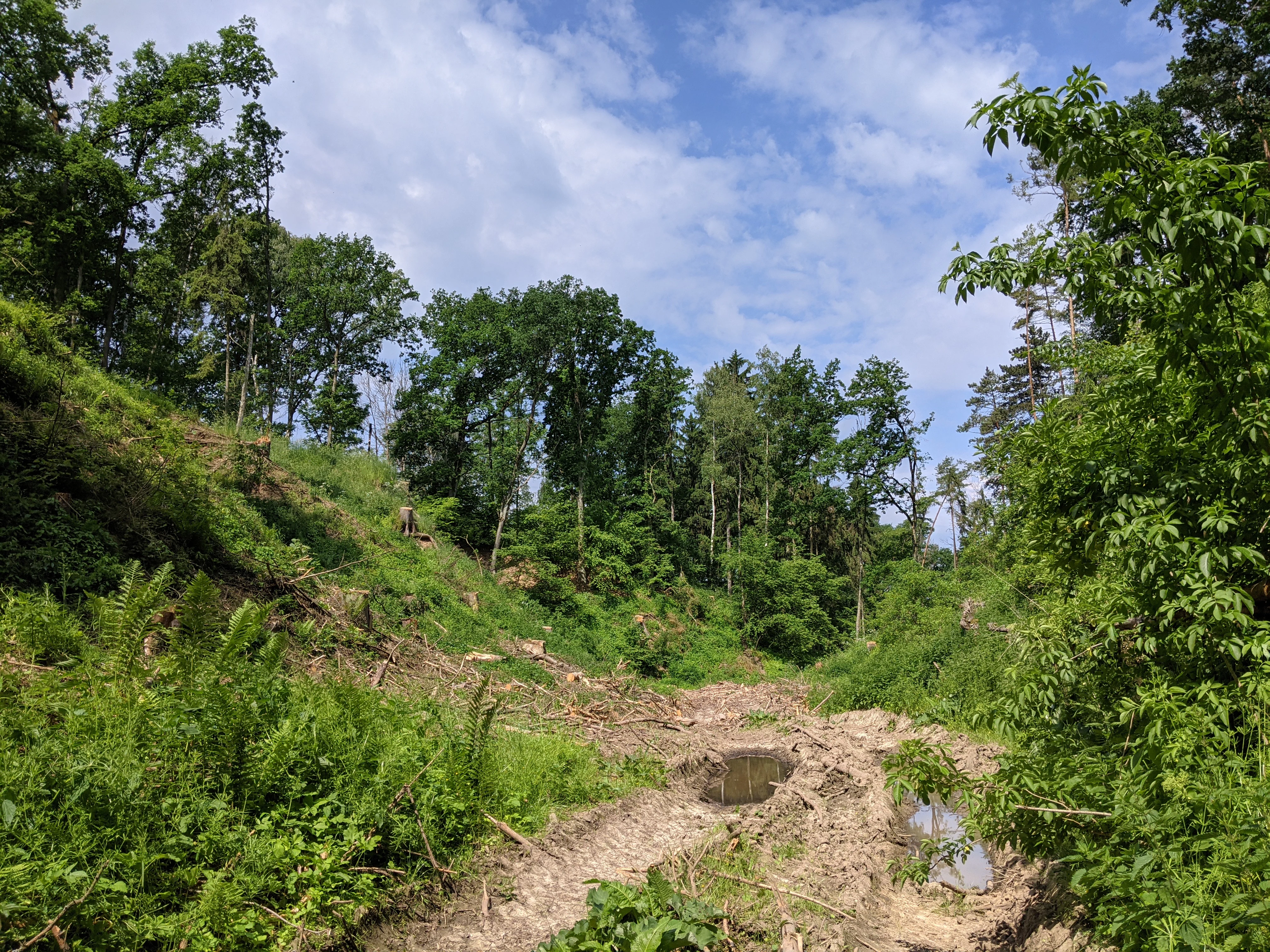
A view looking down into a wooded ravine with a dirt trail and scattered vegetation under a partly cloudy sky.
A view of the ravine forming the central part of the V kuksu natural monument.

V kuksu history and protected-area timeline

V kuksu was formally established as a protected natural monument on January 15, 2011, when it was declared by the Regional Authority (Krajský úřad) of the Ústecký region. The decision followed recognition of the site's status as a locality of European importance within the Natura 2000 network, an EU-wide framework aimed at conserving threatened habitats and species across member states.

The protection history is closely tied to the identification of significant populations of the lady's slipper orchid (Cypripedium calceolus) and related orchid species on the site. Botanical and ecological surveys in the area determined that the ravine provided the specific combination of shade, moisture, and soil conditions necessary for these orchids to thrive, making it a candidate for targeted conservation action.

Since its designation, the reserve has been managed as a habitat and species management area under IUCN Category IV, an approach that emphasizes the maintenance and, where necessary, restoration of conditions favorable to the species of concern. Its inclusion in the broader Natura 2000 framework means that its protection is aligned not only with national Czech conservation priorities but also with European-level biodiversity objectives.

V kuksu landscape and geographic character

The physical landscape of V kuksu is defined by a relatively narrow wooded ravine, carved into the gentle hills that characterize the borderlands between the inner Czech basins and the more varied terrain to the north. Elevations within the reserve range from approximately 212 to 280 meters above sea level, placing the site within a lowland to submontane altitudinal band where cool, shaded ravines create microclimates distinct from the surrounding open country.

The ravine's slopes are typically forested, with a structure that mixes mature canopy cover, woody debris, and uneven terrain. This morphology produces conditions of stable humidity, filtered light, and accumulated leaf litter, all of which contribute to the specific environmental character of the reserve. Although the protected area itself is compact, the broader landscape around Vědlice contains a mosaic of similar small valleys and wooded features that together form part of the regional natural character of the Litoměřice district.

The terrain is not visually dramatic in the way of high mountains or coastal cliffs, but rather quietly distinctive: a sheltered, shaded corridor cut into otherwise agricultural countryside. This combination of topographic shelter, woodland cover, and ravine microclimate is precisely what gives the site its conservation significance.

V kuksu ecosystems, habitats, and plant life

V kuksu protects a small but ecologically rich remnant of Central European ravine woodland, a habitat type that has become increasingly fragmented across the region. The site's vegetation reflects the shaded, humid conditions typical of such ravines, with a tree canopy and understory that together create stable conditions for sensitive plant species.

The defining ecological feature of the reserve is the presence of orchid-rich communities, particularly those dominated by the lady's slipper orchid (Cypripedium calceolus) and complemented by other members of the orchid family (vstavačovité). These plants depend heavily on specific soil chemistry, mycorrhizal relationships, and a stable microclimate, all of which the ravine provides. The presence of these species has elevated the site from a locally interesting woodland patch to a site of European conservation concern within the Natura 2000 network.

Beyond orchids, the habitat supports the broader biological communities associated with mature deciduous and mixed forests, including typical woodland understory plants, invertebrates, and fungi suited to damp, shaded conditions. The site's protected status is designed to maintain these ecological processes and the habitat structures on which they depend, ensuring that the specific combinations of shade, humidity, and substrate that support rare species remain intact.

V kuksu wildlife and species highlights

While V kuksu is primarily recognized for its botanical importance, particularly its orchid populations, the protected ravine also provides habitat for a range of woodland fauna typical of mature Central European forests. The stable canopy cover, accumulation of woody debris, and shaded conditions create niches for invertebrates, including the pollinators and mycorrhizal partners associated with orchids and other understory plants.

The broader woodland environment supports typical forest-dwelling bird species, small mammals adapted to woodland edges and understory, and a community of insects tied to dead wood and leaf litter. Although the reserve is too small to host populations of larger mammals as a primary feature, the site contributes to the regional habitat network that sustains such species at a broader landscape scale.

The site's management as a habitat/species management area under IUCN Category IV emphasizes the maintenance of conditions that support these communities, with particular attention to the ecological relationships, including pollination and fungal partnerships, on which the rare orchid populations depend.

V kuksu conservation status and protection priorities

The conservation significance of V kuksu lies in its formal recognition as part of the Natura 2000 network, a European Union framework for protecting habitats and species of shared concern. The site was specifically designated to safeguard occurrences of the lady's slipper orchid (Cypripedium calceolus), a species listed for protection due to its decline across much of its European range, alongside other orchid species and their associated habitats.

The reserve's status as a přírodní památka (natural monument) under Czech law provides an additional layer of national protection, ensuring that activities affecting the site's ecological integrity are regulated. Its IUCN Category IV designation as a habitat/species management area reflects the site's role as a focused conservation unit, where management is oriented toward maintaining or restoring the specific conditions required by target species.

In conservation terms, V kuksu demonstrates the value of small, targeted protected areas. Although limited in extent, it contributes meaningfully to European biodiversity goals by preserving a viable population of a threatened orchid species and the specialized habitat on which that species depends. Its protection also serves as a point of reference for conservation planning in the Litoměřice district and the Ústecký region more broadly.

Top sights and standout views in V kuksu

V kuksu's standout quality is its protected population of the lady's slipper orchid (Cypripedium calceolus), one of Europe's most charismatic and threatened wild orchids, set within a shaded, ecologically specialized ravine habitat. The site's Natura 2000 designation elevates its significance from a local nature monument to part of a continent-wide biodiversity network.

Equally notable is the way the reserve exemplifies how small protected areas, even those of only around twenty hectares, can carry disproportionate ecological importance when they shelter habitats and species of European concern.

Best time to visit V kuksu

Because V kuksu is a small, ecologically sensitive protected area rather than a developed visitor destination, any consideration of timing relates more to the experience of the surrounding landscape than to formal access. Late spring and early summer generally represent the most biologically expressive period for the habitats involved, when woodland vegetation is at its fullest and conditions in shaded ravines are mild and humid.

For visitors interested in observing the broader landscape of the Litoměřice district, the warmer months offer comfortable walking conditions through the countryside near Vědlice, while autumn brings the changing colors of the mixed forest cover typical of the region. Visitors should be aware that the site itself is a protected natural monument, so any presence near orchid habitats should be approached with care and respect for the conservation purpose of the reserve.

Monthly climate preview

Long term representative point averages for monthly temperature and precipitation patterns in V kuksu

V kuksu Climate Normals and Measured Annual Temperature Rhythm

Historical climate records from 1991 to 2000 outline the measured annual temperature rhythm and monthly precipitation values sampled at representative coordinates in V kuksu. Reviewing the complete twelve month profile provides deeper insight into long term averages across changing thermal conditions.
Annual mean9 °C
-2 °C20 °C
Jan-2°
Feb-1°
Mar
Apr
May14°
Jun18°
Jul20°
Aug19°
Sep14°
Oct
Nov
Dec-1°
Warmest month
July

19.8 °C

Coolest month
January

-2.3 °C

Wettest month
July

2.4 mm/day

Driest month
February

1 mm/day

Park location guide

Geography guide, regional context, and park location map for V kuksu

V kuksu park geography, regions, and map view in Czechia

Understand where V kuksu sits in Czechia through a broader geographic reading of the surrounding landscape, nearby location context, and its mapped position within the national park landscape.

How V kuksu fits into Czechia

Czech Republic is a landlocked Central European country with a population of approximately 10.9 million people. The nation was established as an independent state on January 1, 1993, following the dissolution of Czechoslovakia. Its capital and largest city is Prague, with other major urban centers including Brno, Ostrava, Plzeň, and Liberec.

Wider geography shaping V kuksu in Czechia

The Czech Republic is a landlocked country in Central Europe. It is bordered by Germany to the west, Austria to the south, Poland to the northeast, and Slovakia to the southeast. The landscape is predominantly hilly, with the territory covering 78,871 square kilometers.

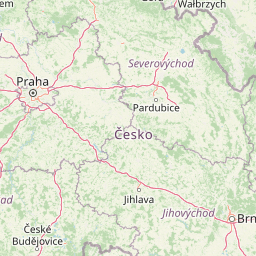
Map view of V kuksu

Use this park location map to pinpoint V kuksu in Czechia, understand its exact geographic position, and read its mapped placement within the surrounding landscape more clearly.

Pigeon | © OpenStreetMap contributors

Location context for V kuksu

Ústecký kraj
Recorded earthquake history

Explore Historical Earthquake Records Associated with V kuksu

Review documented seismic events occurring near the V kuksu natural monument. This catalogue provides an organized view of historical earthquake data, including event magnitude and depth, specifically curated to support geographic and environmental context within the Ústecký district.

V kuksu Earthquake History

Catalogued events

21 events

Strongest magnitude

Magnitude 3.7

Most recent event

May 4, 2000

This history includes earthquakes recorded inside the park or within 50 km of its borders

Visual reference guide for terrain, shaded woodland habitats, and protected ravine ecosystems

V kuksu Photos and Visual Landscapes: Exploring the Protected Ravine Scenery

Visual documentation captures the wooded ravine terrain, shaded slopes, and delicate orchid habitats that define the V kuksu protected area. Examining these field photographs reveals the microclimate and topography underpinning this specialized Central European natural monument.

A view looking down into a wooded ravine with a dirt trail and scattered vegetation under a partly cloudy sky.

Park atlas

Discover adjacent forest reserves, ravine ecosystems, and regional protected areas.

Explore Parks Near V Kuksu and Surrounding Protected Natural Landscapes

Browsing parks near V kuksu reveals a diverse mosaic of sheltered wooded ravines and specialized orchid habitats across the region. Comparing these protected natural landscapes provides essential context for understanding biodiversity patterns in the surrounding terrain.
A soft watercolor painting of a hilly landscape featuring pine trees and low-lying vegetation in shades of green, yellow, and red, with a pale background.
Natural monumentLiberec Region
About 10 km away#1 closest

Northeast

Martinské stěny Natural Monument: Sandstone Cliff Geography and Protected Landscapes

Geomorphology and sandstone terrain in the Liberec Region

Martinské stěny features a prominent quartz sandstone cliff wall shaped by geological forces in the Bohemian Cretaceous Basin. This natural monument serves as a key protected area for heath and lichen communities, representing the unique cliff-side geography found throughout the Liberec Region in the northern Czech Republic.

Area
0.032 km²
Established
2002
IUCN
III
Relief
Upland
A watercolor illustration of rolling hills and a green landscape with a soft, abstract style.
Nature reserveLiberec Region
About 11 km away#2 closest

North

Ronov Nature Reserve: Protected Volcanic Geography and Scree Forest Ecosystems in Liberec Region

Volcanic landmark with basalt talus slopes and historic ruins

Ronov rises as a distinctively shaped basalt cone from the rolling terrain of the northern Czech Republic. This nature reserve offers significant insight into the geological and botanical character of the Ralská pahorkatina, featuring extensive stone seas and rare plant habitats situated around ancient castle remains.

Area
0.09 km²
Established
1995
IUCN
IV
Relief
Mountain
A watercolor illustration depicting a soft, panoramic landscape of gentle, rolling green hills, scattered trees, and grassland areas with a muted color palette.
Nature reserveStředočeský kraj
About 15 km away#3 closest

Southeast

Na oboře Nature Reserve in Středočeský kraj: A Detailed Geographic Atlas Overview

Protected loess slopes and rare steppe ecosystems.

Na oboře comprises a series of south-facing slopes in the Středočeský kraj region, serving as a sanctuary for heat-loving flora and critically endangered insect species. The reserve features a rare geological intersection of wind-deposited loess and sandstone bedrock, forming a warm, mineral-rich landscape that remains a vital, mapped study area for steppe-like grassland conservation in the Czech Republic.

Area
0.034 km²
Established
2001
IUCN
IV
Relief
Upland
Natural monumentStředočeský kraj
About 16 km away#4 closest

Southeast

Vehlovické opuky Natural Monument: Geological Mapping and Historical Mining Context

Protected paleontological and mining heritage in the Czech Republic

Vehlovické opuky stands as a compact but rich natural monument in the Středočeský kraj region. This protected area showcases the geological legacy of the Bohemian Cretaceous Basin, preserving fossilized remains within yellowish opuka beds and demonstrating historical underground extraction techniques that now support local bat populations.

Area
0.009 km²
Established
2002
IUCN
III
Relief
Lowland
A soft watercolor illustration of rolling green hills with distant mountain peaks under a light sky.
Natural monumentÚstecký kraj
18 km away#5 closest

West

Radobýl Natural Monument: Basalt Formations and Volcanic Geography in Ústecký kraj

A protected volcanic landmark with steppe ecosystems and ridge views.

Radobýl stands as a distinctive volcanic remnant in the Ústecký kraj, featuring profound columnar basalt jointing and frost-weathered cliffs. This protected natural monument shelters rare dry grassland habitats and rocky terrain, while offering expansive views across the Litoměřice basin and the surrounding Bohemian landscape.

Area
0.063 km²
Established
1966
IUCN
IV
Relief
Mountain
Natural monumentLitoměřice District
19 km away#6 closest

Southwest

Vrbka Natural Monument: Exploring Protected Limestone Habitats and Bohemian Lowland Geography

A rare botanical reserve in the Litoměřice District of the Czech Republic

Vrbka Natural Monument protects a significant 15.5-hectare expanse of warm limestone slopes and dry meadows. This geographic landmark serves as an essential repository for rare orchid species and diverse insect populations, functioning as a representative habitat patch within the intensively cultivated landscapes of the surrounding region.

Area
0.155 km²
Established
2013
IUCN
IV
Relief
Upland
A horizontal watercolor painting depicting a soft-focus landscape with light green trees and low rolling hills under a pale, warm-toned sky.
Protected landscapeLitoměřice District
About 22 km away#7 closest

Southwest

Dolní Poohří Nature Park: Protected Landscape and River Geography

A riparian corridor through the Litoměřice District

The landscape of Dolní Poohří Nature Park follows the irregular arc of the lower Ohře River across the Bohemian plain. Its narrow boundaries protect a functional floodplain ecosystem characterized by silted oxbows, gravel banks, and rare forest fragments. This atlas entry details the geographic features, protected status, and the interplay between the active river channel and the historic townscapes found along its banks.

Area
40 km²
Established
2001
Relief
Lowland
Climate
Temperate
A horizontal watercolor illustration depicting a soft, rolling landscape with green hills, a small winding stream, and meadow vegetation on a white background.
Natural monumentÚstecký kraj
22 km away#8 closest

Southwest

Na Dlouhé stráni Natural Monument: Regional Protected Area and Botanical Landscape

A conservation-focused look at the Mšenský potok valley slope

Na Dlouhé stráni is a designated natural monument in the Czech Republic, renowned for its concentration of thermophilous grassland flora. This protected area, located near Mšené-lázně, preserves a specific slope habitat that supports declining plant species. The site offers an important look at regional conservation efforts and the mapping of small-scale protected habitats within the diverse Ústecký kraj geography.

Area
0.126 km²
Established
2012
IUCN
IV
Relief
Lowland

Common questions about visiting, size, designation, and location context for V kuksu

V kuksu FAQs for park facts, access, geography, and protected area context

Find quick answers about V kuksu, including protected-area facts, park geography, trail and visitor context, and how the park fits into its surrounding country and regional landscape.
MoriAtlas Explorer

Continue Your Protected Areas Search Across the Global Atlas

Deepen your exploration by continuing the structured search for national parks and protected areas worldwide. Utilize the comprehensive filtering capabilities to compare different conservation landscapes and refine your understanding of global park geography. Discover more about the distribution and characteristics of protected natural areas.

Global natural geography