
Why V kuksu stands out
V kuksu is best known for its protection of the lady's slipper orchid (Cypripedium calceolus), one of Europe's most striking and threatened wild orchids, together with related orchid species that share the same ravine habitat. The reserve's identity is closely tied to the presence of these plants, which have made the site a recognized Natura 2000 locality of European importance. Beyond the orchids themselves, the place is also notable as a representative example of a small Central European ravine (rokle) ecosystem, where shaded slopes, woody debris, and moisture-retaining soils create the specific microclimate that these species require.
V kuksu history and protected-area timeline
V kuksu was formally established as a protected natural monument on January 15, 2011, when it was declared by the Regional Authority (Krajský úřad) of the Ústecký region. The decision followed recognition of the site's status as a locality of European importance within the Natura 2000 network, an EU-wide framework aimed at conserving threatened habitats and species across member states.
The protection history is closely tied to the identification of significant populations of the lady's slipper orchid (Cypripedium calceolus) and related orchid species on the site. Botanical and ecological surveys in the area determined that the ravine provided the specific combination of shade, moisture, and soil conditions necessary for these orchids to thrive, making it a candidate for targeted conservation action.
Since its designation, the reserve has been managed as a habitat and species management area under IUCN Category IV, an approach that emphasizes the maintenance and, where necessary, restoration of conditions favorable to the species of concern. Its inclusion in the broader Natura 2000 framework means that its protection is aligned not only with national Czech conservation priorities but also with European-level biodiversity objectives.
V kuksu landscape and geographic character
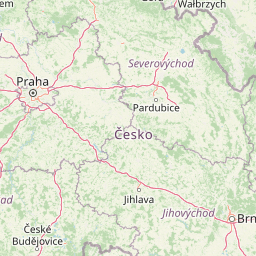
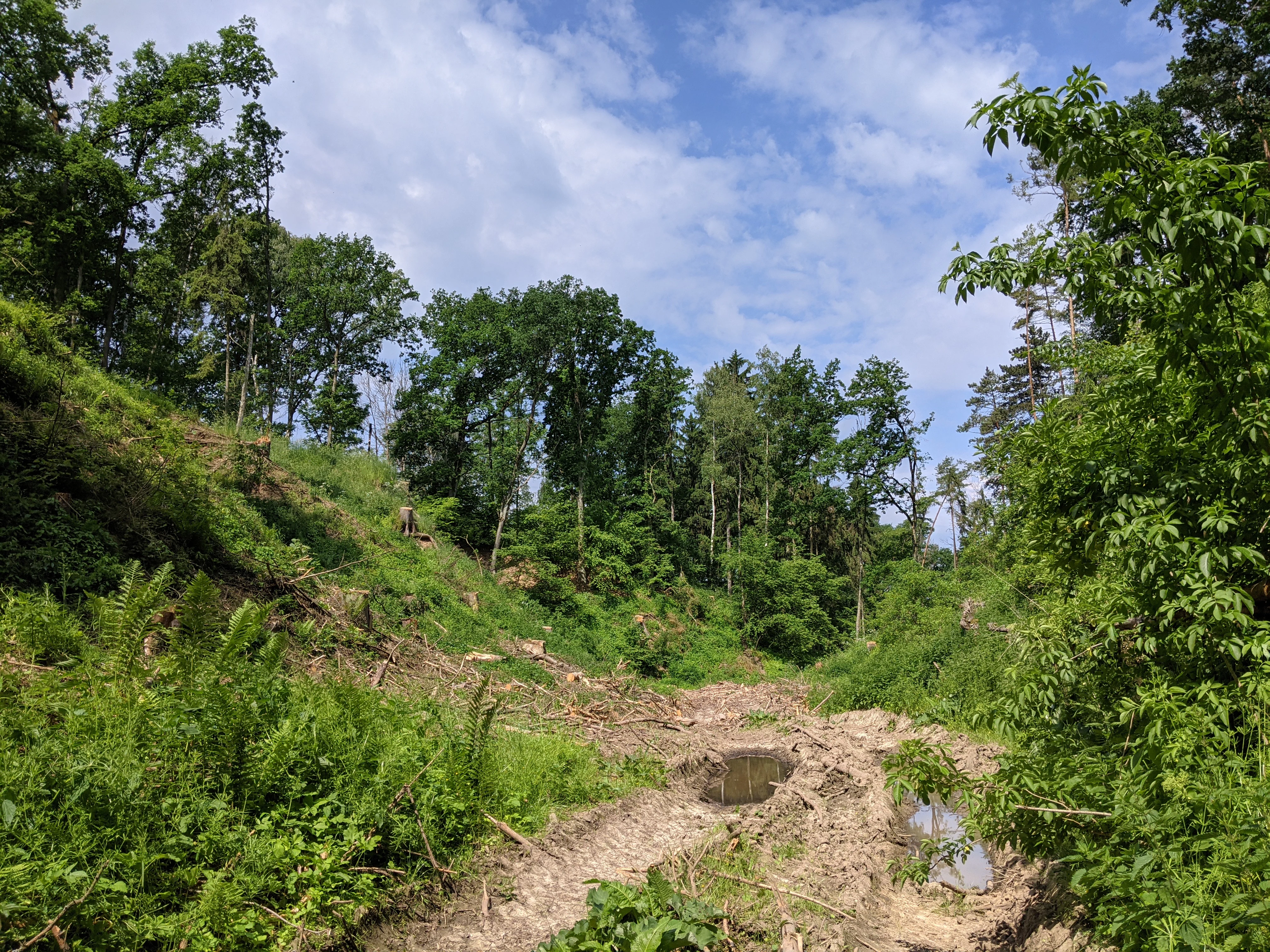
The physical landscape of V kuksu is defined by a relatively narrow wooded ravine, carved into the gentle hills that characterize the borderlands between the inner Czech basins and the more varied terrain to the north. Elevations within the reserve range from approximately 212 to 280 meters above sea level, placing the site within a lowland to submontane altitudinal band where cool, shaded ravines create microclimates distinct from the surrounding open country.
The ravine's slopes are typically forested, with a structure that mixes mature canopy cover, woody debris, and uneven terrain. This morphology produces conditions of stable humidity, filtered light, and accumulated leaf litter, all of which contribute to the specific environmental character of the reserve. Although the protected area itself is compact, the broader landscape around Vědlice contains a mosaic of similar small valleys and wooded features that together form part of the regional natural character of the Litoměřice district.
The terrain is not visually dramatic in the way of high mountains or coastal cliffs, but rather quietly distinctive: a sheltered, shaded corridor cut into otherwise agricultural countryside. This combination of topographic shelter, woodland cover, and ravine microclimate is precisely what gives the site its conservation significance.
V kuksu ecosystems, habitats, and plant life
V kuksu protects a small but ecologically rich remnant of Central European ravine woodland, a habitat type that has become increasingly fragmented across the region. The site's vegetation reflects the shaded, humid conditions typical of such ravines, with a tree canopy and understory that together create stable conditions for sensitive plant species.
The defining ecological feature of the reserve is the presence of orchid-rich communities, particularly those dominated by the lady's slipper orchid (Cypripedium calceolus) and complemented by other members of the orchid family (vstavačovité). These plants depend heavily on specific soil chemistry, mycorrhizal relationships, and a stable microclimate, all of which the ravine provides. The presence of these species has elevated the site from a locally interesting woodland patch to a site of European conservation concern within the Natura 2000 network.
Beyond orchids, the habitat supports the broader biological communities associated with mature deciduous and mixed forests, including typical woodland understory plants, invertebrates, and fungi suited to damp, shaded conditions. The site's protected status is designed to maintain these ecological processes and the habitat structures on which they depend, ensuring that the specific combinations of shade, humidity, and substrate that support rare species remain intact.
V kuksu wildlife and species highlights
While V kuksu is primarily recognized for its botanical importance, particularly its orchid populations, the protected ravine also provides habitat for a range of woodland fauna typical of mature Central European forests. The stable canopy cover, accumulation of woody debris, and shaded conditions create niches for invertebrates, including the pollinators and mycorrhizal partners associated with orchids and other understory plants.
The broader woodland environment supports typical forest-dwelling bird species, small mammals adapted to woodland edges and understory, and a community of insects tied to dead wood and leaf litter. Although the reserve is too small to host populations of larger mammals as a primary feature, the site contributes to the regional habitat network that sustains such species at a broader landscape scale.
The site's management as a habitat/species management area under IUCN Category IV emphasizes the maintenance of conditions that support these communities, with particular attention to the ecological relationships, including pollination and fungal partnerships, on which the rare orchid populations depend.
V kuksu conservation status and protection priorities
The conservation significance of V kuksu lies in its formal recognition as part of the Natura 2000 network, a European Union framework for protecting habitats and species of shared concern. The site was specifically designated to safeguard occurrences of the lady's slipper orchid (Cypripedium calceolus), a species listed for protection due to its decline across much of its European range, alongside other orchid species and their associated habitats.
The reserve's status as a přírodní památka (natural monument) under Czech law provides an additional layer of national protection, ensuring that activities affecting the site's ecological integrity are regulated. Its IUCN Category IV designation as a habitat/species management area reflects the site's role as a focused conservation unit, where management is oriented toward maintaining or restoring the specific conditions required by target species.
In conservation terms, V kuksu demonstrates the value of small, targeted protected areas. Although limited in extent, it contributes meaningfully to European biodiversity goals by preserving a viable population of a threatened orchid species and the specialized habitat on which that species depends. Its protection also serves as a point of reference for conservation planning in the Litoměřice district and the Ústecký region more broadly.
Top sights and standout views in V kuksu
V kuksu's standout quality is its protected population of the lady's slipper orchid (Cypripedium calceolus), one of Europe's most charismatic and threatened wild orchids, set within a shaded, ecologically specialized ravine habitat. The site's Natura 2000 designation elevates its significance from a local nature monument to part of a continent-wide biodiversity network.
Equally notable is the way the reserve exemplifies how small protected areas, even those of only around twenty hectares, can carry disproportionate ecological importance when they shelter habitats and species of European concern.
Best time to visit V kuksu
Because V kuksu is a small, ecologically sensitive protected area rather than a developed visitor destination, any consideration of timing relates more to the experience of the surrounding landscape than to formal access. Late spring and early summer generally represent the most biologically expressive period for the habitats involved, when woodland vegetation is at its fullest and conditions in shaded ravines are mild and humid.
For visitors interested in observing the broader landscape of the Litoměřice district, the warmer months offer comfortable walking conditions through the countryside near Vědlice, while autumn brings the changing colors of the mixed forest cover typical of the region. Visitors should be aware that the site itself is a protected natural monument, so any presence near orchid habitats should be approached with care and respect for the conservation purpose of the reserve.