Why William B. Bankhead National Forest stands out
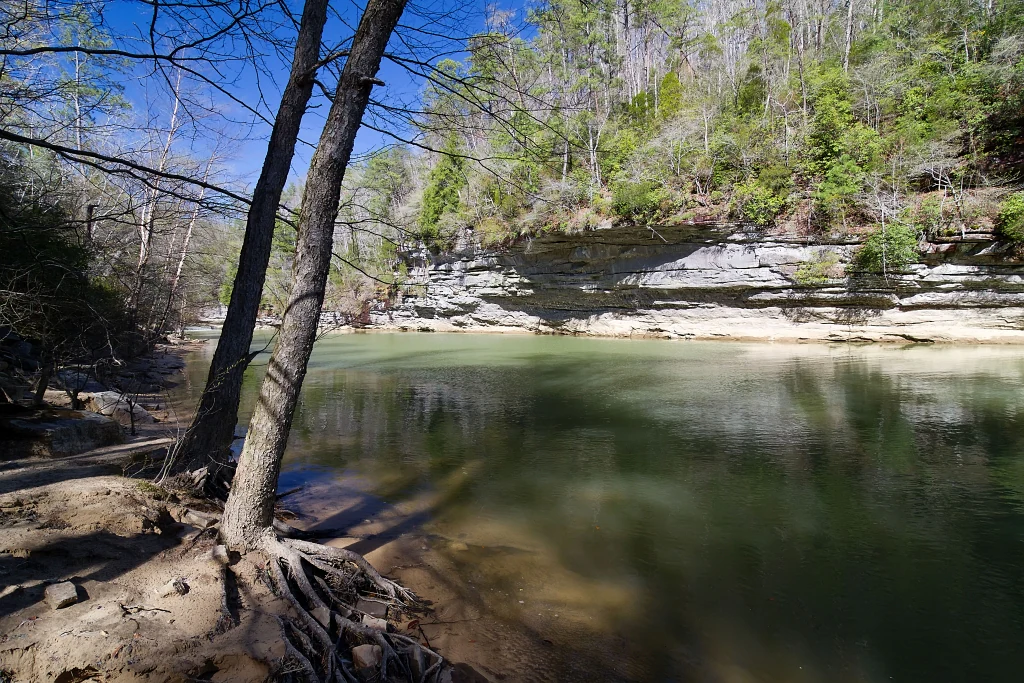
Bankhead National Forest is celebrated above all for its waterfalls, canyons, and clear mountain streams flowing through limestone terrain. The Sipsey Wilderness, contained within the forest, is the focal point of that reputation, with sheer bluffs, hidden gorges, and a network of springs feeding the Sipsey Fork of the Black Warrior River. The forest is also recognized for the Sipsey Fork's status as Alabama's only National Wild and Scenic River, and for the extensive record of human history etched into its rock overhangs. Petroglyphs, prehistoric drawings, and rock shelters such as Kinlock Shelter make Bankhead a premier archaeological destination in the southeastern United States.
William B. Bankhead National Forest history and protected-area timeline
The forest was first established on January 15, 1918, under the name Alabama National Forest, with an initial area of about 66,008 acres. At that early stage, it represented a modest beginning of what would become one of Alabama's most significant National Forest holdings.
On June 19, 1936, the forest was renamed Black Warrior National Forest, reflecting its geographic and cultural ties to the Black Warrior River system that drains the region. Six years later, on June 6, 1942, it was again renamed, this time to William B. Bankhead National Forest, in honor of the longtime Alabama U.S. Representative for whom it is still known today. In 1959, Executive Order 10850 removed a portion of land from the forest's boundaries, adjusting the overall extent of the unit. The forest is now managed by the U.S. Forest Service, with headquarters in Montgomery and on-the-ground operations supported by a ranger district office in Double Springs.
William B. Bankhead National Forest landscape and geographic character
Bankhead's landscape is defined by the dissected edge of the Cumberland Plateau, where flat-topped uplands break apart into steep ridges, deep hollows, and narrow stream valleys. This terrain produces the rugged scenery that gives the area its reputation for waterfalls and rock bluffs. Limestone is a key ingredient in that scenery, creating karst-like features, exposed bluffs, and the geological conditions that allow water to emerge as springs and falls.
The forest's drainage network is dominated by tributaries of the Black Warrior River, including the Sipsey Fork, which cuts striking corridors through the plateau. Together, these waterways have shaped much of what visitors now experience: shaded gorge trails, plunging cascades, and small plunge pools. Along its western edge, the forest also meets Lewis Smith Lake, a large reservoir that contrasts with the otherwise stream-driven terrain and adds open-water scenery to the mix.
William B. Bankhead National Forest ecosystems, habitats, and plant life
The forest supports a mosaic of habitats typical of the southern Cumberland Plateau, from dry upland pine and oak ridges to moist hardwood hollows and stream-side communities. Mixed forests of oak, hickory, tulip poplar, and pine dominate much of the landscape, while richer and more diverse plant communities thrive along the cooler, wetter floors of the deep gorges where the Sipsey Fork and its tributaries flow.
The network of perennial streams, seeps, and springs maintains a constantly refreshed riparian environment throughout the forest. These conditions support a broad range of ecological niches, from mossy rock outcrops and shaded cliff faces to seasonal wildflower displays in spring. The Sipsey Wilderness, in particular, preserves a higher degree of ecological continuity because of its protected status, allowing forest processes and habitat complexity to develop with minimal direct management influence.
William B. Bankhead National Forest wildlife and species highlights
Wildlife across Bankhead reflects the diversity of its mixed forests, stream corridors, and wilderness interior. White-tailed deer are among the most commonly seen large mammals, and the forest's mix of ridges and hollows provides reliable habitat for them. Wild turkey is another signature species, supported by the open understory of many forest areas and managed as part of the forest's hunting program.
Smaller mammals such as gray and fox squirrels thrive in the oak-hickory forests, while raccoons, opossums, and various bat species use both the forest canopy and the area's many caves and rock crevices. Stream-dependent life, including freshwater fish and aquatic invertebrates, inhabits the cold, clear waters of the Sipsey Fork and its tributaries. The variety of habitats and the presence of extensive wilderness and remote tracts make the forest important for both resident species and seasonal migrants moving through the region.
William B. Bankhead National Forest conservation status and protection priorities
Bankhead's conservation importance lies in the protection of representative Cumberland Plateau ecosystems across a very large landscape, ranging from upland forests to broken gorge terrain and high-quality free-flowing rivers. The Sipsey Wilderness is the cornerstone of that effort, providing a buffer from heavy development and preserving ecological conditions that have been altered in many similar landscapes elsewhere in the region.
The designation of the Sipsey Fork as a National Wild and Scenic River adds a major layer of protection to one of the forest's defining features. That designation supports both ecological values, like water quality, riparian habitat, and aquatic biodiversity, and the recreational and scenic qualities that visitors associate with the river. Together, the wilderness, the wild and scenic river corridor, and the broader National Forest designation make Bankhead a key conservation anchor in northwestern Alabama.
William B. Bankhead National Forest cultural meaning and human context
The forest occupies a landscape with deep human history. Long before it became a National Forest, the area's rock overhangs and shelters sustained Indigenous communities, leaving behind petroglyphs, rock carvings, and prehistoric drawings that remain visible across the forest today. Sites such as Kinlock Shelter are regarded as some of the most significant archaeological locations in the southeastern United States.
This enduring archaeological record gives Bankhead a cultural layer beyond its natural features. The forest's modern identity, with its mix of recreational use, wilderness protection, and heritage preservation, reflects a continuing relationship between people and this landscape across thousands of years. That long arc of human presence is part of what distinguishes Bankhead from purely wilderness-oriented public lands elsewhere in the region.
Top sights and standout views in William B. Bankhead National Forest
A defining feature of William B. Bankhead National Forest is the concentration of waterfalls within its deeply cut gorges, the basis for the area's famed "land of a thousand waterfalls" moniker, with the Sipsey Wilderness serving as the primary showcase. Equally important is the Sipsey Fork itself, Alabama's only National Wild and Scenic River, whose clear waters, limestone bluffs, and swift currents anchor both the scenic and ecological identity of the forest. Combined with the surrounding Sipsey Wilderness and the lake scenery of Lewis Smith Lake, these features give Bankhead a layered mix of gorge, river, wilderness, and open-water experiences in a single public-land unit. The forest also stands out for its archaeological wealth, with petroglyphs and prehistoric rock shelters that elevate it from a recreational destination into a landscape of broader regional significance.
Best time to visit William B. Bankhead National Forest
Spring and fall are widely regarded as the most rewarding times to experience Bankhead, when milder temperatures make waterfall trails and long-distance hiking more comfortable and when wildflowers or autumn foliage add extra visual interest to the forest. Spring in particular tends to bring fuller flows to the area's many streams and cascades, reinforcing the waterfall-rich character that defines the region.
Summer visits can also be rewarding because the deeply shaded gorges and the cool waters of the Sipsey Fork provide natural relief from Alabama's heat, though humidity and thunderstorm activity are higher during this season. Winter tends to be quieter, with thinner crowds on the trails and a different visual character as leaves drop from the deciduous forests, exposing more of the rocky bluff lines and stream channels that give the area its distinctive scenery.