
Mori Atlas logo
Park guides

Focused context for choosing a season on Maine's mountain coast

Acadia National Park guides for seasonal timing and visit context in Maine

Use the available Acadia National Park guides to explore when to visit its granite mountains, Atlantic shoreline, forests, lakes, and islands. The published timing guide compares summer's consistent access and coastal warmth with the quieter scenery, variable temperatures, and service tradeoffs of spring and autumn.

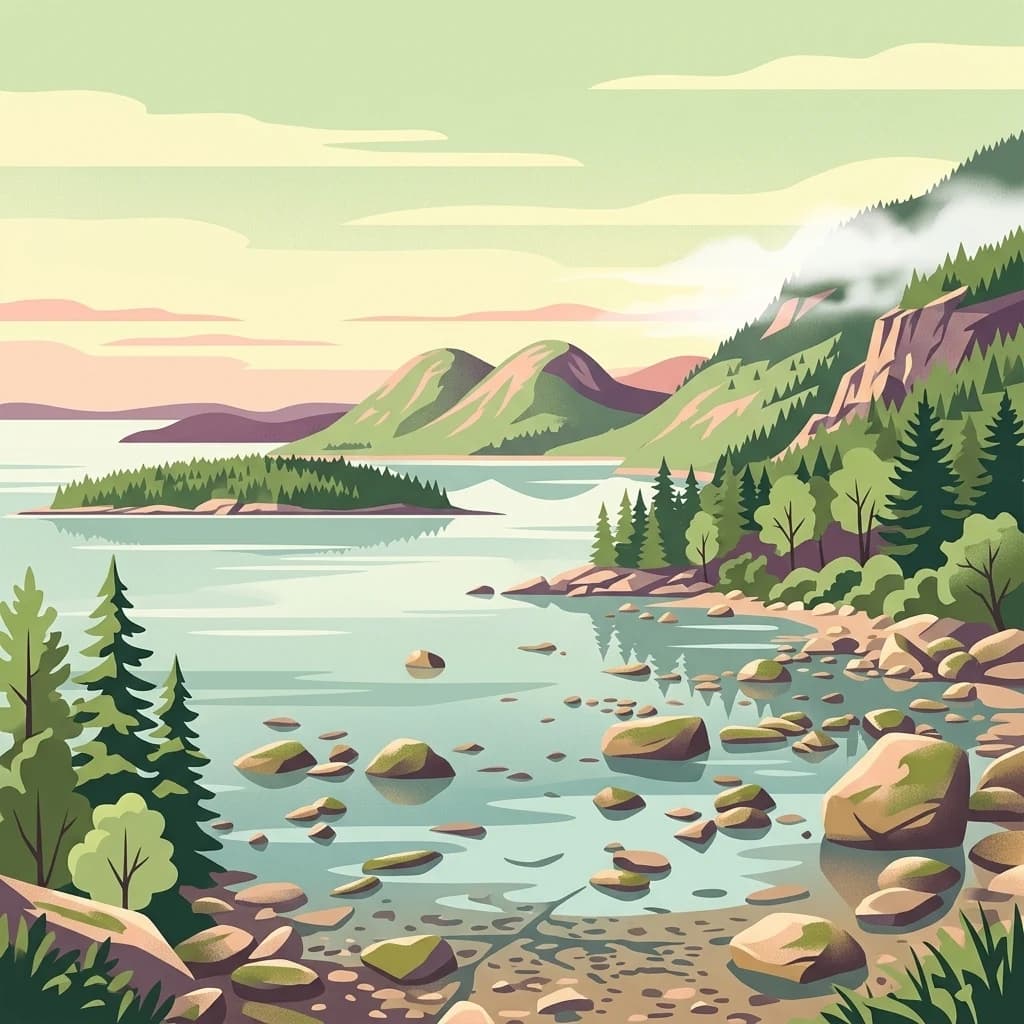
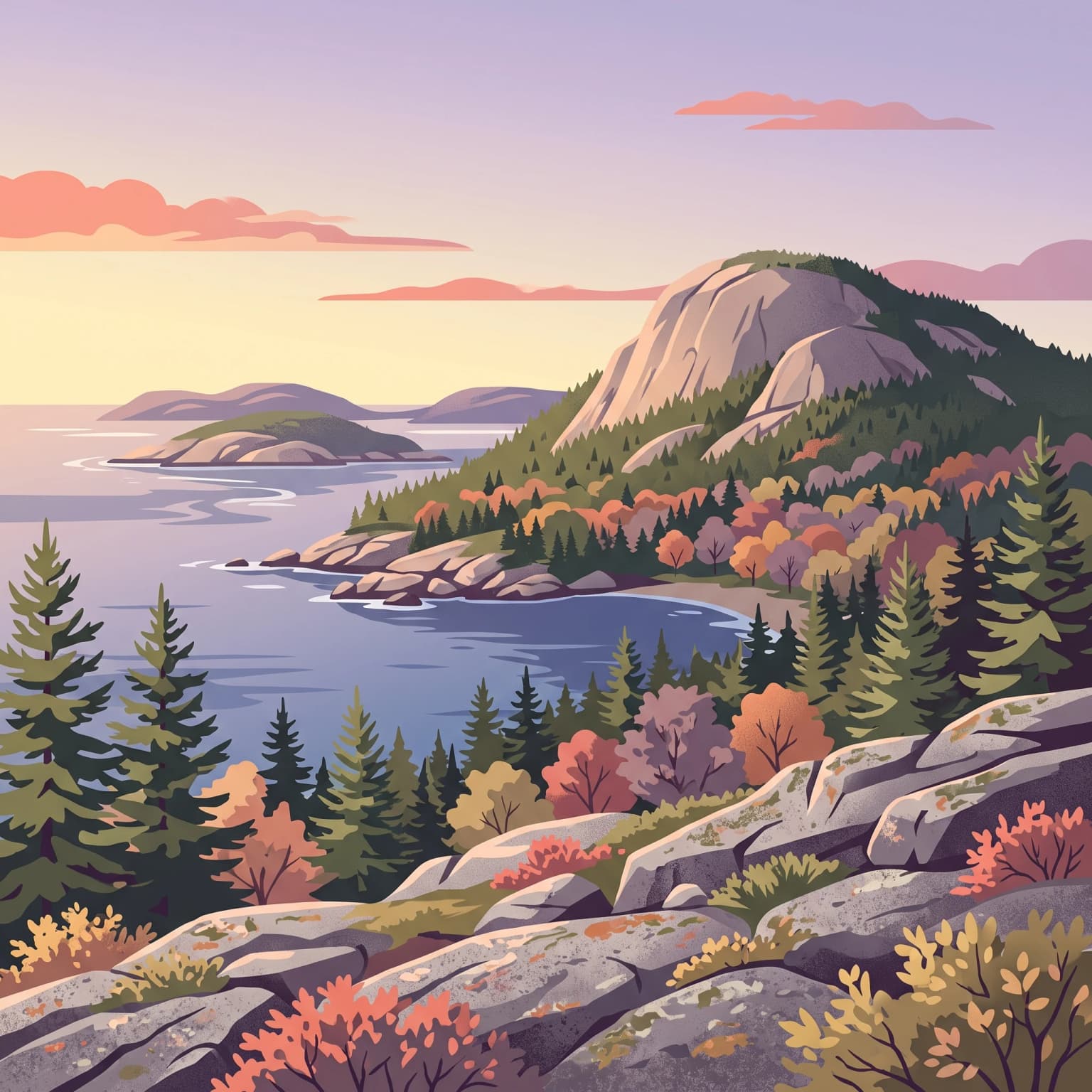
A digital illustration of a calm, rocky coastline with spruce trees and distant mountains under a soft-colored sky.

New England's premier coastal national park and the first national park east of the Mississippi River

Acadia National Park

Acadia National Park stands as a unique preservation success story in American conservation history, born from the dedicated efforts of private citizens who worked to protect the remarkable landscapes of coastal Maine. The park encompasses approximately half of Mount Desert Island, the tip of the Schoodic Peninsula on the mainland, the majority of Isle au Haut, and portions of sixteen smaller islands in Frenchman Bay and surrounding waters. The terrain is characterized by twenty-six significant mountains, with elevations ranging from 284 feet at Flying Mountain to 1,530 feet at Cadillac Mountain, whose pink granite summit represents the highest point along the eastern coastline of the United States. Glacial activity during the Pleistocene epoch shaped the landscape, leaving behind distinctive features including U-shaped valleys, granite domes, glacial erratics such as Bubble Rock, and the deep fjord-like inlet of Somes Sound that nearly bisects Mount Desert Island. The park's location at the convergence of boreal and deciduous forest ecosystems, combined with its extensive wetlands and coastline, creates a remarkable ecological tapestry that supports hundreds of species of plants and animals. Beyond its natural significance, Acadia represents an important chapter in the evolution of American national park policy as the first park created entirely through private land donations, establishing a model for subsequent conservation efforts.

Location
United States of America
Park type
National park
Established
1919
Area
198.6 km²
Highest point
470 m
Acadia National Park Atlas
MoriAtlas Explorer

Acadia National Park

Explore the map, landscapes, and protection details for Acadia National Park.

Global natural geography