Why Akzhayyk Reserve stands out
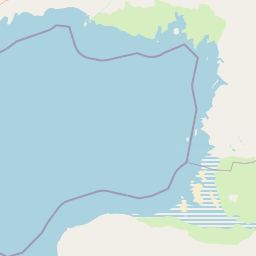
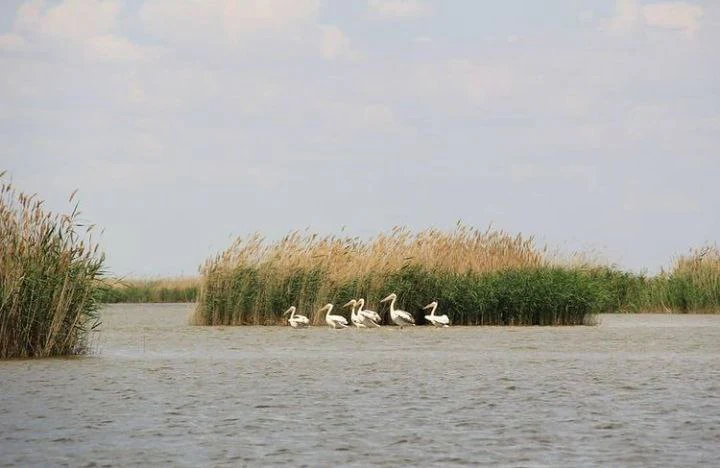
Akzhayyk is best known for being one of the premier wetland and migratory bird sites in Kazakhstan. The reserve protects a critical segment of the Siberian-East African flyway, where tens of thousands of waterbirds concentrate during seasonal passage, including flamingos, curly pelicans, swans, and the endangered lesser white-fronted goose. The reserve is equally celebrated for its position at the meeting point of the Ural River delta and the Caspian Sea, a dynamic hydrological interface where spring floods, shifting sea levels, and wind-driven surges reshape the landscape. Its combination of Ramsar and UNESCO Biosphere Reserve status places Akzhayyk among the most formally recognized conservation landscapes in the country.
Akzhayyk Reserve history and protected-area timeline
Akzhayyk Reserve was established by Resolution No. 119 of the Government of the Republic of Kazakhstan, dated 6 February 2009. The decision created a dedicated state institution responsible for the Ural River delta and the adjacent Caspian coastline, recognizing these lands as a distinct ecological unit that warranted formal protection.
Only weeks after the reserve was formally established, the same wetland complex received international recognition. On 1 April 2009, the Ural River delta and the adjoining Caspian coastal zone were inscribed on the List of Wetlands of International Importance, the Ramsar Convention's core register. This made Akzhayyk the second Ramsar site in Kazakhstan, after the Tengiz-Korgalzhyn lake system further east in the country.
The reserve's profile grew further in 2014, when it joined the UNESCO World Network of Biosphere Reserves. This step formalized the area's combined role as a conservation site, a zone of sustainable resource use, and a reference area for long-term environmental monitoring of one of Central Asia's major river deltas and the world's largest enclosed sea.
Akzhayyk Reserve landscape and geographic character
The landscape of Akzhayyk is shaped almost entirely by water. At its core lies the lower Ural River, which after flowing through the city of Atyrau splits into multiple branches and channels before reaching the Caspian Sea. The lower course is deepened each year by the spring flood pulse, producing pools of seven to twenty metres in depth along with shallower stretches. The river is essentially a snow-fed system, with no significant tributaries joining after Oral in the upstream sections.
The delta merges into a broad zone of reed and cattail marshes, floating and submerged aquatic plant communities, and periodically flooded lowlands. Beyond this freshwater belt, the reserve extends onto the shallow northern Caspian coast, where the seabed slopes very gently and the configuration of the shoreline allows large wind-driven fluctuations in water level. Storm surges can shift the effective coastline by several kilometres in moderate conditions and by much greater distances under extreme winds, while set-downs can expose the seabed over wide areas.
The wider climate is strongly continental and notably dry, with hot summers, dust storms, winters with little snow, low annual precipitation, and persistent winds that on average reach five to seven metres per second. This combination of strong seasonality, low rainfall, and persistent wind gives the whole delta and coastal zone a distinctive, ever-shifting character shaped by both river flow and sea level.
Akzhayyk Reserve ecosystems, habitats, and plant life
Vegetation in Akzhayyk is dominated by aquatic and wetland communities, reflecting the permanently and seasonally flooded nature of most of the reserve. Two main types of aquatic vegetation are recognized: a phytobenthic layer of attached submerged macroalgae and higher submerged plants near the bottom, and an air-water layer dominated by emergent hygrophytes such as reed and cattail, together with floating species like water lilies and water chestnut, and submerged species including hornwort and spiked water milfoil.
The reserve's flora includes around 130 recorded species spread across roughly 90 genera and 33 families. This represents about half of the plant diversity documented for the Kazakh portion of the North Caspian region. Among the recorded flora are rare and Red Book-listed plant species, emphasizing the conservation importance of the wetland habitats rather than any arid-land assemblage.
The habitats form an unusually productive ecological interface, where freshwater channels flow into a saline closed sea. The combination of shallow water, dense emergent vegetation, and seasonally shifting shoreline generates high biological productivity, which in turn supports rich communities of invertebrates, fish, and waterbirds, and gives the reserve its character as a continuous wetland-to-coastal ecosystem rather than two separate protected landscapes.
Akzhayyk Reserve wildlife and species highlights
Akzhayyk Reserve is primarily known for its birdlife. The Ural delta and the adjoining Caspian shoreline lie directly along the Siberian-East African migratory flyway, and during seasonal passage the reserve hosts very large concentrations of waterbirds. Among the species documented are several rare breeding or staging birds, including glossy ibis, spoonbill, little egret, cattle egret, and purple swamphen, while flocks of thousands of flamingos, curly pelicans, Mediterranean gulls, and swans use the area as a major stopover. The endangered lesser white-fronted goose is also recorded during migration.
Beyond birds, the reserve supports a mammal fauna of around 78 species, reflecting the diversity of habitats from wetlands and riparian woodlands to drier steppe margins. The coastal and estuarine waters also harbour two particularly significant animal groups: sturgeons in the river and delta, and the Caspian seal in the marine zone, both of which are considered to be on the edge of survival in the wider region. The regional lists of threatened species also include insect and reptile species, underscoring that the conservation interest of Akzhayyk extends well beyond the charismatic migratory birds.
Akzhayyk Reserve conservation status and protection priorities
Akzhayyk is a conservation area of national and international importance, layered with multiple formal designations. At the national level, it is a state nature reserve managed under the authority of the Committee of Forestry and Animal World of the Ministry of Agriculture of Kazakhstan, with IUCN category VI recognizing a role in sustainable natural resource use rather than strict wilderness protection.
Internationally, the reserve carries two of the most significant wetland and biodiversity labels available. Its inscription as a Ramsar site in 2009 brought global recognition of its value for waterbirds and hydrological function, while its 2014 inclusion in the UNESCO World Network of Biosphere Reserves positioned it as a reference site for long-term study of the Ural delta and the Caspian coast.
The area's conservation value extends beyond bird protection. The reserve covers important sturgeon habitats, and the Caspian seal depends on the coastal waters it includes. By bringing river, delta, and sea within a single protected framework, Akzhayyk plays a central role in Kazakhstan's strategy for safeguarding the ecological connectivity of one of the country's major river systems and the most biologically productive zone of the Caspian.
Top sights and standout views in Akzhayyk Reserve
Akzhayyk Reserve combines the delta of one of Eurasia's major rivers with the shoreline of the world's largest enclosed sea, creating a continuously shifting wetland-to-coast landscape. Its formal protections at both national and international level place it among the most fully designated wetland sites in Kazakhstan, and its position on a major migratory flyway gives it outstanding seasonal wildlife interest.
What distinguishes Akzhayyk from many other steppe and desert reserves in the region is the depth of its water-associated identity: the reserve is shaped by river flow, by sea level change, and by wind-driven surges, and its conservation significance is inseparable from this hydrological dynamism. The presence of sturgeons, Caspian seals, and major waterbird concentrations gives it a rare combination of freshwater, marine, and migratory values within a single management framework.
Best time to visit Akzhayyk Reserve
The character of a visit to Akzhayyk depends strongly on seasonal hydrology. Spring is the period of most dramatic change in the landscape, when the Ural River enters its spring flood pulse, levels rise several metres above the summer baseflow, and the delta is reworked by fresh water and sediment. Late spring and early summer, near the peak of the flood, are likely to offer the richest combination of flooded wetlands and high waterbird activity, although weather can be changeable.
Summer brings hot, dry conditions and strong winds, including dust storms, with generally low humidity and very limited rainfall. Autumn is the most important season for waterbird passage and is also the period with the highest frequency of wind-driven sea surges along the Caspian coast, which can dramatically alter the apparent shoreline. Winter is cold, windy, and often marked by thaws and little snow, producing subdued scenery but occasionally interesting concentrations of wintering waterfowl.