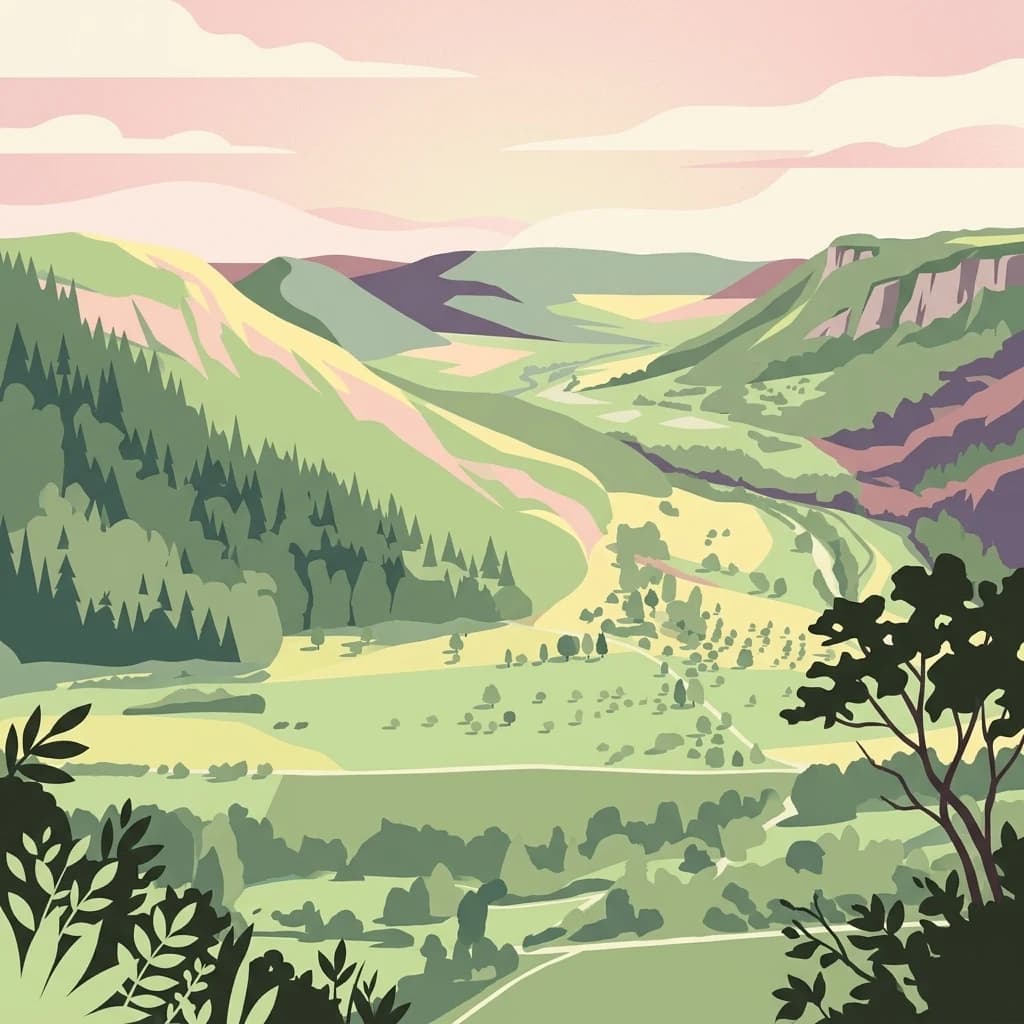
A fragmented Natura 2000 refuge on the Albtrauf, the steep north-facing escarpment of the Swabian Alb.
Albtrauf Donzdorf-Heubach
Albtrauf Donzdorf-Heubach is a federally designated Natura 2000 site in eastern Baden-Württemberg, Germany, protecting fragments of the dramatic northern escarpment of the Swabian Alb between the towns of Donzdorf and Heubach. Designated as a Fauna-Flora-Habitat area under the European Habitats Directive, it spans roughly 2,530 hectares across the districts of Göppingen and the Ostalbkreis, distributed among eight separate sub-areas. The site preserves large tracts of near-natural deciduous forest, juniper-rich heath pastures, limestone rock formations, karst caves, and dry grasslands on Upper Jurassic terrain.
The landscape is shaped by the steep Albtrauf escarpment and its eroded rear slopes, where calcareous soils support habitats as varied as orchid-rich beech woodland, ravine and slope mixed forests, species-rich Nardus grasslands, and limestone pioneer swards. More than 80 caves have been documented within the protected boundaries, adding a distinctive subterranean dimension to the area's geology and biodiversity. Together these features make the site an important refuge for habitat types and species that have become rare elsewhere in the intensively farmed landscapes of southern Germany.
The site's ecological value is recognized at the European level, and it is administered by the Stuttgart Regional Council. It contributes to the broader Natura 2000 network in Baden-Württemberg and complements other protected areas along the Swabian Alb, reinforcing regional efforts to conserve the escarpment's forests, dry grasslands, and associated wildlife.