Why Ausoniusstein Nature Reserve stands out
Ausoniusstein is best known for its combination of notable geology and its population of the Apollo butterfly. The reserve was designated specifically because of its geological and morphological character, which creates conditions suitable for uncommon plant communities that in turn support rare fauna. The Apollo butterfly is the species most often highlighted in descriptions of the reserve. The site is valued as a refuge for threatened wildflowers and the plant communities associated with the dry, rocky habitats that this butterfly needs to complete its life cycle. Together, the geological setting and the rare butterfly population define the reserve's conservation identity.
Ausoniusstein Nature Reserve history and protected-area timeline
The formal history of Ausoniusstein as a protected area began on 15 August 1984, when the Bezirksregierung Koblenz issued a legal ordinance designating it as a Naturschutzgebiet. The process followed the standard German framework in which a site is evaluated against explicit criteria before protection is granted.
In Ausoniusstein's case, the ordinance specified three distinct grounds for protection. The first was the geological and morphological condition of the area, recognized as valuable for natural-history reasons. The second was the presence of rare and threatened wild plants, plant communities, and animal species, recognized as valuable for scientific reasons. The third was the special character and beauty of the landscape, recognized as valuable in its own right.
The designation assigned the protected-area number 7137-017, integrating the reserve into the regional hierarchy of nature protection in Rhineland-Palatinate. Beyond this founding act, the area has continued to be regarded primarily as a refuge for the Apollo butterfly and the associated rare flora that the 1984 ordinance cited as the central ecological justification for its protection.
Ausoniusstein Nature Reserve landscape and geographic character
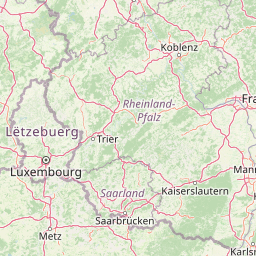
The landscape of Ausoniusstein reflects the transitional character of the Lower Moselle region, where the deeply incised river valley meets the uplands of the Eifel foothills. The reserve sits above the river corridor on terrain that includes slopes, rocky outcrops, and varied ground transitions typical of the Untermosel.
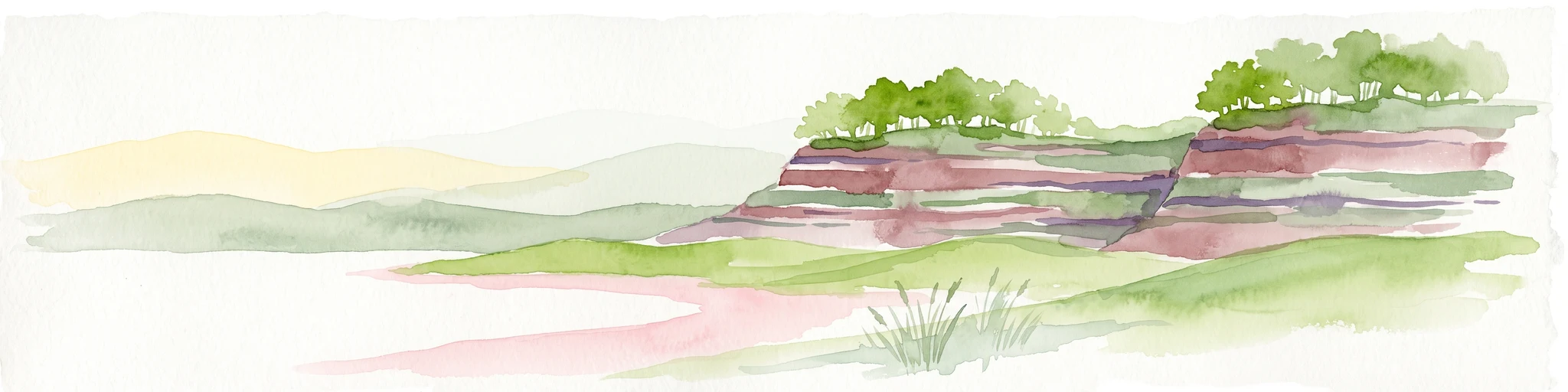
Geologically, the site is shaped by the diversity of substrates common to this part of Rhineland-Palatinate. The mix of volcanic-derived materials from the nearby Eifel highlands and sedimentary influences from the river landscape gives the reserve a mosaic of soil types. This geological complexity is part of what justified the 1984 designation; the ordinance explicitly cited the geology and morphology of the site among its reasons for protection.
At ground level, the result is a varied topography that exposes rocky surfaces and well-drained, often thin soils. Such terrain supports semi-open vegetation rather than closed forest, and it is in these warmer, drier exposures that the Apollo butterfly and its associated plant communities thrive. The visual character of the reserve is one of openness, rocky structure, and clear views across a regionally distinctive German river-valley landscape.
Ausoniusstein Nature Reserve ecosystems, habitats, and plant life
The ecological identity of Ausoniusstein is tied to the dry, rocky, sun-exposed habitats that develop on its varied substrates. These conditions support a plant community that has become rare in the broader agricultural landscape of Rhineland-Palatinate, and the reserve's designation specifically protected these wild plants and their associated plant communities.
The vegetation pattern reflects the geological mosaic of the site. Thin soils over rocky ground give way to more developed soils in sheltered pockets, producing a patchwork of microhabitats. This kind of small-scale variation is typical of sites where rare species persist in a heavily cultivated region, because each niche provides slightly different conditions for specialized plants and the insects that depend on them.
By protecting not only individual species but also plant communities, the 1984 ordinance took an explicitly ecological view of the reserve. Rather than focusing on a single rare organism, the protection framework recognizes that the habitats themselves are part of what makes Ausoniusstein valuable, and that maintaining habitat structure is necessary for safeguarding species such as the Apollo butterfly over the long term.
Ausoniusstein Nature Reserve wildlife and species highlights
The wildlife profile of Ausoniusstein is dominated by a single, charismatic species: the Apollo butterfly. This large, pale mountain-ringlet butterfly is sought after throughout its declining European range and is considered threatened. Its presence at Ausoniusstein is the primary faunal justification that the 1984 ordinance cited for protecting the area on scientific grounds.
The Apollo butterfly is closely tied to specific habitat conditions that match the reserve's rocky, well-drained slopes with their mosaic of warm, open terrain. The species depends on particular host plants and on the continuity of suitable microclimates that allow its larvae and pupae to survive. By protecting the entire mosaic of rocky slopes, thin soils, and associated vegetation, the reserve indirectly protects the structural conditions the butterfly requires.
Beyond the Apollo butterfly, the reserve's designation language emphasizes that threatened animal species more broadly are among the reasons for protection. While individual species beyond the Apollo butterfly are not named in the source material, the framework of the designation indicates that the reserve is expected to function as a refuge for the wider community of specialized fauna associated with these rare habitats in the Lower Moselle landscape.
Ausoniusstein Nature Reserve conservation status and protection priorities
Ausoniusstein's conservation value lies in the convergence of three factors: its geological record, its rare flora and fauna, and the aesthetic quality of its landscape. The 1984 ordinance drew on all three, which is unusual among smaller reserves and reflects the diversity of values concentrated within the 31-hectore site.
From a scientific perspective, the reserve preserves a stretch of ground whose geological and morphological features are considered worthy of study. From an ecological perspective, it maintains rare plant communities and the threatened animal species, especially the Apollo butterfly, that depend on them. From a landscape perspective, it preserves a piece of the characteristic scenery of the Lower Moselle that illustrates the geological complexity of the region.
By combining these strands in a single protective designation, the reserve operates under a model that integrates natural-history preservation, biodiversity conservation, and landscape protection. Its relatively small size means that its long-term value depends heavily on careful management that maintains the open, rocky habitat structure on which its rare species depend.
Top sights and standout views in Ausoniusstein Nature Reserve
The defining highlights of Ausoniusstein are its geological character, its rare plant communities, and its population of the Apollo butterfly. Together these features explain why the site was considered worth protecting under all three of the standard German grounds for nature reserve designation: natural-history, scientific, and landscape-aesthetic.
The reserve's small footprint near the Lower Moselle also makes it a good example of the kind of focused, species-driven protection that characterizes many Naturschutzgebiete in Rhineland-Palatinate. Its Apollo butterfly population is the most recognizable feature for visitors interested in the reserve, while geologists and ecologists appreciate the broader mosaic of substrates and habitats that supports the species.