Mori Atlas logo
Nature reserveBabski Las Nature Reserve

Examining the rare fir forest ecosystems and upland topography within this protected reserve

Babski Las Nature Reserve: An Atlas of Protected Forest Landscapes in the Silesian Voivodeship

(Rezerwat przyrody Babski Las)

Babski Las Nature Reserve stands as a significant protected forest complex situated in the Częstochowa Upland of the Silesian Voivodeship. This landscape is defined by its unusual Balkan-type fir forest, which is rare for the region, alongside swampy alder woods and stands of monumental old pedunculate oaks. The reserve serves as a critical site for specialist species and ecological stability, functioning as an essential component of the regional protected network that includes the adjacent Stawki Landscape Park.

nature reserveforest reservefir forestalder carrold-growth oakswoodland

Babski Las Nature Reserve

Nature reserve

Park overview

Structured park overview, official facts, and landscape profile for Babski Las Nature Reserve

Babski Las Nature Reserve park facts, protected area profile, and essential visitor context

Review the core facts for Babski Las Nature Reserve, including designation, size, terrain, visitor scale, habitats, and operating context in one park-focused overview.

About Babski Las Nature Reserve

Babski Las Nature Reserve is a recently designated protected forest in the Częstochowa Upland, a limestone-rich upland region in southern Poland. It lies in gmina Przyrów within the Silesian Voivodeship, a part of Poland where forests tend to be dominated by broadleaf and mixed formations rather than the fir-dominated community present here.

The reserve's defining trait is its fir forest, a phytocenosis that is described as rare across the voivodeship and effectively unique in the northern reaches of Silesia. This kind of forest is associated with cooler, moister, and more stable conditions than the surrounding lowland woodlands, and its survival here is a key reason the area received strict legal protection in 2025.

Around the fir-dominated core, the reserve also preserves swampy alder woods, known locally as olsy, that occupy wetter ground within the forest mosaic. Where drainage has not altered these soils, alder carrs create shaded, waterlogged conditions that support a distinct group of plants and amphibians. Scattered across the reserve are old pendunculate oaks of monumental size; these veteran trees provide deadwood and cavities that are particularly important for saproxylic species and cavity-nesting animals.

The reserve is only partly isolated from neighboring protected land: a portion of its footprint overlaps with the Stawki Landscape Park, broadening the effective protected context around the forest. A buffer zone, larger than the reserve itself, extends outward from the core and helps reduce edge effects, supporting species that require more extensive forest cover than the strict core alone would provide.

Babski Las is not primarily a destination reserve, but rather a conservation-oriented area focused on maintaining a forest community and the species associated with it. Its profile combines forest type, old-growth trees, and a notably diverse set of forest-interior plants, fungi, and animals, giving the site both scientific and regional conservation value within the network of protected areas in the Częstochowa Upland.

Quick facts and research context for Babski Las Nature Reserve

Babski Las is a forest nature reserve in gmina Przyrów in the Silesian Voivodeship, set within the Wyżyna Częstochowska (Częstochowa Upland) mesoregion. It was designated in 2025 and carries strict legal protection (ochrona ścisła).

The reserve covers a forested area dominated by a phytocenosis that is rare in Silesia and exceptional in its northern part, together with boggy alder stands and old pendunculate oaks. It sits partly within the Stawki Landscape Park and is surrounded by a buffer zone that significantly enlarges the protected footprint around the core reserve.

Protection and recognition

Documented terrestrial protection scope and conservation designation records

Babski Las Nature Reserve Protection Status and International Recognition

Babski Las Nature Reserve maintains a defined terrestrial protection scope within its regional conservation framework. Official records compile all available designation details and international recognition data for structured geographic analysis.

Protection details

Protection scope
Terrestrial
Transboundary protection
No
Buffer area
3.11 km²
Park context

Deeper park guide and search-rich context for Babski Las Nature Reserve

Babski Las Nature Reserve history, landscape, wildlife, and travel context

Explore Babski Las Nature Reserve through its history, landscape character, ecosystems, wildlife, conservation priorities, cultural context, and seasonal travel timing in a structured park guide built for atlas discovery and search intent.

Why Babski Las Nature Reserve stands out

Babski Las is best known for protecting a rare fir forest community that is highly unusual in the Silesian Voivodeship and especially uncommon in its northern portion. The presence of this forest type alongside swampy alder carrs and old-growth oaks gives the reserve a layered and relatively uncommon woodland profile. The reserve is also valued for its concentration of rare fungi, plants, amphibians, reptiles, and forest-dwelling birds, including species such as the fire-bellied toad stand-in European tree frog, slow worm, common adder, and pygmy owl. The combination of forest type and specialist species assemblage is the defining feature of the site.

Babski Las Nature Reserve history and protected-area timeline

Babski Las was established as a nature reserve in 2025, making it one of the more recently designated forest reserves in the Silesian Voivodeship. Its creation reflects the conservation value of the fir forest community present on the site, which is unusual in the voivodeship as a whole and especially rare in its northern part.

The reserve was designated under strict protection status, a designation reserved for areas where conservation goals require minimal direct human intervention. Alongside the core reserve, a buffer zone was created to extend the protective influence of the designation beyond the strict core, and the reserve's footprint was drawn to partially overlap with the existing Stawki Landscape Park, integrating it into a broader landscape-level protection framework.

The historical detail of the site before designation is limited in available sources, and the reserve is best understood as a contemporary response to the ecological significance of the forest rather than as a site with a long sequence of conservation milestones.

Babski Las Nature Reserve landscape and geographic character

Babski Las occupies part of the Częstochowa Upland, a region of rolling, often gully-cut terrain shaped by limestone substrate and Quaternary processes. Within this broader upland setting, the reserve is a forested block whose surface reflects the underlying geology and the moisture gradients typical of upland forest stands. The landscape elevation is moderate by regional standards, and the relief transitions across small valleys and shallow, often poorly drained depressions that strongly influence vegetation.

The forest scenery of the reserve is layered. On better-drained sites, the dominant community is a fir forest that gives the reserve its characteristic structural profile: a dense canopy in winter, a relatively subdued understory, and a shaded interior. On wetter ground, swampy alder woods fill the low-lying sections, producing a darker, more open-canopied appearance in places where alder roots tolerate waterlogged soils. Old pedunculate oaks rise above the general canopy in scattered locations, contributing individual monumental features to an otherwise continuous forest view.

External land use is shaped by the surrounding agricultural mosaic of the Częstochowa Upland, but the buffer zone and the broader Stawki Landscape Park provide a degree of landscape buffering that reduces intensive land use directly adjacent to the core.

Babski Las Nature Reserve ecosystems, habitats, and plant life

Babski Las protects a forest mosaic whose ecological character is set by the coexistence of three distinct phytocenoses. The dominant community is a fir forest, which in this part of Poland is associated with higher humidity, more stable microclimate, and a particular set of understory and ground-layer plants. Fir forests also tend to support specific mycorrhizal fungi, which is consistent with the reserve's noted fungal diversity.

Alongside the fir-dominated stands, swampy alder woods occupy wetter depressions and waterlogged hollows within the forest. These habitats create the shaded, moist conditions favored by amphibians and by moisture-dependent plant species. Scattered old-growth pedunculate oaks add an additional structural layer, supplying standing deadwood, fallen logs, and cavities that sustain a specialized community of invertebrates, fungi, and cavity-dwelling vertebrates.

The combination of canopy types, the transition between drier fir forest and wet alder carrs, and the presence of veteran oaks gives the reserve an unusually varied forest-floor and understory environment for a single site of its size. This internal diversity is the foundation of the reserve's broader species richness.

Babski Las Nature Reserve wildlife and species highlights

The wildlife profile of Babski Las is shaped by the structure of the forest, the combination of dry fir stands and wet alder woods, and the presence of old trees with cavities. Amphibians are particularly well represented, with the European tree frog documented in the reserve; the mix of wet woodland and standing water that it requires is consistent with the alder carr habitats found here.

Reptiles recorded in the reserve include the slow worm, a legless lizard associated with forest edges and leaf-litter habitats, and the common adder, a snake that thrives in structurally varied forest with open patches for basking. Both species indicate a forest habitat that retains undisturbed ground-layer conditions.

Birds associated with mature and structurally diverse forest are present in the reserve. The white-tailed eagle is documented, reflecting the reserve's location within a landscape that supports large raptors. The Eurasian pygmy owl, the smallest owl in Europe, has been recorded and uses cavities in old trees. The black stork and the middle spotted woodpecker are noted as nesting in the reserve; both are forest interior species that depend on extensive mature forest with suitable nesting trees and minimal disturbance.

Although heavily insect-influenced, the reserve also supports populations of rare fungi that depend on the habitats provided by old trees and undisturbed forest floor; these in turn anchor food webs for invertebrates and the wider forest community.

Babski Las Nature Reserve conservation status and protection priorities

Babski Las was designated in 2025 under strict protection (ochrona ścisła), the highest protective category within Poland's nature reserve framework, reflecting its conservation priority. The reserve's formal recognition is anchored in the rarity of its fir forest community, which is exceptional in this part of the Silesian Voivodeship and effectively unique in its northern reaches.

The conservation value of the site is reinforced by the presence of habitat types that have been heavily reduced elsewhere in lowland and upland Poland, particularly swampy alder woods and stands of old-growth oaks. Together these habitats sustain rare plants, fungi, amphibians, reptiles, and forest-interior birds, several of which are considered unusual in the regional context.

A buffer zone surrounds the core reserve, increasing the effective protected footprint beyond the strict core and providing additional habitat continuity for species sensitive to edge effects. Partial overlap with the Stawki Landscape Park also places Babski Las within a larger landscape-scale conservation framework, which helps maintain the ecological processes operating across the broader Częstochowa Upland.

Top sights and standout views in Babski Las Nature Reserve

The defining feature of Babski Las is its fir forest, a community rarely found in the Silesian Voivodeship and effectively absent from the region's northern reaches. Surrounding this core, swampy alder woods and old-growth pedunculate oaks extend the habitat diversity of the reserve and contribute to its species richness.

Standout species in the reserve include amphibians and reptiles such as the European tree frog, slow worm, and common adder, together with forest birds such as the white-tailed eagle, Eurasian pygmy owl, nesting black stork, and middle spotted woodpecker. The combination of rare forest type and a diverse specialist assemblage sets the reserve apart within the regional network of protected areas.
Monthly climate preview

Measured monthly temperature ranges and precipitation patterns from NASA POWER data

Babski Las Nature Reserve Climate and Average Temperature Normals

Long-term data records outline the annual temperature rhythm and monthly precipitation values measured at a representative coordinate within Babski Las Nature Reserve. Reviewing the complete twelve-month climatology profile provides deeper insight into historical meteorological normals across the protected area.
Annual mean9 °C
-3 °C20 °C
Jan-3°
Feb-2°
Mar
Apr
May14°
Jun18°
Jul20°
Aug20°
Sep15°
Oct
Nov
Dec-2°
Warmest month
July

20.2 °C

Coolest month
January

-3.3 °C

Wettest month
July

2.7 mm/day

Driest month
January

1.3 mm/day

Park location guide

Geography guide, regional context, and park location map for Babski Las Nature Reserve

Babski Las Nature Reserve park geography, regions, and map view in Poland

Understand where Babski Las Nature Reserve sits in Poland through a broader geographic reading of the surrounding landscape, nearby location context, and its mapped position within the national park landscape.

How Babski Las Nature Reserve fits into Poland

Poland, officially the Republic of Poland, is a Central European country spanning from the Baltic Sea in the north to the Carpathian Mountains in the south. It borders Germany, Czech Republic, Slovakia, Ukraine, Belarus, Lithuania, and Kaliningrad Oblast. The country has a temperate climate, diverse landscapes, and is known for its rich history, cultural heritage, and strong economic position within the EU.

Wider geography shaping Babski Las Nature Reserve in Poland

Poland occupies 312,696 km2 in Central Europe, extending from the Baltic Sea coast in the north to the Sudetes and Carpathian Mountains in the south. It borders Germany to the west, Czech Republic and Slovakia to the south, Ukraine and Belarus to the east, and Lithuania and Kaliningrad Oblast to the northeast. The landscape includes lowland plains, uplands, and mountain ranges.

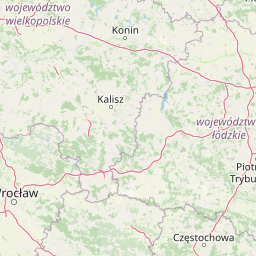
Map view of Babski Las Nature Reserve

Use this park location map to pinpoint Babski Las Nature Reserve in Poland, understand its exact geographic position, and read its mapped placement within the surrounding landscape more clearly.

Pigeon | © OpenStreetMap contributors

Location context for Babski Las Nature Reserve

Silesian Voivodeship
Park atlas

Compare adjacent woodland reserves and regional geography across the Częstochowa Upland

Explore Parks Near Babski Las Nature Reserve and Surrounding Protected Landscapes

Browse protected areas and forest reserves near Babski Las Nature Reserve to examine connected woodland ecosystems and regional limestone terrain. Comparing adjacent protected landscapes reveals broader patterns in regional forest composition and habitat distribution.
Protected areaSilesian Voivodeship
About 12 km away#1 closest

South

Ostoja Złotopotocka: Mapping the Protected Habitats and Limestone Geography of Silesian Voivodeship

Natura 2000 protected zone in southern Poland

Ostoja Złotopotocka encompasses a rich mosaic of natural habitats across the Częstochowa Upland. From the calcareous rock faces and deep karst caves to the expansive beechwood forests and inland sand dunes, this area serves as a primary site for ecological conservation. Use this resource to understand the complex terrain, boundary layout, and structural diversity that define this protected landscape within the Polish region.

Area
27.48 km²
Relief
Upland
Climate
Temperate
Access
Access unknown
A soft watercolor painting of a rolling landscape featuring light-colored limestone cliffs, green hills, and a winding path, rendered in pale pastel tones.
Nature reserveSilesian Voivodeship
About 13 km away#2 closest

Southwest

Ostoja Olsztyńsko-Mirowska: A Detailed Map and Geographic Overview of the Protected Reserve

Karst limestone formations and diverse forest habitats in Silesian Voivodeship.

Ostoja Olsztyńsko-Mirowska stands as a centerpiece of the Częstochowa Upland, characterized by its dramatic mogotes, caves, and sheltered xerothermic grasslands. This atlas-focused entry details the area's topographic complexity, ranging from the wooded ridges of Sokole Góry to the historic limestone spurs housing medieval ruins. Uncover the ecological dynamics of this protected landscape where beech forest stands and rare cave systems form a critical regional biodiversity network.

Area
22.109 km²
Established
2008
Relief
Upland
Climate
Temperate
A soft watercolor painting of a wide, rolling landscape with green hills, patches of trees, and subtle pink ground tones.
Protected areaPoland
About 15 km away#3 closest

West

Przełom Warty koło Mstowa: Mapping the Protected River Corridor and Limestone Geography

A critical geological breakthrough in the Częstochowa Upland.

This protected area features a twelve kilometer river gorge carved by the Warta. The terrain is characterized by dramatic limestone outcrops such as the Brama Mirowska, paired with rich meadow habitats and oak hornbeam forests. Explore the intersection of geology and conservation within this key corridor of the Polish Jura, where river dynamics meet ancient upland landscapes.

Relief
Upland
Climate
Temperate
Scope
Terrestrial
Water
Major water bodies
Nature reserveŁódź Voivodeship
About 16 km away#4 closest

North

Rezerwat przyrody Bagno w Ewinie: Peatland Geography and Protected Landscape Context

Nature reserve in Łódź Voivodeship, Poland

Rezerwat przyrody Bagno w Ewinie preserves a compact but essential series of high bog and transitional mire ecosystems. Situated in the gently rolling hills of the Wzgórza Radomszczańskie, this nature reserve showcases specialized flora such as the royal fern and provides a clear look at the structural diversity of central Polish protected lands.

Area
0.208 km²
Established
2024
Relief
Lowland
Climate
Temperate
Watercolor painting of pale limestone rock formations with small cave openings and green vegetation on a soft, light background.
Nature reserveSilesian Voivodeship
About 20 km away#5 closest

South

Ostoja Kroczycka Nature Reserve: Geological Formations and Protected Habitat Mapping

Karst limestone landscapes in the Częstochowa Upland

A core component of the Natura 2000 network, Ostoja Kroczycka concentrates four dramatic limestone ranges into a single conservation landscape. The area combines vertical rock towers, subterranean hibernacula for bats, and fragmented forest patches, serving as a primary site for understanding the geological and ecological mosaic of the Polish upland region.

Area
13.912 km²
Established
2011
Relief
Upland
Climate
Temperate
Nature reserveŁódzkie Voivodeship
About 21 km away#6 closest

Northeast

Dębowiec Nature Reserve: Protected Forest Landscapes and Geography in Łódzkie Voivodeship

Deciduous woodland conservation and regional lowland forest terrain

Spanning over 200 hectares within the Niecka Włoszczowska region, Dębowiec Nature Reserve protects a diverse range of lowland oak-hornbeam and ash-elm riparian forest ecosystems. This important conservation site hosts approximately 355 recorded plant species, serving as a primary reference for the native deciduous woodland character of central Poland.

Area
2.059 km²
Established
1965
Relief
Lowland
Climate
Temperate
A watercolor painting showing a soft landscape with green fields, a cluster of trees, and a small lookout tower against a plain white background.
Nature reserveŚląskie
About 40 km away#7 closest

West

Dębowa Góra Nature Reserve: Geographic Profile of an Urban-Adjacent Protected Forest

Preserving ancient mixed woodland in the Śląskie Voivodeship

Located in the town of Kłobuck, Dębowa Góra serves as a critical nature reserve shielding a fragmented but authentic relic of old-growth oak and hornbeam forest. The site occupies the elevated topography of the Wieluńska Upland, providing an important contrast to the surrounding industrial landscape through its ancient trees and protected understory vegetation.

Area
0.054 km²
Established
1953
Relief
Upland
Climate
Temperate
Nature reserveSilesian Voivodeship
About 41 km away#8 closest

South

Ostoja Środkowojurajska Nature Reserve: Protected Area Geography and Habitat Mapping

Regional karst terrain and protected beech forest mosaic

Analyze the geographic structure of Ostoja Środkowojurajska, a vital Natura 2000 site in the Silesian Voivodeship. This protected area features a unique concentration of inland dunes, rocky limestone outcrops, and multiple forest types. Explore the site to understand its role in regional conservation and its varied, karst-influenced physical geography.

Area
57.676 km²
Established
2009
Relief
Upland
Climate
Temperate

Common questions about visiting, size, designation, and location context for Babski Las Nature Reserve

Babski Las Nature Reserve FAQs for park facts, access, geography, and protected area context

Find quick answers about Babski Las Nature Reserve, including protected-area facts, park geography, trail and visitor context, and how the park fits into its surrounding country and regional landscape.
MoriAtlas Explorer

Continue Your Protected Areas Search Across the Global Atlas

Deepen your exploration by continuing the structured search for national parks and protected areas worldwide. Utilize the comprehensive filtering capabilities to compare different conservation landscapes and refine your understanding of global park geography. Discover more about the distribution and characteristics of protected natural areas.

Global natural geography