Mori Atlas logo
Nature reserveBagno Raczyk Nature Reserve

A compact sanctuary of spring-fed alder forests, peatland marshes, and riparian river corridors

Bagno Raczyk Nature Reserve: Mapped Protected Landscapes and Wetland Geography in Western Poland

(Rezerwat przyrody Bagno Raczyk)

Bagno Raczyk Nature Reserve serves as a strictly protected wetland refuge within the Pojezierze Wałeckie mesoregion of northwestern Poland. This 34-hectare landscape tracks the Cieszynka River as it flows into Lake Młyński Staw, creating a dense mosaic of sedge marshes, willow thickets, and groundwater-fed alder swamps. As a vital component of the broader Puszcza nad Drawą Protected Landscape Area, the reserve provides critical habitat for wetland-dependent bird species and riparian wildlife.

wetlandmarshreedbedalder swampriver corridorglacial lake

Bagno Raczyk Nature Reserve

Nature reserve

Park overview

Structured park overview, official facts, and landscape profile for Bagno Raczyk Nature Reserve

Bagno Raczyk Nature Reserve park facts, protected area profile, and essential visitor context

Review the core facts for Bagno Raczyk Nature Reserve, including designation, size, terrain, visitor scale, habitats, and operating context in one park-focused overview.

About Bagno Raczyk Nature Reserve

Bagno Raczyk Nature Reserve sits in the heart of the Drawa Forest landscape in northwestern Poland, a region shaped by glacial lakes, moraine hills, and extensive forests. The reserve itself is narrowly focused on wetlands, occupying two separate stretches of land on either side of the Cieszynka River where it flows toward Lake Młyński Staw. Despite its modest size of about 34 hectares, the area captures a complete sequence of wetland habitats, from open peat-forming marshes at the river mouth back into the spring mires and alder swamps that flank the stream further upstream.

The defining feature of the reserve is the intact mosaic of natural and semi-natural wetland vegetation. Sedge-dominated turf (turzycowiska), tall reedbeds (trzcinowiska), and low willow thickets (łozowiska) fringe the lake's edge, while along the Cieszynka River, the forest shifts into well-preserved source-mire alder woodlands (olsy źródliskowe) and flooded riparian forest (łęgi). The floating aquatic plant known as water soldier (osoka aloesowata) appears in the sheltered inlet of Lake Młyński Staw, adding a distinctive element to the aquatic flora.

Administratively, Bagno Raczyk operates under strict protection (ochrona ścisła), the highest level of nature conservation in Poland, prohibiting most forms of active management and restricting access to marked paths. Its location within the larger Puszcza nad Drawą Protected Landscape Area and its overlap with two Natura 2000 sites connect this small reserve to large-scale European networks of habitat and bird conservation. This layered protection underscores the site's value as both a regional wetland refuge and a contributor to continent-wide biodiversity goals.

Quick facts and research context for Bagno Raczyk Nature Reserve

Bagno Raczyk Nature Reserve is a small landscape-type nature reserve in West Pomeranian Voivodeship, Poland, covering approximately 34 hectares. It lies within the Człopa Forest District, in the Raczyk forestry division, and stretches in two separate sections along the Cieszynka River near its inflow into Lake Młyński Staw. The reserve falls inside the Puszcza nad Drawą Protected Landscape Area and overlaps with two Natura 2000 sites: the Special Area of Conservation 'Uroczyska Puszczy Drawskiej' (PLH320046) and the Special Protection Area 'Lasy Puszczy nad Drawą' (PLB320016).

Protection and recognition

Examine official designation history and recognized conservation frameworks for Bagno Raczyk Nature Reserve.

Bagno Raczyk Nature Reserve Protection Status and Governance Records

Bagno Raczyk Nature Reserve maintains verified records detailing its established protection status and management scope. Official conservation frameworks and administrative data provide structured context for exploring the reserve.

Protection details

Transboundary protection
No
Park context

Deeper park guide and search-rich context for Bagno Raczyk Nature Reserve

Bagno Raczyk Nature Reserve history, landscape, wildlife, and travel context

Explore Bagno Raczyk Nature Reserve through its history, landscape character, ecosystems, wildlife, conservation priorities, cultural context, and seasonal travel timing in a structured park guide built for atlas discovery and search intent.

Why Bagno Raczyk Nature Reserve stands out

Bagno Raczyk is best known as a compact but ecologically rich wetland complex where sedge marshes, reed beds, willow scrub, and spring-fed alder forests meet the mouth of the Cieszynka River. The reserve is particularly recognized for its breeding bird community, which mixes waterbirds such as cranes, grebes, swans, and goldeneyes with specialized reedbed songbirds, all concentrated in a relatively small strictly protected area. The combination of peatland vegetation, pristine alder sources, and a sheltered inlet of a glacial lake gives the site a strongly defined wetland character unusual at this scale in the region.

Bagno Raczyk Nature Reserve history and protected-area timeline

The area that is now Bagno Raczyk Nature Reserve was first given formal ecological recognition in 1995, when it was designated as an ecological use area (użytek ekologiczny), a lighter form of protection used in Poland for ecologically valuable smaller sites.

In 2010, the Regional Director for Environmental Protection in Szczecin initiated proceedings to grant the site stronger and more permanent protection as a full landscape nature reserve. This process culminated on 24 November 2011, when the reserve was officially established under Order No. 37/2010 of the Regional Director for Environmental Protection in Szczecin, dated 4 May 2011, and published in the official journal of the West Pomeranian Voivodeship (Dz. Urz. Woj. Zach. 2011, No. 128, item 2329). With that designation, the area moved from a passive-use ecological designation into a strictly protected nature reserve, considerably raising the level of legal protection over the wetland and its surroundings.

Bagno Raczyk Nature Reserve landscape and geographic character

The landscape of Bagno Raczyk is dominated by flat, waterlogged terrain at the transition between a glacial lake and a lowland river system. The reserve follows the Cieszynka River along the northern edge of Lake Młyński Staw (Jezioro Młyńskie Wielkie) and includes a sheltered inlet of the lake where the river slows and spreads out.

Two visually distinct but ecologically connected zones make up the area. Near the lake, the ground is soft and open, shaped by mats of sedges, reeds, and low willows that form a marshy fringe. Further upstream, the river corridor narrows into spring-fed woodlands, where the terrain rises slightly into hummocks of alder and flooded lowland forest. The broader regional setting belongs to the Pojezierze Wałeckie mesoregion, a post-glacial landscape of lakes, morainic hills, and extensive forests that frames the small wetland in a much larger natural mosaic.

The overall impression is of a quiet, water-dominated landscape where open water, peat-forming marsh, and damp forest stand in close juxtaposition. A walking trail has been laid out around the reserve, allowing visitors to experience this sequence of wetland habitats without disturbing the sensitive interior of the protected area.

Bagno Raczyk Nature Reserve ecosystems, habitats, and plant life

Bagno Raczyk protects a fine-grained mosaic of natural and semi-natural wetland communities rather than a single dominant habitat type. Near the mouth of the Cieszynka River into Lake Młyński Staw, the vegetation is shaped by open water and shallow peat-forming conditions: dense stands of sedges (turzyce), tall reeds (trzcina), and bushy willows (wierzby) create a layered marsh plant community that grades gradually from open water into shrubby wetland.

Along the river's upstream course, the habitat shifts into wooded wetland. Source-mire alder forests (olsy źródliskowe) and lowland riparian forests (łęgi) line the springs and seepage zones that feed the Cieszynka, relying on constant groundwater discharge. These forests remain in good natural condition and contribute to the hydrological stability of the whole wetland system. In the lake's sheltered bay, the floating species water soldier (osoka aloesowata) can be found, adding an unusual aquatic element to the site's flora.

Ecologically, the reserve functions as a linkage between aquatic, marsh, and swamp-forest environments. The combination of relatively undisturbed hydrology, varied microtopography, and strict protection allows rare and sensitive wetland communities to persist in a region where similar habitats are increasingly affected by drainage and forestry.

Bagno Raczyk Nature Reserve wildlife and species highlights

Bagno Raczyk is most notable for its rich birdlife, which reflects the diversity of wetland habitats concentrated within the small protected area. The reserve supports breeding populations of several waterbird and marshbird species, including the common crane (żuraw), grebes (perkoz), the Eurasian bittern (bąk), the mute swan (łabędź niemy), the common teal (cyraneczka), and the common goldeneye (gągoł).

A distinctive feature of the site's bird community is the presence of several specialized reedbed songbirds, which depend on tall and dense marsh vegetation. Among these are the great reed warbler (trzciniak), the Eurasian reed warbler (trzcinniczek), the Savi's warbler (brzęczka), and the aquatic warbler (strumieniówka). These species indicate that the reserve's reedbeds and sedge mats maintain the structural complexity and quiet conditions required by reed-nesting wetland passerines.

Beyond birds, the reserve is also inhabited by the European beaver (bóbr europejski), a mammal closely tied to slow-moving rivers, lake margins, and wooded wetlands. The presence of beaver activity is itself an indicator of the reserve's intact riparian environment.

The site's overlap with the Natura 2000 bird area 'Lasy Puszczy nad Drawą' (PLB320016) underscores the regional importance of this small reserve for bird conservation, providing habitat and breeding sites within a much larger forest and wetland landscape.

Bagno Raczyk Nature Reserve conservation status and protection priorities

Bagno Raczyk operates under the highest level of nature protection available in Poland: strict protection (ochrona ścisła). Within the reserve, most forms of active intervention, including forestry, hunting, and significant land-use changes, are prohibited, and the primary management goal is the preservation of existing natural processes and habitat structures.

The reserve's conservation significance is reinforced by its position within an overlapping network of larger protected and recognized areas. It lies entirely inside the Puszcza nad Drawą Protected Landscape Area, a regional designation that limits development across a broad surrounding forest landscape. It also falls partially within two Natura 2000 sites: the Special Area of Conservation 'Uroczyska Puszczy Drawskiej' (PLH320046), which protects habitat types listed under the EU Habitats Directive, and the Special Protection Area 'Lasy Puszczy nad Drawą' (PLB320016), which protects birds listed under the EU Birds Directive.

Together, these layered designations connect Bagno Raczyk to international conservation frameworks. The reserve functions as a local stronghold for wetland habitats and species in a wider landscape where lakes, peatlands, and forests still form a coherent ecological mosaic, contributing to the long-term persistence of marsh and swamp habitats in northwestern Poland.

Top sights and standout views in Bagno Raczyk Nature Reserve

A strictly protected wetland reserve built around the meeting point of the Cieszynka River and Lake Młyński Staw, Bagno Raczyk concentrates a remarkable variety of marsh, reedbed, willow scrub, and alder swamp habitats into a compact area of roughly 34 hectares. Its nesting community of cranes, grebes, swans, goldeneyes, bitterns, and several reedbed warblers gives the reserve an unusually strong birdlife profile for its size.

The reserve's position inside the Puszcza nad Drawą Protected Landscape Area and its overlap with two Natura 2000 sites tie this small site to a much larger forest and wetland system in the Drawsko region. Strict legal protection, a network of small clearwater habitats, and the presence of beavers make it a compact but clearly defined stronghold of wetland biodiversity in northwestern Poland.

Best time to visit Bagno Raczyk Nature Reserve

As a wetland reserve with most of its interest tied to breeding birds and seasonal water levels, Bagno Raczyk is best appreciated during the late spring and early summer months, when reeds and sedges are in full growth, water levels are stable, and nesting waterbirds and reedbed warblers can be heard throughout the area.

Wetland landscapes also take on a distinct character in autumn, when migratory waterfowl and cranes pass through or pause in the area, and in winter, when frozen marshland and snow-covered alder woods create a quieter but still visually distinctive atmosphere. Visitors at any season will encounter a calm, water-dominated environment, with a marked walking trail around the reserve providing the main access route.
Monthly climate preview

Long-term representative point measurements tracking monthly temperature and precipitation rhythm

Bagno Raczyk Nature Reserve Climate Normals and Annual Weather Patterns

Representative coordinate records show measured monthly temperature ranges alongside daily precipitation averages across twelve distinct periods. Examining the complete climate profile reveals detailed thermal shifts and moisture patterns recorded for this protected area.
Annual mean9 °C
-2 °C19 °C
Jan-2°
Feb-1°
Mar
Apr
May14°
Jun17°
Jul19°
Aug19°
Sep14°
Oct
Nov
Dec-1°
Warmest month
July

19.4 °C

Coolest month
January

-2.1 °C

Wettest month
July

2.5 mm/day

Driest month
April

1.1 mm/day

Park location guide

Geography guide, regional context, and park location map for Bagno Raczyk Nature Reserve

Bagno Raczyk Nature Reserve park geography, regions, and map view in Poland

Understand where Bagno Raczyk Nature Reserve sits in Poland through a broader geographic reading of the surrounding landscape, nearby location context, and its mapped position within the national park landscape.

How Bagno Raczyk Nature Reserve fits into Poland

Poland, officially the Republic of Poland, is a Central European country spanning from the Baltic Sea in the north to the Carpathian Mountains in the south. It borders Germany, Czech Republic, Slovakia, Ukraine, Belarus, Lithuania, and Kaliningrad Oblast. The country has a temperate climate, diverse landscapes, and is known for its rich history, cultural heritage, and strong economic position within the EU.

Wider geography shaping Bagno Raczyk Nature Reserve in Poland

Poland occupies 312,696 km2 in Central Europe, extending from the Baltic Sea coast in the north to the Sudetes and Carpathian Mountains in the south. It borders Germany to the west, Czech Republic and Slovakia to the south, Ukraine and Belarus to the east, and Lithuania and Kaliningrad Oblast to the northeast. The landscape includes lowland plains, uplands, and mountain ranges.

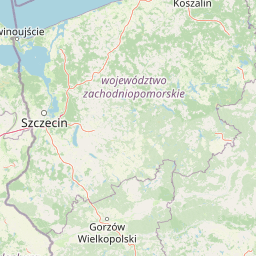
Map view of Bagno Raczyk Nature Reserve

Use this park location map to pinpoint Bagno Raczyk Nature Reserve in Poland, understand its exact geographic position, and read its mapped placement within the surrounding landscape more clearly.

Pigeon | © OpenStreetMap contributors

Location context for Bagno Raczyk Nature Reserve

Zachodniopomorskie Voivodeship
Park atlas

Compare adjacent wetland reserves, river corridors, and regional forest ecosystems

Parks Near Bagno Raczyk Nature Reserve and Surrounding Protected Landscapes

Browse other protected areas near Bagno Raczyk Nature Reserve to compare regional wetland habitats and lowland river corridors. Extending geographic exploration across the surrounding lake district reveals broader conservation networks and connected forest ecosystems.
Watercolor painting depicting a river flowing through a forested landscape with hills in the background
National parkWest Pomeranian Voivodeship
About 9.1 km away#1 closest

West

Drawa National Park: Protected Landscape and River Geography in West Pomeranian Voivodeship

Explore Poland's unique lowland river and ancient forest protected area.

Drawa National Park stands as a vital protected area within West Pomeranian Voivodeship, Poland, celebrated for its exceptional natural geography. The park's core feature is the Drawa River, which carves a distinctive path with fast-flowing currents and deep valleys, presenting a landscape more akin to mountain streams than typical lowland waterways. This area protects one of Poland's most valuable lowland river corridors, featuring ancient beech and oak forests, the rare meromictic Lake Czarne, and diverse wetland habitats. MoriAtlas facilitates structured exploration of Drawa National Park's mapped terrain and protected landscape identity.

Area
115.36 km²
Established
1990
IUCN
II
Visitors
27K annual
A watercolor painting of a serene river valley with soft green forest hills in the distance and muted pink reflections on the water.
National parkPoland
About 9.1 km away#2 closest

West

Drawieński Park Narodowy: Mapping Protected Lowland Forests and Glacial Lake Networks in Poland

Regional geography and protected terrain analysis

An authoritative overview of Drawieński Park Narodowy, covering the postglacial landforms of the Równina Drawska, the unique hydrology of its river-fed lake chains, and the ecological importance of its extensive mature beech forests. This resource provides a clear understanding of the park's boundaries, riparian corridors, and the specific terrain features that define its character within the Polish landscape.

Area
115.36 km²
Established
1990
Visitors
27K annual
Relief
Lowland
Nature reserveZachodniopomorskie
About 12 km away#3 closest

North

Mszary Tuczyńskie Nature Reserve: Protected Peatland and Grassland Landscape in Poland

A rare habitat mosaic within the Zachodniopomorskie protected region

Mszary Tuczyńskie protects a highly varied mosaic of wetland, meadow, and xerothermic grassland habitats concentrated within a small area near Lake Tuczno. This nature reserve functions as a critical component of the regional conservation network, offering a concentrated look at spring fed calcareous peatlands and specialized orchid populations common to this specific lowland geography.

Area
0.072 km²
Established
1988
Relief
Lowland
Scope
Terrestrial
Nature reserveZachodniopomorskie Voivodeship
About 15 km away#4 closest

Northeast

Rezerwat przyrody Mokradła koło Leśniczówki Łowiska: Protected Landscapes and Map Geography

A nature reserve located in the West Pomeranian Voivodeship

Located in the heart of the Wałeckie Lake District, this nature reserve is a concentration of transitional bogs and dystrophic lakes. The site remains a critical node in the Drawa River basin, serving as a protected landscape for rare bog mosses and peat forming processes framed by mature pine stands. Explore the mapped boundaries and natural terrain of this unique ecological refuge.

Area
1.018 km²
Established
2011
Relief
Lowland
Climate
Temperate
Nature reserveLubusz Voivodeship
About 39 km away#5 closest

Southwest

Rezerwat przyrody Mszar Przygiełkowy, Długie im. Huberta Jurczyszyna Nature Reserve

Protected peatland and raised bog landscape in Lubusz Voivodeship

This nature reserve in western Poland serves as a crucial reference site for peatland ecology, showcasing diverse raised and transitional bog habitats. Learn about the reserve's protected botanical landscape, the role of Rhynchospora alba in its ecosystem, and its regional position within the wider forest network of the Lubusz Voivodeship.

Area
0.078 km²
Established
2009
Relief
Lowland
Scope
Terrestrial
Nature reserveLubusz Voivodeship
About 41 km away#6 closest

Southwest

Rezerwat przyrody Mszar Rosiczkowy koło Rokitna: Protected Peatland and Bog Geography

Nature reserve terrain and regional ecological context

This protected area in the Lubusz Voivodeship features a diverse mosaic of raised bog sub habitats. The site is characterized by carnivorous sundew populations and open Scots pine stands rooted in acidic peat, offering a concentrated look at the unique post glacial landscape features found throughout western Poland.

Area
0.034 km²
Established
2009
Water
Major water bodies
Nature reserveZachodniopomorskie
About 43 km away#7 closest

Northeast

Rezerwat przyrody Dolina Rurzycy: Mapped Geography and Protected Area Data

A glacial river valley reserve in the West Pomeranian landscape

Trace the ecological profile of Rezerwat przyrody Dolina Rurzycy. This entry provides map-based context for its deeply incised river valley, interconnected glacial lake chain, and rare calcareous spring communities within the Wałcz Forests region.

Area
5.547 km²
Established
2005
Relief
Upland
Climate
Temperate
A watercolor painting of a serene landscape with soft green hills and distant mountains.
Nature reserveGreater Poland Voivodeship
About 45 km away#8 closest

Northeast

Rezerwat przyrody Diabli Skok: Protected Forest and Glacial Ravine Geography

A sheltered microclimate and moraine reserve in Greater Poland.

Rezerwat przyrody Diabli Skok protects a sharp, deeply incised gorge that contrasts with the surrounding flat glacial plains. This site is defined by its old-growth beech woodland and numerous groundwater springs, providing a critical habitat for diverse plant species and montane moss communities within the regional geography of the Greater Poland Voivodeship.

Area
0.21 km²
Established
1961
Relief
Upland
Climate
Temperate

Common questions about visiting, size, designation, and location context for Bagno Raczyk Nature Reserve

Bagno Raczyk Nature Reserve FAQs for park facts, access, geography, and protected area context

Find quick answers about Bagno Raczyk Nature Reserve, including protected-area facts, park geography, trail and visitor context, and how the park fits into its surrounding country and regional landscape.
MoriAtlas Explorer

Continue Your Protected Areas Search Across the Global Atlas

Deepen your exploration by continuing the structured search for national parks and protected areas worldwide. Utilize the comprehensive filtering capabilities to compare different conservation landscapes and refine your understanding of global park geography. Discover more about the distribution and characteristics of protected natural areas.

Global natural geography