

Mori Atlas logo
Protected landscapeBarlinecko-Gorzowski Park Krajobrazowy

Analyzing the geographic character of postglacial lake chains and lowland forest complexes

Barlinecko-Gorzowski Park Krajobrazowy: A Mapped Protected Landscape in Northwestern Poland

Barlinecko-Gorzowski Park Krajobrazowy represents a significant protected area within the northwestern lake districts of Poland. This region is defined by an expansive glacial outwash plain, where sandy ridges meet deep postglacial lake basins and peat-rich bog communities. The territory serves as a vital case study for understanding the complex interaction between ancient meltwater channels, forest woodland mosaics, and regional conservation history.

protected landscapelowland forestpostglacial landscapeglacial lakesoutwash plainpeatlands
A flat-style digital illustration depicting a valley flanked by steep, rocky mountains, with two cascading waterfalls, a river flowing in the foreground, and pine and deciduous trees.

Barlinecko-Gorzowski Park Krajobrazowy

Protected landscape

Park overview

Structured park overview, official facts, and landscape profile for Barlinecko-Gorzowski Landscape Park

Barlinecko-Gorzowski Landscape Park park facts, protected area profile, and essential visitor context

Review the core facts for Barlinecko-Gorzowski Landscape Park, including designation, size, terrain, visitor scale, habitats, and operating context in one park-focused overview.

About Barlinecko-Gorzowski Landscape Park

Barlinecko-Gorzowski Park Krajobrazowy was a major landscape-level protected area in northwestern Poland, established to conserve the natural values of the Barlinecka Forest (Puszcza Barlinecka), an extensive woodland that reaches well beyond the park boundaries. Although the forest complex is large, only about 40% of its area falls within the park, carefully chosen to be representative of the broader ecosystem. Forests cover roughly 81% of the park's area, with the remainder occupied by lakes, mires, river valleys, and small settlements.

The underlying terrain is a sandr, a flat but uneven outwash plain deposited by meltwater escaping from the retreating Scandinavian ice sheet around 12,000 years ago. This geological foundation has shaped a particular kind of landscape: pine- and mixed-forest-dominated plains interrupted by chains of kettle lakes, glacial tunnel valleys (rynny), and depressions filled with peatlands and bogs. The park sits at the meeting point of the Równina Gorzowska, Równina Pyrzycka, and Pojezierze Choszczeńskie mesoregions, all of which belong to the broader Pomeranian and Myślibórz lake districts.

In early 2021, the park was divided into two separate landscape parks: the Gorzowski Park Krajobrazowy in Lubusz Voivodeship and the Barlinecki Park Krajobrazowy in West Pomeranian Voivodeship. While that administrative history is integral to the park's identity, the ecological story it had protected since 1991 remains a defining part of its legacy in the Polish protected-area system.

Quick facts and research context for Barlinecko-Gorzowski Landscape Park

Barlinecko-Gorzowski Park Krajobrazowy was a Polish protected landscape area (park krajobrazowy) created on 23 October 1991 by regulation of the Wojewoda of Gorzów. It covered about 239.83 square kilometers, with an additional buffer zone (otulina) of around 317.68 square kilometers.

The park was located in northwestern Poland, spanning two voivodeships: West Pomeranian (communes of Barlinek, Pełczyce, and Nowogródek Pomorski) and Lubusz (communes of Kłodawa and Strzelce Krajeńskie). Its administrative seat was in Gorzów Wielkopolski. By early 2021 it had been dissolved and split into two successor landscape parks.

Protection and recognition

Documented terrestrial protection framework and administrative governance records

Barlinecko-Gorzowski Park Krajobrazowy Protection Status and Regional Scope

Barlinecko-Gorzowski Park Krajobrazowy maintains a documented terrestrial protection status with structured management scope and administrative records. Comprehensive conservation tracking details official designation frameworks and international recognition standards without speculative outcomes.

Protection details

Protection scope
Terrestrial
Transboundary protection
No
Buffer area
317.68 km²
Park context

Deeper park guide and search-rich context for Barlinecko-Gorzowski Landscape Park

Barlinecko-Gorzowski Landscape Park history, landscape, wildlife, and travel context

Explore Barlinecko-Gorzowski Landscape Park through its history, landscape character, ecosystems, wildlife, conservation priorities, cultural context, and seasonal travel timing in a structured park guide built for atlas discovery and search intent.

Why Barlinecko-Gorzowski Landscape Park stands out

The park is best known for protecting a representative slice of Puszcza Barlinecka, a vast forested complex lying on a glacial outwash plain dotted with lakes and bog communities. Its character is defined by extensive lowland woodland, postglacial lake chains, meltwater channels, and ecologically valuable mire and peatland formations.
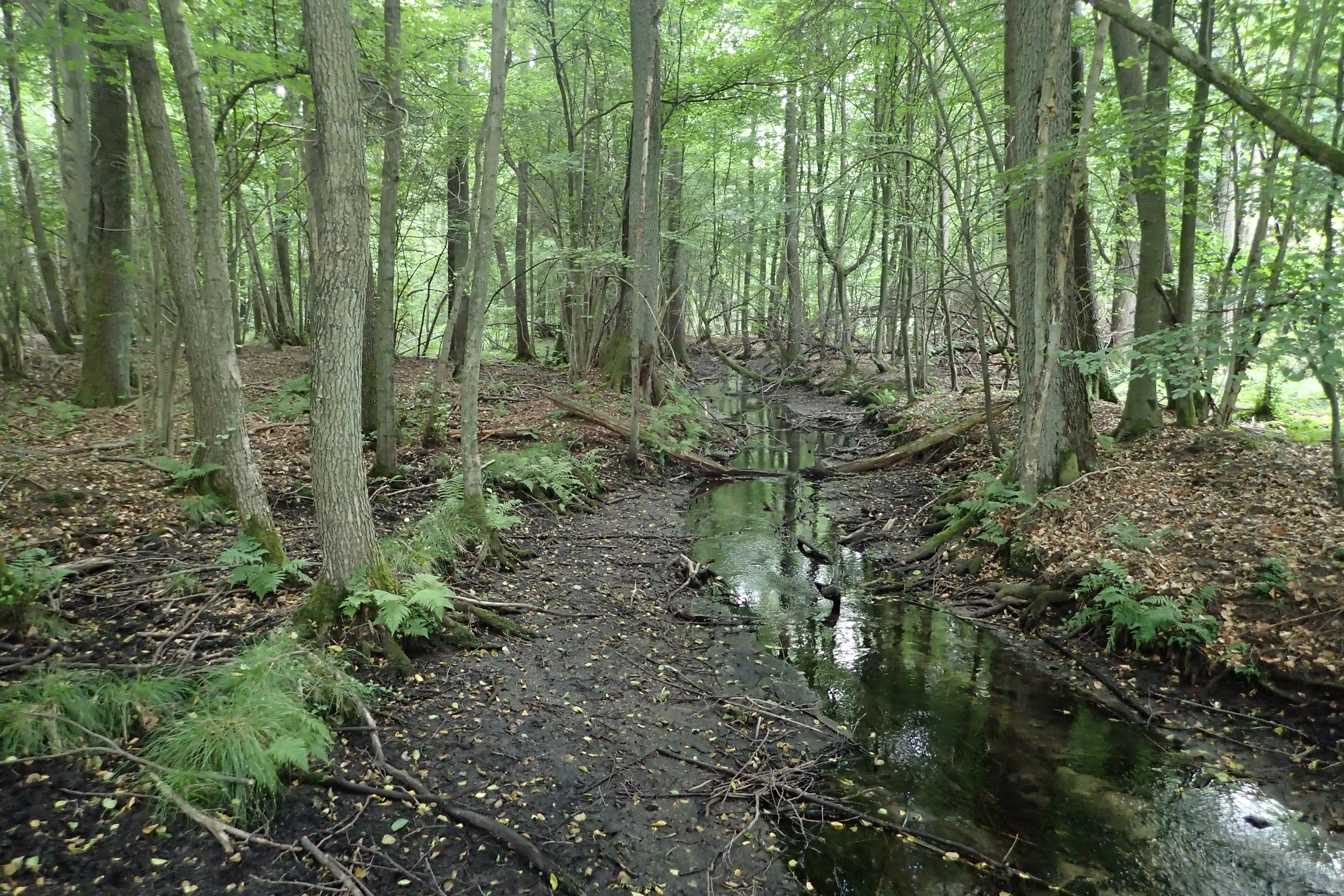
A small, narrow stream flows through a lush, deciduous forest with mossy ground and fallen branches in the Przyłężek Nature Reserve.
A shaded stream winding through the dense forest of the Przyłężek Nature Reserve.

Barlinecko-Gorzowski Landscape Park history and protected-area timeline

The park was established on 23 October 1991 through Regulation No. 27 of the Wojewoda of Gorzów, which also approved the original conservation plan for the area. Its creation reflected the broader late-20th-century expansion of Poland's network of landscape parks, intended to protect large, ecologically valuable rural landscapes that combine forests, lakes, cultural heritage, and traditional land use.

The legal foundation of the park was amended several times in the following years. In 1996, a new regulation of the Wojewoda of Gorzów updated the original framework, and in 2006 separate regulations from the Wojewoda of Lubusz (February) and the Wojewoda of West Pomeranian Voivodeship (July) reconfirmed the park's status under the new administrative division of Poland that followed voivodeship reforms. In this way the same park continued across two voivodeships under coordinated regional regulation.

By the early 2020s, after nearly three decades of continuous protection, the landscape park was dissolved and reorganized. At the beginning of 2021, the territory was split into two successor landscape parks: Gorzowski Park Krajobrazowy in Lubusz Voivodeship and Barlinecki Park Krajobrazowy in West Pomeranian Voivodeship. The original legal entity, Barlinecko-Gorzowski Park Krajobrazowy, ceased to exist, although the natural values it had protected continued under the two new parks.

Barlinecko-Gorzowski Landscape Park landscape and geographic character

The dominant landscape of the park is a gentle, forested plain laid down by glacial meltwater. The substrate is a sandr, an outwash plain built from sand and gravel deposited as the ice sheet retreated at the end of the last glaciation. Although visually flat at first glance, the surface is broken by long, curving tunnel valleys (rynnowe ciągi) and shallow kettle-like depressions, which create the conditions for lakes, bogs, and damp forest hollows.

Within this framework, the park contains 75 lakes larger than one hectare, scattered across the terrain and in places linking up with rivers to form chains of basins along former meltwater routes. The largest, Lake Barlineckie, covers about 268 hectares, followed by Lake Dankowskie at around 82 hectares. These lakes, combined with pine-dominated sandy ridges and boggy hollows, give the park its characteristic northwestern Polish lake-district scenery.

The result is a landscape that is neither mountainous nor dramatic but quietly varied: wide stretches of forest interspersed with glittering water surfaces, peat-stained hollows, and the low, rolling relief typical of the postglacial plains of West Pomerania and Lubusz.

Barlinecko-Gorzowski Landscape Park ecosystems, habitats, and plant life

Ecologically, the park belongs to the postglacial lowland forest and lake landscape of northwestern Poland, dominated by coniferous and mixed woodland on sandy outwash soils. Forests of various types occupy roughly 81% of the area, while the remainder is given over to open water, peatlands, river valleys, and small rural enclaves. The vegetation combines acidophilous pine woods on the dry sandr surface with wet alder and birch communities in the depressions, producing a fine-grained mosaic of habitats over short distances.

The park has been documented as supporting around 700 species of vascular plants, about 140 species of lichens, and more than 100 breeding bird species, indicating a high level of biodiversity for a lowland, sandy-substrate landscape. Strictly protected plants include round-leaved sundew, common columbine, common polypody, cowslip, hepatica, and snowdrop, while partially protected species include bog bean, yellow water-lily, and white water-lily. Bogs, peatlands, and mire communities are particularly notable and contribute significantly to the area's botanical distinctiveness.

Barlinecko-Gorzowski Landscape Park wildlife and species highlights

The lake-rich, forested mosaic of the park provides habitat for a wide range of fauna typical of the Polish lowlands, including white-tailed eagles (bielik) among its notable large birds. Birdlife is particularly rich because of the combination of mature forest, lake shores, peatlands, and quieter river corridors, and the park has been recorded as supporting more than 100 breeding bird species.

In October 2011, the Polish Society for the Conservation of Nature "Salamandra" launched a three-year reintroduction project for the edible dormouse, aiming to restore this small mammal to the forests of the park. The project underlined the park's role not only as a refuge for existing native fauna but also as a site for active conservation and recovery of species that had disappeared from the local landscape.

Barlinecko-Gorzowski Landscape Park conservation status and protection priorities

The park protected a representative portion of a much larger lowland forest complex and a chain of postglacial lakes and mires, contributing meaningfully to the connectivity of natural habitats in northwestern Poland. Five nature reserves were established within its boundaries: Dębina, Rzeka Przyłężek, Wilanów, Markowe Błota, and Skalisty Jar Libberta, each safeguarding specific features such as old-growth forest, riverine habitats, peatlands, or rocky ravine geology.

Conservation efforts extended beyond passive protection. The dormouse reintroduction project between 2011 and 2014 demonstrated a more active management approach, and the network of natural monuments (41 trees, plus non-living monuments including an erratic boulder, rocks, and a spring known as Boży Dar) provided additional small-scale protection for individual features of natural value. Together with its surrounding buffer zone, the park formed an important regional node for habitat and species conservation in the West Pomeranian and Lubusz lake districts.

Barlinecko-Gorzowski Landscape Park cultural meaning and human context

Although the source material emphasizes natural values, the park also contained elements of material cultural heritage in the form of individual historic structures, manor and park complexes, and entire village layouts. These features tied the protected landscape to a longer history of human settlement and land use within the forest.

In Lubociesz (Lipy), the park hosted a "Leśna Stacja Dydaktyczna" (Forest Educational Station) that served as a center for nature education, indicating the park's role in public engagement with the natural and cultural landscape of Puszcza Barlinecka.

Top sights and standout views in Barlinecko-Gorzowski Landscape Park

The park's strongest identity lies in its combination of extensive lowland forest, postglacial lakes, and peatland complexes set on a glacial outwash plain. Five nature reserves gave added protection to particularly valuable forest, river, bog, and gorge habitats, while a buffer zone and natural monuments extended conservation attention to the wider landscape.

Supporting infrastructure such as the Forest Educational Station, along with active conservation initiatives like the edible dormouse reintroduction, made the park not only a place of preservation but also a setting for public learning and species recovery. Its division in 2021 marked the administrative end of the original landscape park, but the ecological mosaic it protected continues under two successor parks.

Best time to visit Barlinecko-Gorzowski Landscape Park

The park lies in the temperate lowland climate zone of northwestern Poland, where late spring and early summer tend to bring the richest vegetation, blooming mire flora, and active birdlife, while early autumn offers warm colors across the mixed forests and quieter conditions along the lakes. Winter brings a quieter, more austere atmosphere with frozen or partially frozen lakes and snow-covered pine forest. Visitors interested in birdwatching, peatland plants, or forest trekking typically find the warmer halves of the year most rewarding, though the park's scenery is appealing in any season.
Monthly climate preview

Long-term monthly climate rhythms recorded at a representative coordinate baseline

Barlinecko-Gorzowski Park Krajobrazowy Average Temperature and Precipitation Normals

Barlinecko-Gorzowski Park Krajobrazowy experiences a measured annual thermal cycle ranging from winter sub-zero minimums to warm summer maximums alongside steady precipitation. Examining the complete monthly climate profile reveals detailed temperature shifts and precipitation distribution across the representative point.
Annual mean9 °C
-2 °C19 °C
Jan-2°
Feb
Mar
Apr
May14°
Jun17°
Jul19°
Aug19°
Sep14°
Oct
Nov
Dec
Warmest month
July

19.2 °C

Coolest month
January

-1.8 °C

Wettest month
July

2.5 mm/day

Driest month
April

1.1 mm/day

Park location guide

Geography guide, regional context, and park location map for Barlinecko-Gorzowski Landscape Park

Barlinecko-Gorzowski Landscape Park park geography, regions, and map view in Poland

Understand where Barlinecko-Gorzowski Landscape Park sits in Poland through a broader geographic reading of the surrounding landscape, nearby location context, and its mapped position within the national park landscape.

How Barlinecko-Gorzowski Landscape Park fits into Poland

Poland, officially the Republic of Poland, is a Central European country spanning from the Baltic Sea in the north to the Carpathian Mountains in the south. It borders Germany, Czech Republic, Slovakia, Ukraine, Belarus, Lithuania, and Kaliningrad Oblast. The country has a temperate climate, diverse landscapes, and is known for its rich history, cultural heritage, and strong economic position within the EU.

Wider geography shaping Barlinecko-Gorzowski Landscape Park in Poland

Poland occupies 312,696 km2 in Central Europe, extending from the Baltic Sea coast in the north to the Sudetes and Carpathian Mountains in the south. It borders Germany to the west, Czech Republic and Slovakia to the south, Ukraine and Belarus to the east, and Lithuania and Kaliningrad Oblast to the northeast. The landscape includes lowland plains, uplands, and mountain ranges.

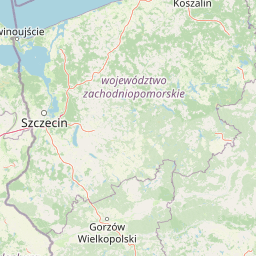
Map view of Barlinecko-Gorzowski Landscape Park

Use this park location map to pinpoint Barlinecko-Gorzowski Landscape Park in Poland, understand its exact geographic position, and read its mapped placement within the surrounding landscape more clearly.

Pigeon | © OpenStreetMap contributors

Location context for Barlinecko-Gorzowski Landscape Park

LubuskieZachodniopomorskie

Visual reference of lowland forests, postglacial lakes, and outwash plain terrain in Poland

Barlinecko-Gorzowski Park Krajobrazowy Photos, Landscapes, and Protected Scenery

Visual documentation captures the extensive lowland woodland, postglacial lake chains, and peatland habitats defining Barlinecko-Gorzowski Park Krajobrazowy. Field imagery reveals the quiet relief of sandy ridges, meltwater channels, and diverse wetland ecosystems across northwestern Poland.

A small, narrow stream flows through a lush, deciduous forest with mossy ground and fallen branches in the Przyłężek Nature Reserve.

Park atlas

Compare surrounding lowland forests and postglacial lake district reserves in northwestern Poland

Other Parks and Protected Areas Near Barlinecko-Gorzowski Park Krajobrazowy

Browsing other protected areas near Barlinecko-Gorzowski Park Krajobrazowy reveals broader regional forest ecosystems and postglacial lake chains. Extending geographic comparison across northwestern Poland uncovers connected lowland terrain and related conservation landscapes.
Nature reserveLubusz Voivodeship
Mapped location lies within the park boundary#1 closest

Southwest

Dębina Nature Reserve: An Oak-Hornbeam Woodland Sanctuary in Lubusz Voivodeship

Mapping the ecological heritage of Poland's lowland forest remnants

Dębina protects a compact, authentic fragment of deciduous forest, characterized by a mix of mature oak, hornbeam, and linden. This site acts as a living ecological reference point for the Równina Gorzowska region, showcasing the vertical stratification and ground-layer flora typical of undisturbed oak-hornbeam habitats. Access the geographic context and conservation data to better understand how this managed reserve preserves the woodland legacy of western Poland.

Area
0.122 km²
Established
1995
Relief
Lowland
Climate
Temperate
Nature reserveWest Pomeranian Voivodeship
About 2.8 km away#2 closest

West

Markowe Błota Nature Reserve: A Protected Wetland and Forest Landscape in West Pomeranian

Mapping bog ecosystems and glacial plain terrain in northwestern Poland

Markowe Błota Nature Reserve presents a concentrated mosaic of raised peat bogs and beech-dominated mixed forest. Situated within the Gorzów Plain, the reserve serves as a protected core of wetland and woodland within the larger Barlinecko-Gorzowski Landscape Park. This mapped region illustrates the diverse hydrological processes and ecological character found in the lowlands of northwestern Poland.

Area
0.927 km²
Established
1994
Relief
Lowland
Scope
Terrestrial
Watercolor illustration showing a winding river through a soft, green wetland landscape with distant rolling hills and scattered trees.
Protected areaLubusz Voivodeship
7.6 km away#3 closest

Southwest

Ostoja Witnicko-Dębniańska: Mapped Protected Area and Regional Geography

An extensive mosaic of lowland forest and wetland habitats in Poland

The Ostoja Witnicko-Dębniańska sanctuary serves as a critical protected landscape, defined by its blend of managed forest stands, transitional peatlands, and dystrophic lakes. Positioned along the Warta river valley, this area provides a rich geographic context for understanding the wetland ecosystems of the Lubusz Voivodeship and the surrounding western Polish lowlands.

Area
469.93 km²
Established
2007
Scope
Terrestrial
Water
Major water bodies
Nature reserveLubusz Voivodeship
About 13 km away#4 closest

East

Rezerwat przyrody Mszar Rosiczkowy koło Rokitna: Protected Peatland and Bog Geography

Nature reserve terrain and regional ecological context

This protected area in the Lubusz Voivodeship features a diverse mosaic of raised bog sub habitats. The site is characterized by carnivorous sundew populations and open Scots pine stands rooted in acidic peat, offering a concentrated look at the unique post glacial landscape features found throughout western Poland.

Area
0.034 km²
Established
2009
Water
Major water bodies
Nature reserveLubusz Voivodeship
About 14 km away#5 closest

East

Rezerwat przyrody Mszar Przygiełkowy, Długie im. Huberta Jurczyszyna Nature Reserve

Protected peatland and raised bog landscape in Lubusz Voivodeship

This nature reserve in western Poland serves as a crucial reference site for peatland ecology, showcasing diverse raised and transitional bog habitats. Learn about the reserve's protected botanical landscape, the role of Rhynchospora alba in its ecosystem, and its regional position within the wider forest network of the Lubusz Voivodeship.

Area
0.078 km²
Established
2009
Relief
Lowland
Scope
Terrestrial
Nature reserveLubusz Voivodeship
About 15 km away#6 closest

Southwest

Rezerwat przyrody Dębowa Góra: Protected Oak and Beech Woodland Geography in Lubusz Voivodeship

Analysis of a near-natural deciduous forest reserve in western Poland.

Rezerwat przyrody Dębowa Góra is a protected fragment of mature deciduous woodland located in Gorzów County. Its landscape preserves essential oak-lime-hornbeam forest stands, providing a glimpse into the natural lowland ecology of the Lubusz Voivodeship through structured active conservation and forest management.

Area
0.113 km²
Established
1995
Relief
Lowland
Climate
Temperate
Protected landscapePoland
21 km away#7 closest

Southwest

Park Krajobrazowy Ujście Warty: Protected Landscape and River Valley Atlas

Mapping wetland ecosystems and floodplain geography in western Poland

Park Krajobrazowy Ujście Warty preserves a significant lowland river valley landscape characterized by vast open pastures, marshes, and rare riparian oak forests. Located primarily within the Lubuskie region, this protected area offers a clear view into the floodplain processes of the Warta river basin, providing a distinct geographic context for wetland conservation and waterbird habitat mapping in Poland.

Area
194.96 km²
Established
1996
Relief
Lowland
Climate
Temperate
Nature reserveZachodniopomorskie
About 23 km away#8 closest

North

Dęby Sądowskie Nature Reserve: Ancient Woodland and Protected Geography in Poland

A rare old-growth forest refuge in the West Pomeranian landscape

Discover the ecological value of Dęby Sądowskie, a vital nature reserve in Poland known for its monumental pedunculate oaks and intact subatlantic forest communities. Located in the Choszczeńskie Lake District, this protected site serves as a crucial fragment of natural heritage within an intensively managed regional agricultural mosaic.

Area
0.031 km²
Established
1985
Relief
Lowland
Scope
Terrestrial

Common questions about visiting, size, designation, and location context for Barlinecko-Gorzowski Landscape Park

Barlinecko-Gorzowski Landscape Park FAQs for park facts, access, geography, and protected area context

Find quick answers about Barlinecko-Gorzowski Landscape Park, including protected-area facts, park geography, trail and visitor context, and how the park fits into its surrounding country and regional landscape.
MoriAtlas Explorer

Continue Your Protected Areas Search Across the Global Atlas

Deepen your exploration by continuing the structured search for national parks and protected areas worldwide. Utilize the comprehensive filtering capabilities to compare different conservation landscapes and refine your understanding of global park geography. Discover more about the distribution and characteristics of protected natural areas.

Global natural geography