

Mori Atlas logo
Nature reserveCarpenter Rocks Conservation Park

A vital nature reserve within the Limestone Coast region supporting endemic plant communities and bird populations

Carpenter Rocks Conservation Park: Mapping the Protected Flora and Woodland Habitat of South Australia

Located in the south-eastern corner of South Australia, Carpenter Rocks Conservation Park stands as a significant protected landscape within the Limestone Coast. The reserve functions as a specialized sanctuary for the Carpenter Rocks Manna Gum and provides essential habitat for threatened migratory bird species. By mapping its boundaries and ecological context, one can understand the importance of this small but ecologically dense woodland in broader conservation strategies.

Limestone CoastSouth Australiaconservation parkwoodland habitatendemic floraManna Gum

Carpenter Rocks Conservation Park

Nature reserve

Park overview

Structured park overview, official facts, and landscape profile for Carpenter Rocks Conservation Park

Carpenter Rocks Conservation Park park facts, protected area profile, and essential visitor context

Review the core facts for Carpenter Rocks Conservation Park, including designation, size, terrain, visitor scale, habitats, and operating context in one park-focused overview.

About Carpenter Rocks Conservation Park

Carpenter Rocks Conservation Park sits in the remote far south-east of South Australia, in an area shaped by the coastal landscapes of the Limestone Coast region. The park lies a short distance south-east of the tiny township of Carpenter Rocks, in a landscape where woodland, scrub, and proximity to the coast combine to create habitat conditions that are unusual at both state and national levels.

The reserve is small in extent, covering only a few dozen hectares, and it is not designed as a major visitor destination. Its purpose is tightly focused on conservation, particularly the long-term survival of plant species and vegetation communities that have very limited distributions. The most important of these is the Carpenter Rocks Manna Gum, a Manna Gum subspecies that appears to have a natural range almost entirely contained within the boundaries of the park and its immediate surroundings. This kind of restricted endemism makes the site irreplaceable for the survival of the subspecies.

Habitats within the park are also significant for wildlife beyond plants. The woodlands, open spaces, and coastal-adjacent environments provide seasonal and breeding habitat for several threatened animal species, most notably the Orange-bellied Parrot. As a result, the park contributes to national recovery efforts for a species whose survival is considered critically dependent on a small number of well-managed sites across southern Australia.

Because the park is managed under IUCN Category VI criteria, its protection framework recognises both biodiversity conservation and the sustainable use of natural resources, allowing traditional, low-intensity land uses to continue in the broader landscape where they do not conflict with conservation outcomes. Visitor numbers are extremely low, and the park functions primarily as a quiet conservation reserve rather than a recreational hub.

Quick facts and research context for Carpenter Rocks Conservation Park

Carpenter Rocks Conservation Park is a small IUCN Category VI protected area in South Australia, located about 370 kilometres south-east of Adelaide near the small township of Carpenter Rocks. It was proclaimed on 6 September 2001 under the National Parks and Wildlife Act 1972 to safeguard threatened plant species and vegetation communities. The park is managed by the South Australian Department for Environment and Water and covers only a few dozen hectares, but it has an importance well beyond its size.

Protection and recognition

Documented terrestrial protection scope and international recognition records

Carpenter Rocks Conservation Park Protection Status and Mapped Designation

Carpenter Rocks Conservation Park maintains a documented terrestrial protection scope within the regional conservation network. Structured records outline the official protected area designation and management framework for this location.

Protection details

Protection scope
Terrestrial
Transboundary protection
No
Park context

Deeper park guide and search-rich context for Carpenter Rocks Conservation Park

Carpenter Rocks Conservation Park history, landscape, wildlife, and travel context

Explore Carpenter Rocks Conservation Park through its history, landscape character, ecosystems, wildlife, conservation priorities, cultural context, and seasonal travel timing in a structured park guide built for atlas discovery and search intent.

Why Carpenter Rocks Conservation Park stands out

The conservation park is best known for protecting what is effectively the entire known population of the Carpenter Rocks Manna Gum, a distinctive form of Manna Gum that was described as a new subspecies around the time the park's protection was secured. It is equally known as one of the most important sites in South Australia for the Orange-bellied Parrot during the 1980s and early 1990s surveys, when the species was recorded there more consistently than anywhere else in the state. Together, these two conservation values, a taxonomically distinctive plant community and habitat for one of Australia's most threatened migratory parrots, define the park's identity and underpin its significance within South Australia's reserve system.

Carpenter Rocks Conservation Park history and protected-area timeline

Carpenter Rocks Conservation Park was formally proclaimed on 6 September 2001 under South Australia's National Parks and Wildlife Act 1972. Its establishment was driven by the recognition that the area supported both rare plant communities and important habitat for threatened fauna, particularly the Orange-bellied Parrot and the locally restricted Manna Gum subspecies associated with the site.

The timing of the proclamation coincided with a period of growing scientific attention to the region's flora. Field work in the years leading up to the park's protection had clarified that the Manna Gum population in the Carpenter Rocks area was taxonomically distinct, leading to its description as a separate subspecies. Protecting the land underpinning that population became a central reason for the reserve's creation.

The park has since been managed by the South Australian Department for Environment and Water as a Category VI protected area, balancing biodiversity conservation with the broader land-use context of the Limestone Coast. Although it receives very few visitors and attracts little public attention, it remains a strategically important piece of a wider conservation network aimed at preventing the loss of some of Australia's rarest species.

Carpenter Rocks Conservation Park landscape and geographic character

The park lies in the south-eastern part of South Australia, close to the coast of the Limestone Coast region, a landscape known for its underlying limestone geology, pockets of remnant native vegetation, and a mix of woodland, low scrub, and open ground. The coordinates of the reserve place it in terrain that sits between inland rural land and the coastal strip that defines this part of the state.

Near the small township of Carpenter Rocks, the surrounding environment retains patches of native vegetation that have been heavily cleared from much of the Limestone Coast over the past century, making surviving woodland blocks ecologically valuable. The park's small footprint reflects the highly localised distribution of the species and communities it was created to protect, rather than a large-scale landscape feature in its own right.

The broader regional landscape combines agricultural land, remnant bushland patches, and proximity to the Southern Ocean, creating conditions that range from sheltered inland sites to more exposed coastal environments. Within this context, the conservation park functions as a small but critical refuge where native plant communities and habitat structure have been maintained at levels that support threatened species.

Carpenter Rocks Conservation Park ecosystems, habitats, and plant life

Carpenter Rocks Conservation Park protects plant communities and habitat patches that are highly localised within South Australia. The park's vegetation includes populations of Manna Gum, including the distinctive Carpenter Rocks Manna Gum subspecies that is largely confined to the site. This subspecies is considered to be of national, state, and regional botanical significance because of its restricted range and the limited number of populations known to exist.

Beyond the Manna Gum stands, the vegetation in and around the park reflects the broader patterns of the south-eastern South Australian coastal hinterland, with a mix of eucalypt woodland elements and understorey species characteristic of the Limestone Coast. Because much of the surrounding region has been converted to agricultural use, the surviving native vegetation communities within the park have a disproportionate ecological value.

Habitat structure within the reserve, including the balance of trees, lower vegetation, and open areas, also creates conditions that are important for feeding and sheltering animals, particularly woodland and woodland-edge birds that rely on defined patches of intact habitat in an otherwise modified landscape.

Carpenter Rocks Conservation Park wildlife and species highlights

The wildlife values of Carpenter Rocks Conservation Park are dominated by its importance to the Orange-bellied Parrot, one of the most critically endangered bird species in Australia. During the 1980s and early 1990s, the Carpenter Rocks site recorded Orange-bellied Parrots more consistently than any other location in South Australia, giving the park an outsized role in regional monitoring and conservation planning for the species.

The park also provides habitat that supports other woodland-dependent fauna typical of remnant native vegetation in the south-east of the state, though its small size means that its wildlife significance is closely tied to the broader landscape context rather than to large populations resident within the park itself. The reserve functions as a key local refuge, contributing to habitat connectivity and reducing the risk of local extinctions for species that depend on remaining patches of native woodland.

Because of the park's proximity to the coast, the broader area also supports bird populations that move between inland habitats and coastal environments, further highlighting the park's role as part of a wider ecological network along the southern Australian coastline.

Carpenter Rocks Conservation Park conservation status and protection priorities

Carpenter Rocks Conservation Park was specifically established to protect threatened species and vegetation communities, and its conservation significance is far greater than its small area would suggest. The park safeguards a substantial part of the only known population of the Carpenter Rocks Manna Gum, a subspecies with an extremely restricted distribution. Without active protection of sites like this, such narrowly endemic taxa would face a high risk of extinction from habitat loss, fragmentation, or stochastic events.

The reserve also plays a meaningful role in the national recovery effort for the Orange-bellied Parrot, a species listed as critically endangered. Historical records from the site make it a reference location for the species' presence in South Australia, and the habitat it protects continues to contribute to broader strategies aimed at maintaining viable populations across the species' migratory range.

The park is managed under the National Parks and Wildlife Act 1972 by the Department for Environment and Water and is classified as an IUCN Category VI protected area. This framework recognises that conservation outcomes can be supported alongside appropriate sustainable use of natural resources, aligning the park's protection with the land-use patterns of the surrounding Limestone Coast region.

Top sights and standout views in Carpenter Rocks Conservation Park

The standout features of Carpenter Rocks Conservation Park revolve around two closely related conservation themes. First, the protection of the only known population of the Carpenter Rocks Manna Gum anchors the reserve's botanical significance and gives the park a clear identity as a refuge for a narrowly endemic plant subspecies.

Second, the park's role as one of the most reliable South Australian sites for the Orange-bellied Parrot during the 1980s and early 1990s gives it lasting importance within national efforts to recover this critically endangered species. Together, these qualities make a small park a meaningful contributor to both regional biodiversity protection and broader threatened-species recovery in Australia.

Best time to visit Carpenter Rocks Conservation Park

Visit timing for Carpenter Rocks Conservation Park is shaped less by mass tourism seasons and more by the mild coastal climate of South Australia's south-east. The cooler months of late autumn, winter, and early spring typically offer quieter conditions and are often associated with higher rainfall that supports greener vegetation and active birdlife, including potential seasonal presence of migratory species such as the Orange-bellied Parrot, which historically uses habitats in this part of the state during specific times of the year.

Summer can bring warmer and sometimes drier conditions, and the small size of the park means that visitors tend to favour cooler parts of the day for any outdoor time. Because the park receives very few visitors overall, the experience is generally quiet regardless of season, and timing decisions are best made around the specific reason for visiting, whether that is observing woodland birdlife, checking on flowering of the unique Manna Gum subspecies, or simply exploring the south-eastern South Australian coastline.
Monthly climate preview

Long-term representative point measurements tracking monthly temperature and precipitation rhythms in South Australia

Carpenter Rocks Conservation Park Climate Normals, Annual Temperature, and Monthly Precipitation

Carpenter Rocks Conservation Park exhibits measured long-term temperature ranges and monthly precipitation patterns sampled from representative coordinate data in South Australia. Accessing the comprehensive twelve-month profile allows detailed comparison of average minimum and maximum temperatures alongside shifting rainfall amounts across the year.
Annual mean14 °C
11 °C18 °C
Jan18°
Feb18°
Mar17°
Apr15°
May13°
Jun12°
Jul11°
Aug11°
Sep12°
Oct13°
Nov15°
Dec16°
Warmest month
February

18 °C

Coolest month
July

11 °C

Wettest month
July

3.1 mm/day

Driest month
February

0.9 mm/day

Park location guide

Geography guide, regional context, and park location map for Carpenter Rocks Conservation Park

Carpenter Rocks Conservation Park park geography, regions, and map view in Australia

Understand where Carpenter Rocks Conservation Park sits in Australia through a broader geographic reading of the surrounding landscape, nearby location context, and its mapped position within the national park landscape.

How Carpenter Rocks Conservation Park fits into Australia

Australia is a constitutional monarchy and federal parliamentary democracy comprising six states and ten territories. With a population of nearly 28 million, it is one of the world's most urbanised countries, with most people concentrated on the eastern seaboard. The country has a high Human Development Index and is known for its cultural diversity, ancient Aboriginal heritage, and unique wildlife.

Wider geography shaping Carpenter Rocks Conservation Park in Australia

Australia occupies the entire Australian continent, the island of Tasmania, and numerous smaller islands. It is the world's flattest and driest inhabited continent, featuring vast deserts in the interior (the Outback), tropical rainforests along the eastern coast, and a coastline bordering the Indian and Pacific Oceans.

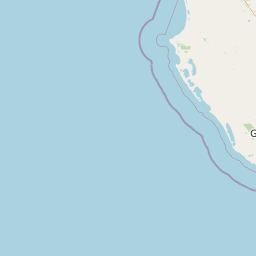
Map view of Carpenter Rocks Conservation Park

Use this park location map to pinpoint Carpenter Rocks Conservation Park in Australia, understand its exact geographic position, and read its mapped placement within the surrounding landscape more clearly.

Pigeon | © OpenStreetMap contributors

Location context for Carpenter Rocks Conservation Park

South Australia
Recorded earthquake history

Explore Historical Earthquake Records for Carpenter Rocks Conservation Park

Investigate the documented seismic history surrounding this South Australian conservation area. This database provides structured event information, including magnitudes and epicentre locations, to support a deeper understanding of local geographic and geophysical patterns as recorded in national datasets.

Carpenter Rocks Conservation Park Earthquake History

Catalogued events

2 events

Strongest magnitude

Magnitude 3.6

Most recent event

Jan 5, 2002

This history includes earthquakes recorded inside the park or within 50 km of its borders

Park atlas

Compare adjacent woodland habitats, limestone terrain, and regional South Australian reserves.

Other Parks Near Carpenter Rocks Conservation Park and Surrounding Coastal Protected Areas

Expand your geographic comparison by browsing other protected areas located near Carpenter Rocks Conservation Park. Evaluating adjacent regional reserves provides broader context on the limestone terrain and remnant coastal habitats of South Australia.
National parkSouth Australia
2.1 km away#1 closest

Northwest

Canunda National Park: South Australia's Protected Landscape and Geographic Atlas

Explore mapped boundaries and regional natural geography.

Canunda National Park in South Australia is presented here as a distinct protected landscape. This detail page focuses on its geographic setting, providing insights into its mapped boundaries and its role within the regional atlas context. Understand the park's natural geography and its protected status for informed exploration.

Area
96.24 km²
Established
1959
IUCN
VI
Relief
Lowland
Nature reserveSouth Australia
17 km away#2 closest

Southeast

Douglas Point Conservation Park: Coastal Protected Area and Limestone Geography

Nature reserve atlas entry for southeastern South Australia.

Douglas Point Conservation Park serves as a crucial refuge for endangered flora along the Limestone Coast. This nature reserve highlights the intersection of coastal limestone formations and specific biodiversity conservation goals, providing a clear example of South Australia's targeted approach to regional protected lands and specialized shoreline ecosystems.

Area
0.6 km²
Established
1997
IUCN
VI
Relief
Lowland
Nature reserveSouth Australia
About 24 km away#3 closest

North

Gower Conservation Park: A Protected Eucalypt Forest Reserve in South Australia

Mapped terrain, calcarenite dunes, and native woodland ecosystems

Gower Conservation Park preserves a representative stand of native eucalypt forest on a backdrop of ancient, consolidated calcarenite dunes. Located in the lower south east of South Australia, the area stands as a significant ecological remnant featuring stringybark woodlands, limestone outcrops, and diverse understorey vegetation that reflect the historic character of the surrounding regional geography.

Area
0.4 km²
Established
1971
IUCN
III
Relief
Upland
Nature reserveSouth Australia
About 26 km away#4 closest

Southeast

Dingley Dell Conservation Park Protected Area and Geographic Overview

Limestone Coast woodland and heritage landscape

Dingley Dell Conservation Park is a compact protected area situated in the south-east of South Australia, near Port MacDonnell. The site features a preserved woodland landscape dominated by blue gums and wattles, offering a quiet, sheltered contrast to the surrounding pastoral paddocks of the Limestone Coast. This overview examines the geography, boundaries, and historical significance of the reserve as a unique, small-scale protected land entity.

Area
0.06 km²
Established
1922
Relief
Lowland
Climate
Mediterranean
Nature reserveSouth Australia
34 km away#5 closest

East

Ewens Ponds Conservation Park: An Atlas View of South Australia's Freshwater Springs

Geographic boundaries and spring-fed aquatic terrain analysis.

Situated in the Limestone Coast region of South Australia, Ewens Ponds Conservation Park preserves an unusual freshwater spring complex. This nature reserve serves as a critical example of limestone-fed aquatic habitats and remnant native vegetation, providing a clear window into the natural ecology of the local region compared to surrounding cleared land.

Area
0.36 km²
Established
1976
IUCN
III
Relief
Lowland
National parkAustralia
49 km away#6 closest

East

Lower Glenelg National Park: Dramatic River Gorge and Limestone Cave Protected Landscape

Explore its mapped boundaries and unique geological features.

Lower Glenelg National Park in Victoria, Australia, is a national park celebrated for its visually stunning Glenelg River gorge. This protected area showcases millions of years of geological history etched into its limestone cliffs and features the accessible Princess Margaret Rose Cave. Understand the park's mapped landscape, its diverse terrain from riverine woodlands to coastal wetlands, and its significance within regional geographic exploration.

Area
273 km²
Established
1969
IUCN
II
Visitors
200K annual
Nature reserveSouth Australia
About 61 km away#7 closest

North

Furner Conservation Park Geography and Protected Woodland Atlas for South Australia

A study of forest remnants, sandy rises, and coastal dune topography

Furner Conservation Park preserves a significant mosaic of native woodlands within the Limestone Coast region. The terrain shifts between sandy rises and stony calcarenite ridges, supporting distinct forest communities that offer a vital look into the natural history and regional geography of South Australia.

Area
2.89 km²
Established
1973
IUCN
III
Relief
Upland
Nature reserveWattle Range
About 63 km away#8 closest

North

Calectasia Conservation Park: Protected Area Mapping and Landscape Context in Wattle Range

Rare plant habitat and stranded dune ecosystems in South Australia

Calectasia Conservation Park serves as an important protected site within Wattle Range, preserving a delicate balance between seasonally inundated swampland and dry sandy-land woodland. This geographic overview examines the reserve's protected status, its history of habitat management, and the distinct physical terrain that supports a rare population of blue tinsel lily.

Area
0.14 km²
Established
1967
IUCN
IV
Relief
Lowland

Common questions about visiting, size, designation, and location context for Carpenter Rocks Conservation Park

Carpenter Rocks Conservation Park FAQs for park facts, access, geography, and protected area context

Find quick answers about Carpenter Rocks Conservation Park, including protected-area facts, park geography, trail and visitor context, and how the park fits into its surrounding country and regional landscape.
MoriAtlas Explorer

Continue Your Protected Areas Search Across the Global Atlas

Deepen your exploration by continuing the structured search for national parks and protected areas worldwide. Utilize the comprehensive filtering capabilities to compare different conservation landscapes and refine your understanding of global park geography. Discover more about the distribution and characteristics of protected natural areas.

Global natural geography