
Mori Atlas logo
Nature reserveDąbrowa w Niżankowicach

Discover the ecological significance and terrain patterns of this preserved oak woodland in central Poland.

Dąbrowa w Niżankowicach Nature Reserve: Mapped Geography and Protected Forest Landscapes

(Rezerwat przyrody Dąbrowa w Niżankowicach)

Dąbrowa w Niżankowicach serves as a vital sanctuary for rare acidophilous oak forest communities within the Wyżyna Wieluńska mesoregion of Poland. Located in the Łódź Voivodeship, this nature reserve protects diverse woodland vegetation, including moist false oat-grass forests and open thermophilous oak stands. This protected area offers deep insight into the remnant oak woodland structures that contrast with the surrounding agricultural lowlands.

nature reservePolandŁódzkie Voivodeshipforest reserveoak forestacidophilous oakwood

Dąbrowa w Niżankowicach

Nature reserve

Park overview

Structured park overview, official facts, and landscape profile for Dąbrowa w Niżankowicach

Dąbrowa w Niżankowicach park facts, protected area profile, and essential visitor context

Review the core facts for Dąbrowa w Niżankowicach, including designation, size, terrain, visitor scale, habitats, and operating context in one park-focused overview.

About Dąbrowa w Niżankowicach

Dąbrowa w Niżankowicach is a compact, ecologically focused nature reserve in central Poland. Its setting is characteristic of the Wyżyna Wieluńska mesoregion: a transitional upland area where glacial history, post-glacial soils, and a long agricultural tradition have shaped a landscape of small forest fragments surrounded by farmland. Within this broader matrix, the reserve represents one of the more ecologically coherent surviving woodland patches.

The reserve is located in the Łódzkie Voivodeship, within the Pajęczański County and the administrative area of Gmina Działoszyn. Geographically, it is nested inside the Załęczański Landscape Park, a protected landscape unit that helps link smaller forest reserves with broader landscape-level conservation objectives. This layered protection framework gives the site added significance: although Dąbrowa w Niżankowicach is small, it sits within a regional landscape system that supports continuity of forest habitats and ecological processes on a much larger scale.

The core character of the reserve is defined by its oak forests. Protection is focused on natural dąbrowa communities, both the moist acidophilous form and the more open thermophilous oakwood type. These communities are distinctive in the Polish botanical context: they belong to a group of vegetation types that were once more widespread but have been reduced by centuries of land conversion. By preserving an intact, naturally composed example, the reserve contributes meaningfully to the conservation of these forest communities and the plant species that depend on them.

For visitors and researchers, the reserve is a representative example of how small, well-targeted protected areas can serve significant conservation functions. It combines community-level protection (the forest as a whole) with species-level protection (the rare plants growing in the understory), making it a more biologically meaningful area than its modest size might suggest.

Quick facts and research context for Dąbrowa w Niżankowicach

Dąbrowa w Niżankowicach is a phytocenotic forest nature reserve of the forest communities subtype, established in 1983 under Polish law. It covers approximately 102.54 hectares and lies within the Wyżyna Wieluńska mesoregion in central Poland.

The reserve is administered under active protection, with a formal protection plan adopted in 2011. It protects acidophilous oak forest communities and rare plant species, and is nested geographically within the Załęczański Landscape Park in the Łódzkie Voivodeship.

Protection and recognition

Examine terrestrial protected area designations and management scope

Dąbrowa w Niżankowicach Protection Status and Conservation Framework

Dąbrowa w Niżankowicach maintains a documented terrestrial protection scope within structured conservation records. Systematic atlas data outlines current administrative status without external international recognition sources.

Protection details

Protection scope
Terrestrial
Transboundary protection
No
Park context

Deeper park guide and search-rich context for Dąbrowa w Niżankowicach

Dąbrowa w Niżankowicach history, landscape, wildlife, and travel context

Explore Dąbrowa w Niżankowicach through its history, landscape character, ecosystems, wildlife, conservation priorities, cultural context, and seasonal travel timing in a structured park guide built for atlas discovery and search intent.

Why Dąbrowa w Niżankowicach stands out

The reserve is best known for preserving two complementary forms of acidophilous oak woodland: the moist false-oat-grass oak forest of the Calamagrostietum type, and the more open, thermophilous świetlista dąbrowa form. These vegetation communities are increasingly rare in central Poland, where agricultural land use has largely replaced natural oak habitats. A further defining feature is the presence of rare and characteristic woodland understory species that thrive within these oak-dominated stands. The combination of community-level forest protection and rare-species protection gives the reserve a sharply defined conservation identity rather than a general-purpose natural area character.

Dąbrowa w Niżankowicach history and protected-area timeline

Dąbrowa w Niżankowicach was formally established as a nature reserve in 1983, through the issuance of a Polish legal act published in the official journal Monitor Polski. The founding designation identified the area as a forest reserve of the forest-communities subtype, with the explicit aim of preserving natural oak forest communities and rare plant stands.

Since its establishment, the reserve has been managed within the evolving Polish system of nature protection. The originally cited area in the founding act and the currently recognized area differ slightly, reflecting refined measurements over time. In 2011, an updated protection plan was adopted, formally placing the area under active conservation management. This shift toward active protection reflects a broader contemporary approach in Polish conservation in which small, ecologically valuable reserves are deliberately managed to maintain or restore target vegetation communities.

The reserve's history is therefore not one of dramatic landscape change, but of sustained institutional protection: a small oak forest fragment has been maintained under varied but continuous legal protection over several decades, evolving from a strict preservation reserve to one with an active management mandate.

Dąbrowa w Niżankowicach landscape and geographic character

The landscape setting of Dąbrowa w Niżankowicach corresponds to the broader physical character of the Wyżyna Wieluńska, a mesoregion of central Poland that forms part of the larger Wieluń Upland system. This is a transitional terrain shaped by older geological processes, with soils and substrates that historically supported oak-dominated forest rather than the more typical pine mixtures that dominate much of the Polish lowlands.

Within this regional context, the reserve itself is a wooded tract. It is not a park of dramatic landforms; its landscape interest is more subtle, rooted in vegetation patterns and subtle terrain variation rather than in cliffs, valleys, or open panoramas. The terrain within the reserve supports dry-warm conditions in the more open oakwood communities and moister conditions in the acidophilous forms, producing an internal mosaic that is ecologically meaningful.

Externally, the reserve is surrounded by the typical land-use matrix of central Poland: agricultural fields, smaller woodlots, and rural settlement. This surrounding context reinforces the reserve's distinctive character as a small, ecologically coherent island of oak woodland within a heavily modified agricultural landscape.

Dąbrowa w Niżankowicach ecosystems, habitats, and plant life

The ecological core of the reserve is the natural acidophilous oak forest community, often referred to in Polish botany as kwaśna dąbrowa trzcinnikowa. This is a vegetation type dominated by oak with a grassy ground layer, structured around species adapted to moderately acidic soils and a moisture regime that supports tall grass rather than dense shrub layers. It is a defining woodland type of certain central Polish uplands, and one that has become increasingly fragmented.

Alongside this moist form, the reserve protects dąbrowa świetlista, the open, thermophilous oakwood community. This drier, sunnier form of oak forest is shaped by warmer microclimate conditions and lighter canopy cover, supporting a different but equally characteristic set of herb-layer species. Preserving both forms within a single small reserve gives the site a particular conservation value: it represents the ecological breadth of acidophilous oak woodland in a compact setting.

The understory of both communities supports rare woodland plants that contribute to the site's botanical importance. The presence of these species within forest communities of recognized conservation interest gives the reserve a layered ecological profile, combining community protection with species-level significance.

Dąbrowa w Niżankowicach wildlife and species highlights

The wildlife profile of Dąbrowa w Niżankowicach is shaped less by charismatic fauna and more by the quiet, structured biodiversity of oak-dominated woodland. Like other comparable acidophilous oak reserves in central Poland, the reserve can support woodland bird species associated with mature deciduous forest structure, as well as invertebrates tied to specific understory plants and deadwood habitats often present in such forests.

The understory flora documented in the reserve, including species such as lily of the valley (Convallaria majalis), two-leaved Solomon's seal (Maianthemum bifolium), bugle (Ajuga reptans), hare's-foot clover (Trifolium arvense), and wood anemone (Anemone nemorosa), implies habitat conditions suitable for forest-floor fauna dependent on similar structural complexity. Such assemblages are characteristic of well-preserved oakwood fragments and contribute to the broader biodiversity value of the site.

Because the reserve is small, intensively managed for vegetation conservation, and embedded in a farmed landscape, its wildlife function is less about hosting large species and more about serving as a habitat refuge and stepping stone, particularly for species specialized to deciduous forest interiors.

Dąbrowa w Niżankowicach conservation status and protection priorities

From a conservation perspective, Dąbrowa w Niżankowicach is a textbook example of a small, targeted Polish forest reserve with clear ecological objectives. Its purpose is to protect a specific vegetation type (acidophilous oak forest in its two principal forms) and the rare plant species associated with those communities. This is a precise conservation mandate, distinct from the broader landscape-protection aims of the surrounding Załęczański Landscape Park.

The reserve's designation as a phytocenotic reserve of the forest communities subtype reflects a deliberate choice to protect forest vegetation as a coherent ecological unit rather than focusing narrowly on single species. The implementation of an active protection plan in 2011 further indicates that conservation management here includes deliberate interventions aimed at maintaining or restoring the target communities, rather than pure hands-off preservation.

In the regional conservation architecture of central Poland, the reserve also plays a supporting role. By protecting an intact oakwood fragment, it contributes to the representation of acidophilous oak forest within the broader network of protected areas in the Łódzkie Voivodeship and the Załęczański Landscape Park system, helping to maintain ecological continuity and the genetic and species diversity of these forest communities.

Top sights and standout views in Dąbrowa w Niżankowicach

Among the reserve's most distinctive qualities is its dual protection of two complementary forms of acidophilous oak forest within a single compact area, making it an unusually representative example of central Polish oak woodland.

Equally notable is its position within the Załęczański Landscape Park, which gives the reserve a place in a larger landscape-level conservation framework despite its modest size. The combination of ecologically targeted active management, a clear vegetation-focused mandate, and a setting within a broader protected landscape defines the reserve's strongest point of distinction.

Best time to visit Dąbrowa w Niżankowicach

As a quiet, ecologically focused woodland reserve without major visitor infrastructure, the most rewarding times to explore Dąbrowa w Niżankowicach are the warmer seasons when the forest understory is biologically active. Spring brings flowering of characteristic woodland species and fresh green development in the oak canopy, while early summer highlights the more developed grass-dominated ground layer typical of the moist oakwood community. Autumn brings acorn production and the visual character of mature oak forest at its most expressive, and lighter access conditions before heavier winter weather.

Because the reserve is small and managed for vegetation protection, visitors generally benefit from approaching it with a low-impact, observation-oriented mindset rather than expecting developed tourist amenities.

Monthly climate preview

Long-term monthly temperature and precipitation patterns recorded at Dąbrowa w Niżankowicach

Dąbrowa w Niżankowicach Climate Normals and Annual Temperature Rhythm

Representative coordinates record measured monthly temperature ranges and precipitation levels spanning 1991 to 2020 at Dąbrowa w Niżankowicach. Deeper monthly analysis reveals the full twelve-month statistical climate profile across the protected terrain.
Annual mean9 °C
-3 °C20 °C
Jan-3°
Feb-1°
Mar
Apr
May14°
Jun18°
Jul20°
Aug20°
Sep15°
Oct
Nov
Dec-2°
Warmest month
July

20.2 °C

Coolest month
January

-3.1 °C

Wettest month
July

2.6 mm/day

Driest month
January

1.4 mm/day

Park location guide

Geography guide, regional context, and park location map for Dąbrowa w Niżankowicach

Dąbrowa w Niżankowicach park geography, regions, and map view in Poland

Understand where Dąbrowa w Niżankowicach sits in Poland through a broader geographic reading of the surrounding landscape, nearby location context, and its mapped position within the national park landscape.

How Dąbrowa w Niżankowicach fits into Poland

Poland, officially the Republic of Poland, is a Central European country spanning from the Baltic Sea in the north to the Carpathian Mountains in the south. It borders Germany, Czech Republic, Slovakia, Ukraine, Belarus, Lithuania, and Kaliningrad Oblast. The country has a temperate climate, diverse landscapes, and is known for its rich history, cultural heritage, and strong economic position within the EU.

Wider geography shaping Dąbrowa w Niżankowicach in Poland

Poland occupies 312,696 km2 in Central Europe, extending from the Baltic Sea coast in the north to the Sudetes and Carpathian Mountains in the south. It borders Germany to the west, Czech Republic and Slovakia to the south, Ukraine and Belarus to the east, and Lithuania and Kaliningrad Oblast to the northeast. The landscape includes lowland plains, uplands, and mountain ranges.

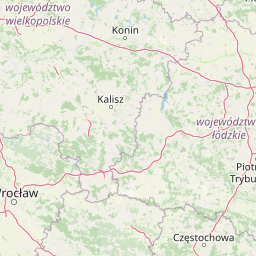
Map view of Dąbrowa w Niżankowicach

Use this park location map to pinpoint Dąbrowa w Niżankowicach in Poland, understand its exact geographic position, and read its mapped placement within the surrounding landscape more clearly.

Pigeon | © OpenStreetMap contributors

Location context for Dąbrowa w Niżankowicach

Łódź Voivodeship
Park atlas

Explore connected reserves and regional forest landscapes across central Poland

Other Parks Near Dąbrowa w Niżankowicach and Surrounding Protected Areas

Browsing other parks near Dąbrowa w Niżankowicach reveals additional woodland reserves and protected landscapes embedded throughout the surrounding regional terrain. Expanding the geographic view helps place isolated forest fragments into a broader conservation context across the Polish lowlands.
Protected landscapeŁódź Voivodeship
Mapped location lies within the park boundary#1 closest

Southwest

Załęczański Park Krajobrazowy: Mapping the Karst Landscape and Warta River Geography

A comprehensive look at protected karst features in central Poland.

Spanning the Wieluńska Upland, Załęczański Park Krajobrazowy serves as a central protected landscape renowned for its geological diversity. From the Warta River meanders and oxbow lakes to the concentrated cave systems and pulsating karst springs, this geography provides an in-depth look at the intersection of river dynamics and limestone terrain within the Polish Jura.

Area
147.5 km²
Established
1978
Relief
Upland
Climate
Temperate
Nature reserveLodzkie Voivodeship
About 7 km away#2 closest

Northeast

Rezerwat przyrody Mokry Las: Protected Oak-Hornbeam Forest and Regional Geography

A botanical forest refuge in the Kotlina Szczercowska basin.

Situated in the Pajęczno County of central Poland, Rezerwat przyrody Mokry Las is a dedicated nature reserve protecting a complete stand of oak-hornbeam forest. The area stands as an island of mixed deciduous and coniferous woodland within the gentle terrain of the Kotlina Szczercowska, offering a clear view of regional botanical conservation and forest ecology.

Area
0.146 km²
Established
1983
Relief
Lowland
Climate
Temperate
Protected landscapeLodzkie Voivodeship
About 12 km away#3 closest

North

Osjakowski Zespół Przyrodniczo-Krajobrazowy: River Valley Geography and Protected Terrain

A vital wetland corridor within the Lodzkie Voivodeship landscape network.

Located in central Poland, this protected landscape safeguards a representative stretch of the Warta river valley. It acts as an essential ecological bridge, connecting surrounding regional parks through a diverse mosaic of floodplain habitats, riparian forests, and riverine terrain that host unique bird and plant communities.

Area
24.92 km²
Established
1998
Relief
Lowland
Scope
Terrestrial
A watercolor painting of a green, tree-covered hillside set against a pale background.
Nature reserveSilesian Voivodeship
About 24 km away#4 closest

South

Modrzewiowa Góra Nature Reserve: Protected Forest Geography in Silesian Voivodeship

Veteran larch and oak woodland on the Wieluńska Upland

Modrzewiowa Góra functions as a critical nature reserve containing hundreds of mature Polish larch and ancient oaks. Representing a significant ecological fragment in southern Poland, the site maintains natural woodland structure that contrasts with the surrounding agricultural land. This map and geographic record explores the reserve's unique status as a botanical archive within the broader context of the Silesian Voivodeship's natural terrain.

Area
0.493 km²
Established
1957
Relief
Upland
Climate
Temperate
A watercolor painting showing a soft landscape with green fields, a cluster of trees, and a small lookout tower against a plain white background.
Nature reserveŚląskie
About 30 km away#5 closest

South

Dębowa Góra Nature Reserve: Geographic Profile of an Urban-Adjacent Protected Forest

Preserving ancient mixed woodland in the Śląskie Voivodeship

Located in the town of Kłobuck, Dębowa Góra serves as a critical nature reserve shielding a fragmented but authentic relic of old-growth oak and hornbeam forest. The site occupies the elevated topography of the Wieluńska Upland, providing an important contrast to the surrounding industrial landscape through its ancient trees and protected understory vegetation.

Area
0.054 km²
Established
1953
Relief
Upland
Climate
Temperate
A soft watercolor painting of a wide, rolling landscape with green hills, patches of trees, and subtle pink ground tones.
Protected areaPoland
About 46 km away#6 closest

Southeast

Przełom Warty koło Mstowa: Mapping the Protected River Corridor and Limestone Geography

A critical geological breakthrough in the Częstochowa Upland.

This protected area features a twelve kilometer river gorge carved by the Warta. The terrain is characterized by dramatic limestone outcrops such as the Brama Mirowska, paired with rich meadow habitats and oak hornbeam forests. Explore the intersection of geology and conservation within this key corridor of the Polish Jura, where river dynamics meet ancient upland landscapes.

Relief
Upland
Climate
Temperate
Scope
Terrestrial
Water
Major water bodies
A soft watercolor painting of a rolling landscape featuring light-colored limestone cliffs, green hills, and a winding path, rendered in pale pastel tones.
Nature reserveSilesian Voivodeship
About 47 km away#7 closest

Southeast

Ostoja Olsztyńsko-Mirowska: A Detailed Map and Geographic Overview of the Protected Reserve

Karst limestone formations and diverse forest habitats in Silesian Voivodeship.

Ostoja Olsztyńsko-Mirowska stands as a centerpiece of the Częstochowa Upland, characterized by its dramatic mogotes, caves, and sheltered xerothermic grasslands. This atlas-focused entry details the area's topographic complexity, ranging from the wooded ridges of Sokole Góry to the historic limestone spurs housing medieval ruins. Uncover the ecological dynamics of this protected landscape where beech forest stands and rare cave systems form a critical regional biodiversity network.

Area
22.109 km²
Established
2008
Relief
Upland
Climate
Temperate
Nature reserveŁódź Voivodeship
About 48 km away#8 closest

Northwest

Długosz Królewski w Węglewicach Nature Reserve: Mapped Protected Landscapes in Poland

A focused floristic sanctuary in the Łódź Voivodeship.

Długosz Królewski w Węglewicach is a small but ecologically significant nature reserve in the Łódź Voivodeship. Primarily designated to protect royal fern habitats, the reserve showcases a diverse transition of forest types and wetland conditions, offering a clear window into the rare botanical geography of the Kotlina Grabowska region.

Area
0.033 km²
Established
1965
Relief
Lowland
Scope
Terrestrial

Common questions about visiting, size, designation, and location context for Dąbrowa w Niżankowicach

Dąbrowa w Niżankowicach FAQs for park facts, access, geography, and protected area context

Find quick answers about Dąbrowa w Niżankowicach, including protected-area facts, park geography, trail and visitor context, and how the park fits into its surrounding country and regional landscape.
MoriAtlas Explorer

Continue Your Protected Areas Search Across the Global Atlas

Deepen your exploration by continuing the structured search for national parks and protected areas worldwide. Utilize the comprehensive filtering capabilities to compare different conservation landscapes and refine your understanding of global park geography. Discover more about the distribution and characteristics of protected natural areas.

Global natural geography