
Mori Atlas logo
Nature reserveDębowiec Nature Reserve

Analyzing the ecological mosaic of lowland oak-hornbeam and riparian woodland boundaries

Dębowiec Nature Reserve: Mapped Protected Landscapes and Forest Geography in Łódzkie Voivodeship

(Rezerwat przyrody Dębowiec)

Dębowiec Nature Reserve represents a critical protected forest area in the Niecka Włoszczowska basin of central Poland. Expanding significantly to cover over 200 hectares, this site serves as a vital reference for lowland deciduous woodland, preserving a unique intersection of oak-hornbeam and ash-elm riparian forest types within the Łódzkie Voivodeship landscape.

forest reservelowland forestoak-hornbeam forestriparian forestdeciduous woodlandprotected landscape

Dębowiec Nature Reserve

Nature reserve

Park overview

Structured park overview, official facts, and landscape profile for Dębowiec Nature Reserve

Dębowiec Nature Reserve park facts, protected area profile, and essential visitor context

Review the core facts for Dębowiec Nature Reserve, including designation, size, terrain, visitor scale, habitats, and operating context in one park-focused overview.

About Dębowiec Nature Reserve

Dębowiec Nature Reserve is a forest-focused protected area in central Poland, situated in the lowlands of the Łódź region within the Niecka Włoszczowska mesoregion. It occupies a position in Gmina Żytno, Radomsko County, and is managed on forest land belonging to the Gidle Forest District. The reserve's core identity is defined not by dramatic relief or iconic landmarks but by the preservation of a compositionally rich lowland deciduous woodland, a type that has become increasingly fragmented across the Polish countryside.

The reserve's founding purpose was to safeguard, for scientific and educational reasons, a natural fragment of oak-hornbeam forest (grąd) in which large-leaved linden reaches the edge of its natural distribution, together with ash-elm riparian forest (łęg) that sustains rare understorey plants. Although originally a relatively compact site, its 2024 expansion to roughly 206 hectares allowed it to encompass a more ecologically coherent block of woodland rather than a narrow patch embedded in managed forest.

Visitors and researchers encounter a reserve shaped by the characteristic geomorphology of the Niecka Włoszczowska: a broad, low-elevation basin with gentle relief, where soils, moisture gradients, and historical land-use patterns have favoured a mosaic of upland deciduous forest and moisture-loving forest communities. The site's quiet, woodland character and its integration with surrounding protected areas, including the Natura 2000 Las Dębowiec habitat site (PLH100023) and the Piliczański Obszar Chronionego Krajobrazu, mean Dębowiec functions as much as a regional conservation node as it does a standalone forest plot.

Quick facts and research context for Dębowiec Nature Reserve

Dębowiec Nature Reserve is a Polish leśny (forest) reserve in Łódź Voivodeship, administered on land belonging to Gidle Forest District, Dębowiec forest subdistrict. Established in 1965 by order of the Minister of Forestry and the Wood Industry, it has grown from an original area near 47 hectares to roughly 206 hectares following a major 2024 expansion. The reserve is classified as phytocenotic, of the forestcommunity subtype, with main ecosystem described as forest and upland forest communities.

Protection is divided between strict protection, covering about 43 hectares, and active protection covering roughly 3 hectares. Its location places it inside the Las Dębowiec Natura 2000 habitat site (PLH100023) and within the Piliczański Obszar Chronionego Krajobrazu, reinforcing its conservation role. The vegetation assemblage it preserves is built around oak-hornbeam forest enriched by large-leaved linden, with patches of ash-elm riparian forest and a documented flora of about 355 species.

Protection and recognition

Documented terrestrial protection scope, designation history, and management status.

Dębowiec Nature Reserve Protection Status and International Recognition Data

Dębowiec Nature Reserve maintains a documented terrestrial protection scope within its designated conservation boundaries. Structured conservation records outline established management frameworks and official recognition details associated with the protected landscape.

Protection details

Protection scope
Terrestrial
Transboundary protection
No
Core area
0.43 km²
Park context

Deeper park guide and search-rich context for Dębowiec Nature Reserve

Dębowiec Nature Reserve history, landscape, wildlife, and travel context

Explore Dębowiec Nature Reserve through its history, landscape character, ecosystems, wildlife, conservation priorities, cultural context, and seasonal travel timing in a structured park guide built for atlas discovery and search intent.

Why Dębowiec Nature Reserve stands out

Dębowiec is best known for preserving a natural fragment of lowland oak-hornbeam (grąd) forest enriched by large-leaved linden (Tilia platyphyllos) growing near the limit of its natural range, alongside riparian ash-elm forest harbouring rare herbaceous plants. The reserve thus combines two ecologically valuable forest types in one site: classic central-European deciduous upland forest and moisture-loving floodplain forest. It is also notable for its unusually high botanical diversity relative to its size, with around 355 recorded plant species, reflecting the mixture of upland and wetter riparian microhabitats. Its integration into both a Natura 2000 habitat area and a broader protected landscape unit strengthens its regional significance for lowland deciduous woodland conservation.

Dębowiec Nature Reserve history and protected-area timeline

Dębowiec Nature Reserve was established in 1965 by an administrative order of the Polish Minister of Forestry and the Wood Industry, with the founding legal instrument published in the official Polish journal of legislation (M.P. of 1965, No. 63, item 352). From the outset, the reserve's purpose was explicitly framed as the preservation, for scientific and educational reasons, of a natural fragment of oak-hornbeam forest containing large-leaved linden at the margin of its range, complemented by ash-elm riparian forest with rare herbaceous plants.

At the time of its creation the reserve covered a far more modest area than it does today; the founding act recorded roughly 47 hectares, and a 2024 expansion enlarged the protected zone to approximately 206 hectares, nearly quadrupling its extent. This significant enlargement reflected a long-running recognition that the original core, while ecologically valuable, was too restricted to fully represent the forest communities it was supposed to protect.

Over the decades the reserve's formal protection regime evolved into a hybrid system dividing the area into strictly protected and actively managed zones. Today the area sits within both the national Polish protected-area framework and a broader Natura 2000 network, with the Las Dębowiec habitat site (PLH100023) reinforcing the reserve's conservation ambitions and connecting it to landscape-scale protection across the Pilica river basin.

Dębowiec Nature Reserve landscape and geographic character

The landscape of Dębowiec Nature Reserve is defined by the gentle, low-lying character of the Niecka Włoszczowska mesoregion, a broad structural basin in central Poland that shapes the surrounding terrain. The reserve sits on relatively flat to undulating lowland surfaces, where modest differences in elevation and hydrology translate into pronounced ecological contrasts across short distances.

This subtle topography is responsible for one of the reserve's defining features: a close juxtaposition of upland and lowland forest types. Slightly higher, drier ground supports oak-hornbeam woodlands, while depressions and flood-influenced zones host ash-elm riparian forest, creating a mosaic of habitats within an otherwise visually uniform lowland setting. The surrounding region is heavily forested, with woodland managed by the Gidle Forest District extending well beyond the reserve's borders.

Viewed from a wider geographic perspective, the reserve belongs to the transition zone between the historically forested basins of the Pilica catchment and the more open agricultural landscapes further south. Its appearance is typically Polish lowland forest: mixed deciduous canopy, a structured understorey, and seasonal change dominated by leaf-out in spring, dense green shading in summer, and warm autumn leaf colour across oaks, lindens, hornbeams, ashes, and elms.

Dębowiec Nature Reserve ecosystems, habitats, and plant life

Ecologically, Dębowiec is anchored on the coexistence of two complementary forest community types. The dominant assemblage is oak-hornbeam forest (grąd), a classic central-European deciduous woodland, but the reserve's distinguishing trait is the prominence of large-leaved linden, Tilia platyphyllos, a species of warmer microclimates that here reaches the edge of its natural range. This combination gives the site a particular botanical character, blending the typical grąd species set with submontane or thermophilous elements associated with linden.

The second defining forest community is ash-elm riparian forest (łęg), found in moister, periodically water-influenced positions within the reserve. These wetter stands support rarer herbaceous plants that would not survive under the drier grąd canopy, and they amplify the site's botanical richness. Together, the two forest types create distinct microhabitats: drier, base-rich soils under the upland forest, and moister, nutrient-rich substrates in the riparian zones.

Botanical surveys have documented around 355 plant species on site, an unusually rich figure for a lowland forest reserve of its size. This diversity reflects both the substrate heterogeneity and the contrast between upland grąd and lowland łęg. The reserve's classification as a phytocenotic reserve of the forest-community subtype reinforces its ecological focus: the conservation value lies primarily in the preservation of intact, naturally developed forest vegetation and the ecological processes that maintain it.

Dębowiec Nature Reserve wildlife and species highlights

The reserve is primarily recognised as a botanical site rather than a wildlife focus, and the source materials emphasise its plant communities and forest structure rather than specific fauna. The mosaic of oak-hornbeam woodland and ash-elm riparian forest nonetheless provides habitat for the typical wildlife associates of central European lowland deciduous forest: small mammals, woodland birds, and invertebrates tied to mature broadleaf canopies and rich understorey vegetation.

Old-growth structural features, deadwood, and a layered canopy that develops over time in such stands create conditions for cavity-nesting birds, bats, and saproxylic insects, although the source materials do not enumerate specific species. The reserve's inclusion in the Natura 2000 network signals that its habitat quality, including forest-dependent fauna, is considered to meet formal European ecological criteria, but detailed wildlife inventories are not provided by the source.

Dębowiec Nature Reserve conservation status and protection priorities

Dębowiec's conservation value lies in preserving, within a heavily altered central-Polish landscape, a natural fragment of two complementary deciduous forest types that have become rare in working landscapes. The oak-hornbeam forest, and especially its variant enriched by large-leaved linden at its range edge, captures genetic and compositional diversity that is difficult to conserve outside formally protected sites. The riparian ash-elm forest adds a moisture-loving ecosystem that supports rare herbaceous plants and contributes to overall botanical richness.

The reserve enforces a dual protection regime, with strict protection covering a core area of roughly 43 hectares and active protection extending across an additional smaller zone. The 2024 expansion to about 206 hectares strengthened the site's ability to maintain ecological processes such as natural regeneration, microclimate buffering, and dispersal between forest patches, all of which are limited in small, isolated woodland fragments.

Dębowiec's integration into the Las Dębowiec Natura 2000 habitat site (PLH100023) and its position within the Piliczański Obszar Chronionego Krajobrazu embed it in a landscape-wide framework that links strict nature protection to broader regional conservation objectives. This layered protection gives the reserve significance beyond its botanical value, functioning as a node within European and national ecological networks.

Top sights and standout views in Dębowiec Nature Reserve

Dębowiec Nature Reserve stands out for the rarity of its combination: a lowland oak-hornbeam forest enriched by large-leaved linden at the edge of its range, paired with a riparian ash-elm forest supporting rare herbaceous plants. Its roughly 355 documented plant species underscore how much botanical diversity the site packs into a compact lowland setting.

Equally important is the reserve's layered protection framework. As a leśny (forest) reserve, a Natura 2000 habitat site, and a component of the protected Piliczański landscape, it forms a multi-tiered conservation anchor in a part of central Poland where original lowland woodland has been intensively altered. The 2024 expansion further consolidated its role as a regional reference site for lowland deciduous forest.

Best time to visit Dębowiec Nature Reserve

Dębowiec's seasonal character follows that of central Polish lowland deciduous forest. Late spring and early summer bring full canopy leaf-out, dense shading, and peak visibility of the woodland herb layer, making these months favourable for observing the reserve's botanical richness. Summer is characterised by cool, shaded forest interiors, while autumn delivers the warm colour display of oaks, lindens, and hornbeams typical of mixed broadleaf stands.

Because the reserve is primarily a protection- and research-oriented site with a strict protection regime over a substantial portion of its area, visits are generally low-impact, oriented toward quiet observation rather than active recreation. Cooler months, outside the breeding and peak growing season, can be appropriate for unobtrusive visits focused on landscape structure and winter woodland atmosphere, while warmer months reward careful attention to the herbaceous flora the reserve was created to protect.

Monthly climate preview

Long-term monthly temperature and precipitation patterns recorded at representative coordinates

Dębowiec Nature Reserve Climate Normals and Annual Temperature Rhythm

Representative coordinate measurements reveal a measured annual temperature and precipitation rhythm across twelve months at Dębowiec Nature Reserve. Detailed monthly climate records outline long-term averages for temperature swings and precipitation levels.
Annual mean8 °C
-3 °C20 °C
Jan-3°
Feb-2°
Mar
Apr
May14°
Jun18°
Jul20°
Aug20°
Sep14°
Oct
Nov
Dec-2°
Warmest month
July

20.1 °C

Coolest month
January

-3.5 °C

Wettest month
July

2.8 mm/day

Driest month
January

1.3 mm/day

Park location guide

Geography guide, regional context, and park location map for Dębowiec Nature Reserve

Dębowiec Nature Reserve park geography, regions, and map view in Poland

Understand where Dębowiec Nature Reserve sits in Poland through a broader geographic reading of the surrounding landscape, nearby location context, and its mapped position within the national park landscape.

How Dębowiec Nature Reserve fits into Poland

Poland, officially the Republic of Poland, is a Central European country spanning from the Baltic Sea in the north to the Carpathian Mountains in the south. It borders Germany, Czech Republic, Slovakia, Ukraine, Belarus, Lithuania, and Kaliningrad Oblast. The country has a temperate climate, diverse landscapes, and is known for its rich history, cultural heritage, and strong economic position within the EU.

Wider geography shaping Dębowiec Nature Reserve in Poland

Poland occupies 312,696 km2 in Central Europe, extending from the Baltic Sea coast in the north to the Sudetes and Carpathian Mountains in the south. It borders Germany to the west, Czech Republic and Slovakia to the south, Ukraine and Belarus to the east, and Lithuania and Kaliningrad Oblast to the northeast. The landscape includes lowland plains, uplands, and mountain ranges.

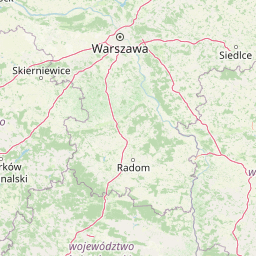
Map view of Dębowiec Nature Reserve

Use this park location map to pinpoint Dębowiec Nature Reserve in Poland, understand its exact geographic position, and read its mapped placement within the surrounding landscape more clearly.

Pigeon | © OpenStreetMap contributors

Location context for Dębowiec Nature Reserve

Łódzkie Voivodeship
Park atlas

Compare adjacent forest reserves and regional woodland habitats in central Poland

Exploring Parks Near Dębowiec Nature Reserve and Surrounding Protected Landscapes

Browse other protected areas and regional forest reserves located near Dębowiec Nature Reserve across central Poland. Expanding the geographic view helps place local lowland oak-hornbeam and riparian ecosystems into a broader woodland conservation context.
Nature reserveŁódź Voivodeship
About 13 km away#1 closest

West

Rezerwat przyrody Bagno w Ewinie: Peatland Geography and Protected Landscape Context

Nature reserve in Łódź Voivodeship, Poland

Rezerwat przyrody Bagno w Ewinie preserves a compact but essential series of high bog and transitional mire ecosystems. Situated in the gently rolling hills of the Wzgórza Radomszczańskie, this nature reserve showcases specialized flora such as the royal fern and provides a clear look at the structural diversity of central Polish protected lands.

Area
0.208 km²
Established
2024
Relief
Lowland
Climate
Temperate
Nature reserveSilesian Voivodeship
About 21 km away#2 closest

Southwest

Babski Las Nature Reserve: Regional Geography and Protected Forest Landscapes in Poland

Częstochowa Upland woodland and rare fir forest ecosystems

Babski Las Nature Reserve protects a distinct mosaic of forest types within the Silesian Voivodeship. From its rare fir stands to its moisture-dependent alder carrs, this reserve offers a deep look into the ecological diversity of the Częstochowa Upland, providing vital habitat for specialized amphibians, reptiles, and forest-dwelling birds.

Area
1.124 km²
Established
2025
Relief
Lowland
Climate
Temperate
Nature reserveŁódzkie Voivodeship
About 28 km away#3 closest

North

Łąka w Bęczkowicach Nature Reserve: Mapping Wetland Habitats in Central Poland

Riparian ecosystems and protected peat meadow geography

Łąka w Bęczkowicach serves as a specialized nature reserve in the Łódzkie Voivodeship. Defined by its peat extraction legacy and subsequent development into a vibrant wetland habitat, the area provides essential shelter for rare orchids and riparian wildlife along the Luciąża River, showcasing the ecological evolution of lowland meadows in central Poland.

Area
1.912 km²
Established
2008
Relief
Lowland
Climate
Temperate
Protected areaSilesian Voivodeship
About 29 km away#4 closest

Southwest

Ostoja Złotopotocka: Mapping the Protected Habitats and Limestone Geography of Silesian Voivodeship

Natura 2000 protected zone in southern Poland

Ostoja Złotopotocka encompasses a rich mosaic of natural habitats across the Częstochowa Upland. From the calcareous rock faces and deep karst caves to the expansive beechwood forests and inland sand dunes, this area serves as a primary site for ecological conservation. Use this resource to understand the complex terrain, boundary layout, and structural diversity that define this protected landscape within the Polish region.

Area
27.48 km²
Relief
Upland
Climate
Temperate
Access
Access unknown
A soft watercolor painting of a wide, rolling landscape with green hills, patches of trees, and subtle pink ground tones.
Protected areaPoland
About 34 km away#5 closest

West

Przełom Warty koło Mstowa: Mapping the Protected River Corridor and Limestone Geography

A critical geological breakthrough in the Częstochowa Upland.

This protected area features a twelve kilometer river gorge carved by the Warta. The terrain is characterized by dramatic limestone outcrops such as the Brama Mirowska, paired with rich meadow habitats and oak hornbeam forests. Explore the intersection of geology and conservation within this key corridor of the Polish Jura, where river dynamics meet ancient upland landscapes.

Relief
Upland
Climate
Temperate
Scope
Terrestrial
Water
Major water bodies
A soft watercolor painting of a rolling landscape featuring light-colored limestone cliffs, green hills, and a winding path, rendered in pale pastel tones.
Nature reserveSilesian Voivodeship
About 34 km away#6 closest

Southwest

Ostoja Olsztyńsko-Mirowska: A Detailed Map and Geographic Overview of the Protected Reserve

Karst limestone formations and diverse forest habitats in Silesian Voivodeship.

Ostoja Olsztyńsko-Mirowska stands as a centerpiece of the Częstochowa Upland, characterized by its dramatic mogotes, caves, and sheltered xerothermic grasslands. This atlas-focused entry details the area's topographic complexity, ranging from the wooded ridges of Sokole Góry to the historic limestone spurs housing medieval ruins. Uncover the ecological dynamics of this protected landscape where beech forest stands and rare cave systems form a critical regional biodiversity network.

Area
22.109 km²
Established
2008
Relief
Upland
Climate
Temperate
Protected landscapeLodzkie Voivodeship
About 34 km away#7 closest

North

Sulejowski Park Krajobrazowy: Geography and Protected Landscape Mapping

Central Polish river valley and reservoir terrain

Examine the territorial boundaries and landscape character of Sulejowski Park Krajobrazowy. This protected area integrates riverine corridors, large reservoir habitats, and mixed lowland forests across the Lodzkie Voivodeship, providing a core reference for understanding the ecological geography of the central Pilica valley.

Area
170.26 km²
Established
1994
Relief
Lowland
Climate
Temperate
Watercolor painting of pale limestone rock formations with small cave openings and green vegetation on a soft, light background.
Nature reserveSilesian Voivodeship
About 35 km away#8 closest

South

Ostoja Kroczycka Nature Reserve: Geological Formations and Protected Habitat Mapping

Karst limestone landscapes in the Częstochowa Upland

A core component of the Natura 2000 network, Ostoja Kroczycka concentrates four dramatic limestone ranges into a single conservation landscape. The area combines vertical rock towers, subterranean hibernacula for bats, and fragmented forest patches, serving as a primary site for understanding the geological and ecological mosaic of the Polish upland region.

Area
13.912 km²
Established
2011
Relief
Upland
Climate
Temperate

Common questions about visiting, size, designation, and location context for Dębowiec Nature Reserve

Dębowiec Nature Reserve FAQs for park facts, access, geography, and protected area context

Find quick answers about Dębowiec Nature Reserve, including protected-area facts, park geography, trail and visitor context, and how the park fits into its surrounding country and regional landscape.
MoriAtlas Explorer

Continue Your Protected Areas Search Across the Global Atlas

Deepen your exploration by continuing the structured search for national parks and protected areas worldwide. Utilize the comprehensive filtering capabilities to compare different conservation landscapes and refine your understanding of global park geography. Discover more about the distribution and characteristics of protected natural areas.

Global natural geography