
Why Dolina Kamionki Nature Reserve stands out
Dolina Kamionki Nature Reserve is best known for its exceptionally well-preserved river-valley forests growing in a post-glacial meltwater channel. The area contains mature oak-hornbeam (grąd) and alder swamp (ols) communities that are among the most botanically valuable in the local region. The reserve is also distinguished by its diverse geological substrate within a relatively compact area, which supports a striking variety of plant communities in close proximity. These range from moist valley forests and wet meadows to xerothermic plant groupings on the dry edges of the valley, including thirteen documented rare plant sites.
Dolina Kamionki Nature Reserve history and protected-area timeline
Dolina Kamionki Nature Reserve was formally established in 2004 through Regulation No. 30/2004 of the Governor of the Greater Poland Voivodeship, dated 18 March 2004. The regulation's purpose was to create a forested nature reserve protecting a representative fragment of the Kamionka River valley, including its forest communities and associated wetlands. From the outset, the reserve was conceived as a small but ecologically focused area, occupying roughly 59 hectares within a broader post-glacial landscape.
In 2016, the legal framework around the reserve was updated through an order of the Regional Director of Environmental Protection in Poznań, issued on 17 August 2016. This order reaffirmed and refined the reserve's protection regime, ensuring that the management of the area continued to reflect its conservation purpose. Since then, the reserve has operated under this updated framework while remaining an integral part of the Dolina Kamionki Landscape Park.
The area itself, however, was already recognized for its natural value well before formal protection. Scientific publications from the 1970s and 1990s, including works by Stefanek and colleagues, documented the natural and landscape qualities of the Kamionka River valley, the composition of its vegetation, and the challenges of conserving its habitats. These studies helped establish the basis for the eventual designation of the reserve and shaped understanding of its botanical importance.
Dolina Kamionki Nature Reserve landscape and geographic character
The landscape of Dolina Kamionki Nature Reserve is defined by a small but clearly expressed post-glacial river valley, cut into the gently undulating terrain of the Poznań Lakeland. The valley was formed by glacial meltwater processes and represents a classic rynna polodowcowa, a long, narrow channel of glacial origin that today carries the small Kamionka River. This geological setting gives the reserve its basic shape: a relatively narrow valley floor flanked by gently sloping sides, with all variations in between.
A characteristic feature of the reserve is the diversity of geological deposits found within a compact area. This variety of substrate types directly influences the vegetation, allowing different habitat types to occur in close proximity. The valley floor tends to be moist and sometimes waterlogged, supporting wet woodland, while the slope edges and upper portions of the valley side can be notably drier, especially on south-facing exposures.
This combination creates patches of xerothermic, drought-adapted vegetation on the warmer, drier parts of the valley edge, in stark contrast with the damper, cooler habitats along the river itself. Together, these features give the reserve a layered, mosaic-like landscape, where forest, wetland, meadow, and dry-edge habitats come together in a single, easily explored area.
Dolina Kamionki Nature Reserve ecosystems, habitats, and plant life
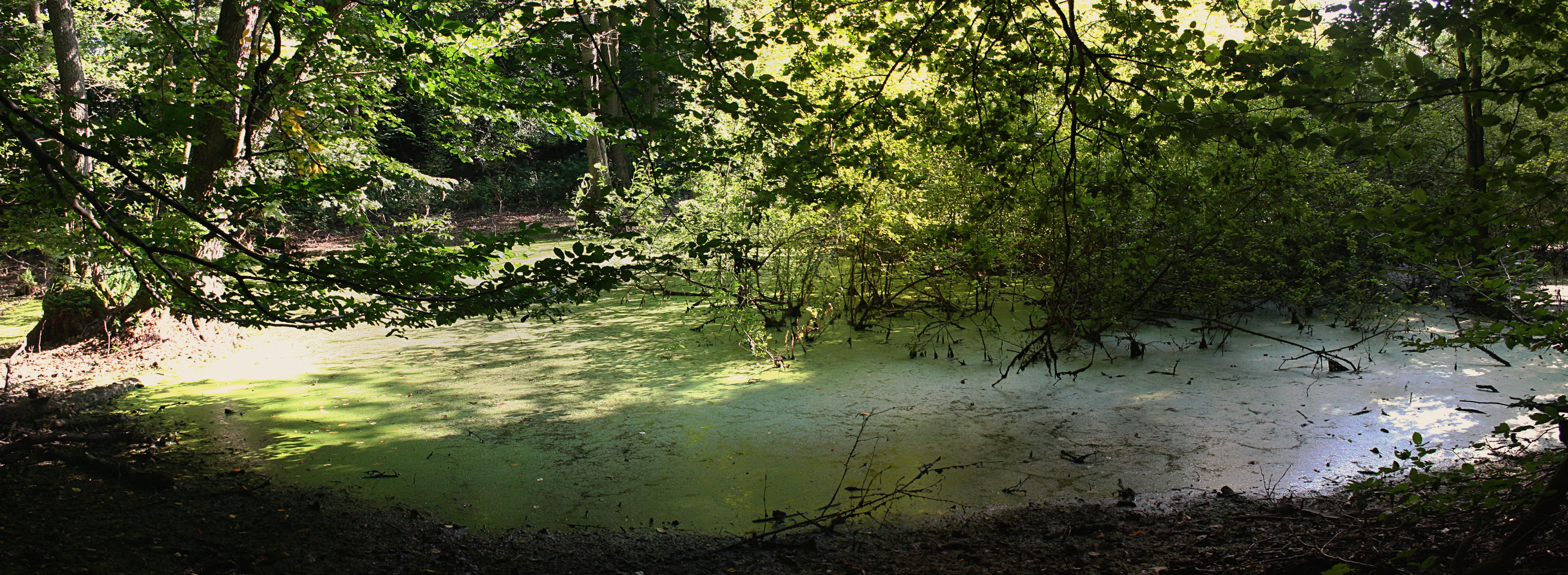
Dolina Kamionki Nature Reserve protects a cross-section of natural communities typical of post-glacial river valleys in the Poznań Lakeland. Wetland, forest, and dry-habitat communities all occur here, often within a few hundred meters of one another. The result is a compact but ecologically layered nature reserve, displaying a wide range of botanical environments typical of central-western Poland.
The most widely represented forest communities are oak-hornbeam forests (grądy) on better-drained sites and alder swamp forests (ols) along the wetter valley floor. Both community types are considered well preserved within the reserve, supporting a diverse herb and shrub layer. Among the woody species, common beech (Fagus sylvatica) stands out as a notably large and old-growth tree, with several specimens of impressive size. Natural regeneration of common yew (Taxus baccata) has also been documented in limited locations.
In addition to forest habitats, the reserve contains fragments of wet meadows with European globeflower (Trollius europaeus), and on the drier, sunniest edges of the valley, xerothermic plant communities have developed. The diversity of habitats is the foundation for the reserve's overall botanical richness, with thirteen rare plant sites documented within its small area.
Dolina Kamionki Nature Reserve wildlife and species highlights
The wildlife dimension of Dolina Kamionki Nature Reserve is closely tied to its habitat mosaic, particularly the alternation between wet alder forests along the Kamionka River and drier oak-hornbeam forests on the slopes above. This mix of damp and dry, shaded and open habitats supports a varied community of forest animals typical of the Poznań Lakeland.
Birds associated with mature deciduous woodland, including warblers and other small passerines, are expected to use the reserve's older beech and oak-hornbeam stands. Wet woodland patches likely support amphibians and invertebrates characteristic of alder swamp habitats, while the open meadow fragments near the river may attract butterflies and other pollinators. Although the park's most distinctive value is botanical rather than faunal, the intact habitat mosaic means that the reserve plays an ongoing role in supporting regional forest and wetland wildlife.
Dolina Kamionki Nature Reserve conservation status and protection priorities
Dolina Kamionki Nature Reserve is a legally designated nature reserve under Polish nature protection law, established to safeguard a fragment of the Kamionka River valley and its associated forest and wetland habitats. Its conservation significance lies in the high concentration of well-preserved forest communities within a very small area, and in the protection of thirteen documented rare plant sites that depend on the intact valley landscape here.
The reserve functions as a conservation core within the larger Dolina Kamionki Landscape Park, complementing the broader landscape-level protection provided by the surrounding park. Its small size and location within a protected landscape also mean that management must carefully balance preservation of its sensitive habitats with controlled public access, especially given the presence of cycling and walking routes along the edges of the reserve. Overall, the reserve plays an important role in preserving the ecological character of this part of the Poznań Lakeland.
Dolina Kamionki Nature Reserve cultural meaning and human context
The Dolina Kamionki area has drawn scientific and conservation interest for several decades before the reserve was formally established. Naturalists working in the 1970s and 1990s produced studies on the valley's natural values, vegetation composition, and conservation challenges, helping to shape the regional understanding of the area's botanical importance. These research efforts form part of the reserve's wider cultural and intellectual context, linking the site to a tradition of Polish landscape and nature study.
The reserve is also situated in a region where rural land use has long coexisted with small areas of natural forest and wetland. Local communities in the Międzychód commune have historically interacted with the Kamionka valley landscape through forestry, small-scale agriculture, and recreation, and the area continues to be integrated into regional cycling and walking networks that connect it to nearby villages such as Lewice.
Top sights and standout views in Dolina Kamionki Nature Reserve
Dolina Kamionki Nature Reserve stands out for the unusual concentration of natural forest, wetland, and dry-habitat communities within a small post-glacial river valley. The combination of mature oak-hornbeam forests, alder swamp forests, and xerothermic vegetation on the valley edges is rare in this part of the Poznań Lakeland.
Equally distinctive is the presence of monumental old trees, especially large beech specimens, together with limited natural regeneration of common yew and a herb layer containing rare woodland species such as red helleborine, mezereon, common twayblade, and white helleborine. The reserve's thirteen documented rare plant sites within a 59-hectare area mark it out as a particularly valuable small-scale conservation site in western Poland.
Best time to visit Dolina Kamionki Nature Reserve
Dolina Kamionki Nature Reserve can be visited throughout much of the year, but the late spring and early summer months tend to be the most rewarding, when woodland wildflowers and orchids in the herb layer are at their most visible. Early summer is also a good time to observe the meadow communities and flowering plants such as European globeflower in the wetter parts of the valley.
Autumn brings strong color in the deciduous oak-hornbeam and alder forests, while winter offers a quieter, more open view of the valley structure and the reserve's mature trees. Cycling and walking routes along the edges of the reserve provide access points in most months, although trails can be wet and slippery after heavy rain or during the spring thaw.