Why Dolina Waliczówki Nature Reserve stands out
The reserve is especially known for protecting forest communities of high naturalness within the Białowieża Forest, together with the associated sedge plant communities that thrive in the headwater and spring-fed zones of the Waliczówka stream. Its value lies less in dramatic scenery and more in the careful preservation of small-scale, ecologically intact forest-stream habitat.
Dolina Waliczówki Nature Reserve history and protected-area timeline
Dolina Waliczówki Nature Reserve was established in 1995 through an order published in the Polish Monitor, the official journal for legal announcements in Poland. The creation of the reserve reflected growing recognition of the need to protect the high-quality natural forest communities within the Białowieża Forest, even in smaller valleys that might otherwise be overlooked in broader conservation strategies.
The reserve's location along a small forest stream was a primary reason for its designation, since the headwater zone supports distinctive plant communities that depend on specific hydrological conditions. In 2003, a formal protection plan was adopted for the reserve, defining how it should be managed in the long term. This plan introduced active conservation as the legal framework for the area, meaning that the reserve is not simply left undisturbed but is actively managed to preserve or restore its protected values.
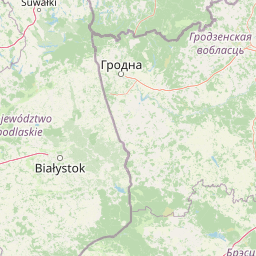
Dolina Waliczówki Nature Reserve landscape and geographic character
The landscape of Dolina Waliczówki is shaped by the valley of a small forest stream, which gives the reserve both its name and its physical character. The terrain belongs to the Równina Bielska, a lowland mesoregion in eastern Poland characterized by gently rolling glacial surfaces rather than dramatic relief. Within this broader plain, the stream valley introduces a finer-scale topography, with subtle hollows and moist zones created by the water flow.
The forest itself is part of the Białowieża Forest complex, a vast lowland woodland known for its continuity, dense canopies, and well-preserved internal structure. The valley of the Waliczówka creates slightly different microclimates and soil conditions compared with the surrounding plateau, which is central to the reserve's ecological value. The result is a quiet, enclosed woodland landscape defined more by its biological detail than by spectacular scenery.
Dolina Waliczówki Nature Reserve ecosystems, habitats, and plant life
Ecologically, Dolina Waliczówki is defined by two interrelated components: natural forest communities and spring-fed non-forest plant communities. The forest communities are valued for their high degree of naturalness, indicating minimal disruption from forestry or other forms of land use. Such communities include tree layer, shrub layer, and understory components typical of old, well-structured Białowieża Forest environments, and they function as reservoirs of native forest biodiversity.
The non-forest component centers on the springhead, or krenal, zone of the Waliczówka stream. In this zone, the emergence of groundwater creates persistently wet conditions that support sedge communities, plant groups adapted to saturated soils and cool, continuously moist habitats. These communities form patches of open, herb-dominated vegetation embedded within the broader forest matrix, contributing structural diversity to the landscape. Together, the woodland and the wet sedge zones create a compact ecological mosaic within the reserve.
Dolina Waliczówki Nature Reserve wildlife and species highlights
The wildlife of Dolina Waliczówki is not separately documented in the available source material beyond the broader ecological context of the Białowieża Forest. Because the reserve is designated as a floristic reserve focused on plant communities, rather than a faunal reserve, its primary wildlife significance lies in supporting habitats that, in turn, sustain the animal life typical of the surrounding forest. Detailed species-level information is not derived from the source page.
Dolina Waliczówki Nature Reserve conservation status and protection priorities
The conservation importance of Dolina Waliczówki rests on its role in protecting forest communities with a high degree of naturalness and on its preservation of spring-zone plant communities along the Waliczówka stream. By situating these protections within the Białowieża Forest, the reserve contributes to a broader network of conservation areas that together maintain the integrity of one of Europe's most significant lowland forest landscapes.
Since 2003, the reserve has been managed under an active conservation regime, meaning that specific management actions are undertaken to maintain or restore the protected habitats. This approach reflects a more hands-on conservation philosophy, recognizing that even small protected areas require deliberate stewardship to retain their ecological value over time.
Top sights and standout views in Dolina Waliczówki Nature Reserve
The strongest points of distinction for Dolina Waliczówki lie in its combination of natural Białowieża Forest woodland with the springhead flora of the Waliczówka stream. Its small size contrasts with its high botanical and ecological specificity, and its active conservation framework adds a meaningful layer of management to its protected status. As a quiet, strictly ecological reserve, it serves as a focused example of habitat-level protection within a much larger forest landscape.
Best time to visit Dolina Waliczówki Nature Reserve
The source material does not provide seasonal guidance specific to this reserve, so detailed month-by-month recommendations are not appropriate. In general, late spring and early summer are commonly good periods for observing woodland and wetland flora in lowland Polish forests, while autumn can highlight the broader forest character of the Białowieża landscape. Visitors should note that the reserve is a nature reserve with specific protective restrictions, and access may be regulated.