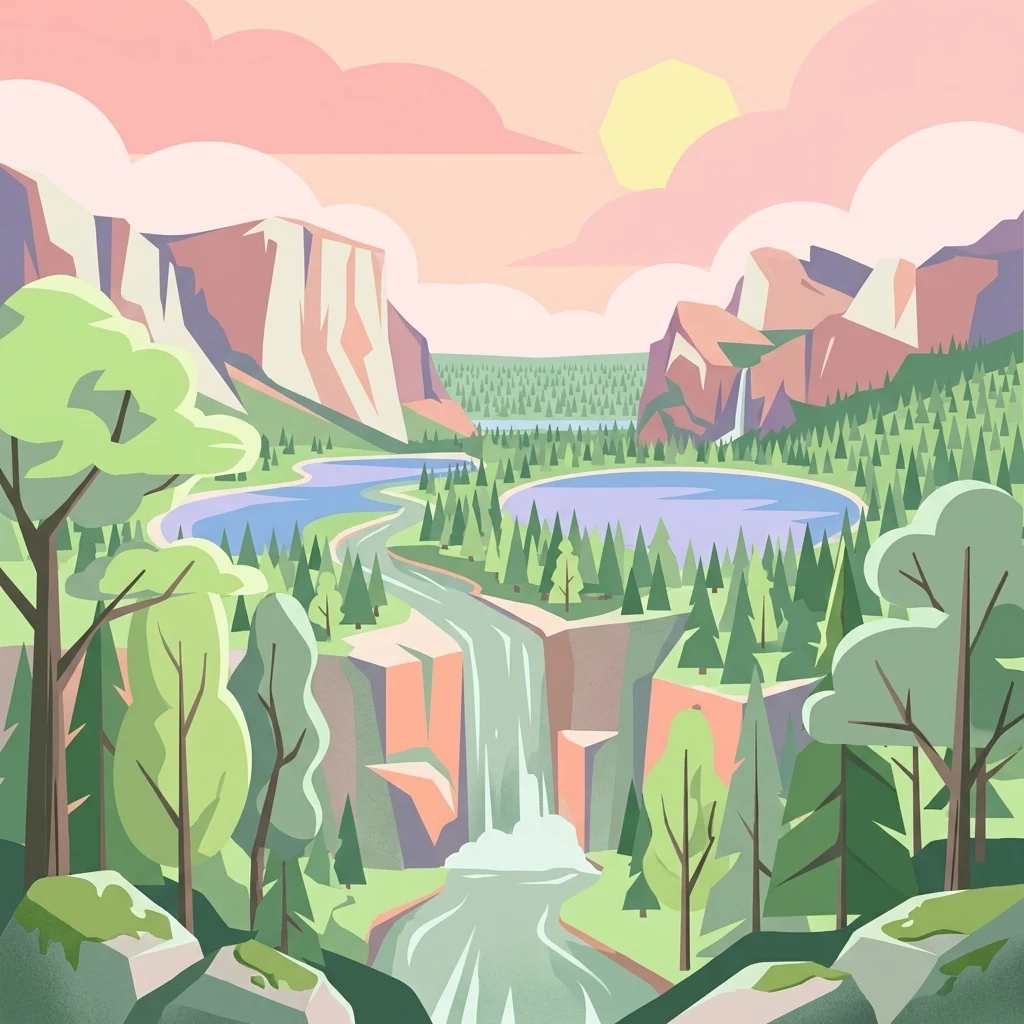
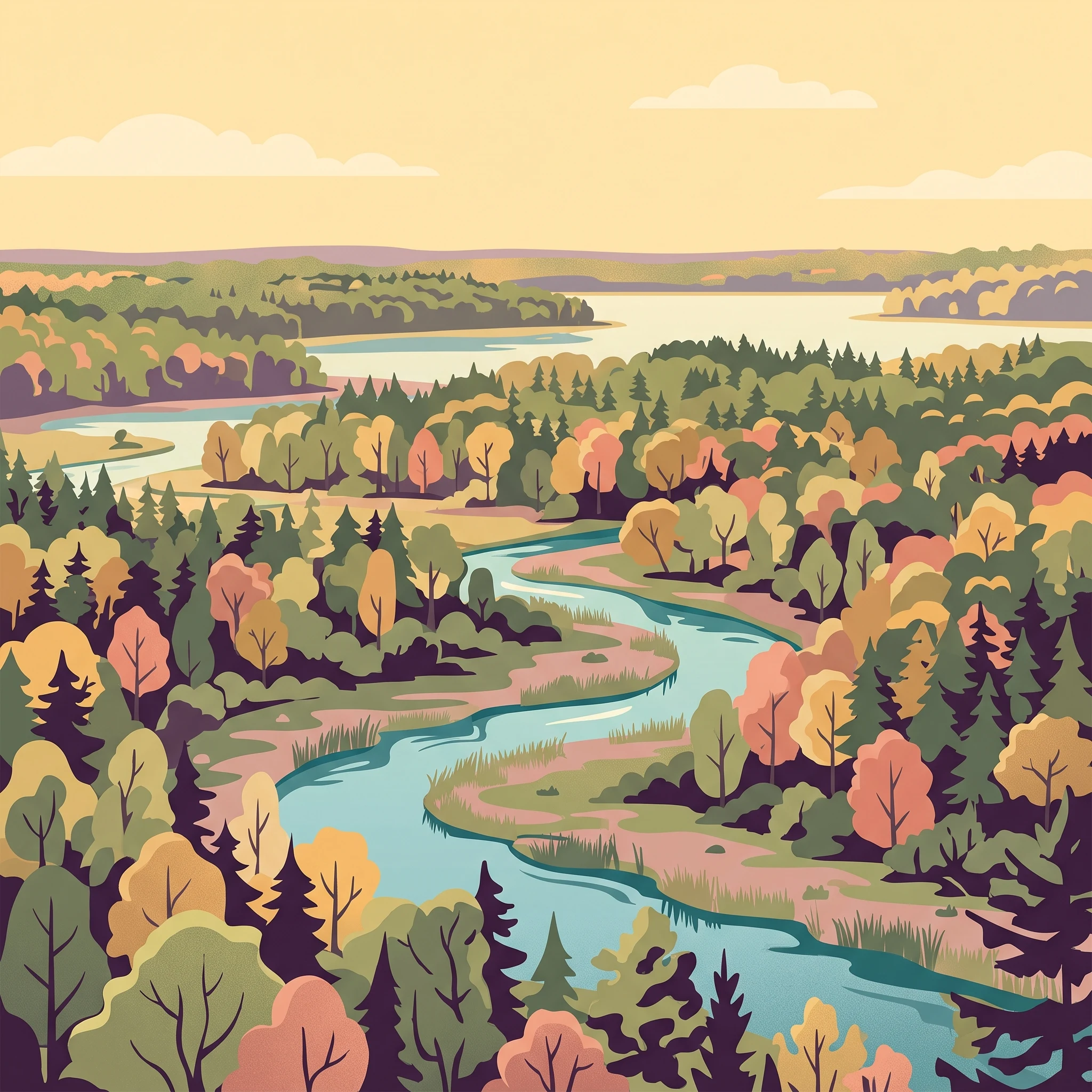
A forested lowland park of glacial lakes, beech woods and winding rivers in northwestern Poland.
Drawieński National Park
Drawieński National Park occupies a broad swathe of the Równina Drawska, the glacial lowland that forms the heart of the larger Drawska Forest complex in northwestern Poland. Although the park lies entirely within the Polish lowlands, the terrain is far from flat. The retreating Scandinavian ice sheet left behind a richly varied postglacial landscape of moraine ridges, outwash plains, kettle holes, peat bogs and lake basins, which together produce a mosaic of micro-landscapes that change over short distances.
Forests are the park's defining feature, covering more than four-fifths of its surface. Beech and oak-beech woodlands dominate large portions of the area, a relatively unusual composition for a lowland national park in Poland, while pine forests occupy much of the remaining woodland. These forests are not uniform plantations but a mix of age classes and structures, including older stands and natural-looking fragments that contribute to the park's sense of remoteness. The understory and ground layer support hundreds of plant species, including sundews, cranberries, wild lilies, orchids and other moisture-loving plants typical of bog and forest-margin habitats.
The park's hydrological character is equally important. The Drawa and Płociczna rivers meander through the forest, creating steep little valleys, oxbows, marshy fringes and sandbanks. Around twenty lake basins are scattered across the terrain, ranging from small, dark, humic pools to larger open waters such as Lake Ostrowite. The combination of rivers, lakes, bogs and forest creates a connected system of aquatic and terrestrial habitats.
Biologically, the park is rich for its size. Roughly fifty mammal species have been recorded, including red deer, roe deer, wild boar, beaver, otter, gray wolf and several non-native species that have spread through Polish forests in recent decades. Around 130 breeding bird species and about 30 species of fish, including migratory and lake-resident forms of trout, grayling and other salmonids, give the park strong ecological credentials. To preserve its most valuable tracts, twelve strict protection reserves have been designated within the park, with additional nature reserves in the surrounding buffer zone.
For visitors, the park offers a quietly atmospheric landscape shaped by water and woodland rather than by dramatic mountain scenery. Its draw lies in its lowland forests, river valleys, lake views, and a sense of enclosed nature that is increasingly rare in central Europe.