
Mori Atlas logo
Park guides

Seasonal context for Florida's sawgrass, mangroves, and wetlands

Everglades National Park seasonal timing guide for Florida’s wet and dry periods

Explore Everglades National Park's guides for sawgrass marshes, cypress domes, hardwood hammocks, mangroves, and Florida Bay. The timing guide compares comfortable December-to-April weather and high wildlife visibility with fewer crowds, stronger heat, rain, and storm patterns during the wet summer months.

Related tags

WetlandsTropical WildernessBirdwatchingMangrove EcosystemsSubtropical National Park

Tropical wetland wilderness protecting the unique River of Grass ecosystem

Everglades National Park

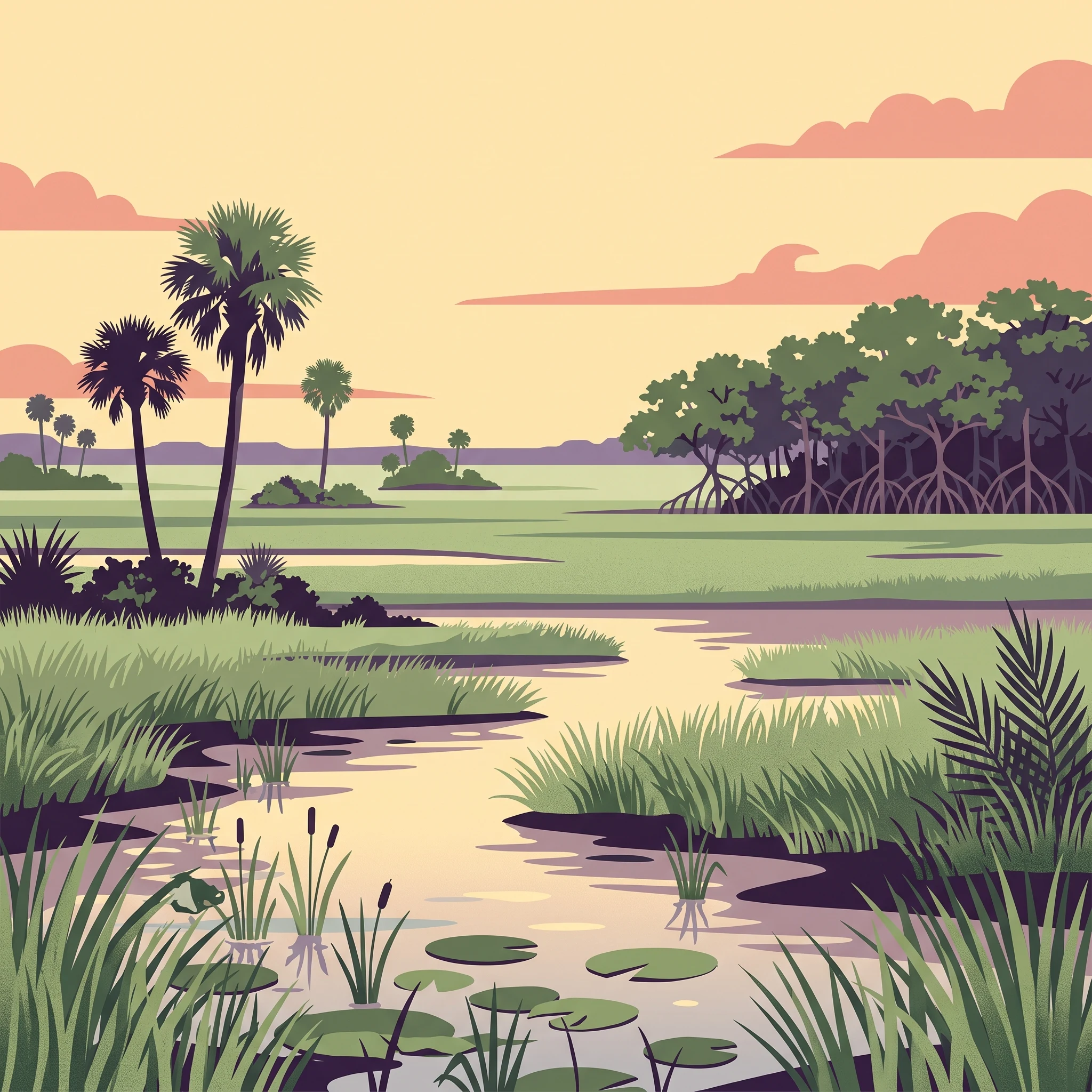
Everglades National Park preserves a unique ecosystem that exists nowhere else on Earth. The Everglades began forming approximately 5,000 years ago when regular flooding created the conditions for vast peat deposits and distinctive plant communities to develop. Water flows imperceptibly south from Lake Okeechobee through a宽 40 to 70-mile river, moving at only about 100 feet per day through sawgrass marshes that dominate the landscape. This slow movement creates a constantly shifting environment where the boundaries between open water and solid ground are never permanent. The park's establishment in 1934, after decades of advocacy by conservationists like Ernest F. Coe and Marjory Stoneman Douglas, marked a revolutionary concept in national park management: protecting a living ecosystem rather than dramatic geological features. The park contains nine distinct but interconnected ecosystems, from freshwater sloughs and marl prairies to tropical hardwood hammocks, pinelands, cypress domes, mangroves, and marine environments. Each system responds dynamically to water levels that fluctuate dramatically between wet and dry seasons, creating constantly changing conditions that support remarkable biodiversity.

Location
United States of America
Park type
National park
Established
1947
Area
6,106.6 km²
Highest point
6 m
Everglades National Park Geography and Atlas
1 guide

Compare available reference materials and targeted seasonal planning themes

Published Guides and Regional Resource Collection for Everglades National Park

Each published guide provides focused editorial coverage for specific planning questions across the protected wetland landscape. Reference materials examine seasonal timing factors, including dry winter wildlife visibility patterns and summer storm planning considerations.
MoriAtlas Explorer

Continue Exploring Everglades National Park's Landscape and Geographic Details

Deepen your understanding of Everglades National Park by investigating its specific landscape character and geographic placement within Florida. This atlas view supports structured discovery of its protected-area boundaries and natural terrain, offering a factual foundation for understanding its role in the region's geography. Continue to map its context and explore the elements that define this significant national park.