Why FFH-Gebiet Wald westlich Wrohm stands out
The site is best known for its surviving beech forests, oak hornbeam forests, and small patches of alder ash floodplain woodland. It represents a rare continuity of native broadleaf woodland in an agricultural Dithmarschen setting. Its forested character has been historically documented since the seventeenth century and continues to serve as a small but ecologically significant island of habitat types that have become scarce across the surrounding Schleswig-Holstein Geest.
FFH-Gebiet Wald westlich Wrohm history and protected-area timeline
The woodland has a documented presence dating back centuries, appearing on the 1651 Landtcarte von Dithmarschen drawn by Johannes Mejer of Husum. By the late nineteenth century, the forest was described as entirely broadleaf, and the same general character persisted into mid-twentieth century mapping.
The historical continuity of the site was disrupted after the Second World War, when the British occupation authorities ordered all mature trees felled and exported as reparation timber. This removed most of the old-growth canopy and left an opening that was gradually replanted, in part with conifers that are not characteristic of the local habitat types.
The Natura 2000 Standard Data Sheet for the site was prepared in June 2004 by the Schleswig-Holstein state office for agriculture, environment, and rural areas (LLUR). It was proposed as a Site of Community Importance in September 2004, confirmed by the European Union in November 2007, and ratified nationally as a Special Area of Conservation in January 2010 under the German Federal Nature Conservation Act. A management plan for the site was published in December 2017.
FFH-Gebiet Wald westlich Wrohm landscape and geographic character
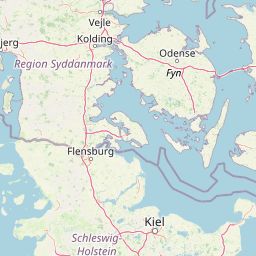
The landscape of FFH-Gebiet Wald westlich Wrohm is defined by a softly rounded geest ridge formed by an old moraine of the Saale glaciation. The protected area extends about 770 meters along its longest north-south axis, with elevations rising from roughly 11 meters above sea level at the northern tip to about 30 meters at the southern end of the site.
The terrain slopes gently toward the northeast, where water drains through small brooks into the Twisselau, then the Tielenau, and ultimately the Eider river, which discharges into the North Sea near the Eider Barrage. Two larger brooks along the western edge shape the small floodplain habitats of alder and ash that are part of the site.
Beyond the woodland itself, the surrounding landscape is characterized by an open mosaic of meadows, arable fields, and dense hedgerows. The Knick hedgerow that encloses the site is a defining feature of the Dithmarschen cultural landscape and visually isolates the forest from its agricultural surroundings.
FFH-Gebiet Wald westlich Wrohm ecosystems, habitats, and plant life
The site is entirely forested, with about three quarters of its area classified under EU Habitats Directive woodland habitat types. The remainder consists largely of non-native coniferous stands, with scattered open features at field edges and along watercourses.
Five habitat types are reported in the Natura 2000 Standard Data Sheet: Hainsimsen beech forest (9110), Waldmeister beech forest (9130), Stellaria oak hornbeam forest (9160), old acidophilous oak forest on sandy plains with pedunculate oak (9190), and alder ash and softwood floodplain forest (91E0). Among these, the two oak-dominated habitat types are of particular conservation significance in Schleswig-Holstein.
The floodplain elements occupy the two main brooks along the western boundary, where wet alder and ash woodland remnant stands occur. Many trees across the site are younger than 140 years, a legacy of post-war timber harvesting, which shapes the present-day structure of the canopy.
FFH-Gebiet Wald westlich Wrohm wildlife and species highlights
Source material does not provide substantive species-specific wildlife detail beyond the woodland habitat types themselves. The site's ecological significance is primarily framed around its habitat composition rather than documented fauna.
The forest patches, hedgerow boundary, and small alder ash floodplain elements suggest potential value for woodland-dependent birds, small mammals, and invertebrates associated with mature deciduous forest in northern Germany, but no specific species are documented in the source. This field is therefore limited to what can be inferred from habitat type rather than direct wildlife records.
FFH-Gebiet Wald westlich Wrohm conservation status and protection priorities
FFH-Gebiet Wald westlich Wrohm is protected under the European Union Habitats Directive as part of the Natura 2000 network. Its purpose is to conserve specific Annex I woodland habitat types that are rare or threatened in the Schleswig-Holstein context, especially Stellaria oak hornbeam forest and old acidophilous oak forest.
According to the 2019 Standard Data Sheet evaluation, forest habitat areas in the site were assessed mainly as unfavorable, while about four fifths of all reported habitat areas were rated in good overall condition, particularly the oak-dominated types. Conservation management focuses on preserving traditional low-intensity woodland use, restoring site-typical tree species, increasing deadwood and habitat trees, protecting near-natural brooks, and controlling neophyte species.
As of the period covered by the source, about two thirds of the protected area was covered by voluntary contract-based conservation agreements with the many private landowners. The Stiftung Naturschutz Schleswig-Holstein holds two parcels on the eastern edge, the Kurt and Erika Schrobach-Stiftung holds a parcel on the western edge, and the Bündnis Naturschutz in Dithmarschen supports broader conservation efforts in the region. Monitoring of the site takes place on the six-year cycle used across Schleswig-Holstein.
FFH-Gebiet Wald westlich Wrohm cultural meaning and human context
The site carries a long cultural footprint within the Dithmarschen region, where a wooded island among fields and meadows has been part of the local geography for centuries. The forest is locally known as Stern Lüdersbüttel, reflecting the nearby village of Lüdersbüttel and emphasizing the woodland's role as a recognizable landmark within the cultural landscape.
The traditional Knick hedgerow enclosing the forest is itself a defining feature of Schleswig-Holstein's rural cultural heritage, and the surviving pattern of small private forest ownership reflects centuries of local land tenure. A forest kindergarten currently uses the woodland, combining ecological preservation with educational use, while broader public access is limited by the absence of formal paths and the preference for undisturbed habitat management.
Top sights and standout views in FFH-Gebiet Wald westlich Wrohm
The site preserves a small but unusually intact matrix of native broadleaf forest types within an agricultural Dithmarschen setting. Its centuries-old woodland continuity, hedgerow enclosure, and concentration of rare oak and beech habitat types distinguish it from the surrounding Geest landscape.
Despite the post-war loss of old-growth canopy, active management, voluntary private conservation agreements, and institutional stewardship are working to restore site-typical species, increase deadwood, and protect the floodplain brooks that drain into the Eider and eventually the North Sea.
Best time to visit FFH-Gebiet Wald westlich Wrohm
The source material does not provide specific seasonal visitation information, so detailed timing recommendations cannot be supported.
Generally, deciduous forests in the Schleswig-Holstein Geest region are most visually expressive from late spring through early autumn, when the broadleaf canopy is in full leaf and the understorey vegetation is active. Late summer and early autumn can also highlight the structures of the hedgerow-enclosed landscape. Visitors should note that the site has no formal trail network and is largely managed for habitat conservation rather than recreation.