
Why Grebensteine bei Willingen Nature Reserve stands out
The reserve is best known for its near-primary Schluchtwald: a steep-slope gorge forest with a montane tall-herb flora growing among boulder fields beneath isolated Grebenstein rock outcrops. These forests carry an unusually wild, old-growth character for central Germany, dominated by sycamore maple, ash, and wych elm, with summer linden appearing more sparingly. The site is also notable for its rare and threatened plant species, including wolf's monkshood, brook avens, fir clubmoss, and white butterbur, as well as for its high moss and fern diversity, with ten recorded fern species. Entomologically, it supports forty-two butterfly species typical of cool, moist montane conditions, including the large tortoiseshell-related Poplar Admiral and the Ringlet, alongside other moisture-loving species.
Grebensteine bei Willingen Nature Reserve history and protected-area timeline
The Grebensteine bei Willingen area was formally protected as a Naturschutzgebiet in 1985, under the German federal state of Hesse's nature conservation framework. The designation recognized the site's long-standing botanical importance, particularly its quality as a near-primeval Schluchtwald community that had survived modern forestry in unusually intact form on its steep, rocky slopes.
Its later integration into the FFH network as part of the NSG-Komplex bei Willingen (DE 4718-301) brought the reserve into the European Union's Natura 2000 system, reinforcing its status as habitat worthy of community-level protection for its mixed montane forest and rocky-slope plant communities. Beyond these administrative milestones, the forest's continuity on difficult terrain has allowed it to function, in ecological terms, as a long-established refuge that escaped the more intensive forest management seen on flatter land in the surrounding Upland region.
Grebensteine bei Willingen Nature Reserve landscape and geographic character
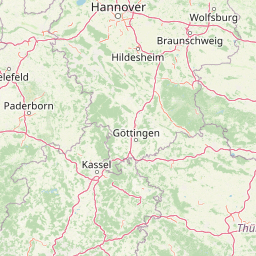
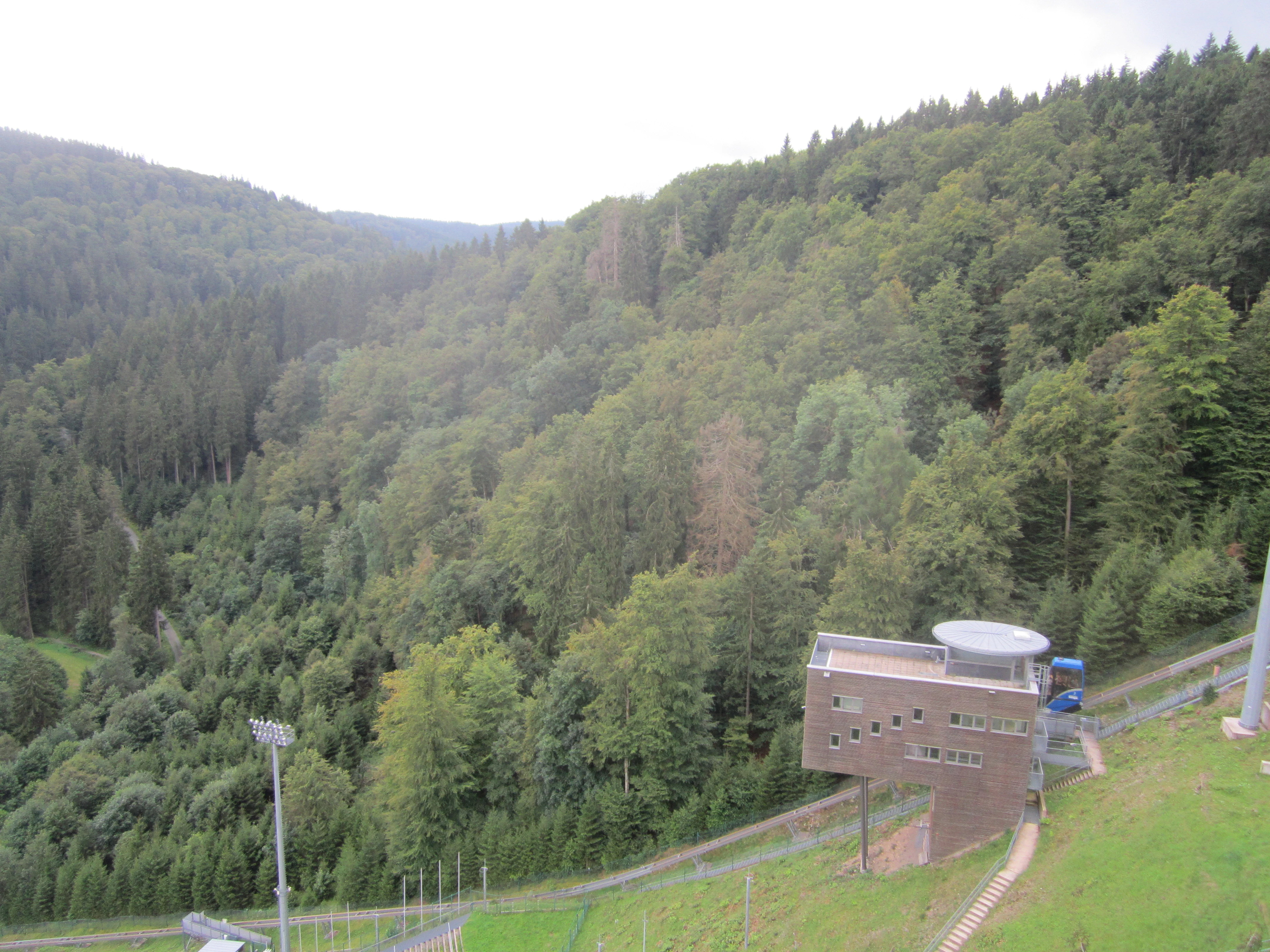
The reserve occupies the east-facing slope of a side valley of the Itter river, with slopes dropping steeply from the ridgeline near the Mühlenkopfschanze down toward the Itter valley floor just south of Willingen. The defining landforms are the Grebensteine themselves: scattered rock outcrops and boulder fields that rise sharply through the middle and upper portions of the slope and give the area both its name and its dramatic microtopography.
Beneath the rock outcrops, the terrain is dominated by unstable, block-rich slopes interspersed with damp seeps and several small springs emanating along the lower slope. The combination of free-draining rocky substrate, persistent moisture from seepage and springs, and the cooler microclimate created by the east-facing aspect produces the conditions that favor a lush montane Schluchtwald. The juxtaposition of vertical rock, fallen boulders, and dense forest vegetation gives the small reserve an unusually varied and scenic landscape character.
Grebensteine bei Willingen Nature Reserve ecosystems, habitats, and plant life
Ecologically, Grebensteine bei Willingen is defined by its Schluchtwald core, centered on a mixed forest community of summer linden, wych elm, and sycamore maple growing on the seeping, block-rich mineral soils. This core is encircled by more acidic soil communities of oak-beech forest with the woodrush Luzula, creating a vegetational mosaic shaped by moisture and substrate variation. The canopy is dominated by sycamore maple and ash, with wych elm as a regular component, scattered sycamore, and a rarer presence of summer linden.
The shrub layer includes daphne along the lower slopes, while on the rock outcrops the alpine currant Ribes alpinum finds a foothold. The herb layer is particularly species-rich, with large stands of perennial honesty, a characteristic species of gorge forests, alongside racemose Christopher's herb and the lobed shield fern. Several regionally threatened plant species occur here, including wolf's monkshood, brook avens, fir clubmoss, and white butterbur. The site also supports a notably rich moss flora and ten recorded fern species, confirming the reserve's status as one of the botanically densest small forests in the Upland.
Grebensteine bei Willingen Nature Reserve wildlife and species highlights
The reserve's most prominent faunal interest is its butterfly fauna, reflecting the cool, moist montane microclimate of the gorge forest. Forty-two butterfly species characteristic of upland, damp forest environments have been documented, including striking species such as the Poplar Admiral, the large ringlet, and the yellow-headed balsam moth geometrid, which depend on the uninterrupted canopy, abundant nectar sources, and stable humid air conditions of old-growth forest.
While mammals and birds are not extensively detailed in the available source material, the old-growth character, rocky outcrops, and structural complexity of the forest are likely to provide habitat for typical central European woodland species associated with deadwood, mossy boulder fields, and undisturbed canopy cover. The reserve's contribution to insect conservation, however, is well supported by the documented butterfly assemblage alone.
Grebensteine bei Willingen Nature Reserve conservation status and protection priorities
Conservation significance at Grebensteine bei Willingen centers on the protection of one of the better-preserved Schluchtwald fragments in the Hessian Upland. The site was designated for the rarity, particular character, and scenic quality of its gorge-forest vegetation, fulfilling the standard German criteria for Naturschutzgebiet status. The presence of multiple regionally threatened vascular plant species, including wolf's monkshood and brook avens, and its rich bryophyte flora, mark it out as an important site for botanical conservation at the regional scale.
At the European level, the reserve belongs to the Natura 2000 NSG-Komplex bei Willingen (DE 4718-301), extending its protection framework beyond purely national designation. Its location within the larger Diemelsee Nature Park further integrates it into a broader conservation and landscape strategy across the Waldeck-Frankenberg district, linking multiple forest and rock-habitat reserves along the northern Rothaargebirge foothills.
Top sights and standout views in Grebensteine bei Willingen Nature Reserve
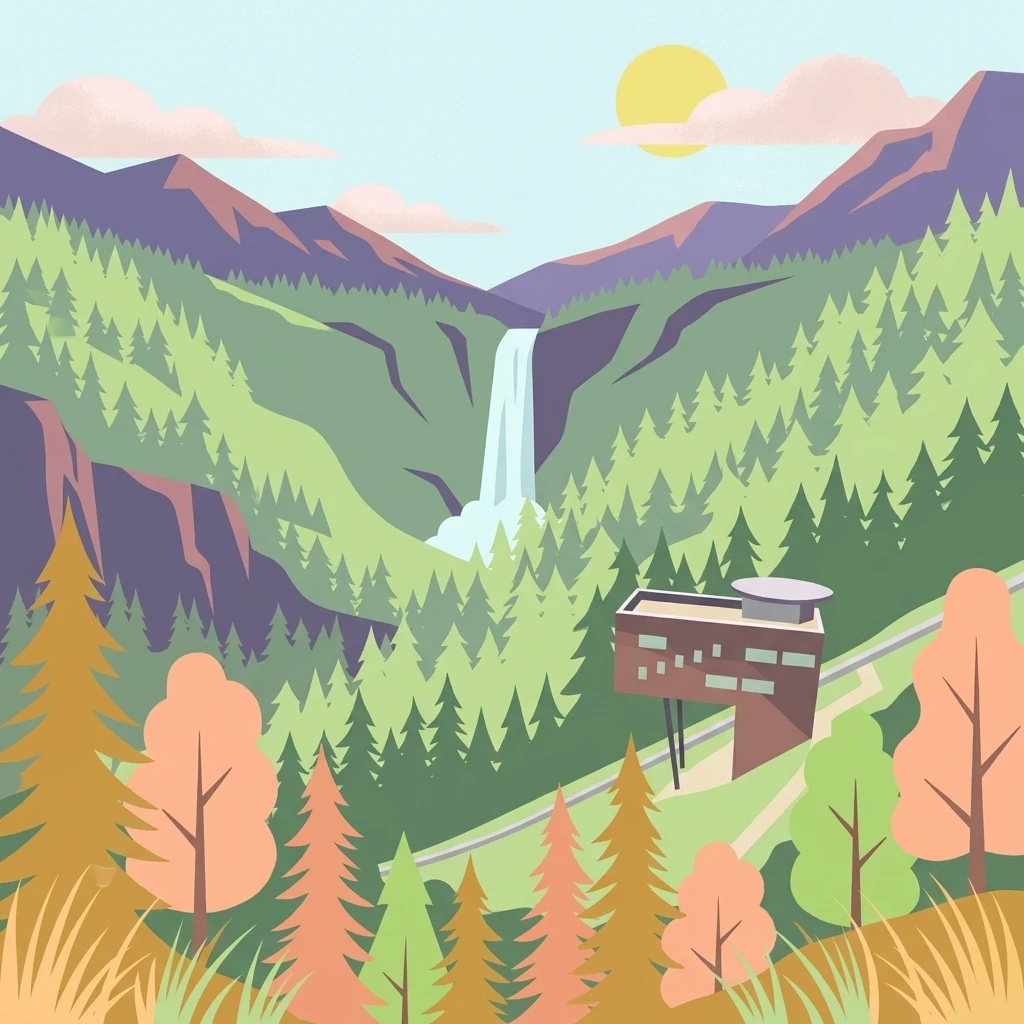
The standout qualities of the Grebensteine bei Willingen reserve cluster around a few defining features: a near-primary Schluchtwald of summer linden, wych elm, and sycamore maple; boulder-strewn rock outcrops that punctuate the slope; montane tall-herb flora with rare species such as wolf's monkshood, brook avens, and white butterbur; a humid microclimate shaped by seeping groundwater and small springs; and the proximity of the Mühlenkopfschanze and the Skywalk Willingen, which place the reserve within a distinctive mix of ecological protection and high-profile outdoor recreation in the Upland region.
Best time to visit Grebensteine bei Willingen Nature Reserve
The reserve can be experienced in any season, but late spring and early summer are the most rewarding times, when the tall-herb flora of the Schluchtwald reaches its seasonal peak and the seepage zones are at their most floristically visible. Early summer also favors butterfly observation, as many of the forty-two documented species are most active in warm, humid conditions. Autumn highlights the moss, fern, and mushroom character of the boulder-rich slopes, while winter adds the appeal of combining a visit with the surrounding winter sports setting of Willingen, including views of the adjacent Mühlenkopfschanze.