
Mori Atlas logo
Park guides

Explore detailed thematic resources covering park timing and volcanic landscape characteristics.

Focused Guides and Informative Resources for Hawaiʻi Volcanoes National Park

This resource collection provides targeted insights into Hawaiʻi Volcanoes National Park. Readers can examine specific guides regarding seasonal timing and climate variations to better understand the conditions shaping these expansive volcanic landscapes, from coastal lava cliffs to the high-elevation summit of Mauna Loa.

Related tags

Active VolcanoWorld Heritage SiteShield VolcanoEndemic SpeciesLava Tubes

Active volcanoes, endemic ecosystems, and living Hawaiian heritage on the island of Hawaiʻi

Hawaiʻi Volcanoes National Park

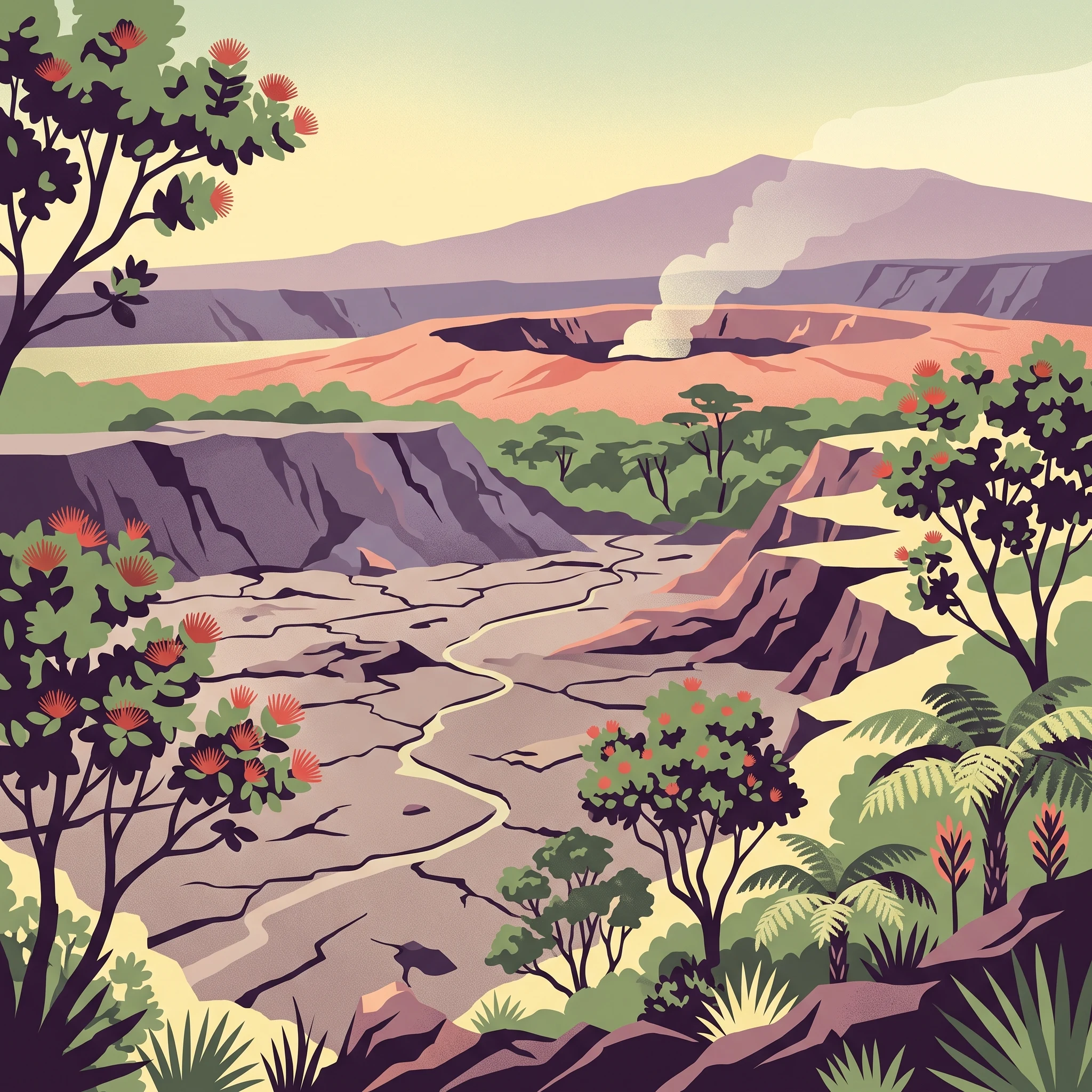
Hawaiʻi Volcanoes National Park stands as one of the most significant geological and ecological protected areas in the world, offering a window into the volcanic processes that created the Hawaiian archipelago. The park encompasses a remarkable range of environments, from lush tropical rainforests at middle elevations to the arid Kaʻū Desert on the leeward slopes, and up to the summit of Mauna Loa, the most massive active volcano on Earth. The continuous volcanic activity at Kīlauea has shaped and reshaped the landscape repeatedly, creating new land while burying old. Visitors travel from around the world to witness active lava flows, explore lava tubes like the Thurston Lava Tube (Nāhuku), and experience the raw power of nature in motion. The park's significance extends beyond geology to include profound cultural importance, as Kīlauea and its caldera Halemaʻumaʻu have been considered the sacred home of the volcano goddess Pele in Hawaiian tradition for centuries. The park also serves as a living laboratory for scientists studying volcanism, plate tectonics, ecological succession, and the evolution of endemic species in isolated island environments.

Location
United States of America
Park type
National park
Established
1916
Area
1,434.5 km²
Highest point
4,169 m
Hawaiʻi Volcanoes National Park Atlas
MoriAtlas Explorer

Continue Exploring Hawaiʻi Volcanoes National Park's Mapped Geography and Landscapes

Deepen your understanding of Hawaiʻi Volcanoes National Park by continuing your exploration of its specific geographic features and protected landscape context. This national park offers rich opportunities for map-based discovery, allowing you to trace its boundaries and comprehend its environmental setting within the United States of America. Investigate the unique terrain and regional geography that define this significant natural area.