

Mori Atlas logo
Park guides

Explore focused collections covering seasonal planning and regional landscape geography.

Published Guides for Huanglong Scenic and Historic Interest Area in Sichuan

Access curated guides dedicated to Huanglong Scenic and Historic Interest Area, a high-altitude travertine landscape in the Sichuan province of China. These resources provide context on seasonal conditions and the unique mountain terrain surrounding the system of mineral-rich colored pools and glacial peaks.

Related tags

travertine poolscolored poolskarsthigh-altitude landscapealpine scenery

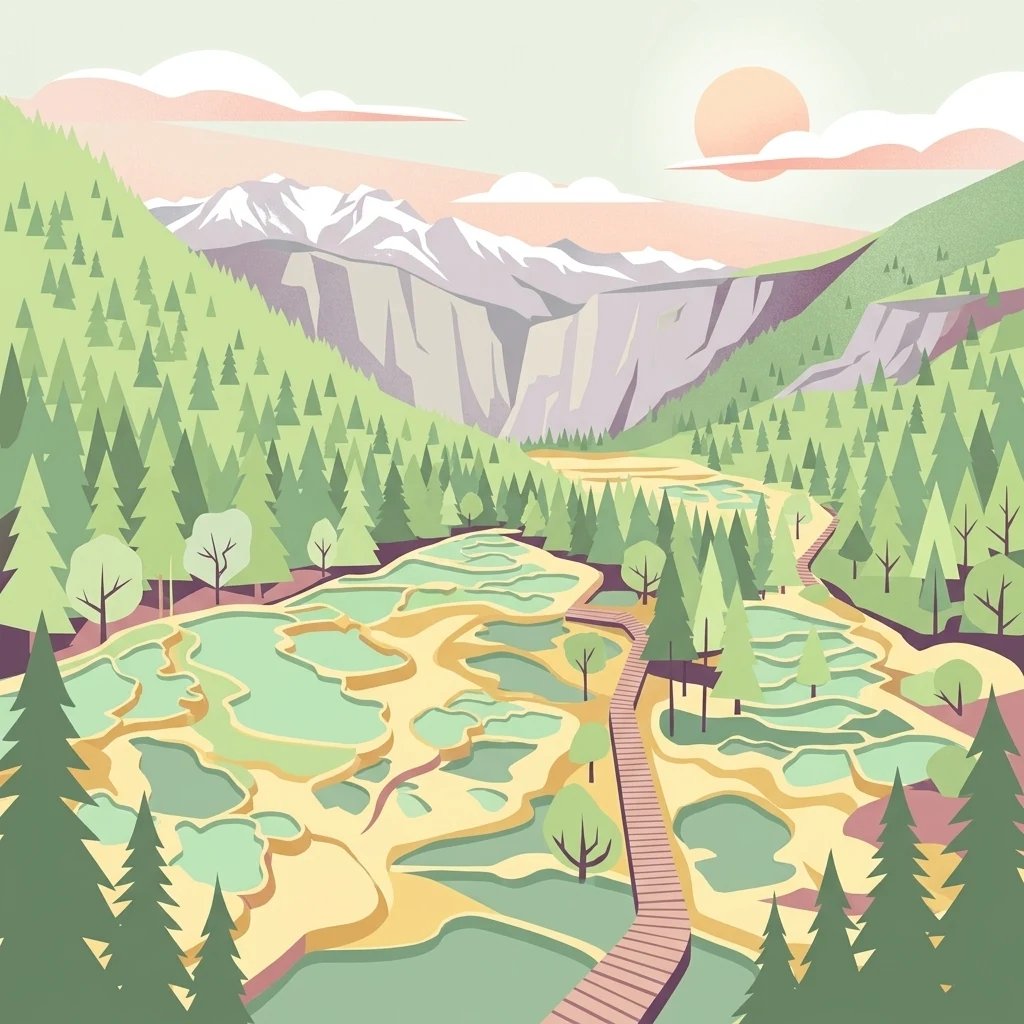
A high-altitude wonder of colored travertine pools, snow peaks, and ancient forests in northern Sichuan.

Huanglong Scenic and Historic Interest Area

Huanglong Scenic and Historic Interest Area is a vast high-altitude landscape reserve in northern Sichuan, instantly recognizable for its long corridor of multicolored travertine pools that descend through a forested valley beneath glaciated peaks. The name Huanglong, meaning "Yellow Dragon," evokes the way the serpentine line of golden and turquoise pools appears to wind down the mountain like the body of a dragon among the trees. Within the broader scenic area, several distinct zones gather around this central valley, including the Danyunxia gorge, Munigou, the Xueshanliang ridge, Hongxingyan, and Xigou, each offering its own character of forest, water, and alpine scenery. The geological drama of Huanglong is rooted in its travertine landscape, one of the largest and best-preserved of its type anywhere on Earth. Mineral-rich water emerges near the head of the valley and, over thousands of years, has built up enormous natural terraces, dams, and basins that hold the now-iconic pools. Across the main valley the pools step upward in elevation, producing distinct sections like the Welcoming Pools, the Lotus Platform Waterfall, the Golden Sand Floor, and the culminating Five-Color Pools at the top of the ascent. These pools, combined with surrounding waterfalls, sinkholes, and ridges, give the area a visual richness that has made it a benchmark for travertine karst scenery worldwide. Beyond the geology, Huanglong is also defined by its ecological and cultural layers. Ancient temples, including Buddhist and Taoist shrines within the valley, connect the landscape to long regional traditions. The mountains above shelter important populations of endangered species, including the giant panda and the Sichuan snub-nosed monkey, lending the area genuine biodiversity value. Designated a UNESCO World Natural Heritage Site in 1992 alongside Jiuzhaigou, recognized as a national geopark, and rated as one of China's premier scenic zones, Huanglong occupies a singular place at the intersection of geology, ecology, and cultural landscape in southwest China.

Location
China
Park type
Protected area
Established
1992
Area
600 km²
Explore Huanglong Scenic and Historic Interest Area Geography
1 guide

Compare specialized park resources to match your specific alpine research questions.

Published Guides and Seasonal Planning Resources for Huanglong Scenic and Historic Interest Area

Published guides offer focused subject coverage for Huanglong Scenic and Historic Interest Area, addressing key planning questions about high altitude access. Available topics evaluate seasonal timing factors, such as late spring and early autumn weather patterns, to support detailed mountain itinerary research.
MoriAtlas Explorer

Continue Exploring the Protected Landscapes of Huanglong Scenic and Historic Interest Area

Deepen your understanding of Huanglong Scenic and Historic Interest Area by examining its specific geological features and mountain boundaries within the MoriAtlas database. Track the transition from lower forest zones to the high-altitude travertine terraces and surrounding snow-capped peaks. This resource provides a clear spatial context for the diverse ecosystems and karst structures protected within this Sichuan region.