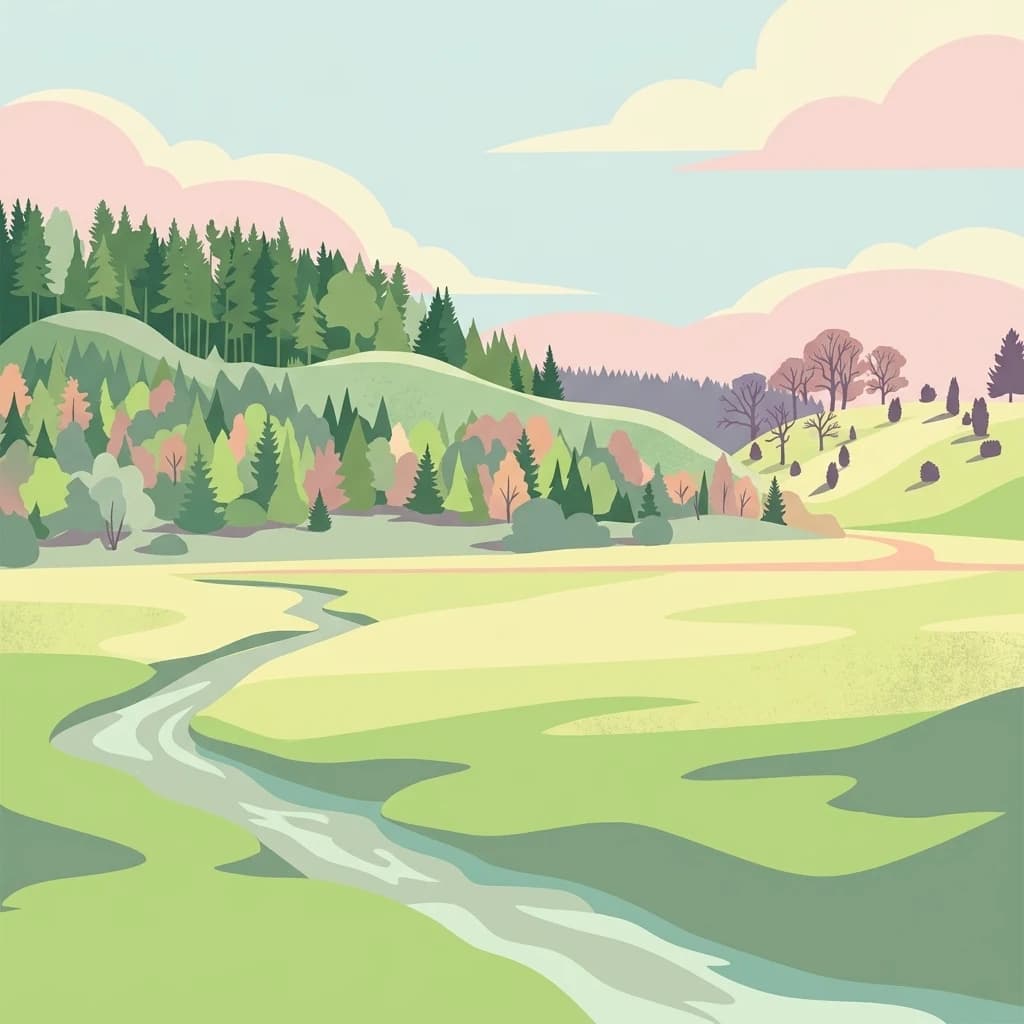
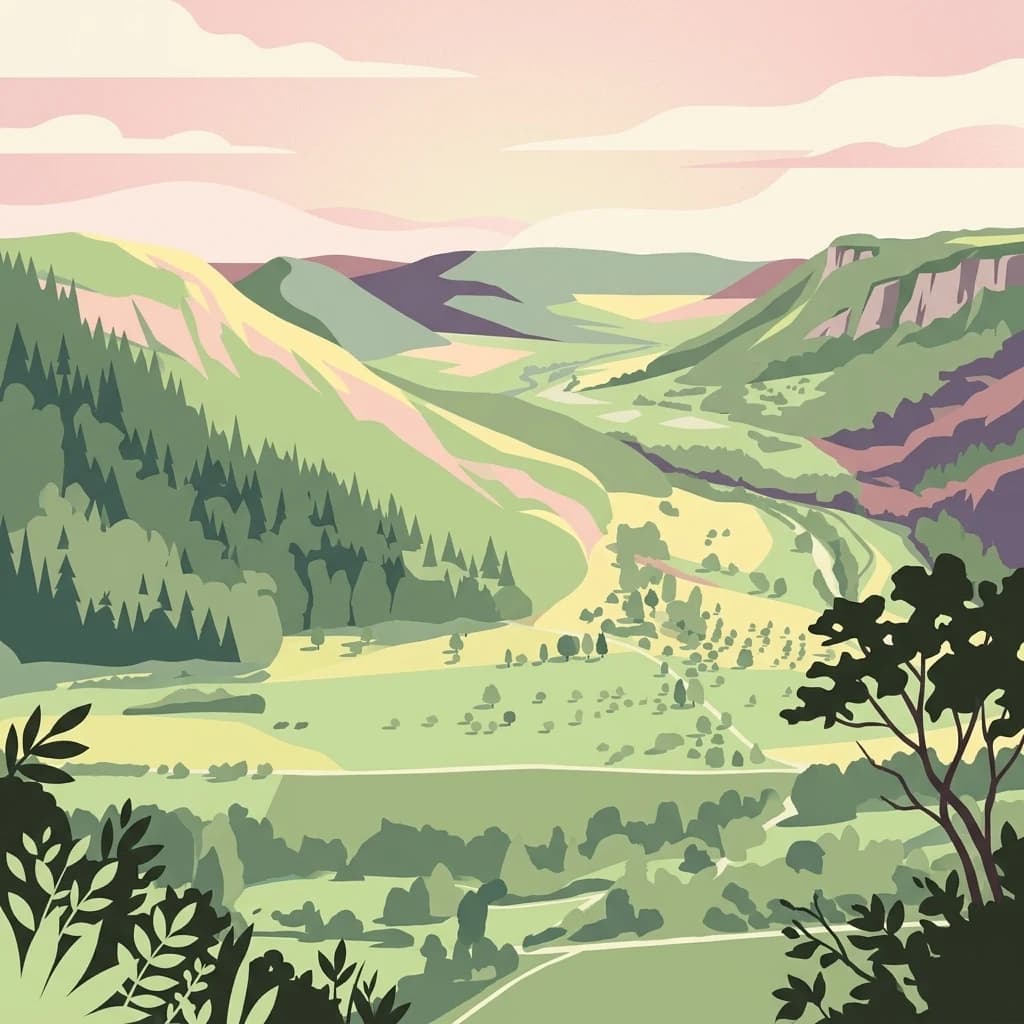
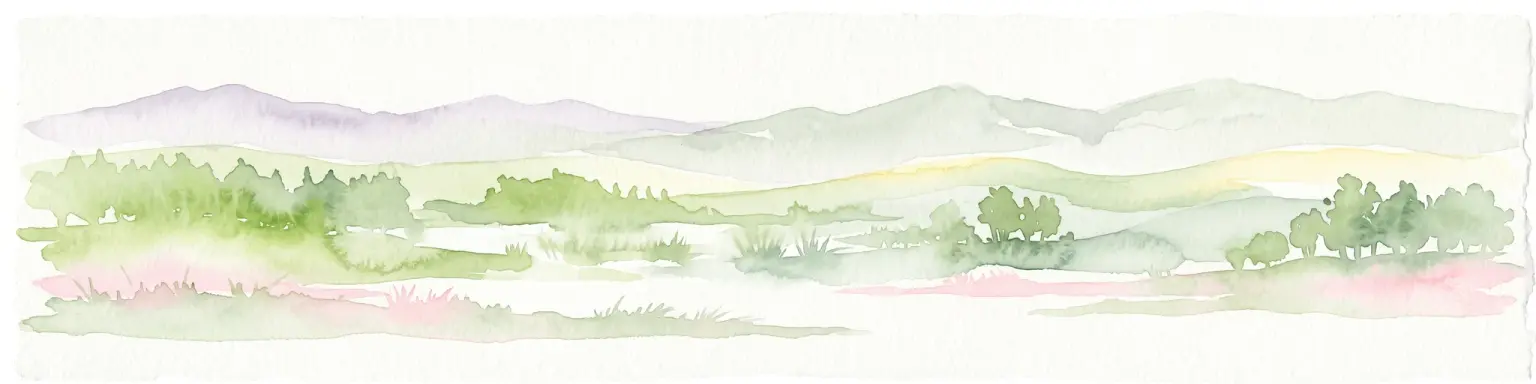
A Natura 2000 valley landscape on the Swabian Alb protecting juniper heaths, dry grasslands, and beech forests.
Hungerbrunnen, Sacken and Lonetal
Hungerbrunnen, Sacken and Lonetal is a small protected area on the eastern Swabian Alb in Baden-Württemberg, Germany. Designated under the European Union Habitats Directive as a Fauna-Flora-Habitat (FFH) site, it covers a deeply incised section of the Lone river valley with its tributaries and side valleys between Gussenstadt and Heuchlingen.
The site is notable for its mix of intermittently dry, meandering stream courses, juniper heaths, fragments of steppe-like grassland, species-rich beech forest on the higher slopes, limestone rocky outcrops, scree slopes, and two small caves. It exemplifies the typical, often arid, karst-influenced valley landscapes that characterize this part of the Swabian Alb and hosts habitats with high conservation value at the European level.
Although modest in area, the protection site is an important component of the broader Natura 2000 network in Baden-Württemberg, complementing adjacent FFH areas such as the Kuppenalb bei Laichingen und Lonetal and Härtsfeld. Its combination of dry grassland, juniper heaths, and calcareous beech forest makes it a representative example of the cultural and natural landscape mosaic of the Lone valley.